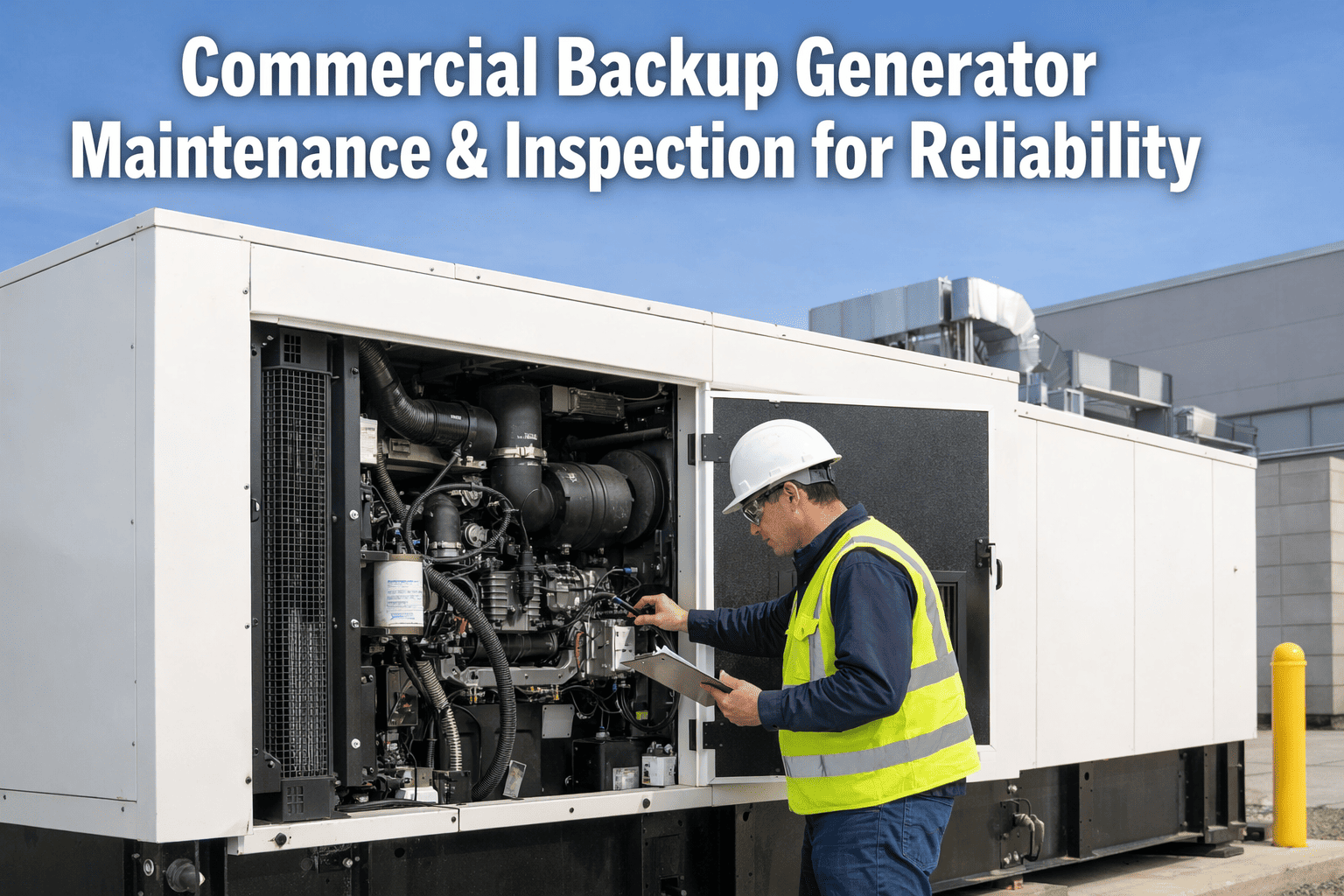
Predictive Maintenance for Backup Generator: AI Detection of Inspection
By Oxmaint on January 29, 2026
Backup generators that only get attention during scheduled inspections are ticking time bombs—silent failures in batteries, fuel systems, and transfer switches go undetected for weeks until the next power outage exposes them. AI-powered predictive maintenance continuously analyzes engine telemetry, electrical output patterns, and component wear signatures to detect inspection-worthy conditions long before manual rounds catch them. By replacing calendar-only inspection schedules with intelligent anomaly detection, facility teams ensure every generator is truly ready when called upon. Operations managers who Sign Up for AI-driven generator monitoring gain continuous inspection intelligence that eliminates blind spots between scheduled service visits.
AI Generator Inspection Intelligence
94%
Failure prediction accuracy
73%
Reduction in surprise breakdowns
Real-time
Engine anomaly alerts
40+
Days early failure detection
AI inspection detection for backup generators goes far beyond checking oil levels and battery voltage on a clipboard. Machine learning algorithms track vibration harmonics, exhaust temperature curves, fuel degradation rates, and electrical output drift to flag components heading toward failure—often weeks before any visible symptom appears. Facility teams ready to move beyond reactive generator maintenance can Book Demo to see how AI transforms raw engine data into prioritized inspection triggers.
AI-Monitored Generator Inspection Parameters
This framework defines the critical data streams AI systems continuously analyze to detect inspection-worthy conditions across backup generator fleets.
Predictive Inspection Detection Model
AI-Analyzed Backup Generator Data Streams
01
Generator Asset Profile
Unit ID / Asset TagSite & Zone LocationkW Rating & Fuel TypeCumulative Runtime HoursCommission DateAI Sensor Node ID
02
Engine Performance Analytics
Oil Pressure Trend (PSI)Coolant Temp Curve (°F)Exhaust Gas Temp (EGT)RPM Stability IndexVibration Frequency (mm/s)Combustion Efficiency Score
ATS Transfer Time TrendContact Resistance (mΩ)Load Step ResponseVoltage/Frequency StabilityRetransfer Verification
ATS degradation detected by AI triggers emergency inspection protocol
05
Battery & Starting System AI
Cranking Voltage DecayInternal Resistance TrendCharge Cycle EfficiencyCell Balance Monitoring
06
AI Inspection Output
Anomaly Confidence LevelPredicted Failure WindowAuto-Generated Work OrderRisk Priority Score (1-100)
Top AI-Detected Generator Inspection Triggers
Machine learning analysis across thousands of backup generators reveals the most frequent conditions AI flags for immediate or priority inspection.
AI Inspection Trigger Distribution
Battery Health Degradation
32%
Fuel Contamination / Aging
25%
Coolant System Anomalies
19%
ATS Response Drift
15%
Vibration & Mechanical Wear
9%
AI detects these conditions an average of 38 days before manual inspection would
AI Inspection Alert Red Flags
Cranking Time IncreaseStart cycle extending beyond 3 seconds signals battery cell degradation or starter wear
Oil Pressure Micro-DropGradual PSI decline under load indicates bearing wear or oil viscosity breakdown
Exhaust Temp Spike PatternAbnormal EGT during load test suggests injector imbalance or turbo degradation
Frequency Oscillation Under LoadHz instability during load step changes points to governor or AVR calibration drift
Scheduled-only inspections miss progressive wear that develops between visits. Teams who Sign Up access AI dashboards showing real-time degradation curves, remaining useful life predictions, and auto-prioritized inspection queues for every generator in their fleet.
Activate AI Generator Inspection Intelligence
Deploy predictive analytics that continuously monitor every backup generator subsystem, detect early-stage degradation, and auto-generate inspection work orders before failures compromise emergency power readiness.
Different generator subsystems require varying AI monitoring intervals based on failure criticality and degradation velocity.
Continuous (24/7)
Battery & Charger Telemetry
Real-time monitoring of cranking voltage, internal resistance, charge rate, and cell balance to predict start failure before it occurs.
Every Run Cycle
Engine & Electrical Output Analysis
AI captures oil pressure, coolant temp, EGT, voltage, frequency, and vibration during every start and load test for trend comparison.
Daily
Fuel & Environmental Scan
AI evaluates fuel quality index, tank water accumulation, ambient temperature impact, and block heater status against degradation models.
Weekly
Predictive Health Report & Inspection Queue
Machine learning generates remaining useful life scores, risk rankings, and auto-prioritized inspection work orders for the maintenance team.
Generator Subsystem Diagnostic Matrix
Use this AI-informed diagnostic matrix to assess each generator subsystem and determine inspection urgency.
AI Subsystem Health Assessment
Subsystem
No Inspection Needed
Schedule Inspection
Immediate Inspection
Starting Battery
Cranks <3s, >12.6V resting
3-5s crank, 12.0-12.6V
>5s crank or <12.0V
Oil System
Pressure stable ±5% baseline
5-15% deviation under load
>15% drop or erratic
Fuel Quality
Fresh (<6mo), zero water
6-12mo age, trace moisture
>12mo or microbial detected
Transfer Switch
ATS transfers <10 sec
10-20 sec, minor hesitation
>20 sec or failed transfer
Cooling System
Temp stable under full load
Gradual rise, minor seepage
Overheating or visible leak
Expert Insights on AI Generator Inspection
"Every backup generator is having a conversation through its data—oil pressure trends whisper about bearing wear, battery resistance curves predict start failures, and exhaust temperatures reveal combustion health. The problem is that traditional inspection schedules only listen once a month. AI predictive maintenance listens every second, translating those whispers into work orders before the generator goes silent during the one moment your building needs it most."
1
Vibration Signature Analysis
AI detects bearing wear, misalignment, and imbalance through micro-vibration patterns invisible during walk-around inspections.
2
Fuel Degradation Modeling
Machine learning tracks diesel aging, water ingress, and microbial risk to trigger fuel polishing or replacement before injector damage.
3
Load Performance Benchmarking
AI compares every load test against historical baselines to detect output degradation that indicates alternator or governor issues.
Early Warning Indicators
!
Slow Crank Trend
Progressive cranking time increase signals battery cell failure 2-4 weeks before no-start
!
Oil Pressure Creep
Gradual PSI decline across run cycles indicates bearing wear or oil viscosity breakdown
!
Coolant Temp Drift
Rising operating temperature under same load suggests radiator fouling or thermostat failure
!
Fuel Filter ΔP Rise
Increasing differential pressure across fuel filter signals contamination or clogging
!
ATS Hesitation
Transfer time creeping beyond baseline indicates contact wear or control board degradation
!
Vibration Harmonic Shift
New frequency peaks in vibration spectrum signal mounting looseness or rotating part imbalance
Predict Generator Failures Before They Strike
Start using the OXmaint AI predictive platform to continuously monitor every backup generator, detect early-stage wear, and auto-schedule inspections that keep your emergency power 100% reliable.
Does AI inspection detection replace scheduled generator maintenance?
No—AI detection supplements scheduled maintenance by catching issues between service intervals. NFPA 110 still requires monthly load testing and annual comprehensive inspections. AI adds a continuous monitoring layer that triggers priority inspections when anomalies are detected, reducing the risk of undetected failures between scheduled visits.
What sensors are needed for AI predictive monitoring on backup generators?
Core sensors include vibration accelerometers, oil pressure transducers, coolant and exhaust temperature probes, battery voltage and resistance monitors, fuel level sensors, and ATS current/timing sensors. Most modern generators already have several of these built in—AI platforms integrate with existing sensor data and add supplemental IoT sensors where gaps exist.
How long does the AI take to learn a generator's normal behavior?
AI systems typically establish a reliable operational baseline within 30-45 days, requiring at least 3-4 complete run and load test cycles. During this learning period, the system maps normal oil pressure ranges, coolant temperature curves, vibration signatures, and battery discharge patterns specific to each unit and its operating environment.
Can AI detect wet-stacking in diesel generators?
Yes—AI monitors exhaust gas temperature profiles, fuel consumption rates, and carbon buildup indicators to detect wet-stacking conditions. When the system identifies low-load operating patterns that risk carbon accumulation, it automatically triggers a load bank test recommendation to burn off deposits before engine damage occurs.
What ROI can facilities expect from AI generator inspection?
Facilities typically see 50-70% reduction in emergency generator repair costs, 30-40% decrease in total maintenance spend through optimized inspection scheduling, and near-elimination of unexpected start failures. Insurance carriers increasingly offer premium discounts for facilities with continuous AI monitoring documentation, adding further financial benefit.