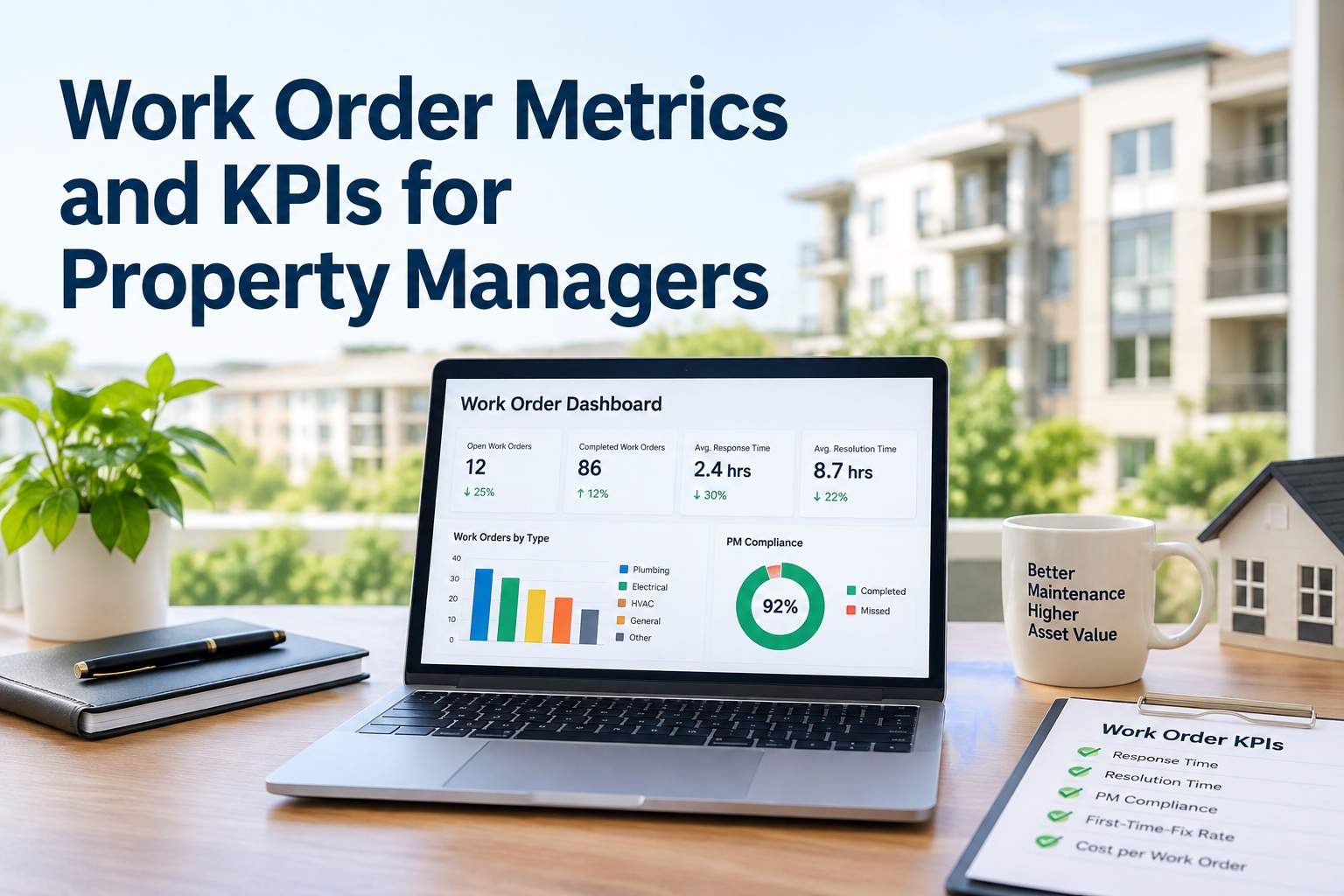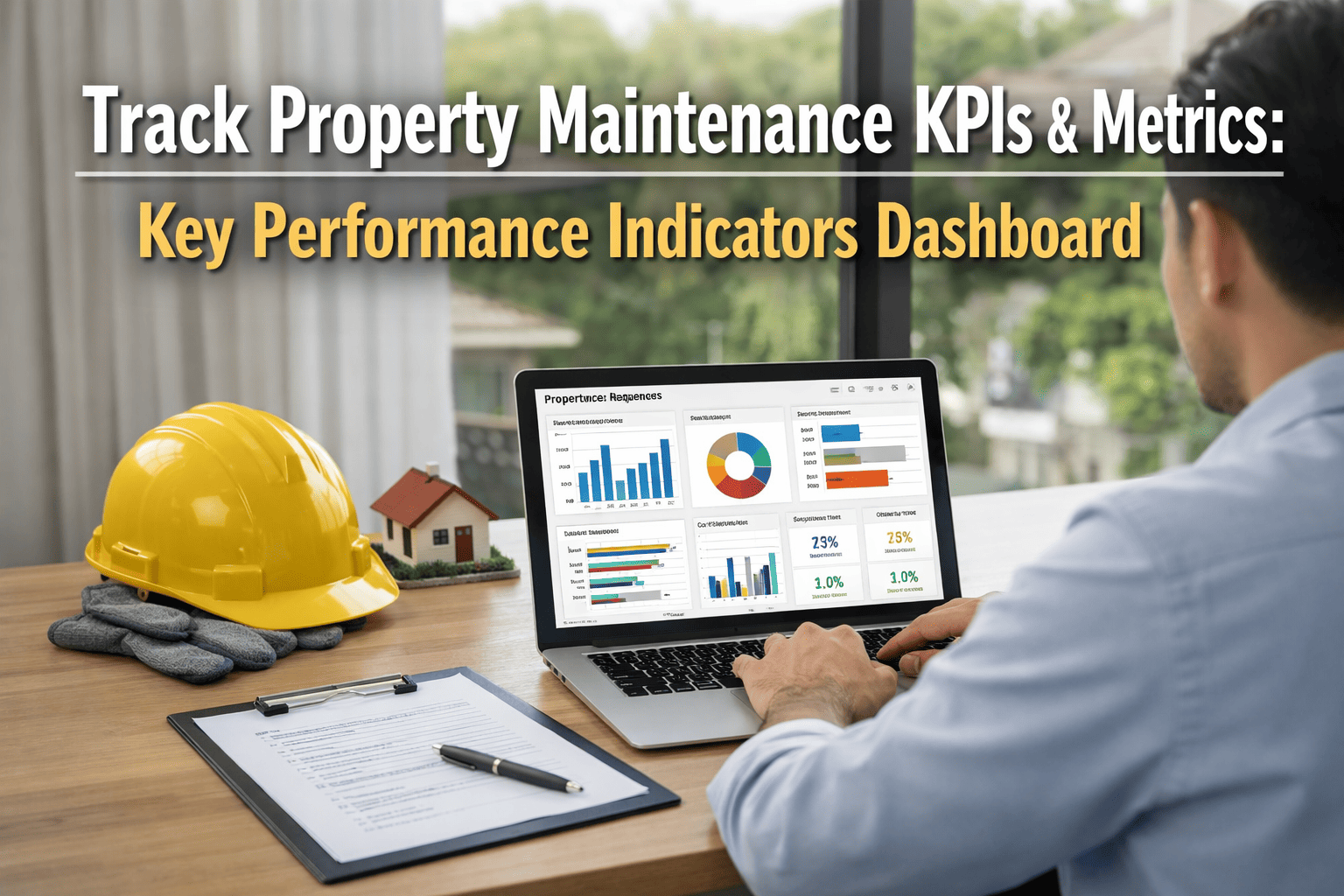
In property management, what gets measured gets managed. Yet many facility managers still rely on gut instinct, anecdotal reports, and reactive workflows to make critical maintenance decisions. The shift toward data-driven operations has made one thing abundantly clear: tracking the right Key Performance Indicators (KPIs) is no longer optional — it is the foundation of every high-performing maintenance program. Whether you oversee a single commercial building or a multi-site portfolio, the following ten KPIs provide the metrics intelligence you need to reduce costs, extend asset life, and deliver exceptional tenant and occupant experiences. Sign up for OxMaint to start tracking all ten of these KPIs from a single, unified maintenance analytics dashboard.
Take Full Control of Your Maintenance Performance
OxMaint gives property managers real-time KPI dashboards, automated work order tracking, and predictive maintenance analytics — all in one platform built for modern facility operations.
Why Property Maintenance KPIs Matter More Than Ever
The property management industry is under mounting pressure from all directions — rising material costs, labor shortages, aging infrastructure, and tenants with increasingly high expectations for response times and service quality. In this environment, maintenance teams that operate without structured performance metrics are flying blind. They cannot identify where labor hours are being wasted, which assets are consuming disproportionate resources, or whether their preventive maintenance program is actually preventing failures.
KPIs transform raw maintenance activity into actionable intelligence. They create accountability across teams, give operations leaders the data to justify capital investments, and surface operational inefficiencies before they become costly failures. The ten metrics below represent the most strategically important performance dimensions in property maintenance — covering speed, cost, reliability, compliance, and stakeholder satisfaction.
The Top 10 Property Maintenance KPIs
Work Order Completion Rate
Work order completion rate measures the percentage of maintenance work orders that are resolved within a defined time period relative to those opened. It is one of the most fundamental indicators of a maintenance team's operational capacity and workflow efficiency. A consistently high completion rate signals that your team has the right resources and processes to keep up with demand. A declining rate is often the first visible sign of understaffing, parts availability issues, or broken prioritization workflows.
Industry Benchmark: Top-performing facilities maintain a completion rate above 90% on a rolling 30-day basis.
Mean Time to Repair (MTTR)
Mean Time to Repair quantifies the average duration required to restore a failed asset or system to full operation, measured from the moment a fault is reported to the moment the repair is confirmed complete. MTTR is a direct measure of maintenance responsiveness and technical competency. It encompasses diagnostic time, parts procurement, active repair labor, and verification. Reducing MTTR requires streamlining each of these sub-components — from faster fault reporting systems to on-site spare parts inventory management.
Industry Benchmark: Commercial facilities typically target MTTR under 4 hours for critical systems and under 24 hours for non-critical assets.
Preventive Maintenance Compliance Rate
Preventive maintenance compliance rate tracks what proportion of scheduled PM tasks are actually completed on time. This KPI is foundational to any reliability-centered maintenance strategy. Many facilities create rigorous PM schedules but then allow day-to-day reactive demands to crowd out planned work — destroying the value of the preventive program entirely. Tracking compliance rate exposes this failure mode and creates the management visibility needed to protect scheduled work from reactive disruption.
Industry Benchmark: World-class maintenance organizations maintain PM compliance above 95%. A rate below 80% typically signals systemic resource or scheduling problems.
Maintenance Cost per Asset
Maintenance cost per asset calculates the total direct and indirect maintenance expenditure associated with each individual asset over a defined period. This metric enables property managers to identify which assets are consuming resources disproportionate to their operational or financial value — providing the data foundation for repair-versus-replace decisions, capital planning, and vendor contract negotiations. Without this visibility, high-cost assets remain hidden within aggregate budget lines until they trigger a financial crisis.
Industry Benchmark: Annual maintenance cost per asset should generally not exceed 3–5% of the asset's current replacement value for mechanical systems.
Asset Downtime Rate
Asset downtime rate measures the proportion of time that a critical asset is unavailable for operation due to failure or unplanned maintenance. In commercial and multifamily properties, downtime on critical systems — HVAC, elevators, plumbing, electrical distribution — directly affects occupant experience, tenant satisfaction, and in some cases lease compliance obligations. Tracking downtime by asset class allows managers to prioritize reliability investments where operational impact is greatest.
Industry Benchmark: Critical building systems should target less than 1% unplanned downtime annually. Life-safety systems must approach zero.
First-Time Fix Rate (FTFR)
First-time fix rate measures the percentage of maintenance work orders that are fully resolved on the technician's initial visit, without requiring follow-up return trips for the same issue. FTFR is a powerful composite indicator — it simultaneously reflects diagnostic accuracy, parts availability, technician skill, and job preparation quality. A low first-time fix rate is operationally costly: each return visit duplicates travel time, labor hours, and tenant disruption while consuming maintenance capacity that could be directed toward new work orders.
Industry Benchmark: Leading maintenance programs achieve first-time fix rates of 85% or higher. Rates below 70% warrant immediate process review.
Reactive vs. Preventive Maintenance Ratio
This ratio compares the volume and cost of unplanned reactive repairs against planned preventive maintenance activities. It is perhaps the single most revealing indicator of a maintenance program's strategic maturity. Facilities with high reactive ratios are trapped in a perpetual crisis cycle — resources are always consumed by the current emergency, leaving no capacity for the planned work that would prevent the next one. Shifting this ratio toward prevention is the primary lever for sustainable cost reduction in property maintenance.
Industry Benchmark: High-performing facilities maintain a reactive-to-preventive ratio of 20:80 or better. A ratio above 50:50 signals a program in need of structural rebalancing.
Mean Time Between Failures (MTBF)
Mean Time Between Failures measures the average operational time elapsed between consecutive failures of the same asset or system. MTBF is the primary indicator of asset reliability and the effectiveness of your preventive and predictive maintenance strategies. A rising MTBF trend confirms that maintenance investments are extending asset performance life. A declining MTBF on a specific asset class signals that current maintenance intervals or methodologies are insufficient to prevent failure progression.
Industry Benchmark: MTBF targets are asset-class specific, but a consistent upward trend quarter-over-quarter is the universal goal indicator.
Maintenance Backlog
Maintenance backlog quantifies the total volume of approved but not yet completed maintenance work orders, typically expressed in hours of labor or number of open work orders weighted by priority. A growing backlog is one of the most actionable leading indicators of future operational and financial risk in property maintenance. Work orders in backlog represent deferred value — assets that are deteriorating faster than intervention is occurring, risk liabilities that are accumulating, and tenant satisfaction impacts that are compounding over time.
Industry Benchmark: A healthy maintenance backlog represents 2–4 weeks of available labor. A backlog exceeding 6–8 weeks requires immediate capacity review.
Tenant or Occupant Satisfaction Score
Operational KPIs measure what your maintenance team does internally — this metric measures the impact of those activities on the people your property exists to serve. Tenant satisfaction scores, collected through post-work order surveys or periodic property satisfaction assessments, close the loop between maintenance performance and business outcomes. In multifamily residential properties, maintenance responsiveness is consistently ranked among the top three factors in lease renewal decisions. In commercial properties, it directly influences tenant retention and rent premium sustainability.
Industry Benchmark: Best-in-class property managers maintain average satisfaction scores above 4.2 out of 5. Scores below 3.5 correlate strongly with elevated churn risk.
How These KPIs Work Together: A Performance Framework
Individually, each KPI surfaces a specific operational insight. Together, they form an interconnected performance framework that tells the complete story of your maintenance program's health. Understanding the relationships between these metrics is what separates reactive measurement from genuinely strategic operations management.
| KPI | Primary Dimension | Directly Influences | Key Risk if Ignored |
|---|---|---|---|
| Work Order Completion Rate | Throughput | Backlog, Tenant Satisfaction | Service deterioration, lease non-compliance |
| Mean Time to Repair (MTTR) | Responsiveness | Downtime Rate, Satisfaction Score | Critical system outages, tenant churn |
| PM Compliance Rate | Reliability Strategy | MTBF, Reactive Ratio, Asset Cost | Accelerated asset deterioration, cost escalation |
| Maintenance Cost per Asset | Financial Efficiency | Capital Planning, Budget Variance | Budget overruns, poor R&R decisions |
| Asset Downtime Rate | Reliability | Tenant Satisfaction, Compliance Risk | Regulatory exposure, lease penalties |
| First-Time Fix Rate | Quality | MTTR, Labor Efficiency, Satisfaction | Wasted labor hours, repeat tenant disruptions |
| Reactive vs. Preventive Ratio | Program Maturity | All Cost and Reliability KPIs | Chronic cost overruns, burnout, asset failure |
| Mean Time Between Failures | Asset Reliability | PM Strategy, Capital Planning | Unplanned capital expenditure spikes |
| Maintenance Backlog | Capacity | Completion Rate, Tenant Satisfaction | Deferred liability, risk accumulation |
| Tenant Satisfaction Score | Outcome Quality | Lease Renewal, Rent Premium | Elevated vacancy, reputational damage |
Building a KPI Dashboard: What to Track and How Often
Effective KPI management requires more than data collection — it requires the right reporting cadence for each metric type. Operational KPIs like work order completion rate and MTTR benefit from daily or weekly visibility so that managers can make real-time adjustments to staffing and prioritization. Strategic KPIs like maintenance cost per asset and reactive-to-preventive ratio are more meaningful at the monthly and quarterly level, where trends become statistically meaningful and comparison to prior periods is actionable. Start for Free and set up your KPI dashboard today, or Book a Demo to see how OxMaint structures reporting cadences for your property portfolio.
Common KPI Measurement Pitfalls and How to Avoid Them
Tracking maintenance KPIs without the right processes in place can produce misleading data that drives poor decisions. The most common pitfall is inconsistent work order categorization — when technicians classify reactive emergency repairs as planned work to improve apparent PM compliance rates, the metric loses all diagnostic value. Establishing clear, enforced definitions for each work order type at the CMMS configuration level is essential to data integrity.
A second common error is measuring too many KPIs simultaneously without connecting them to decisions. A dashboard with twenty metrics and no defined response protocols becomes noise rather than intelligence. The ten KPIs outlined in this article represent a curated, decision-oriented set — each one tied to a specific operational lever that managers can actually pull. Start with this core set before adding context-specific metrics for your property type or portfolio.
Before comparing your KPIs against industry benchmarks, invest four to six weeks establishing your own operational baseline. Industry benchmarks provide directional guidance, but they reflect averages across diverse property types, markets, and operational models. Your baseline — the actual current performance of your specific portfolio — is the most meaningful reference point for measuring improvement. Track trends against your own baseline first; use industry benchmarks to set long-term aspirational targets.
The Role of CMMS Software in KPI Tracking
Manual KPI tracking through spreadsheets is both time-consuming and inherently unreliable — data entry errors, version control problems, and the inability to aggregate information across multiple properties make spreadsheet-based reporting inadequate for any portfolio of meaningful scale. A modern Computerized Maintenance Management System (CMMS) automates the data collection, calculation, and visualization of every KPI described in this article, transforming what would otherwise require hours of manual analysis into real-time dashboard intelligence.
The most capable CMMS platforms go beyond passive reporting — they surface anomalies proactively, alert managers when KPIs breach defined thresholds, and correlate metrics across asset classes and property locations to identify system-wide patterns. This shift from reactive reporting to proactive analytics is what separates facilities that measure maintenance performance from those that genuinely manage it. Book a demo with OxMaint to see how automated KPI dashboards eliminate manual reporting and give your team real-time operational intelligence across your entire property portfolio.
Frequently Asked Questions
How many maintenance KPIs should a property manager track simultaneously?
For most property management operations, tracking eight to twelve carefully selected KPIs provides sufficient performance visibility without creating analytical overload. The ten KPIs outlined in this article represent a strong, decision-oriented core set. Resist the temptation to track everything your CMMS can measure — prioritize the metrics that are directly tied to operational levers you can actually pull.
What is a realistic timeline to improve maintenance KPIs after implementing a CMMS?
Most facilities see measurable improvement in work order completion rate and MTTR within the first 60 to 90 days of structured CMMS use, as workflow visibility and accountability mechanisms take effect. Lagging indicators like MTBF, maintenance cost per asset, and reactive-to-preventive ratio typically require 6 to 12 months of consistent program execution to show statistically meaningful improvement trends.
Which maintenance KPI has the greatest impact on tenant retention?
Research consistently identifies MTTR and tenant satisfaction score as the most directly correlated maintenance metrics with lease renewal behavior. Tenants are generally forgiving of occasional failures — what drives dissatisfaction and churn is slow response time and poor communication during the repair process. Facilities that achieve MTTR under 4 hours on high-priority requests and actively collect and respond to satisfaction feedback consistently outperform peers in retention metrics.
Can small property management companies benefit from tracking these KPIs?
Absolutely. The operational principles underlying these KPIs apply regardless of portfolio size. A single-property manager tracking five of these ten metrics in a modern CMMS will make demonstrably better maintenance decisions than one operating without any structured performance data. The proportional return on KPI-driven management is often higher for smaller operations, where each inefficiency consumes a larger share of limited resources.
How do maintenance KPIs differ between residential and commercial properties?
The core KPI set remains consistent across residential and commercial properties, but the benchmarks, reporting cadence, and business consequences differ meaningfully. Commercial properties place greater emphasis on system uptime KPIs due to operational and contractual dependencies, while multifamily residential properties weight tenant satisfaction and response time metrics more heavily as direct drivers of renewal rates. Asset downtime thresholds are also more stringent in commercial environments where tenant operations depend on building systems.
Start Tracking What Actually Matters in Your Maintenance Program
OxMaint delivers automated KPI dashboards, work order analytics, and preventive maintenance tracking built for modern property management teams. Stop guessing — start managing with data.