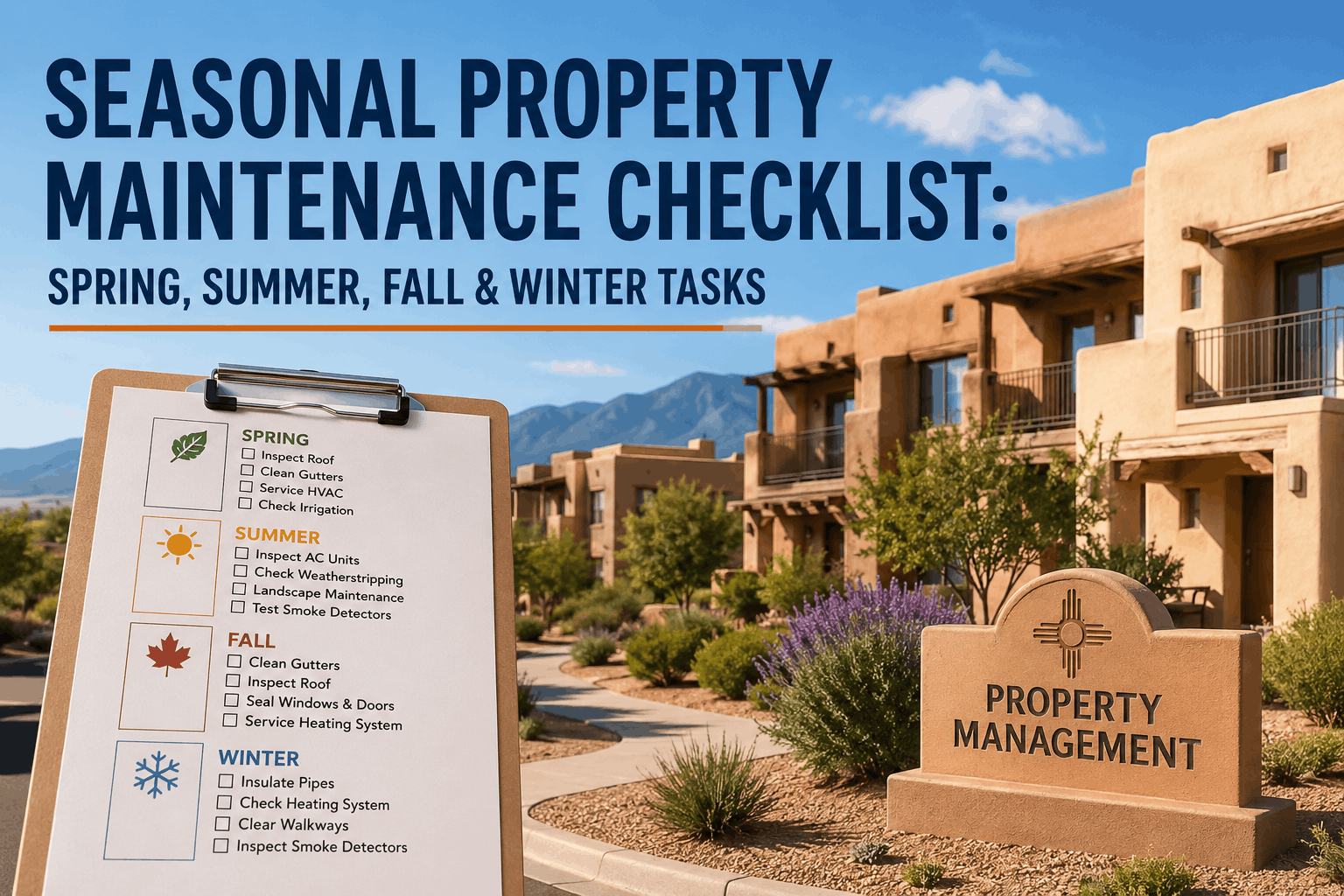
Properties that operate on purely reactive maintenance—addressing problems as they occur rather than anticipating seasonal challenges—face predictable crisis cycles that cost thousands of dollars in unnecessary emergency expenses and service disruptions. When winter arrives without pre-season HVAC preparation, emergency heating calls cost 3-4x standard rates and create multi-day heating outages affecting occupants. When spring rains come without cleared gutters and functioning drainage systems, water intrusion damages ceilings, walls, and tenant spaces requiring costly restoration. When summer arrives without AC system pre-conditioning, compressor failures spike during the hottest days when every contractor in the market is overbooked. Seasonal maintenance planning is the strategic foundation that eliminates these crises by anticipating what will fail based on seasonal stresses, scheduling preventive work during off-peak periods before demand escalates, and ensuring equipment is fully conditioned before seasonal stress arrives. Properties implementing seasonal maintenance calendars reduce emergency repair costs by 40-60%, minimize tenant complaints from service disruptions, avoid peak-season contractor markup pricing, and achieve more reliable operations year-round. This comprehensive guide walks facility managers through building a seasonal maintenance calendar that is customized to your regional climate and facility systems, integrating with work order management to schedule resources appropriately, and creating a predictable maintenance rhythm that prevents emergencies through disciplined advance planning.
Automate Your Seasonal Maintenance Calendar
OxMaint's preventive maintenance scheduling lets you automate seasonal task creation—your spring checklist is automatically generated in March, your fall weatherization tasks in August, ensuring nothing is forgotten and work is scheduled before seasonal demand escalates.
Understanding Seasonal Stress Patterns and Planning Accordingly
Every property experiences predictable seasonal stress patterns based on climate and building systems. Winter in cold climates creates four major categories of stress: freeze protection problems (burst pipes from water lines exposed to freezing temperatures), heating system failure (higher load demand combined with equipment age triggers HVAC breakdowns), ventilation system challenges (fresh air dampers stick in cold weather, creating inadequate circulation), and roof/drainage problems (ice dams trap water behind gutters, forcing it back into the structure). Spring creates water and drainage stress (snowmelt and spring rains overload drainage systems that may be clogged from winter debris), pest infestation onset (warming temperatures activate dormant insects and rodents requiring pest control intensification), and deferred-maintenance emergence (winter damage reveals itself as snow melts). Summer creates cooling demand stress (AC compressors run continuously, aging units fail or lose efficiency) and electrical demand stress (lighting loads from lengthening days, plug loads from cooling fans, and electrical distribution systems forced to capacity). Fall creates seasonal transition stress as heating systems activate after summer dormancy (pilot lights may not ignite, gas supply lines may be clogged from summer weather, thermostats may need recalibration). Understanding these patterns specific to your regional climate allows you to schedule preventive work exactly when it will have maximum impact: HVAC system conditioning in August before cooling demand escalates, heating system commissioning in September before cold weather arrives, roof and drainage clearing in March before spring rains, and freeze-protection inspection in October before first freeze arrives.
A seasonal maintenance strategy must also account for the practical constraints of contractor availability and pricing. HVAC contractors are completely booked May-September during peak cooling season, making emergency service impossible to access and pricing premium. If you schedule your HVAC preventive maintenance for August, you compete with 100 other facility managers for the same few contractors, and you pay summer premium pricing. If instead you schedule major HVAC work for March and April, contractors have availability, pricing is 20-30% lower, and you actually get the work done on schedule. The same principle applies to roofing (schedule in spring and fall when weather is mild and contractors are not overbooked), electrical work (schedule in off-season when electricians have capacity), and plumbing work (spring before summer demand). By shifting your major preventive work to off-season periods, you gain triple advantages: lower contractor costs due to reduced demand, faster work completion because contractors are not stretched across 50 simultaneous projects, and actual prevention (work gets done before the critical season rather than being delayed waiting for contractor availability). Creating a formal seasonal schedule that specifies when each major equipment category receives preventive work transforms your maintenance program from reactive chaos to predictable, scheduled discipline.
Winter Season (Dec-Feb)
Heating system monitoring, freeze protection verification, emergency supply staging, ice dam prevention, backup heating readiness, snow removal planning, salt/sand supply procurement.
Spring Season (Mar-May)
Roof inspection and clearing, gutter cleaning, drainage system testing, cooling system activation, outdoor equipment commissioning, pest control implementation, landscaping restart.
Summer Season (Jun-Aug)
AC system performance monitoring, electrical demand management, pool operation and maintenance, backup generator testing, exterior stain prevention, outdoor lighting maintenance.
Fall Season (Sep-Nov)
Heating system commissioning, gutter clearing, pool closing, irrigation winterization, storm preparation, heating oil/fuel procurement, emergency equipment pre-staging.
Building Your Seasonal Maintenance Checklist and Calendar
A practical seasonal maintenance checklist transforms abstract "plan for winter" into specific, actionable work items that can be scheduled and tracked. A winter preparation checklist for a commercial property in a cold climate might include: test heating system operation on first cold day of fall (September/early October), verify each heating zone reaches target temperature, check thermostat calibration against known temperature reference, inspect all freeze-prone areas (exterior hose connections, crawl spaces, attic spaces near exterior walls) and insulate or add heat tape as needed, verify sump pump operation with water test, check basement sump pit for sediment and clear if needed, test backup heating systems (portable heaters, kerosene heaters) for safe operation, confirm emergency heat supplies are stocked (replacement filters, heating oil, propane), and schedule HVAC contractor maintenance visit to inspect compressor, belts, refrigerant charge, and electrical connections. Each checklist item should specify which team member is responsible, target completion date (by October 15 for heating system testing), and how to document completion (photo of thermostat reading, technician signature on maintenance log). The critical distinction from traditional checklists is that these items are not aspirational wishes but scheduled work orders in your CMMS with assigned technicians, resource allocation, and compliance tracking.
Your seasonal calendar should be a twelve-month rolling document that specifies major maintenance activities by month, accounting for both regional climate factors and building-specific characteristics. A property in a cold climate with a flat roof and older heating system has different seasonal priorities than a property in a warm climate with a pitched roof and modern heat pump system. The seasonal calendar for the cold-climate property might specify: August—HVAC contractor performs compressor rebuild and control calibration; September—roof inspection and gutter clearing; October—freeze protection inspection and heating system commissioning; November—storm preparation and backup supply procurement; December-February—monthly heating system performance monitoring and emergency response readiness. The warm-climate property might instead specify: March-April—cooling system pre-season conditioning; May—exterior unit cleaning and refrigerant charge verification; June-August—monthly performance monitoring; September—transition equipment inspection. By documenting this schedule in advance and entering it into your CMMS, the work becomes automatic rather than something that gets crowded out by daily emergencies. OxMaint's preventive maintenance scheduling allows you to configure recurring PM tasks that automatically generate work orders on the specified schedule—spring roof inspection becomes a recurring task that generates every March automatically, your fall heating commissioning becomes a recurring task that fires every September, eliminating the manual coordination required to remember what needs to happen when.
| Seasonal Task | Target Month(s) | Risk if Deferred | Cost of Prevention |
|---|---|---|---|
| HVAC cooling system pre-season prep | April-May | Compressor failure during peak summer; emergency cost 5x standard | $1,500-$2,500 contractor visit |
| Roof inspection and gutter clearing | March-April, September-October | Water intrusion damage $5,000-$50,000+ depending on area and duration | $800-$1,500 per property |
| Heating system commissioning test | September-October | Heating failure in winter; emergency heating rental $2,000+ per day | $1,200-$1,800 technician time |
| Freeze protection verification | October-November | Burst pipes and water damage $10,000-$100,000+ depending on damage extent | $500-$1,200 inspection and insulation |
| Irrigation winterization / drain-down | October-November | Frozen sprinkler lines, burst pipes requiring replacement $3,000-$10,000 | $600-$1,200 drain and purge service |
Managing Contractor Resources and Avoiding Peak-Season Pricing
The single most expensive time to need contractor service is during peak demand periods—HVAC contractors in June through August when cooling demand is highest, roofing contractors in late spring and early fall, electrical contractors during summer heat waves when electrical distribution systems are stressed. If you need emergency cooling repair on July 15 when temperatures hit 95°F and every commercial property in your market also has AC issues, you compete with 100 other facilities for three available HVAC contractors, pay emergency surcharge pricing (typically 40-60% premium over standard rates), and may wait 2-3 days for service while your tenants suffer in heat. Conversely, if you schedule your AC pre-season service for April when demand is still low, contractors have availability, pricing is standard, and the work gets completed promptly. Facilities implementing demand smoothing strategies actively shift their major maintenance work to off-peak periods, establishing multi-year contractor relationships with guaranteed pricing (negotiate "summer AC service including compressor rebuild at $X" for 2024 and 2025 rather than waiting to see pricing in July), and scheduling major work during contractor slow periods when they are hungry for projects and willing to accommodate scheduling requests. This strategy requires discipline—it is tempting to defer spring roof inspection to "save money" and then face a crisis when summer rain exposes inadequate drainage—but the long-term cost savings are substantial. A facility spending $8,000 on preventive HVAC maintenance in April (off-season pricing) saves an average of $3,000-$5,000 compared to the same work performed as emergency service in August (peak pricing), not counting the cost of extended downtime or tenant complaints.
Managing contractor relationships is equally important as managing your internal resources. Develop preferred vendor relationships for each major service category (HVAC, roofing, electrical, plumbing, equipment-specific specialists), negotiate annual service agreements that specify pricing, response time guarantees, and scheduled service windows, and give contractors advance notice of your planned maintenance calendar so they can staff and plan accordingly. A conversation in January with your HVAC contractor saying "we plan to schedule compressor service and controls calibration for all three of our major units in April and May" allows the contractor to block calendar capacity and plan labor allocation. That same HVAC contractor contacted in July saying "we have an emergency cooling failure" gets handled as an interrupt to their schedule, with premium pricing and delayed response. The difference in outcome is entirely driven by your advance planning. Facilities using OxMaint can share their preventive maintenance calendars with key contractors, allowing contractors to see your planned work schedule and proactively manage their capacity. This creates a partnership dynamic where contractors become invested in your success because they know exactly when their work will be scheduled and can plan accordingly.
Why Seasonal Planning Fails Without Digital Coordination
Properties managing seasonal maintenance through spreadsheets or printed checklists consistently miss tasks because seasonal planning documents are static—they are created in January and never looked at again until that season arrives. By then, it is often too late to schedule contractors or gather equipment. OxMaint integrates seasonal planning with work order management, so your seasonal tasks automatically generate work orders on schedule, appear in technician dashboards as assignments, and create accountability for completion. When fall approaches, your HVAC commissioning task automatically appears in the work queue rather than relying on someone to manually remember it happened.
Customizing Seasonal Plans for Your Regional Climate and Building Systems
A generic seasonal maintenance plan designed for "all commercial properties" is nearly useless—actual maintenance needs are highly specific to regional climate and facility systems. A property in Phoenix, Arizona faces completely different seasonal challenges than a property in Chicago, Illinois. Phoenix's primary seasonal stress is extreme heat creating massive cooling demand June-September, combined with occasional winter freeze threats. Chicago's seasonal stress is harsh winters with freeze protection as the dominant concern, plus spring rains and fall transition. A property with a flat roof faces different seasonal challenges than a property with a pitched roof. A property with a 20-year-old HVAC system faces different maintenance needs than a property with a 3-year-old system with extended manufacturer coverage. Your seasonal maintenance plan must be customized to your specific building and climate. Start with your regional climate data: what is the historical first freeze date in your area (typically October 15-November 1 in northern climates), first warming trend date (typically March-April), peak summer heat (typically July-August), and peak rain periods (varies dramatically by region—coastal areas peak in winter, southern plains in spring, northern areas in summer). Then layer your specific building characteristics: what is your roof type and age, your HVAC system type and age, your heating system type, presence of sprinkler irrigation or outdoor water connections, age and condition of your electrical service, presence of basement or below-grade spaces prone to flooding, historical water damage problems, and any previous equipment failures that were seasonal. Combining climate data with building characteristics creates a specific maintenance calendar optimized for your property rather than a generic template that may not match your needs.
For properties managing multiple buildings or a portfolio of properties, develop seasonal plans that account for differences in building age, system type, and location. A corporate facility with multiple office buildings in different regions needs distinct seasonal plans for the Boston property (harsh winters, spring rains), the Atlanta property (summer heat and humidity, occasional winter freezes), and the Phoenix property (extreme heat, rare cold). Rather than having one seasonal plan that applies across all properties and therefore applies well to none, maintain property-specific seasonal calendars that specify the exact work schedule optimized for each property's climate and systems. This requires upfront investment in analysis but pays dividends in avoided emergency costs and optimized preventive work. The payback typically comes from the first major seasonal event where the property with a specific plan avoids damage that the property with a generic plan still suffers.
Schedule Your Seasonal Maintenance Automatically
OxMaint's automated preventive maintenance scheduling generates seasonal tasks on your calendar automatically—spring roof inspection appears every March, fall heating commissioning every September, with technician assignments and completion tracking built-in.
Frequently Asked Questions About Seasonal Maintenance Planning
How much advance notice should you give contractors to schedule seasonal maintenance work?
Provide contractors 60-90 days advance notice for major seasonal work, allowing them to plan labor and material procurement. Shorter notice (2-4 weeks) is acceptable for routine seasonal tasks, but complex projects need longer lead time.
What financial impact does avoiding peak-season contractor pricing have on annual maintenance budgets?
Off-season contractor pricing is typically 20-35% lower than peak-season pricing for the same work. A facility scheduling preventive HVAC maintenance in April versus emergency service in July saves $3,000-$8,000 per incident on a typical compressor service.
How should properties in mild climates adjust seasonal maintenance planning for less pronounced seasons?
Mild-climate properties should focus on extended seasonal patterns (wet versus dry periods, temperature extremes in either direction) and equipment-specific failure modes. Even without harsh winters, freeze protection for exposed systems remains important during cold snaps.
What is the typical cost of seasonal emergency repairs versus seasonal preventive maintenance?
Seasonal preventive maintenance costs typically 20-30% of emergency repair costs for the same failure. A $1,500 AC pre-season inspection prevents a $6,000-$12,000 compressor emergency repair, making prevention extraordinarily cost-effective.
How should staffing be adjusted for seasonal maintenance workloads without adding permanent headcount?
Hire temporary staff 60-90 days before peak season, contract with outside vendors for specialized work, or negotiate overtime with existing staff during seasonal peaks. Planning in advance prevents emergency hiring at inflated rates.
What documentation should seasonal maintenance create for portfolio-wide analysis and optimization?
Document seasonal work completion dates, contractor performance, costs, and results (before/after performance metrics). Over 2-3 years, patterns emerge showing which seasonal tasks provide highest value and which contractors deliver best results, enabling budget optimization.
How has seasonal maintenance planning improved outcomes for large property portfolios?
"Our portfolio of 23 commercial properties in multiple climate zones was hemorrhaging money on peak-season emergency repairs. After implementing seasonal maintenance calendars synchronized across regions and scheduling major work off-season, our emergency repair costs dropped 52% within 18 months. We recovered more than $180,000 annually through avoided emergency premiums and deferred damage."
What is the realistic maintenance cost comparison between facilities with and without seasonal planning?
"Without seasonal planning, our 50,000 sq ft property was spending $650,000 annually on maintenance (60% emergency/reactive costs). After implementing structured seasonal planning with OxMaint's automated task scheduling, our annual maintenance dropped to $420,000 (35% emergency/reactive, 65% preventive/planned), saving $230,000 in year one."
"We were catching seasonal disasters every year—winter heating failures, spring water damage, summer AC breakdowns. Each emergency ate into emergency budget reserves and resulted in contractor overcharges. Implementing a formal seasonal maintenance calendar with OxMaint's automated scheduling has eliminated 90% of our seasonal surprises. Work gets scheduled proactively during off-season, contractors have availability, pricing is favorable, and damage is prevented before it happens. The shift from reactive crisis management to planned maintenance is one of the most impactful changes we have ever made." — Patricia Williams, Portfolio Director, National Property Management, USA