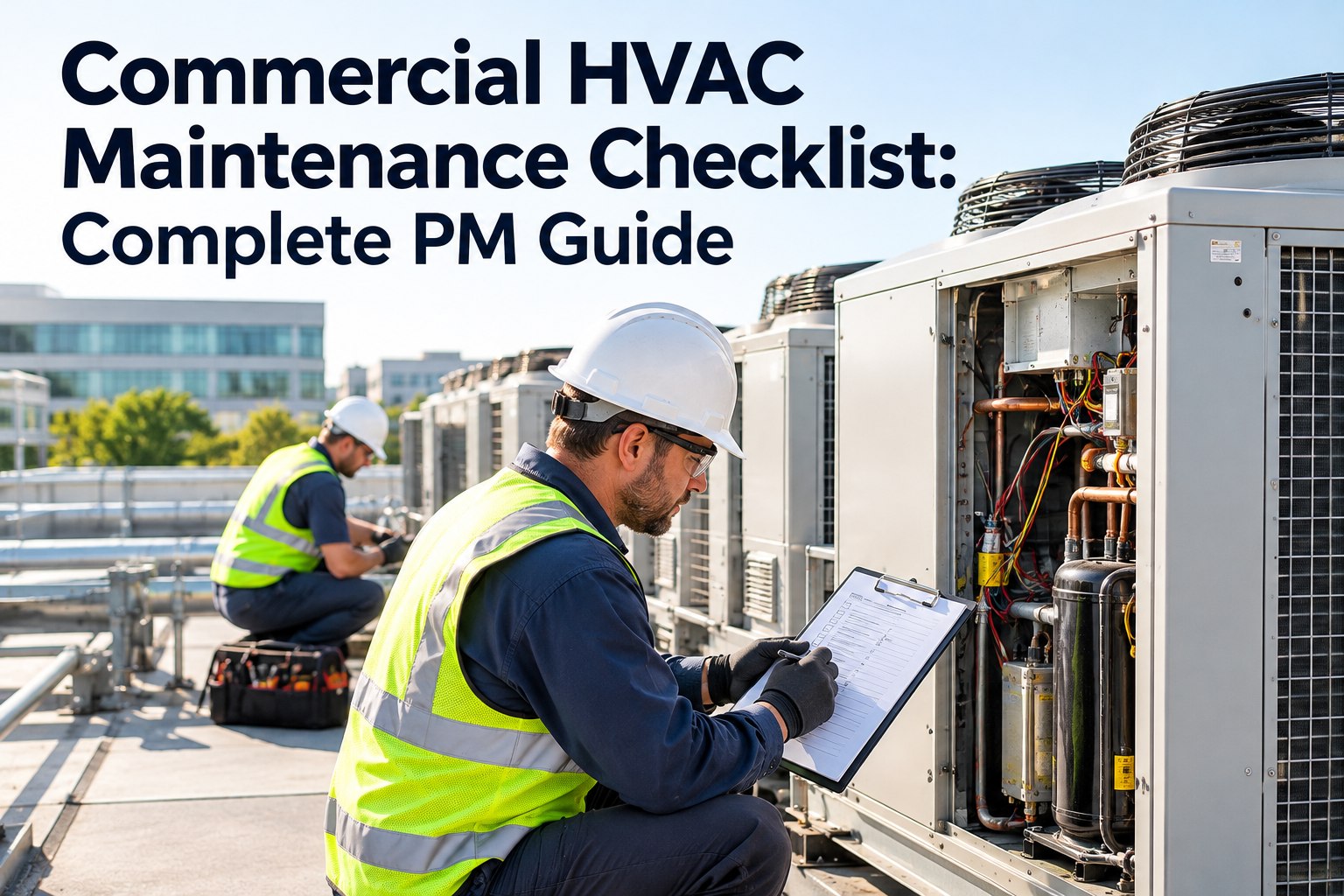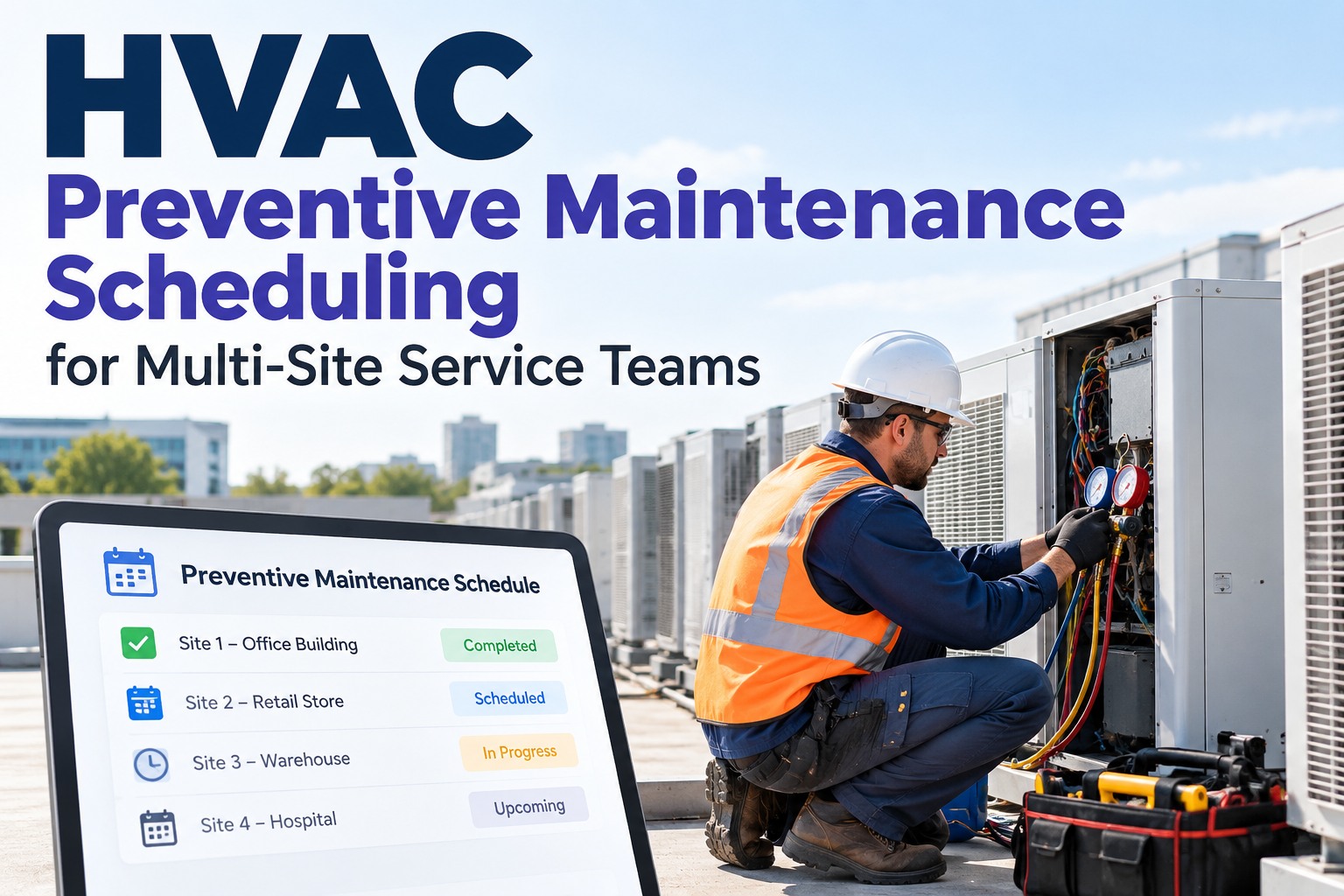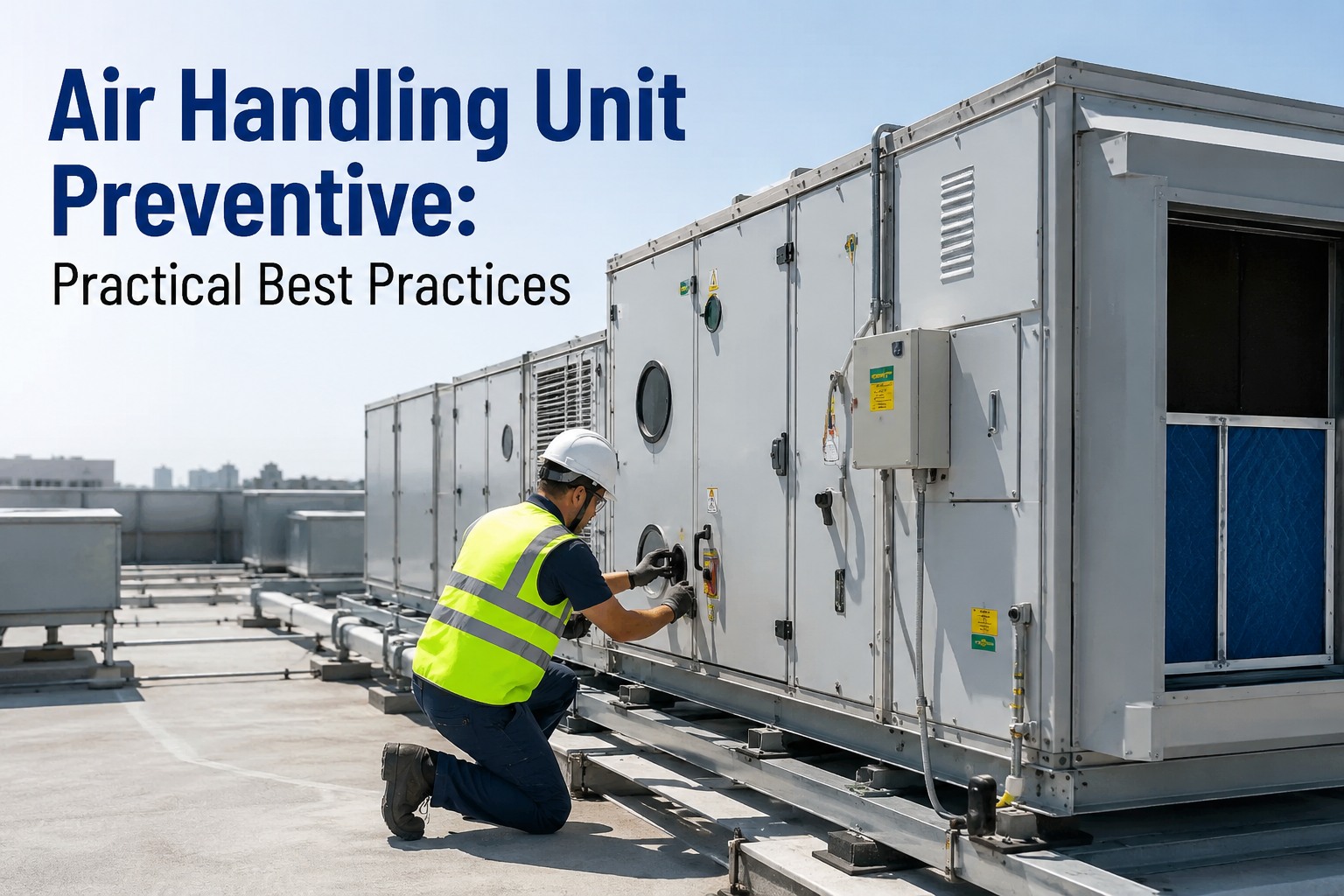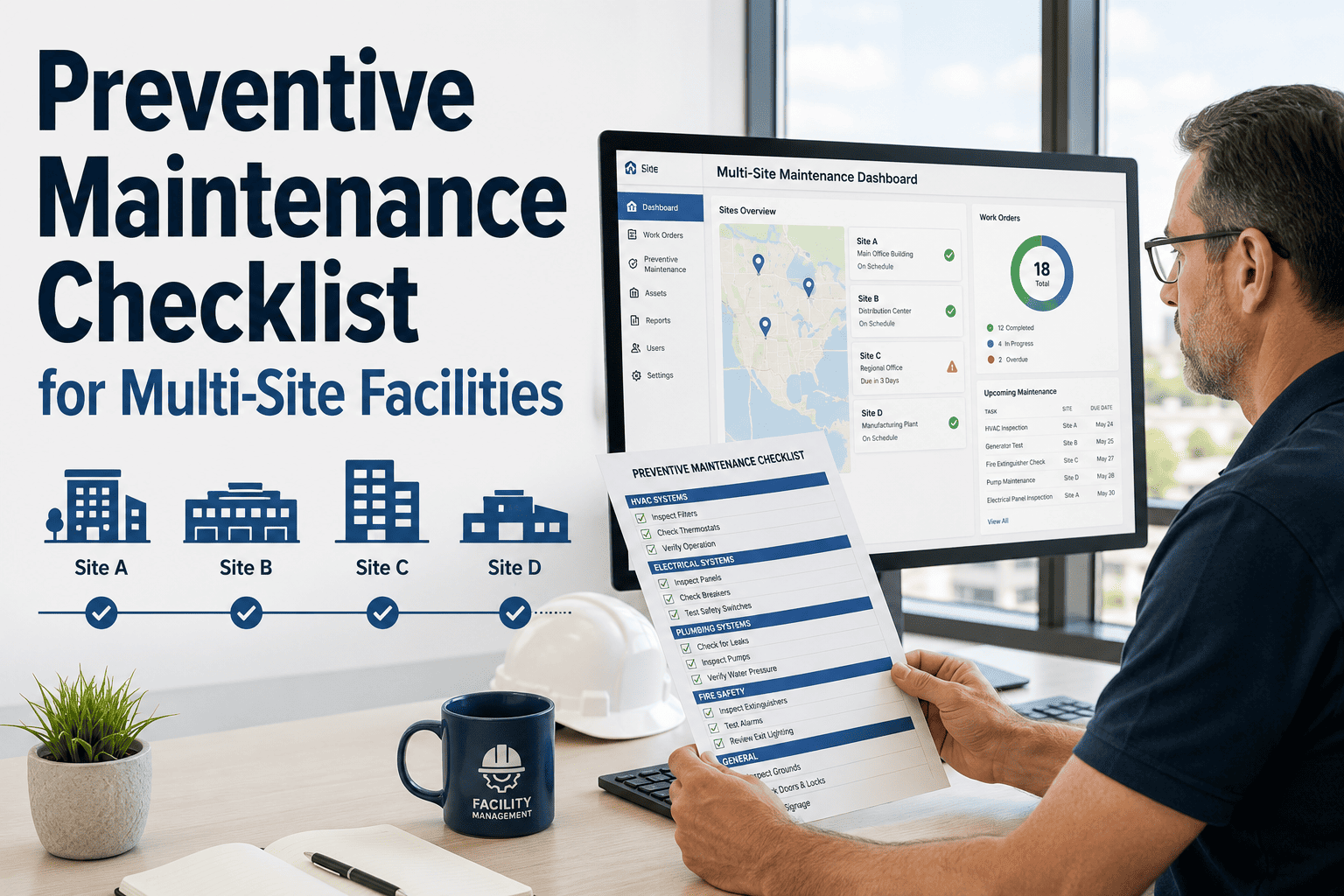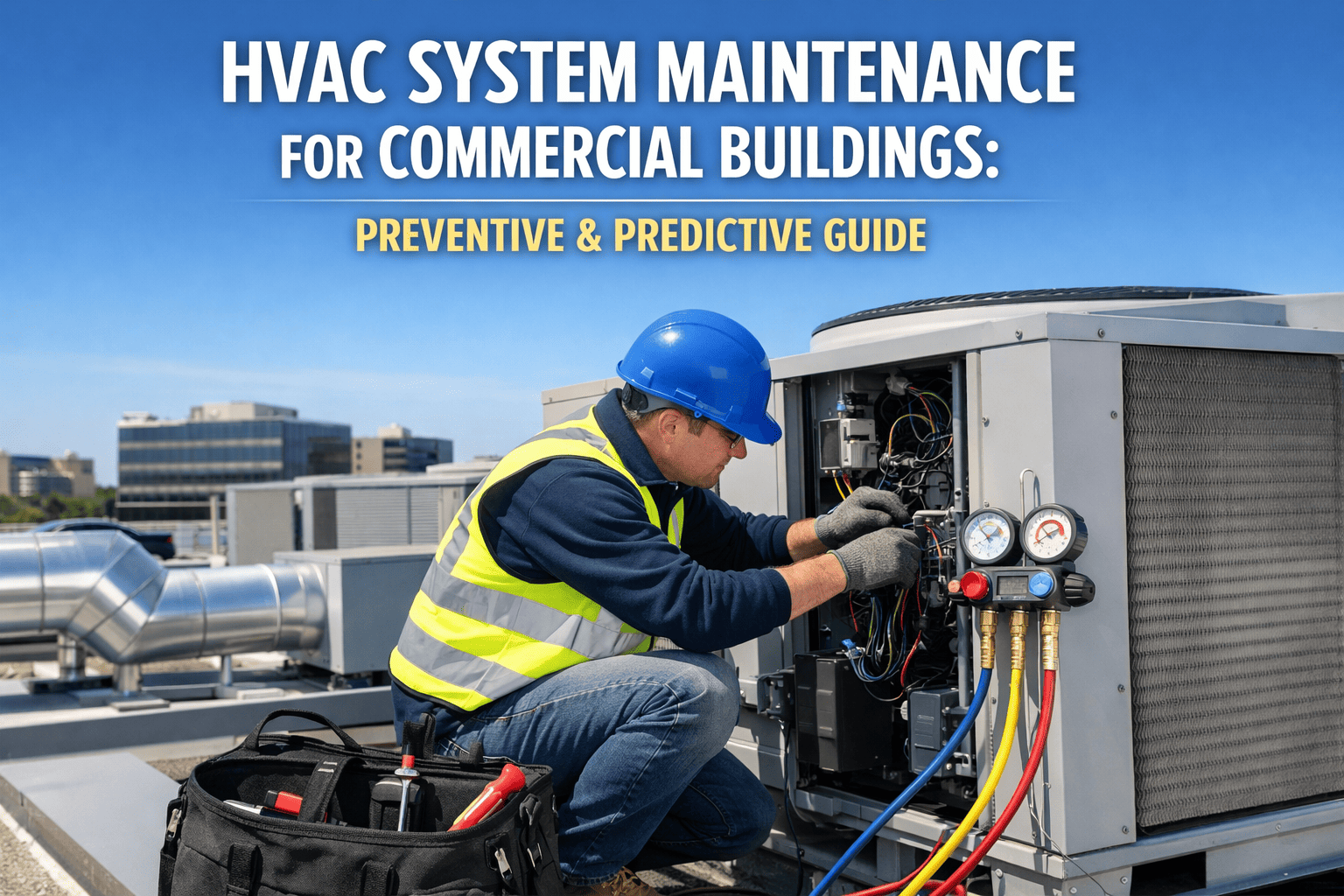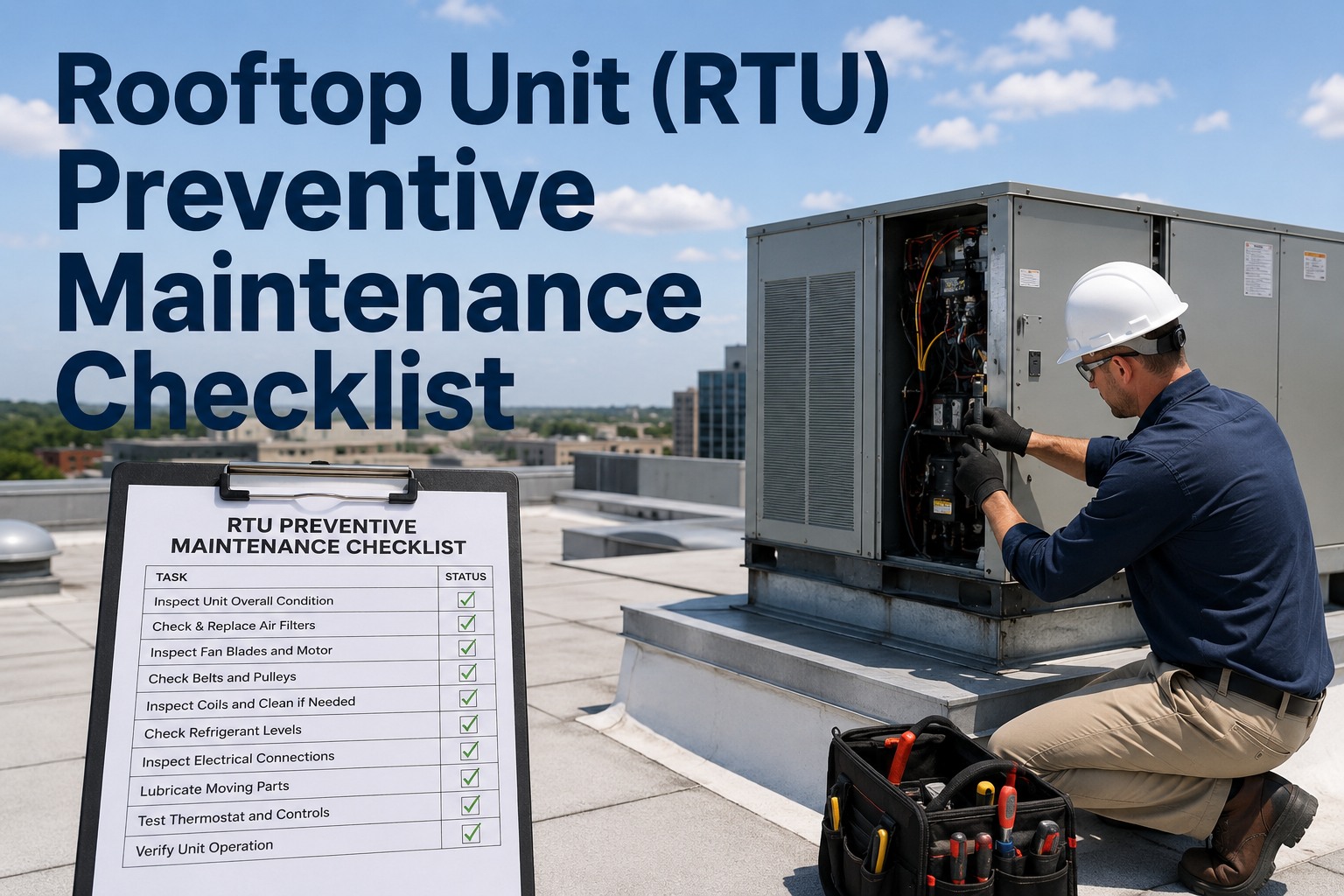
A rooftop unit (RTU) preventive maintenance checklist is the structured set of seasonal inspection, cleaning, and component-replacement tasks required to keep commercial HVAC systems running efficiently, reliably, and in compliance with manufacturer warranties. RTU maintenance typically covers air filters, evaporator and condenser coils, fan belts, economizers, and electrical connections across a seasonal schedule. Managing this preventive maintenance across a portfolio of commercial buildings is far easier with a centralized CMMS like OxMaint, which automates RTU PM scheduling, tracks parts inventory, and ensures no rooftop unit falls behind on its required maintenance. You can Start Free Trial today to digitize your entire RTU maintenance program.
A complete RTU maintenance checklist for commercial HVAC reliability
Stay ahead of seasonal failures with a CMMS-driven rooftop unit inspection program. Track filter changes, coil cleaning, belt replacements, and economizer calibrations across every building in your portfolio — no missed PMs, no wasted energy, no tenant complaints.
Cooling-season rooftop AC maintenance tasks
Before peak cooling demand hits, RTU preventive maintenance should focus on heat-rejection components and refrigerant circuits. Dirty condenser coils alone can raise HVAC energy consumption by up to 30% and shorten compressor life. Use this tiered checklist grid to standardize your commercial RTU maintenance for every rooftop unit.
Condenser Coil Cleaning
Remove debris, wash coils with approved cleaner, and straighten fins. A clean condenser coil reduces head pressure and can cut compressor energy draw by 15–20%.
- Inspect for dirt, pollen, and debris
- Apply non-acid coil cleaner, rinse thoroughly
- Comb bent fins; verify airflow clearance
Refrigerant Charge & Pressures
Check subcooling and superheat against manufacturer specs. Low charge reduces cooling capacity by up to 25% and risks compressor overheating.
- Connect gauges, record suction & liquid pressures
- Verify subcooling / superheat targets
- Inspect for oil stains indicating leaks
Electrical & Controls
Tighten terminals, inspect contactors, and verify operation of all safeties. Loose connections cause voltage drops, overheating, and unexpected rooftop unit failures.
- Check contactor pitting and replace if worn
- Torque all electrical connections to spec
- Test high/low-pressure safety switches
Heating-season rooftop unit inspection essentials
Heating-season RTU PM shifts focus to combustion, heat exchangers, and economizer lockout. Cracked heat exchangers and failed igniters are among the top causes of winter no-heat calls — exactly when tenant comfort complaints spike and emergency repair premiums apply.
Heat Exchanger & Burners
Inspect for cracks, soot, and flame-rollout signs. A cracked heat exchanger can leak carbon monoxide into the supply air, creating life-safety and liability risks. Clean burners, verify flame pattern, and test the flame rectification circuit.
Economizer Maintenance & Lockout
Set the economizer to heating lockout, lubricate damper linkages, and verify the mixed-air sensor. A malfunctioning economizer that stays open in winter can increase heating costs by 20–40% and freeze coils.
Ignition & Gas Train
Inspect the hot-surface igniter or spark ignition system, gas valve operation, and manifold pressure. Verify the flame sensor draws a stable microamp signal — weak flame signals are a leading cause of intermittent heating lockouts.
Filters & Evaporator Coil
Replace air filters (MERV 8–13 per design spec) and inspect the evaporator coil for biological growth. A clogged filter reduces airflow across the heat exchanger, increasing limit-switch tripping and energy waste.
Complete RTU PM checklist table by component
Use this comprehensive RTU maintenance schedule table to assign task frequencies and track compliance. OxMaint digitizes this entire checklist, auto-generating work orders at each interval so nothing is missed across your building portfolio.
| Component | Maintenance Task | Frequency | Key Benefit |
|---|---|---|---|
| Air Filters | Inspect and replace pleated or bag filters | Monthly to Quarterly | Maintains airflow, lowers fan energy |
| Evaporator Coil | Clean coil, clear drain pan & trap | Bi-annually | Prevents freezing and water damage |
| Condenser Coil | Wash, degrease, and straighten fins | Spring & Mid-Summer | Reduces head pressure, saves energy |
| Belts & Sheaves | Check tension, alignment; replace worn belts | Quarterly | Restores airflow, prevents slippage |
| Economizer | Calibrate sensors, lubricate dampers | Seasonally | Enables free cooling, reduces run-time |
| Motors & Bearings | Lubricate, check amperage & vibration | Bi-annually | Extends motor life, reduces failure |
| Refrigerant Circuit | Verify charge, check superheat/subcooling | Spring | Protects compressor, maintains capacity |
| Heat Exchanger | Visually inspect for cracks & soot | Fall | Life-safety, prevents CO leaks |
Stop chasing paper RTU checklists on the roof
See how OxMaint's AI-powered CMMS automates your rooftop unit PM schedule, guarantees compliance, and eliminates missed maintenance.
What a missed RTU PM actually costs your facility
Deferred rooftop HVAC maintenance compounds quickly. A single dirty coil or slipping belt can increase energy consumption, trigger emergency repair calls, and void manufacturer warranties. Consider a real-world scenario: a 180-asset retail portfolio spending $42K annually on reactive HVAC service and filter replacements.
By migrating to OxMaint's CMMS-driven RTU PM program, that same 180-asset portfolio automated filter-change work orders based on run-hours, rather than calendar dates alone. The result: a 28% drop in unplanned cooling breakdowns in the first year, $11.6K in emergency repair cost avoidance, and full compliance documentation ready for every energy audit and warranty claim.
How OxMaint powers your commercial RTU maintenance program
OxMaint replaces clipboards and spreadsheets with a centralized, AI-powered CMMS built for maintenance and reliability teams. From automated work-order generation to predictive analytics, OxMaint ensures every rooftop unit gets the right PM at the right time.
Automated PM Scheduling
Pre-loaded RTU PM libraries trigger work orders automatically based on run-hours, seasonal triggers, or calendar intervals. Ensures 100% PM compliance and eliminates the risk of missed filter changes or coil cleanings across your portfolio.
Mobile Roof Access Execution
Technicians receive digital RTU checklists directly on their mobile devices — with photo attachments, part usage logging, and digital sign-off. Eliminates paper work orders and forces step-by-step checklist completion before a PM can be closed.
Spare Parts & Inventory Tracking
Track belt sizes, filter dimensions, and refrigerant stock by unit. OxMaint auto-decrements inventory on work-order completion and alerts you when spare parts hit minimum thresholds — preventing delayed rooftop AC maintenance due to missing filters.
Maintenance Analytics & Audit Logs
Asset-level dashboards reveal cost-per-unit, MTBF, and energy trends. Exportable audit logs prove PM compliance for manufacturer warranties, ISO 55000 alignment, and tenant SLA requirements with one click.
RTU preventive maintenance FAQs
How often should commercial rooftop units have preventive maintenance?
Most commercial RTUs require quarterly preventive maintenance at minimum, with major inspections scheduled in the spring (cooling prep) and fall (heating prep). Filter changes may be needed monthly depending on the environment and MERV rating. OxMaint automates this scheduling, triggering work orders based on calendar dates, run-hours, or seasonal changes to ensure no unit is skipped.
What is included in an RTU preventive maintenance checklist?
A standard RTU PM checklist includes inspecting and replacing air filters, cleaning evaporator and condenser coils, checking belt tension and motor amperage, calibrating economizer dampers and sensors, verifying refrigerant charge, and tightening electrical connections. OxMaint provides pre-built RTU PM libraries that digitize this entire checklist for your technicians.
How does economizer maintenance impact RTU energy efficiency?
A properly functioning economizer can provide free cooling using outside air, reducing compressor energy consumption by 20–40% during mild weather. However, a malfunctioning economizer that is stuck open or closed can waste significant energy or freeze coils. Economizer maintenance should be performed seasonally to verify sensor accuracy and damper operation.
Can a CMMS help track rooftop unit maintenance across multiple buildings?
Yes. A CMMS like OxMaint centralizes asset data, PM schedules, and work-order history for every rooftop unit across your entire portfolio. Facility managers gain real-time visibility into compliance rates, upcoming PMs, and cost-per-unit. You can Start Free Trial to map your assets today, or Book a Demo to see the portfolio dashboard in action.
Why is coil cleaning important in rooftop HVAC maintenance?
Dirty condenser coils restrict heat rejection, raising head pressure and forcing the compressor to work harder — increasing energy consumption by up to 30% and shortening equipment life. Regular coil cleaning restores rated capacity, lowers operating costs, and is one of the fastest-payback tasks on any RTU PM checklist.
Standardize your RTU PM program today
Join the maintenance teams using OxMaint to prevent rooftop HVAC failures, cut energy waste, and prove compliance across every property.
Free 14-day trial · No credit card