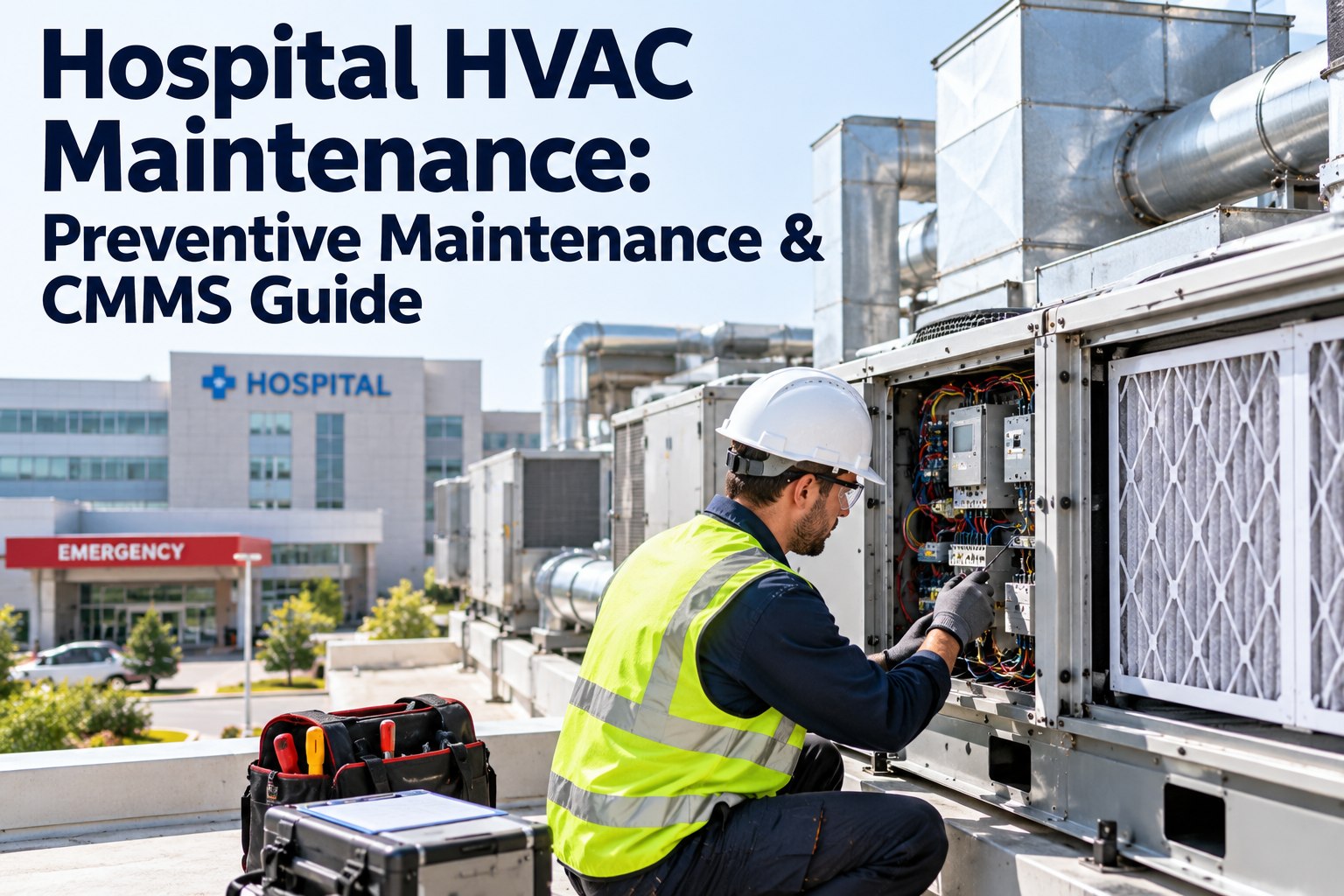
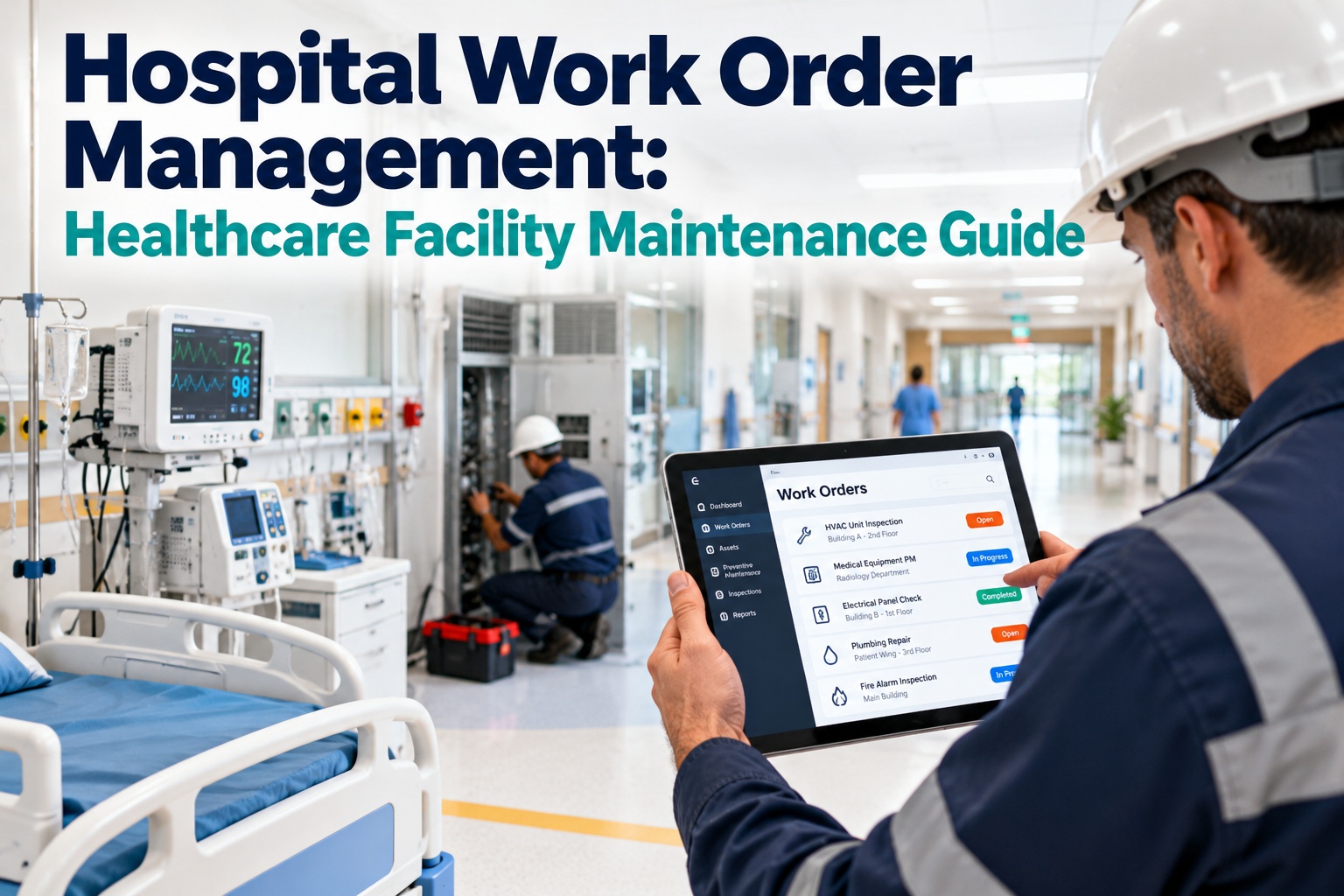
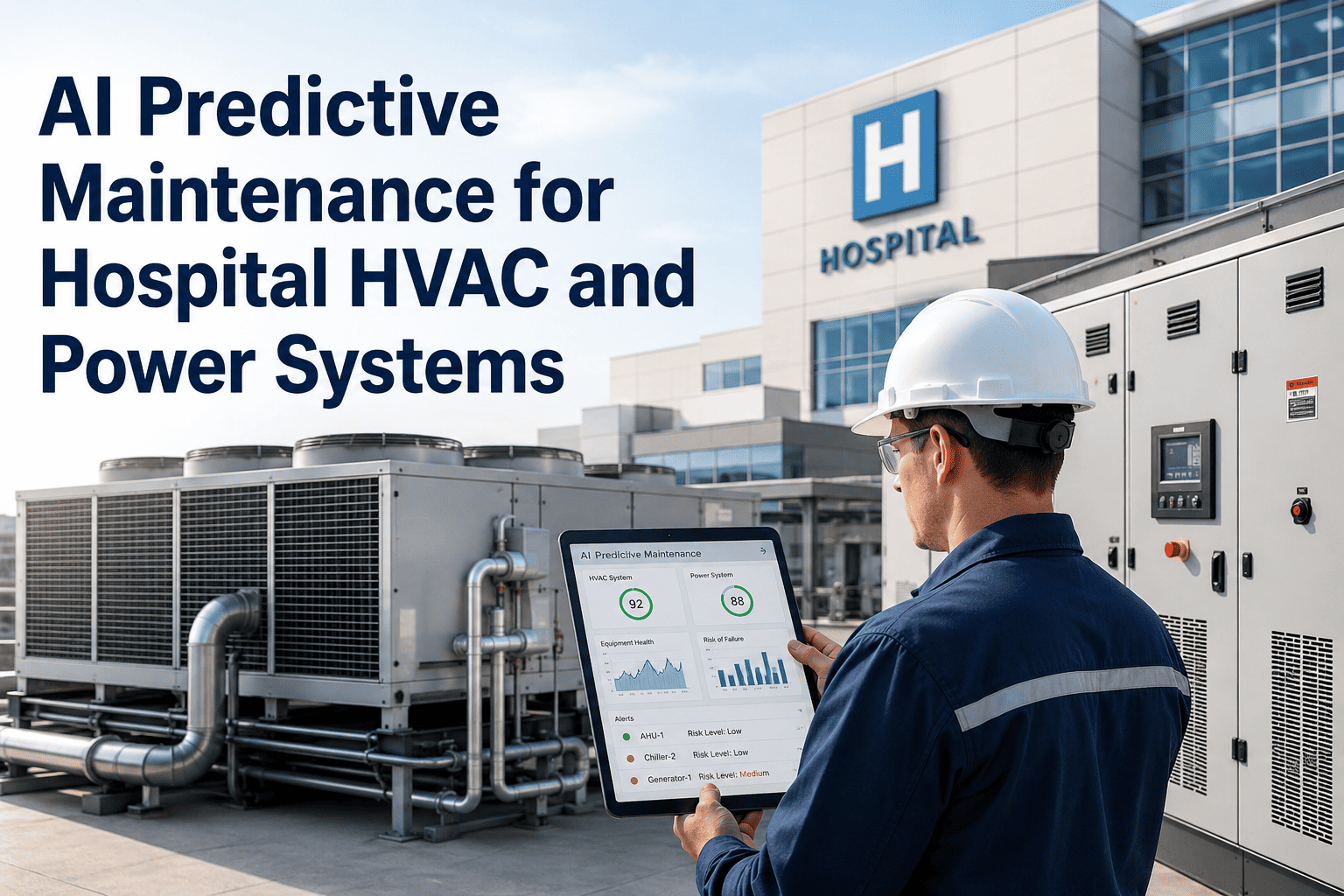
In a hospital, HVAC does more than keep rooms cool. It holds the pressure that keeps infectious air inside an isolation room, the filtration that protects a patient with a weak immune system, and the air changes that keep an operating room clean. This guide explains hospital HVAC maintenance: what each room type needs, a preventive maintenance calendar, an inspection checklist and how to run it all through a CMMS. OXMAINT AI is the AI-powered maintenance management software that keeps the schedule, the readings and the work orders in one place.
Healthcare Facility Maintenance · Hospital HVAC
Hospital HVAC Maintenance: Preventive Maintenance and CMMS Guide
Clean air in a hospital is a pressure map. Operating rooms push air out, isolation rooms pull air in, and one failed fan or clogged filter can reverse the flow. Maintain the system by room risk, record every reading and fix alarms fast. OXMAINT AI, the AI-powered maintenance management software, runs that routine.
Air moves from higher to lower pressure. Values summarize published guidance, and your design drawings rule.
0.01 in. WC
about 2.5 Pa, the pressure difference CDC cites for isolation and protective rooms
12 ACH
air changes per hour for protective rooms and new isolation rooms, CDC
20 ACH
total air changes for an operating room in a summary of ASHRAE 170, 4 or more outdoor
Daily
CDC prefers daily pressure checks on isolation rooms
Maintain by Room Risk, Not by Machine Age
The same air handler can serve a waiting room and an operating room, but a failure matters very differently in each. Start by ranking spaces by what a failure would cost a patient, then set the maintenance and monitoring effort to match. Start free and tag every space with its risk level.
OPERATING ROOM
20
total ACH, 4+ outdoor
Positive pressure
Check: filter status, pressure to corridor, temperature and humidity
ISOLATION ROOM
12
ACH, new rooms
Negative pressure
Check: continuous monitor, alarm, exhaust path, door seals
Sources: CDC environmental infection control guidelines (2003, with 2017 edits) and a summary of ASHRAE 170. Check the edition your jurisdiction adopts.
A Preventive Maintenance Calendar That Matches the Risk
Only the daily pressure check is set by the CDC guidance cited here. The rest of this calendar is general practice that you should adjust to the manufacturer's manuals and your facility's own policy. Book a demo to load the calendar by asset and room.
DAILY
Read pressure in isolation and protective rooms
Check alarms and visual indicators
WEEKLY
Walk plant rooms for leaks and noise
Test alarm lights and buzzers
MONTHLY
Read filter resistance and replace by reading
Check drain pans, belts and fans
QUARTERLY
Clean coils and check dampers
Inspect humidifiers and controls
ANNUAL
Test and balance air changes
Leak test HEPA filters, review ducts and cooling tower
A Missed Check Is a Patient Risk.
OXMAINT AI schedules every round by room type and flags the ones that slip.
This walkthrough follows the CDC's air-handling recommendations. Tick an item only when you've seen the evidence, and photograph or record the reading. Start free and use it as a digital inspection.
Isolation, protective and operating rooms come first.
3
Assign
Name the technician and the due time.
4
Fix
Repair, record parts and photos.
5
Verify
Confirm the reading, then close.
What Hospital HVAC Maintenance Software Must Do
We don't rank brands, because the best CMMS for a hospital is the one that proves each room was checked. Test any system on these five points. Start free and test them on your own plant.
1Does it schedule tasks by room type and risk level?
2Can technicians record readings on a phone, on the spot?
3Does an out-of-range reading become a work order?
4Can it show a surveyor the full history in minutes?
5Does it track filters, spares and vendor visits?
PLAN
Calendar by risk
Daily to annual tasks, matched to each room type.
RECORD
Readings on every round
Pressure, filters and humidity logged against the asset.
RESPOND
Alerts to work orders
Each deviation gets an owner and a verified close.
EXPERT REVIEW · HEALTHCARE FACILITIES LENS
Air change rates, pressure targets and filter grades depend on your design, the edition of the standard your authority adopts and your infection prevention team. Treat the figures on this page as orientation, confirm them against your own drawings and policies, and involve infection control before any shutdown or change.
Frequently Asked Questions
What is hospital HVAC preventive maintenance?
It is a planned routine of inspections, filter changes, readings and tests that keeps air handlers, fans, coils and controls working before they fail. In a hospital it is tied to room risk, so isolation, protective and operating rooms get the closest attention. Start free and plan it.
What pressure and air changes do hospital rooms need?
CDC guidance cites a 0.01 in. water gauge difference, about 2.5 Pa, for isolation and protective rooms, with 12 air changes per hour for protective rooms and new isolation rooms. A summary of ASHRAE 170 lists 20 total for operating rooms. Confirm yours against your design. Book a demo to record them.
How often should isolation room pressure be checked?
The CDC recommends monitoring air pressure periodically, preferably daily, in airborne infection isolation rooms. A summary of ASHRAE 170 also advises continuous monitoring with a local alarm when negative pressure is lost, which is more reliable than occasional spot checks. Start free and log each check.
What should hospital HVAC maintenance software include?
Look for scheduling by room type, mobile readings, automatic work orders from out-of-range values, filter and spare tracking, and a searchable history for surveys. The software should show which spaces are most at risk, so that limited technician time goes where a failure would matter most. Book a demo to compare.
How does HVAC maintenance affect hospital air quality?
Clean, well-sealed filters, controlled humidity, correct intake and exhaust placement and steady pressure all shape indoor air quality. CDC guidance covers each of these. When maintenance slips, dust loads, leaks and humidity swings can quickly undermine the protection the design was built to give. Start free and track filters.
Keep the Air Safe. Prove It.
Schedule every round, log every reading and close every alarm in OXMAINT AI, so your hospital HVAC record is ready before the surveyor asks.