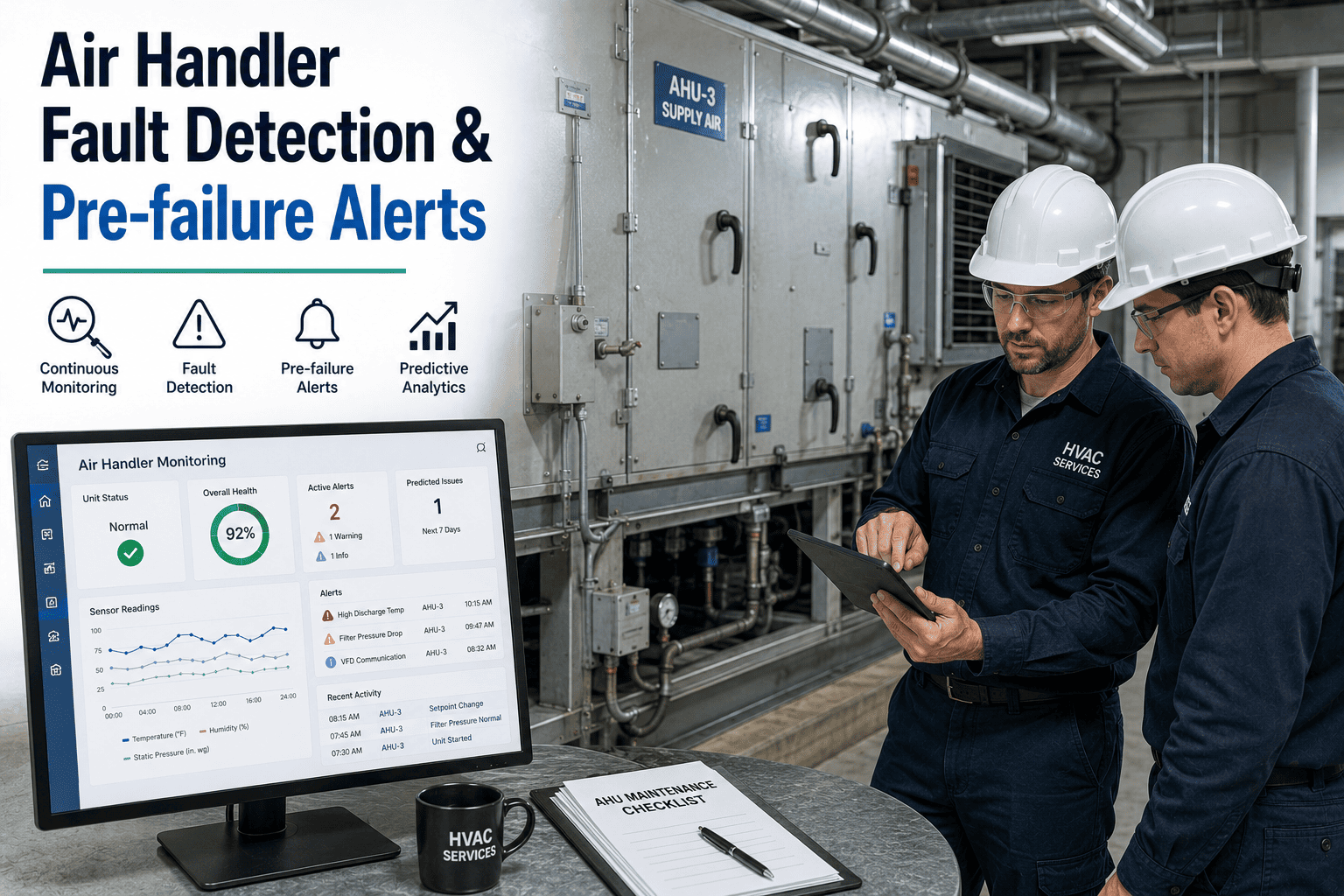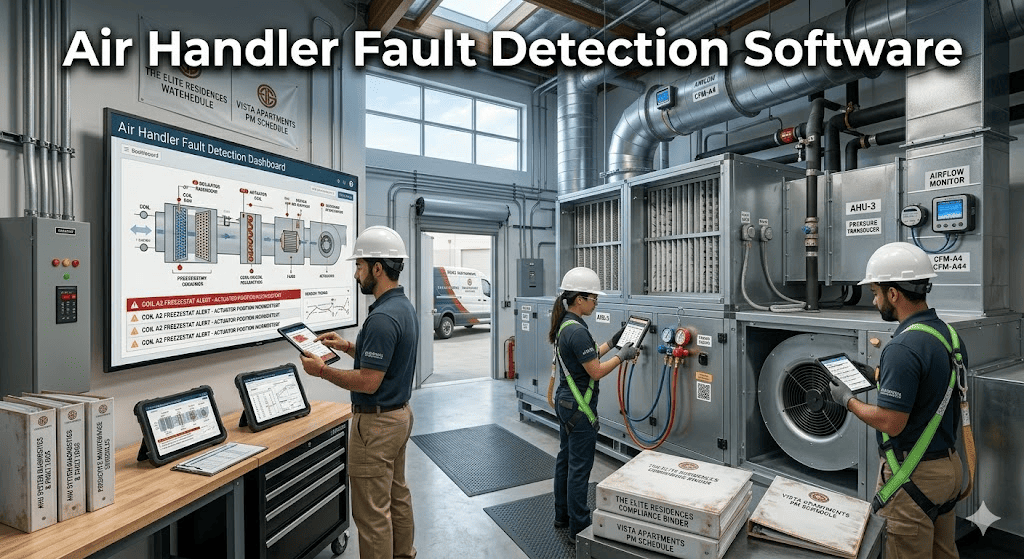
Air handling units are among the most complex and failure-prone assets in any commercial building — integrating fans, coils, filters, dampers, heating elements, humidifiers, and control systems into a single unit that operates continuously across extreme seasonal demand swings. When an AHU begins to fail, the early signals — a 3% drop in supply air temperature, a slight increase in static pressure across a fouled filter bank, an intermittent damper actuator fault — are invisible to any maintenance team not using structured fault detection software. By the time occupant comfort complaints arrive, the AHU has typically been operating in a degraded state for weeks or months, accumulating energy waste, accelerating component wear, and building toward a failure that will cost 8-15x more than early intervention would have. OxMaint's air handler fault detection software gives HVAC maintenance teams automated performance monitoring, configurable fault alert rules, and diagnostic work order routing — so problems are found before they become failures.
See Your AHU Fault Risk Profile — 30-Minute Walkthrough
See how much cost you can eliminate from undetected air handler performance degradation across your building portfolio.
Works across multi-building portfolios · No heavy BAS integration required · Live in days
What Is Air Handler Fault Detection Software?
Air handler fault detection software is a CMMS or building analytics platform that monitors AHU performance parameters — supply air temperature, return air temperature, static pressure, damper position, filter differential pressure, fan current draw, and coil approach temperature — against expected operating baselines and generates alerts when measured values drift outside normal ranges. Unlike manual inspections that capture a point-in-time snapshot, fault detection software watches AHU behavior continuously, identifying degradation trends that would be invisible to even the most attentive technician on a monthly inspection schedule.
For building operations teams managing multiple AHUs across a commercial or institutional portfolio, fault detection converts air handler maintenance from a scheduled-inspection discipline into a continuous-monitoring discipline — catching the stuck economizer damper that is wasting $800 per month in heating energy, the fouled cooling coil that is reducing capacity by 18%, or the fan belt that is running at 85% of design speed before any of them generate occupant complaints or emergency call-outs. Start a free trial to configure your first AHU fault monitoring rules in OxMaint, or book a demo for a live walkthrough of the AHU diagnostics module.
8 Most Common Air Handler Faults Fault Detection Software Catches Early
Filter differential pressure rising above design threshold signals fouling that reduces airflow, increases fan energy consumption, and — if uncorrected — causes fan motor overload. Detected via pressure sensor reading vs. baseline; corrective PM work order generated automatically at threshold breach.
A fouled evaporator coil shows a rising approach temperature differential — the gap between refrigerant saturation temperature and leaving air temperature widens as fouling insulates the heat exchange surface. Early detection allows coil cleaning during scheduled PM, avoiding the compressor overload failure that follows uncorrected fouling.
An economizer damper stuck in the closed position on a mild day wastes mechanical cooling energy on free-cooling that should be available. Stuck open in winter introduces uncontrolled cold air infiltration and heating load. Both conditions are detectable by comparing outdoor air fraction to setpoint — and both waste significant energy undetected for months in calendar-PM systems.
A heating coil valve stuck open during cooling season results in simultaneous heating and cooling — one of the most expensive AHU fault conditions, consuming both heating and cooling energy to maintain setpoint. Supply air temperature trending above setpoint during summer operation is a reliable diagnostic signal detectable without BAS access.
A worn fan belt produces measurable supply airflow reduction at constant motor current — the fan is drawing the same power but delivering less air due to belt slip. Detection via supply air static pressure trend against fan current ratio identifies belt wear before belt failure causes total supply air loss and occupant complaints across the served zones.
Slow refrigerant leaks reduce cooling capacity incrementally — 5-8% capacity loss per 10% charge reduction — producing a rising supply air temperature trend during peak cooling that is detectable weeks before occupants notice. Early identification allows leak location and repair before compressor damage occurs from operating at low charge under high-ambient conditions.
A blocked condensate drain produces standing water in the AHU drain pan, then water overflow into the air stream — distributing mould spores through occupied zones and potentially causing ceiling and electrical damage below the unit. Drain pan water level monitoring or overflow sensor integration catches blockages before overflow occurs.
Rising motor current at constant load indicates increasing mechanical resistance — typically from bearing degradation or winding insulation breakdown. Current trend monitoring catches motor deterioration 4-8 weeks before the bearing seizure or winding failure that causes complete fan motor replacement, ductwork cleaning, and extended building downtime.
4 Pain Points That Keep AHU Faults Hidden Until They Become Failures
A technician inspecting an AHU on the first Tuesday of each month captures a 20-minute snapshot of performance — and cannot detect a coil fouling trend that develops over 6 weeks, a refrigerant leak that loses 2% charge per month, or an economizer damper that stuck open 10 days after the last PM visit. Calendar-only maintenance is structurally blind to the continuous performance degradation that precedes most AHU failures.
Building automation systems generate alarms when a parameter reaches a hard threshold — supply air temperature above 80°F, fan motor tripped — not when it begins trending toward that threshold. A BAS alarm is a notification that a failure has occurred or is imminent. Fault detection software identifies the trend weeks earlier, when intervention is still low-cost and non-disruptive.
Fault detection requires a performance baseline — what does this AHU's supply air temperature look like on a 75°F day at 70% occupancy? Without a CMMS that builds performance baselines from structured inspection data and sensor readings over time, there is no reference point against which to measure drift. Most building operations teams have work order history but no performance baseline — making fault detection impossible.
A building operations team managing 20-50 AHUs across multiple buildings cannot manually track performance trends on each unit — the monitoring workload exceeds available technician bandwidth by a factor of 5-10x. Without automation, the practical result is that monitoring capacity is allocated to the largest and most visible units, while smaller or less critical AHUs drift silently toward failure unobserved.
Buildings that implement structured AHU fault detection with OxMaint see 40% fewer emergency HVAC call-outs and recover 15-22% of their HVAC energy waste within 6 months — start a free trial to configure your first AHU monitoring rules today.
How OxMaint Delivers Air Handler Fault Detection
Define fault thresholds for each AHU parameter — filter differential pressure, supply air temperature deviation, motor current anomaly, condensate overflow — with alert severity levels (warning vs. critical) and automatic work order routing when thresholds are breached.
Every OxMaint AHU inspection checklist captures readings that build a performance baseline over time — supply temperature, filter pressure, motor current, coil approach temperature. This baseline enables trend-based fault detection without a full IoT sensor deployment.
When a fault alert fires, OxMaint generates a pre-populated diagnostic work order linked to the specific AHU — with the fault description, affected parameter, last inspection readings, and asset history pre-loaded for the attending technician. First-time fix rates improve because technicians arrive with context.
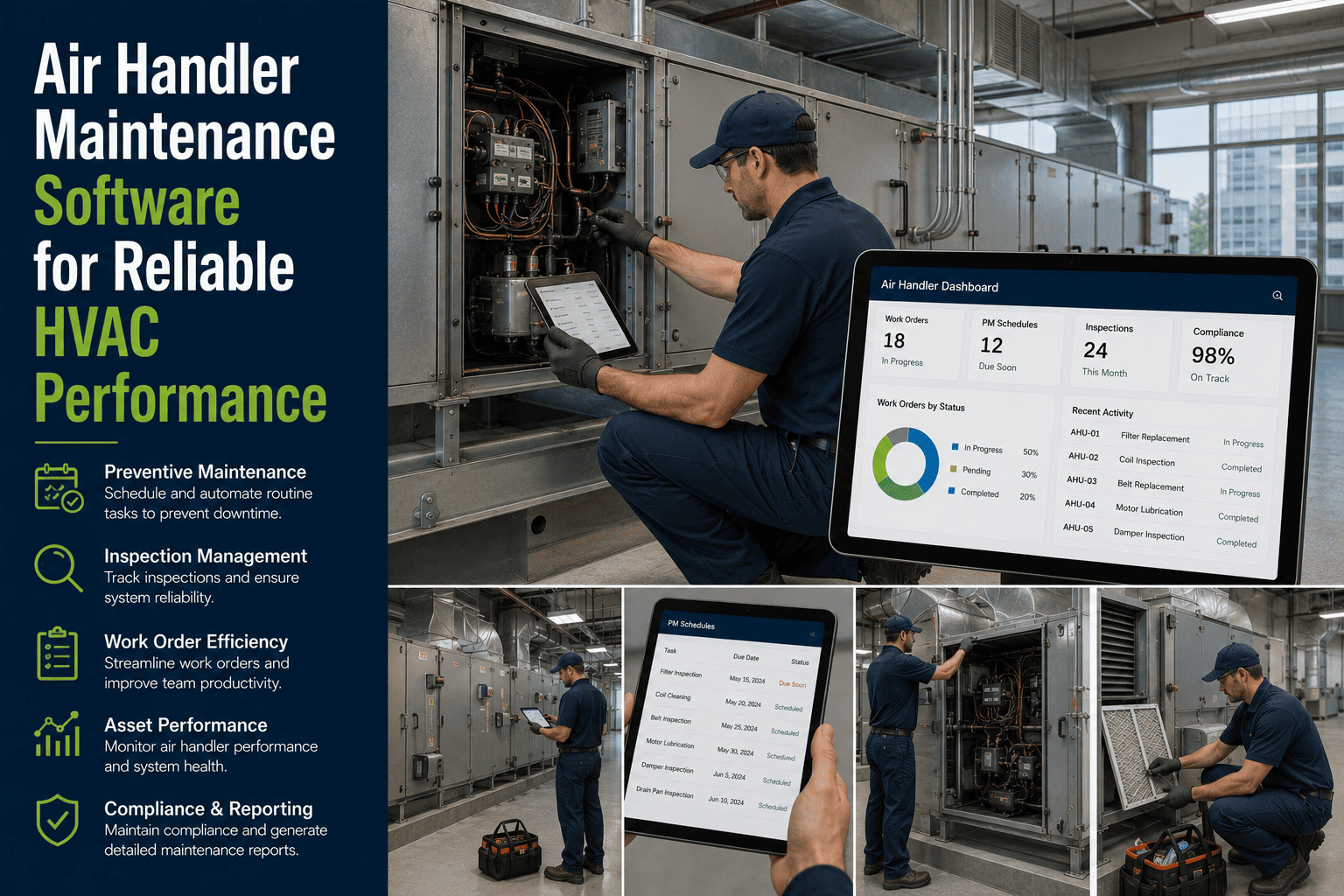
Facilities managers see real-time fault status, alert history, and PM compliance for all AHUs across all buildings in a single dashboard — with RAG status per unit and portfolio-level trend summaries that identify systemic issues across similar equipment types or building vintages.
Calendar PM Alone vs. OxMaint AHU Fault Detection
| Maintenance Capability | Calendar PM Only | OxMaint Fault Detection |
|---|---|---|
| Fault Visibility Window | Point-in-time snapshot monthly | Continuous trend monitoring between PM visits |
| Early Warning Lead Time | Zero — failure discovered at next PM or by occupant complaint | 30-90 days before failure — intervention while low-cost |
| Energy Waste Detection | Not detectable without continuous monitoring | Economizer, coil, and damper fault alerts cut waste 15-22% |
| Work Order Routing | Manual — technician writes up defect on next visit | Auto work order on alert with full asset context pre-loaded |
| Multi-AHU Monitoring | Capacity-limited — smaller units go unwatched | All AHUs monitored simultaneously regardless of size |
| Emergency Call-Out Rate | High — faults compound to failures between visits | 40% reduction in emergency HVAC call-outs |
Building operations teams that implement OxMaint AHU fault detection see measurable emergency call-out reduction within the first 90 days — start a free trial to configure your first AHU fault rules today, or book a demo for a live walkthrough of the air handler diagnostics module.
Frequently Asked Questions
Does OxMaint AHU fault detection require BAS or IoT sensor integration?
What AHU parameters can OxMaint monitor for fault conditions?
How does OxMaint help identify which AHU faults are causing energy waste?
Can OxMaint manage AHU fault detection across a mixed portfolio of building vintages and AHU types?
Stop Waiting for Occupant Complaints to Discover AHU Problems
Detect Air Handler Faults 30-90 Days Before They Become Failures — and Save 15x the Intervention Cost
OxMaint's air handler fault detection software monitors AHU performance continuously, routes diagnostic work orders automatically, and gives building operations teams the early warning lead time that calendar PM alone can never provide.
- Continuous AHU performance monitoring without full IoT deployment
- Automated fault alert routing to technicians with full asset context
- Portfolio AHU health dashboard across all buildings in real time
Used by HVAC operations teams managing 10,000+ assets · 6-month ROI payback