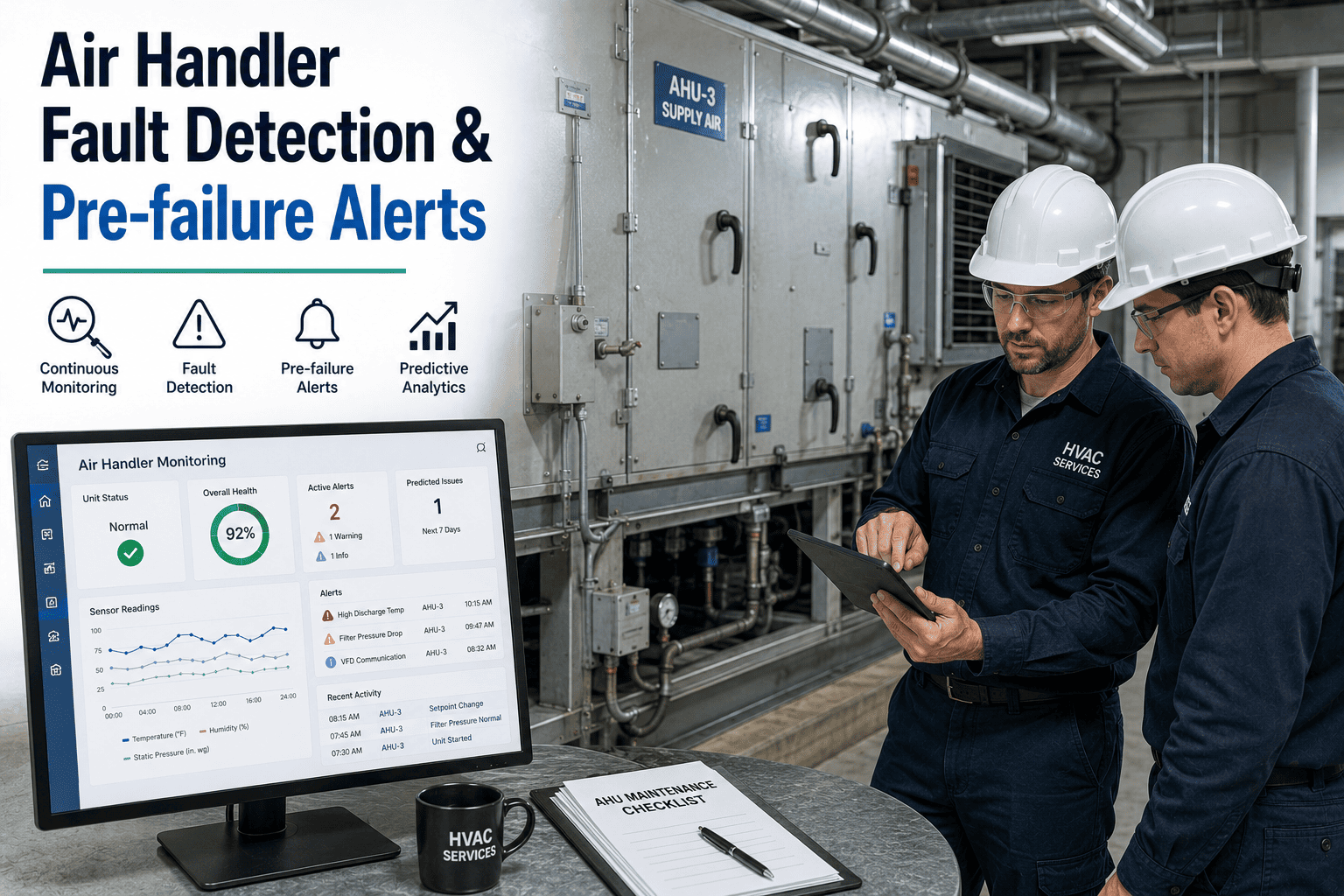
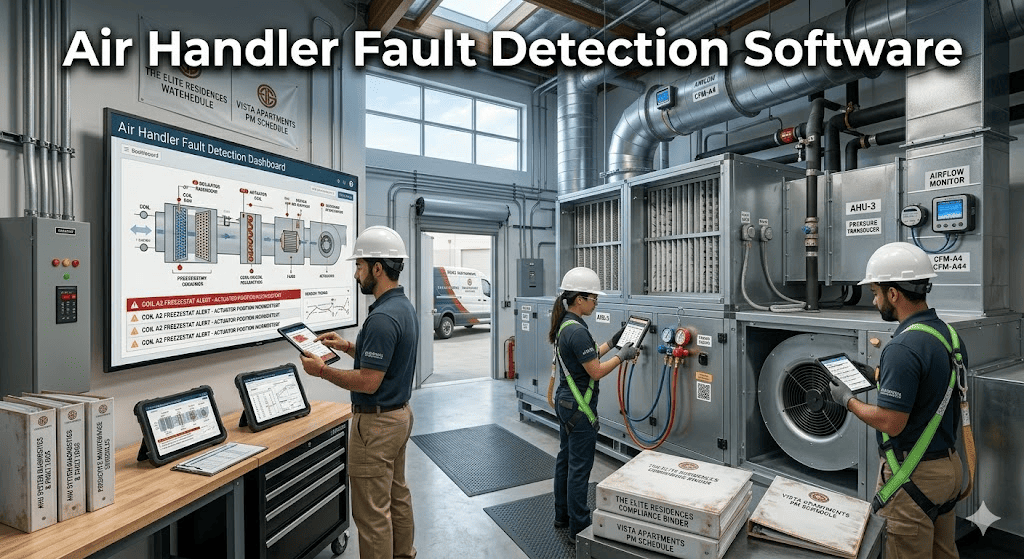
In a commercial air handler, a developing fault leaves a signal trail for 14-30 days before the unit actually fails — but only if the operator is reading the trail. Vibration drift on the supply fan bearing, amperage creep on the compressor, refrigerant subcool falling out of band, chilled-water valve hunting, return-to-supply temperature delta narrowing — each one is a 30-day early warning sign that something is moving toward failure. The plants that read these signals catch faults 2-4 weeks before they take a unit offline. The plants that do not, discover the fault when a tenant calls in 78°F air at 14:00 on a Tuesday, the compressor seized at 02:30, and the replacement quote is three weeks out. Oxmaint Predictive Maintenance, layered on PLC/IoT Integration, Work Order Management, and Analytics & Reporting, reads six fault signatures continuously per air handler and triggers a corrective WO inside the 14-30 day window. Book a demo to see fault detection mapped on your air handlers.
CATCH FAULTS 14-30 DAYS EARLY
Oxmaint reads six fault signatures continuously per air handler and triggers corrective WOs in the early window.
FAULT DETECTION REALITY
Four Numbers Every Building Engineer Knows
14-30 d
typical pre-failure signal window on a commercial air handler
4.8X
cost of reactive AHU replacement vs. predictive intervention
6 sig
core fault signatures Oxmaint reads continuously per unit
-72%
unplanned AHU failure reduction typical inside 12 months
DEFINITION
What Pre-Failure Fault Detection Actually Means
Pre-failure fault detection is the practice of monitoring six measurable signatures per air handler continuously, learning the per-asset baseline over 30-60 days, and triggering a corrective work order when any signature drifts outside the baseline band. The signatures are vibration on supply and return fan bearings, compressor amperage and ramp behaviour, refrigerant subcool and superheat, differential pressure across coils and filters, chilled-water valve position hunt, and return-to-supply temperature delta. None of these signals individually means failure — combined and trended, they predict failure with 80-90% reliability inside the 14-30 day window.
Oxmaint encodes the per-asset baseline learning and signature monitoring into the platform with BMS, BACnet, and IoT data feeds. Start a free trial, or book a demo.
6 Fault Signatures Oxmaint Monitors Per Air Handler
Each signature has its own threshold per unit, learned over 30-60 days. Below the threshold the signal sits in Normal. Above, it escalates through Watch, Warning, and Critical — with a corrective WO triggered at Warning.
Supply Fan Vibration
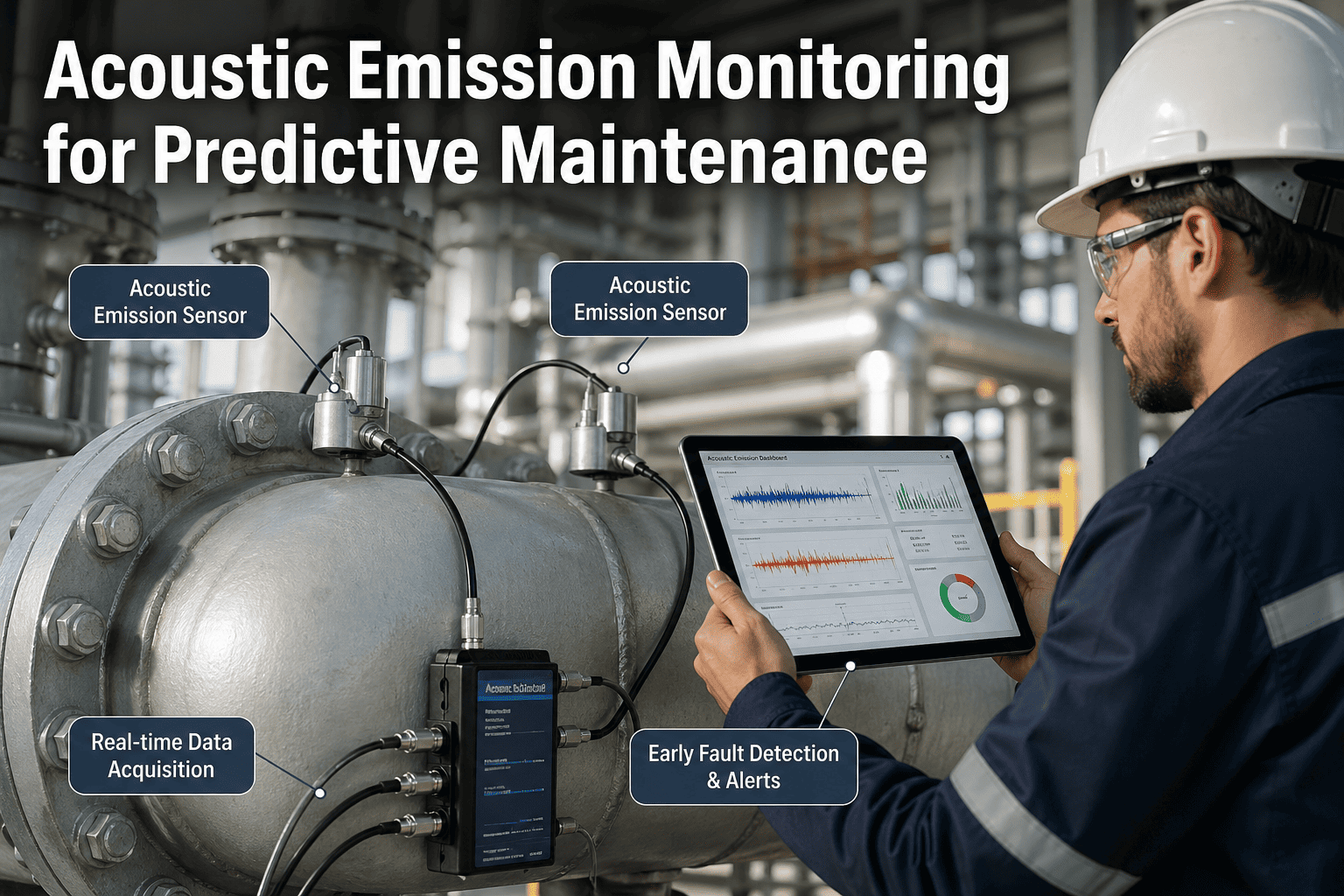
Vibration on supply fan bearings monitored continuously. Drift detection triggers bearing inspection 14-30 days ahead.
Compressor Amperage
Compressor running amperage and start-ramp profile tracked per unit. Creep indicates winding wear, oil issues, or refrigerant fault.
Refrigerant Subcool/Superheat
Subcool and superheat values out of band indicate refrigerant charge issues, restricted TXV, or compressor degradation.
Coil & Filter Differential Pressure
DP across coils and filters trended continuously. Rise indicates fouling, debris loading, or coil scale build-up.
Chilled-Water Valve Hunt
CW valve position oscillation indicates actuator wear, sensor drift, or controls tuning fault.
Return-to-Supply Delta T
Narrowing delta T indicates coil fouling, low airflow, low refrigerant charge, or compressor degradation. Critical alert.
A Warning-state signature 14-30 days early lets the team plan a repair. A Critical-state failure at 02:30 takes a tenant offline.
Pain Points That Delay Fault Detection
Six recurring failures every reactive AHU operation carries — most invisible until the unit goes offline.
No Per-Unit Baseline Learning
Without 30-60 days of baseline, an alarm threshold is a guess. Oxmaint learns per-asset baseline automatically.
BMS Alarms Without Diagnostic Context
A BMS high-temp alarm without supporting signature data is non-actionable. Oxmaint correlates 6 signatures into one fault diagnosis.
Alarms Ignored Due to Noise
Operators ignore alarms after months of false positives. Oxmaint surfaces escalating signatures with confidence scores.
No WO Auto-Trigger From Signal
A Warning signature without an auto-created WO is just a chart on a screen. Oxmaint creates the WO and assigns the technician.
Critical Spares Not on Hand
Compressor contactor or TXV not on shelf when failure approaches. Oxmaint Parts & Inventory auto-reorders.
No Portfolio Pattern View
A pattern across 8 buildings is the early warning of a fleet-wide issue. Oxmaint Enterprise rolls up signatures across the portfolio.
These six failures compound into the tenant SLA and reactive cost gap — start a free trial or book a demo.
How Oxmaint Reads Every Signature Continuously
Six Oxmaint modules combine to convert reactive AHU operations into predictive, signature-driven fault detection.
01
Each air handler learns its own baseline across six signatures over 30-60 days. Drift detection adapts to per-unit behaviour.
02
Vibration, amperage, refrigerant, DP, valve position, and temperature feeds stream into Oxmaint continuously.
03
When a signature crosses Warning, Oxmaint auto-creates the corrective WO with technician assignment and parts list.
04
Live trend charts per signature, per unit, with overlay of Watch/Warning/Critical thresholds. Building engineer sees the full picture.
05
When a Warning fires, Oxmaint checks parts inventory and triggers reorder of expected replacement components.
06
Signature patterns across the portfolio surface fleet-wide issues (TXV batch defect, vendor-quality fault) early.
An auto-generated WO from a Warning signature is the difference between a $400 repair and a $40,000 emergency.
Reactive AHU Operation vs. Oxmaint Predictive Fault Detection
The reliability and tenant SLA gap is signature-based monitoring captured in one platform with BMS data feeds.
| Operational Dimension | Reactive AHU Operation | Oxmaint Predictive Fault Detection |
|---|
| Fault Detection Window | At failure | 14-30 days ahead |
| Signature Monitoring | BMS alarms only | 6 signatures continuous |
| Per-Asset Baseline | None | 30-60 day learned baseline |
| WO Auto-Trigger | Manual after alarm | Auto at Warning threshold |
| Parts on Hand at Failure | 2-3 week lead times | Predictive reorder before failure |
| Tenant Comfort Events | 3-8 per portfolio per year | Near-zero with predictive intervention |
| Compressor Life | 12-15 years average | 15-20 years with predictive PM |
| Multi-Building Pattern View | None | Live portfolio dashboard |
ROI & Outcomes From Oxmaint AHU Fault Detection
These are the measurable outcomes building operations reach within 12 months of unified Oxmaint deployment.
-72%
unplanned AHU failures
Through 14-30 day predictive intervention window
-65%
reactive repair spend
As reactive cost ratios shift to predictive
+18%
compressor useful life
From condition-driven repair before catastrophic failure
4.8X
tenant satisfaction
Through reduced comfort events and faster response
100%
signature monitoring
All 6 signatures monitored continuously per unit
90 d
typical payback
On single-portfolio Oxmaint predictive deployment
These outcomes are what Chief Engineers bring to building owners — start a free trial on one building first, or book a demo for the portfolio rollup.
Air Handler Fault Detection FAQ
How long does it take Oxmaint to learn a baseline for a new air handler
Typically 30-60 days of continuous data capture from BMS or IoT feeds. During the learning phase, generic OEM thresholds apply. After learning completes, per-asset baselines take over and false positives drop significantly.
Can Oxmaint work with existing BMS without adding IoT sensors
Yes. Oxmaint PLC/IoT Integration connects to BACnet, Modbus, and proprietary BMS systems, pulling existing point data. IoT sensors are recommended for vibration monitoring on assets without it, but most signatures can be derived from existing BMS points.
How does Oxmaint avoid alarm fatigue for building engineers
Oxmaint surfaces signatures with confidence scores and combines multiple signatures into one fault diagnosis rather than firing per-point alarms. A WO triggers only at Warning state with diagnostic context attached, reducing alarm noise by 70-80% vs. raw BMS feeds.
How long does Oxmaint deployment take for an AHU portfolio
A single building is typically live in 7-14 working days using Oxmaint pre-built AHU templates. BMS data feeds integrate in week one. Baseline learning completes in 30-60 days, with predictive WOs firing thereafter.
Decision Point
Stop Discovering AHU Faults at 02:30 in the Morning
Turn every air handler into a continuously-monitored, predictively-serviced asset with Oxmaint. Used by building operations teams managing 10,000+ assets. Live in days, not months.
6-signature monitoring
BMS & IoT integration
Multi-building portfolio
No heavy implementation. Multi-building portfolios. Measurable results in 60-90 days.


.png)
