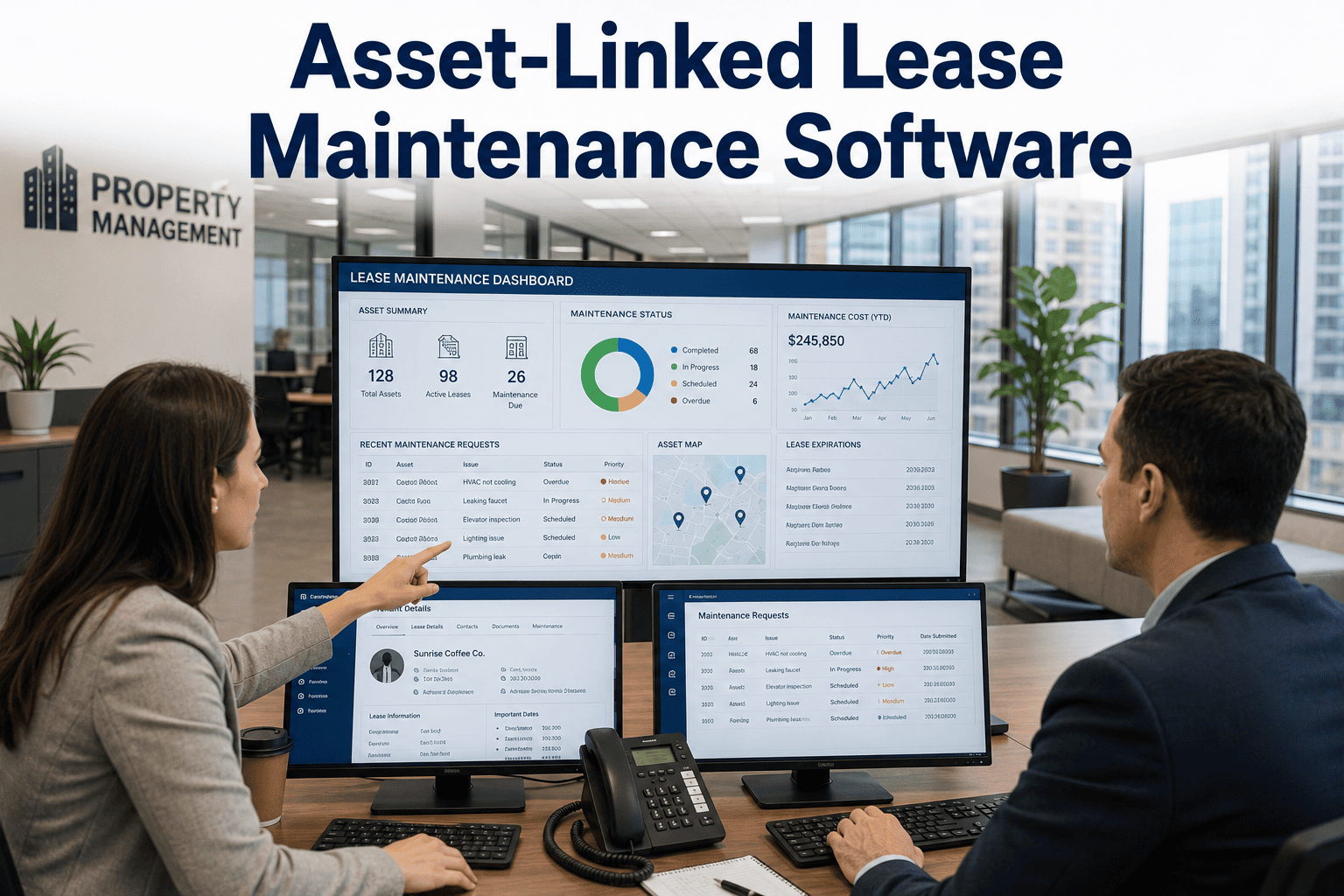
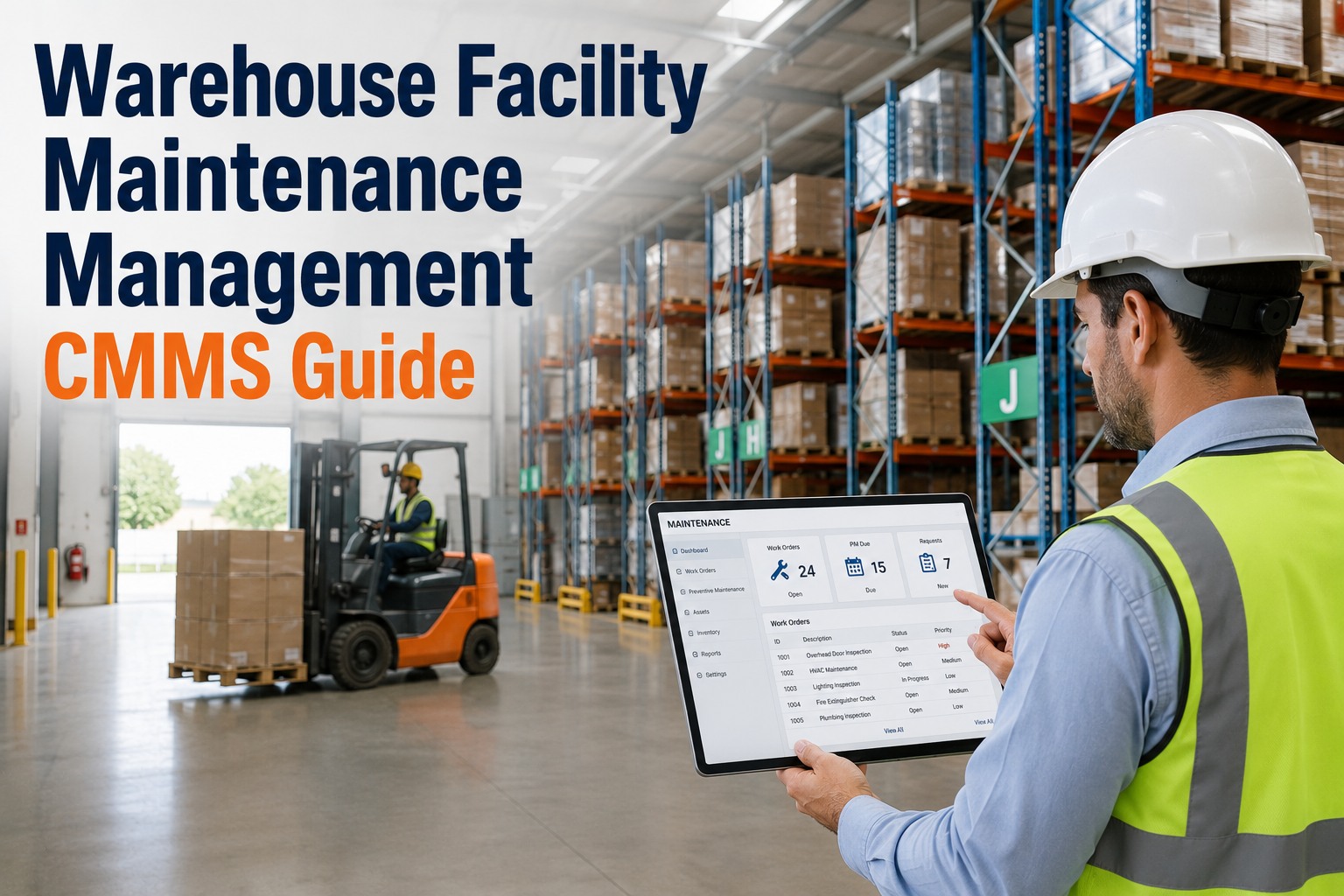
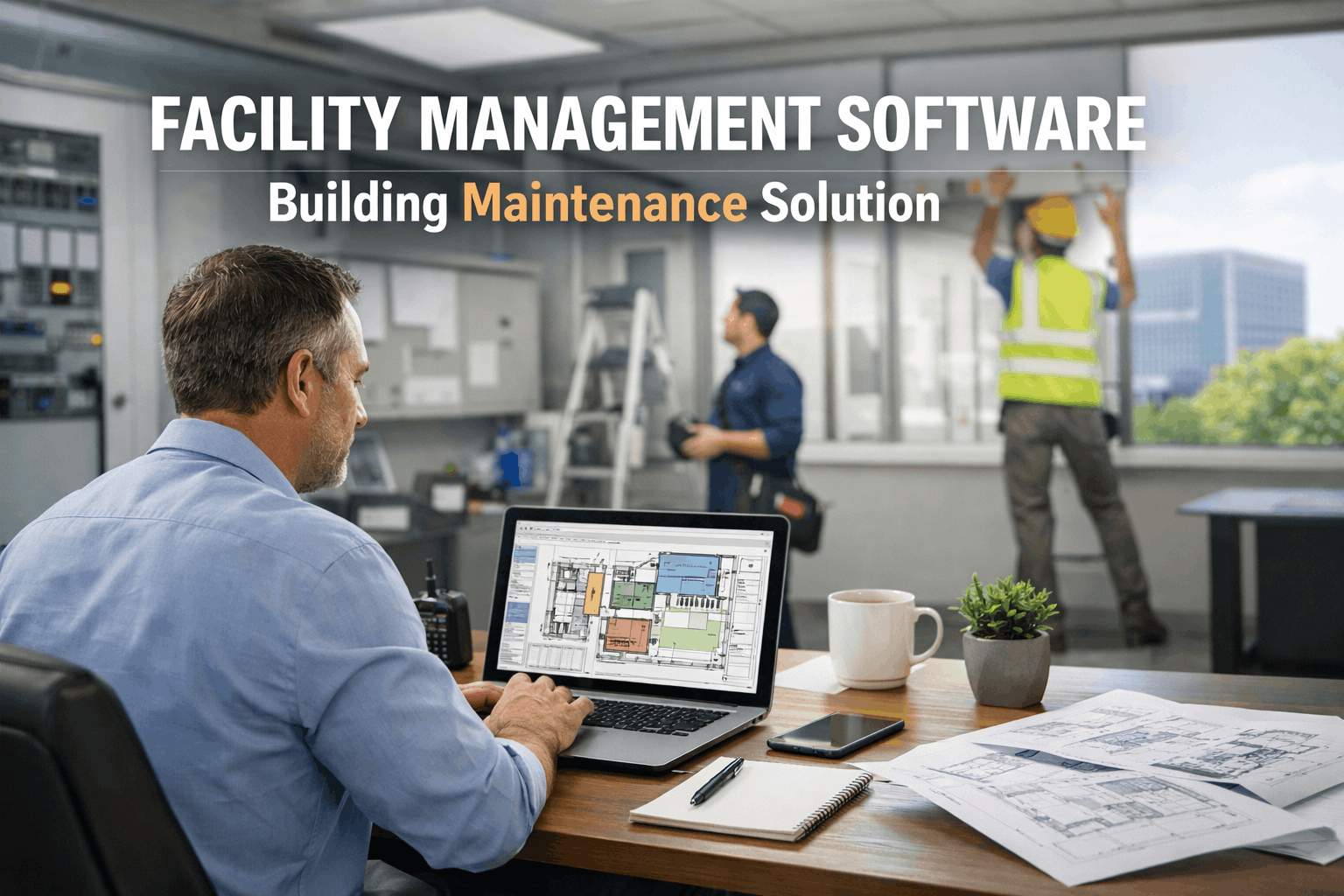
Property managers operating at scale know the hidden cost of disconnected systems: a tenant submits a maintenance request, nobody knows which asset is covered under the lease, the work order gets raised without a cost allocation record, and when lease renewal arrives, there is no maintenance history tied to that unit or asset. This scenario plays out thousands of times each quarter across property portfolios of every size — and each disconnection costs real money in dispute resolution, delayed repairs, and chargeback arguments. Asset-linked lease maintenance software eliminates the gap by creating a live, documented thread connecting every maintenance event to the specific asset it covers, the lease agreement it falls under, and the tenant whose occupancy triggered it. Start a free trial and link your first asset to its lease record in Oxmaint or book a demo to see how your specific property portfolio maps into this structure.
Property Management · Lease Operations 2026
Asset-Linked Lease Maintenance Software
Connect every maintenance request to its underlying asset, lease agreement, and tenant record — eliminating disputes, accelerating response, and building audit-ready property operations.
Works across multi-site portfolios · No heavy implementation required · Live in days, not months
of property managers say maintenance disputes with tenants result from no documented asset history linked to lease records
$18K
average unrecovered maintenance cost per property per year when work orders aren't linked to lease cost-allocation rules
3.2×
faster tenant dispute resolution when property managers have asset-linked maintenance records with timestamps and photos
41%
of maintenance requests in unlinked systems are either delayed, misallocated, or never formally closed with documentation
What Is Asset-Linked Lease Maintenance?
Asset-linked lease maintenance is the operational model where every maintenance activity — request, work order, inspection, repair, and cost — is connected to a specific asset, that asset's lease agreement, and the tenant occupying the space. It replaces the default approach, where maintenance and leasing live in separate systems with no structured relationship between them.
In practice, this means a tenant's request for a broken HVAC unit immediately surfaces which specific unit is being reported, what the lease says about landlord versus tenant responsibility for that asset class, whether the asset is within its warranty or service contract period, and what maintenance history the unit already carries. That context determines response priority, cost allocation, and documentation requirements — automatically, without manual research by the property team.
Properties with no asset-to-lease linkage lose an average of $18,000 per year in unrecovered maintenance costs — money that belongs in the operating budget, not the dispute log.
The Asset-Lease-Maintenance Framework
01
Asset Registry by Property
Every physical asset — HVAC unit, elevator, plumbing system, electrical panel, appliance — is registered in the CMMS with location, condition score, warranty status, and service history. Assets are mapped to the space or unit they serve.
02
Lease Record Integration
Lease terms, start and end dates, included assets, cost-responsibility clauses, and renewal conditions are stored and linked to the relevant assets. When a lease changes, asset responsibility assignments update automatically.
03
Tenant Request Routing
Tenant maintenance requests are submitted through a mobile-accessible portal. Each request auto-links to the relevant asset, surfaces the lease cost-allocation rule, and routes to the correct maintenance team or contractor for action.
04
Work Order Creation and Tracking
Work orders are generated with pre-linked asset context, tenant reference, and cost center allocation. Status, technician assignment, and completion are tracked in real time — tenants receive automatic status notifications throughout.
05
Cost Allocation and Chargeback
Every completed work order generates a cost record linked to the asset, lease, and responsible party. Landlord versus tenant chargebacks are processed with documented evidence — no manual calculation, no disputes without data.
06
Lease Renewal Intelligence
At lease renewal, property managers access a complete maintenance history per tenant and per asset — including total cost incurred, response times, repeat failures, and condition score changes — to inform negotiation and renewal terms.
07
Inspection and Condition Scoring
Move-in and move-out inspections are completed on mobile with photo documentation linked to each asset. Condition scores update automatically, creating a defensible record of asset state at every lease transition.
08
Portfolio Reporting and CapEx Planning
Asset-linked maintenance data aggregates into portfolio-level reports showing maintenance spend by property, asset class, tenant, and lease year — feeding 5–10 year CapEx models with real cost and condition data.
Where Disconnected Property Operations Break Down
Maintenance Without Lease Context
Technicians respond to maintenance requests with no visibility into the lease terms governing cost responsibility. Work gets done, invoiced to the wrong party, and disputed weeks later — creating operational friction and finance errors that repeat every cycle.
Lease Renewals Without Asset History
When lease renewals are negotiated, property managers lack documented evidence of what maintenance was performed, what it cost, and which assets were affected. Renewal decisions are made on incomplete information — leaving value on the table in both directions.
Tenant Dispute Exposure
Deposit deductions and maintenance chargebacks without photographic asset condition records are legally fragile. Property managers relying on verbal agreements and paper move-in reports lose disputes regularly — and the cost of one contested deduction often exceeds a year's software budget.
No Real-Time Portfolio View
Multi-property managers aggregating maintenance data from separate spreadsheets, email threads, and paper work orders spend hours producing a status report that is already outdated. There is no live view of open requests, overdue work, or asset condition across the portfolio.
How Oxmaint Connects Assets, Leases, and Maintenance
Unified Asset and Lease Registry
Every asset is registered with condition score, warranty status, service history, and a direct link to the lease agreement covering it. When a lease updates, asset assignments and cost rules update with it — automatically, without manual reconciliation.
Tenant Request Portal
Tenants submit maintenance requests through a branded mobile portal. Requests auto-populate with asset identification, location, and lease context — eliminating back-and-forth to identify what is broken and who is responsible for fixing it.
Automated Cost Allocation
Lease cost-responsibility rules are pre-configured in Oxmaint. Each work order is automatically flagged with the responsible party — landlord, tenant, or warranty provider — so invoicing, chargebacks, and reimbursements are processed without manual interpretation of lease clauses.
Photo-Documented Inspections
Move-in and move-out inspections are completed on mobile devices with timestamped photos linked to each specific asset. Condition scores are recorded at every lease transition — creating a defensible, date-stamped record that eliminates deposit disputes.
Portfolio Operations Dashboard
Property directors see all open requests, overdue work orders, asset condition scores, and lease expiry alerts across every property in the portfolio — in a single real-time view that requires no manual data consolidation from site teams.
5–10 Year CapEx Forecasting
Asset condition scores and maintenance cost history feed into Oxmaint's CapEx model — producing rolling 5–10 year replacement and refurbishment forecasts by property, asset class, and portfolio segment. Capital requests are backed by data, not estimates.
Disconnected Operations vs. Asset-Linked Maintenance
Before: Disconnected Property Operations
After: Asset-Linked Lease Maintenance
Tenant requests arrive with no asset identification or lease context
Every request auto-linked to asset, lease clause, and cost responsible party
Cost allocation determined manually by cross-referencing lease PDFs
Cost rules pre-configured — allocation applied automatically at work order creation
Move-in and move-out condition recorded on paper or generic forms
Photo-documented condition inspections linked to each asset with timestamped records
Lease renewals negotiated without maintenance cost history
Full maintenance cost and condition history per tenant and asset at renewal time
Portfolio status requires hours of manual consolidation from site teams
Live portfolio dashboard — all open requests, overdue work, and asset scores in one view
CapEx forecasting based on age and assumption with no condition data
Rolling 5–10 year CapEx models built from asset condition scores and cost history
One prevented lease dispute — backed by timestamped asset records and photos — typically exceeds the cost of a full year of property management software.
ROI of Asset-Linked Property Operations
3.2×
faster resolution of tenant maintenance disputes when asset-linked records provide timestamped evidence
$18K
average annual unrecovered maintenance cost per property in disconnected operations — eliminated with linked cost allocation
41%
reduction in open and unresolved maintenance requests when tenant portal routes to linked asset records automatically
28%
improvement in lease renewal negotiation outcomes when property managers present full asset maintenance cost history
How does Oxmaint link assets to specific lease agreements?
Oxmaint's asset registry allows property managers to assign each asset to a property unit, zone, or floor — and then link that location to the active lease covering it. Lease key data including start date, end date, tenant name, included assets, and cost-responsibility clauses are stored in the system. When a work order is created for an asset, Oxmaint automatically surfaces the relevant lease record and applicable cost rules, so the team has full context before any work begins. When a lease transitions or renews, asset assignments are updated to reflect the new agreement without manual re-entry.
Can Oxmaint handle mixed-use portfolios with different lease structures per property?
Yes. Oxmaint's hierarchy — Portfolio, Property, System, Asset, Component — supports mixed-use portfolios with different asset types, lease structures, and cost allocation rules across each property. Commercial NNN leases, full-service gross leases, residential tenancies, and industrial leases can all be configured with their own cost rules. Each property operates with its own settings while rolling up into a unified portfolio reporting view for directors and asset managers.
How does the tenant maintenance request portal work in Oxmaint?
Tenants access a mobile-responsive portal where they submit maintenance requests by selecting the asset or space affected, describing the issue, and attaching photos. The request immediately creates a work order in Oxmaint, pre-linked to the relevant asset, lease record, and cost allocation rule. Tenants receive automatic status notifications as the work order progresses — acknowledgement, assignment, in-progress, and completion. Property managers see all requests and their status across every property in real time.
How quickly can a property management team implement asset-linked maintenance in Oxmaint?
Most property management teams complete initial setup — importing asset lists, entering lease records, and configuring cost allocation rules — within the first week. For portfolios with existing asset inventories, bulk import significantly reduces setup time. The tenant portal and work order system are operational from day one of account creation. There is no lengthy implementation phase, no custom development, and no IT resources required. Most teams are fully live within 5–10 days of starting their account.
Stop Losing Revenue to Disconnected Property Operations
Connect every maintenance request to its asset, lease, and cost record — and turn every property in your portfolio into a trackable, auditable, professionally managed operation.
✔ Real-time asset visibility across every property
✔ Automated lease-linked cost allocation
✔ 5–10 year CapEx forecasting from condition data
No heavy implementation required · Works across multi-site portfolios · See measurable results in the first 30 days