The average maintainable asset in commercial and institutional facilities operates at 55–65% of its design lifespan — replaced not because it wore out, but because reactive maintenance let cumulative neglect make replacement cheaper than continued repair. A $180,000 chiller designed for 25 years that fails at 15 did not have a manufacturing defect. It had a maintenance defect: missed PM cycles that let refrigerant charge drift, condenser coils foul, and compressor bearings degrade until repair cost exceeded 60% of replacement value. Structured asset management reverses this: organizations that implement lifecycle tracking, condition-based PM, AI risk scoring, and data-driven replace-vs-repair analysis consistently extend equipment lifespan 30–40%, reduce maintenance cost per asset 25–35%, and defer $2M–$8M in capital replacement over 5 years. Schedule a demo to see AI-driven asset lifecycle management with predictive risk scoring.
55–65%
Actual vs. Design Life
Average equipment achieves only 55–65% of manufacturer-rated lifespan under reactive maintenance
30–40%
Life Extension
Achievable with structured asset management: lifecycle tracking, condition-based PM, and AI risk scoring
$2M–$8M
Capital Deferral (5-yr)
Replacement spending deferred when assets reach design life instead of failing prematurely
25–35%
Cost Reduction
Total maintenance cost per asset reduction when lifecycle management replaces reactive break-fix
Why Equipment Fails Before Its Time
Premature asset failure follows predictable patterns driven by maintenance failures that compound over time. Each shortens remaining useful life — and by the time consequences are visible, years of lifespan have already been consumed.
What Happens
PM tasks are consistently deferred because reactive work consumes all capacity. Filters go unchanged for 6 months. Belts run until they snap. Bearings are never re-greased. Each deferred cycle accelerates wear that compounds into the next.
Lifespan Impact
Every 10% drop in PM compliance shortens average asset life by 8–12%. A facility at 55% PM compliance loses 3–5 years of useful life on every major asset vs. one at 95%.
What Happens
Equipment degrades silently between PM intervals. A chiller losing refrigerant at 2%/month runs progressively harder for 11 months before the next annual PM detects it — stressing the compressor, increasing energy consumption, and accelerating wear the entire time.
Lifespan Impact
Continuous monitoring catches degradation within days. Calendar PM catches it within months. The cumulative stress difference translates to 3–7 years of additional useful life.
What Happens
Nobody tracks total cost of ownership per asset. A boiler consuming $340K in repairs over 12 years keeps getting $40K annual repairs because each seems justified individually — but cumulative cost exceeded replacement value 3 years ago.
Lifespan Impact
Without TCO data, the replace-vs-repair decision is never made at the optimal point. Money is wasted maintaining assets past economic life while saveable assets are neglected.
The 7 Best Practices That Extend Equipment Lifespan by 40%
1
Capture the Baseline for Every Major Asset
Every maintainable asset needs: manufacturer, model, serial number, installation date, rated design life, replacement cost, location, criticality classification (A/B/C), and complete bill of materials for consumable and wear parts.
Target: 100% of major assets registered with lifecycle data within 90 days
2
Build Progressively from Work Orders
Import whatever data exists, then enrich continuously: every work order adds failure mode data, every PM adds condition observations, every repair adds parts consumption. After 12 months, your registry contains more current data than any one-time consultant survey.
The registry gets more accurate every day instead of aging from creation
A complete asset registry is not a project with a finish date. It is a living database that improves with every maintenance interaction.
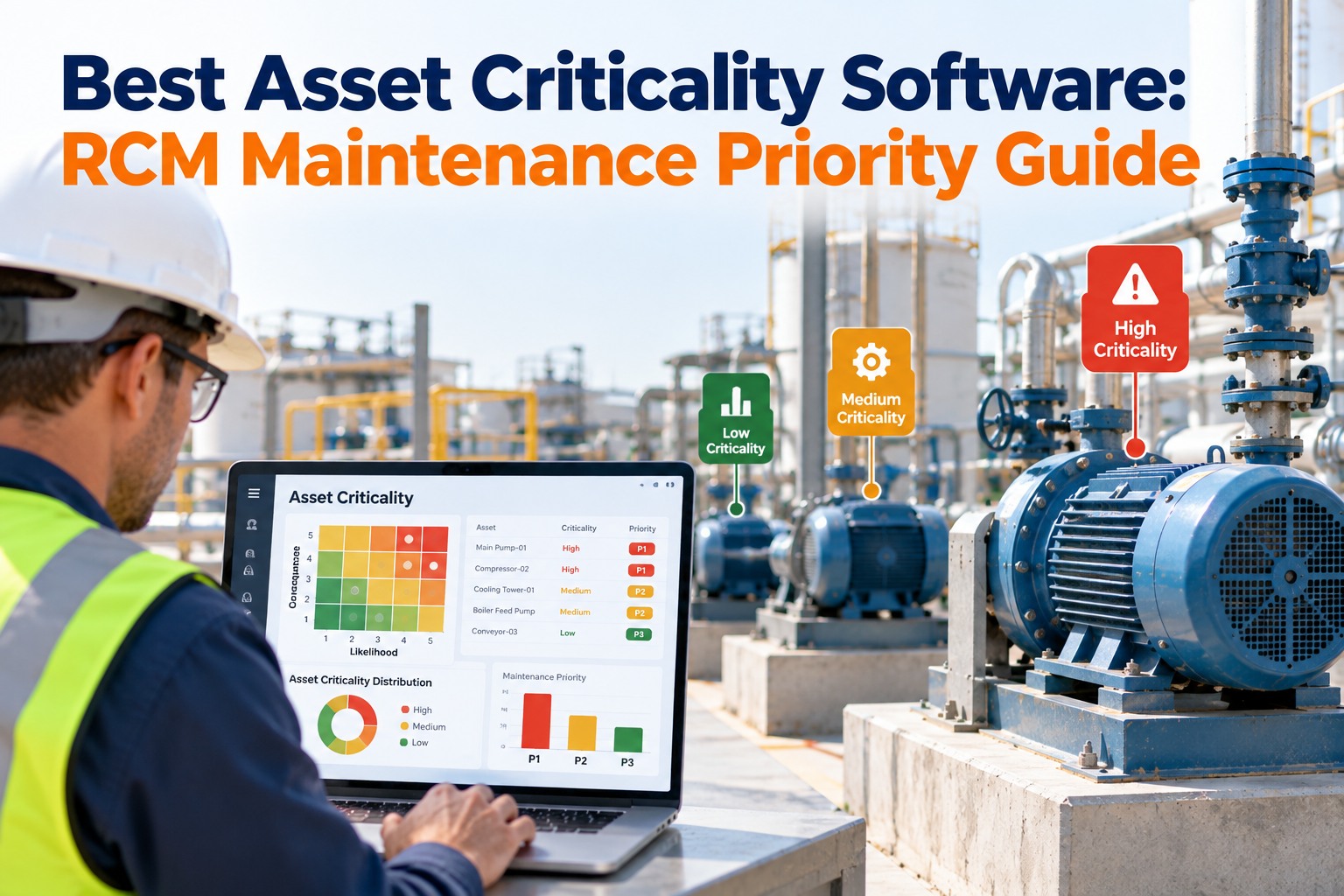
Class A: Mission-Critical
8–12% of assets, 70–80% of risk
Central plant chillers, boilers, main switchgear, fire alarm systems, elevators, data center cooling. Receive predictive monitoring, condition-based PM, parts pre-staging, and AI risk scoring. Every dollar here delivers maximum ROI.
Class B: Important
20–30% of assets, 15–20% of risk
Air handling units, domestic hot water, classroom AV, access control, lab ventilation. Scheduled PM at manufacturer intervals with condition-based adjustments where sensor data is available.
Class C: General
60–70% of assets, 5–10% of risk
Light fixtures, window treatments, cosmetic surfaces, non-critical plumbing. Run-to-failure or minimal PM. Lifecycle extension investment not justified — replace when failed.
⚠
The Calendar PM Problem
Quarterly PM inspects equipment 4 times per year regardless of condition. If healthy, 3 of 4 inspections are unnecessary — consuming technician time, risking maintenance-induced failures. If degrading between intervals, the problem grows up to 90 days before detection. 20–30% of calendar PM spend is wasted on assets not needing service.
Calendar PM wastes 20–30% of PM budget on healthy assets while missing degradation
✓
Condition-Based Solution
Result: 30% fewer PM interventions, 40% longer asset life, 15% lower energy costs
Know What You Have. Know What It Costs. Know When It Will Fail.
Oxmaint builds your asset registry progressively from every work order, assigns AI risk scores to every major asset, and tracks total cost of ownership in real time — so lifecycle decisions are made from data, not guesswork.
$
What TCO Includes
Acquisition cost + cumulative maintenance labor + cumulative parts + energy cost above baseline (from degradation) + downtime cost + disposal/replacement cost. The CMMS calculates automatically from work order data, parts consumption, and energy meter integration.
Automatic TCO from every work order, every parts pull, every energy reading
→
The Replace-vs-Repair Decision Point
When cumulative maintenance reaches 50–60% of replacement value, the CMMS flags it: “Chiller #3 consumed $108K against $180K replacement. AI projects $45K additional maintenance over 24 months vs. $180K replacement with $22K annual energy savings.” NPV makes the decision quantitative.
AI identifies optimal timing — not too early (wasting life) and not too late (wasting dollars)
What It Does
Quantified failure probability
Assigns every asset a continuously updated score (0–100) based on age, maintenance history, sensor deviation, load profile, and consequence severity. Predicts which assets will fail in 30, 60, 90 days with 82–94% accuracy.
How It Extends Life
Intervention before damage
Catches degradation 3–6 weeks before failure, enabling planned repair that prevents collateral damage. A $14K bearing replacement on schedule prevents the $2.8M gearbox destruction from seizure.
What It Saves
65% fewer emergencies
30% asset life extension. 15% energy savings from anomaly correction. 5–8× first-year ROI. The 8–12% of assets carrying 80% of failure risk receive targeted attention.
PM Tiers by Asset Class
Class A: Condition-based + annual comprehensive
Sensor-triggered + scheduled
Class B: Manufacturer intervals with adjustments
Calendar + condition overlay
Class C: Minimal or run-to-failure
Replace on failure
Capacity Protection
Reserve 40–50% of tech capacity for PM
Hard allocation
Only true emergencies displace PM
Corrective fills remaining
Deferred PMs auto-reschedule within window
Zero tasks lost
Lifespan Correlation
95% PM compliance = design life achievable
20–25 yr chiller
80% compliance = 80% of design life
16–20 yr chiller
55% compliance = 55–65% of design life
11–16 yr chiller
1
AI Identifies Assets Approaching End of Economic Life
The CMMS flags assets where cumulative maintenance exceeds 50% of replacement value, failure frequency is accelerating, risk score trends above 65, or projected 24-month maintenance cost exceeds NPV of continued operation.
Automatic identification — no manual analysis required
2
Replace-vs-Repair NPV per Asset
For each flagged asset: continued maintenance trajectory, energy premium from degradation vs. new equipment, failure probability exposure, warranty value of replacement, and remaining useful life projection. The output is a specific NPV comparison per asset.
Board-ready financial analysis auto-generated from CMMS data
3
Scenario Modeling for Capital Budgets
Capital approval: 62% with anecdotes → 91% with data-backed scenarios
Financial Impact: What 40% Life Extension Is Worth
Capital Deferral
30–40% life extension defers $2M–$8M in replacement spending over 5 years
$400K–$1.6M/yr
Emergency Prevention
65% fewer emergency failures from predictive maintenance and 90%+ PM compliance
$800K–$2M/yr
Energy Savings
15% reduction from condition-based PM keeping equipment at optimal efficiency
$150K–$500K/yr
PM Optimization
20–30% fewer unnecessary interventions through condition-based scheduling
$200K–$450K/yr
Combined Annual Value:
$1.55M–$4.55M
Platform: starts free · Full deployment: $200K–$500K/yr · ROI: 3–9× year one · Compounds as AI models improve
Every dollar invested in structured asset management returns $3–$9 in year one through capital deferral, emergency prevention, energy savings, and PM optimization. Sign up free and begin tracking asset lifecycle data from the first work order.
Your Equipment Has 30–40% More Life in It. You Just Need the Data to Unlock It.
Oxmaint tracks every asset from installation to replacement: AI risk scoring, condition-based PM, total cost of ownership, and data-driven capital planning. 90 days to full lifecycle intelligence.
Frequently Asked Questions
How do we get started if we have no asset registry?
Start with what you have. Import any existing data — spreadsheets, legacy CMMS exports, vendor records — regardless of format or completeness. The platform normalizes and deduplicates. Then build progressively: every work order adds failure data, every PM adds condition observations, every parts pull adds BOM data. Within 6–12 months, your registry is more accurate than any one-time consultant survey. The key is starting, not waiting for perfection.
Start free and import your existing asset data in the first session.
Do we need sensors on every asset for condition-based maintenance?
No. Most BAS systems already collect temperature, pressure, and energy data on major HVAC equipment. The CMMS connects to existing feeds via BACnet or Modbus — no new hardware for 60–80% of critical assets. Targeted sensor additions on highest-value assets fill remaining gaps. Start with BAS data. Add sensors where ROI justifies it.
How accurate is the 30–40% life extension claim?
The figure compares average asset life under reactive maintenance (55–65% of design life) against structured lifecycle management (85–95% of design life). A chiller designed for 25 years that fails at 15 under reactive management runs to 21–24 under structured management — a 40–60% improvement from the reactive baseline. The improvement comes from catching degradation before collateral damage (predictive) and maintaining optimal operating parameters continuously (condition-based PM).
How does asset data support board capital requests?
The platform generates board-ready packages per asset: AI risk score, cumulative TCO vs. replacement cost, NPV maintain-vs-replace comparison, energy savings projection, and scenario modeling. Institutions presenting data-backed requests report 91% approval rates vs. 62% for traditional age-based requests. The data transforms the conversation from “things are old” to “these 12 specific assets have quantified failure probability and here is the financial case for each.”
What is the implementation timeline and cost?
Oxmaint deploys in 90 days: weeks 1–2 build data foundation (asset import, criticality classification), weeks 3–4 activate risk scoring and PM scheduling, weeks 5–8 bring condition monitoring and TCO tracking online, weeks 9–12 deploy capital planning dashboards. The platform starts free. Full-featured plans run $200K–$500K annually against $1.55M–$4.55M in documented value — a 3–9× first-year return. Most see positive ROI within 60 days from emergency prevention and energy correction.



.png)


