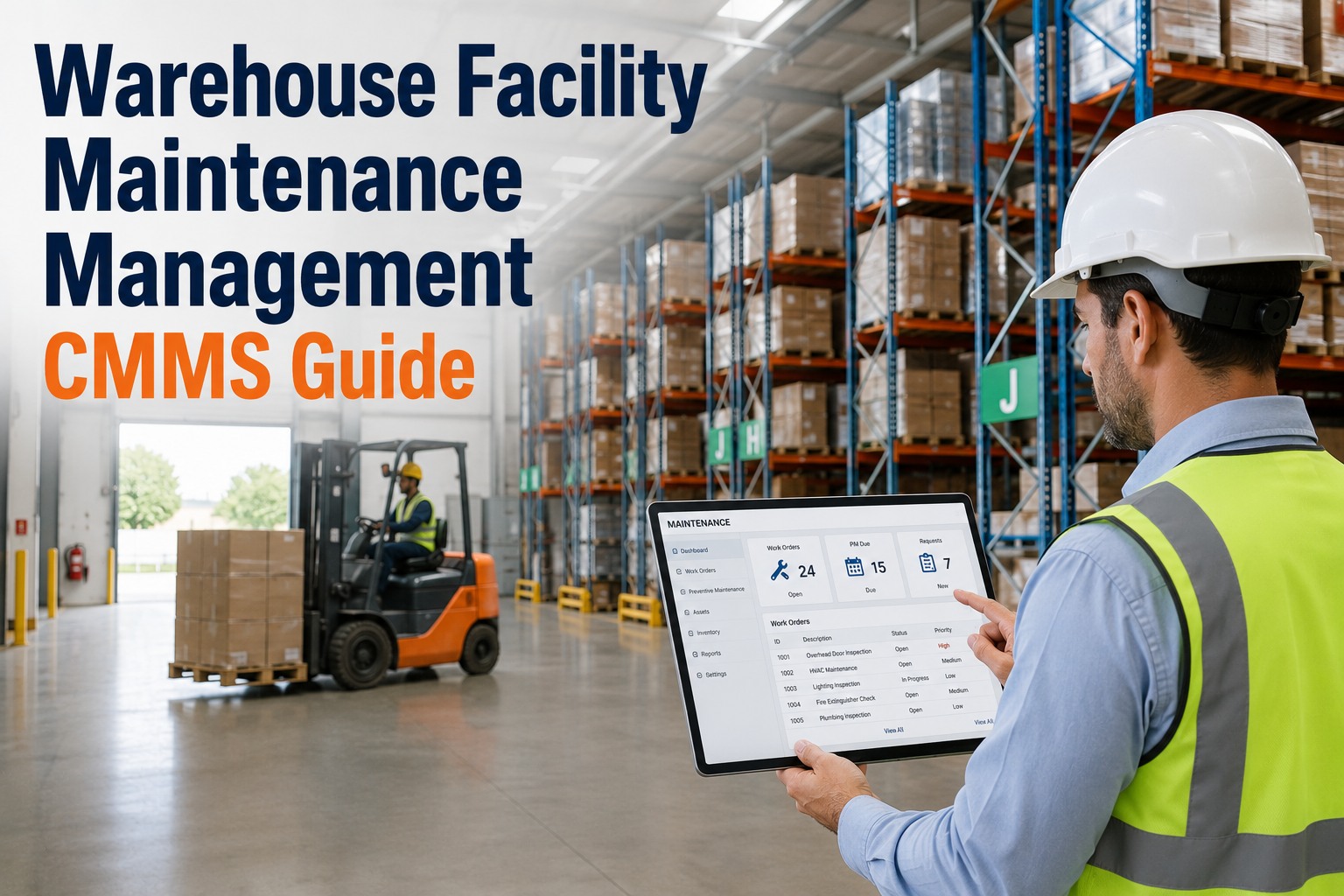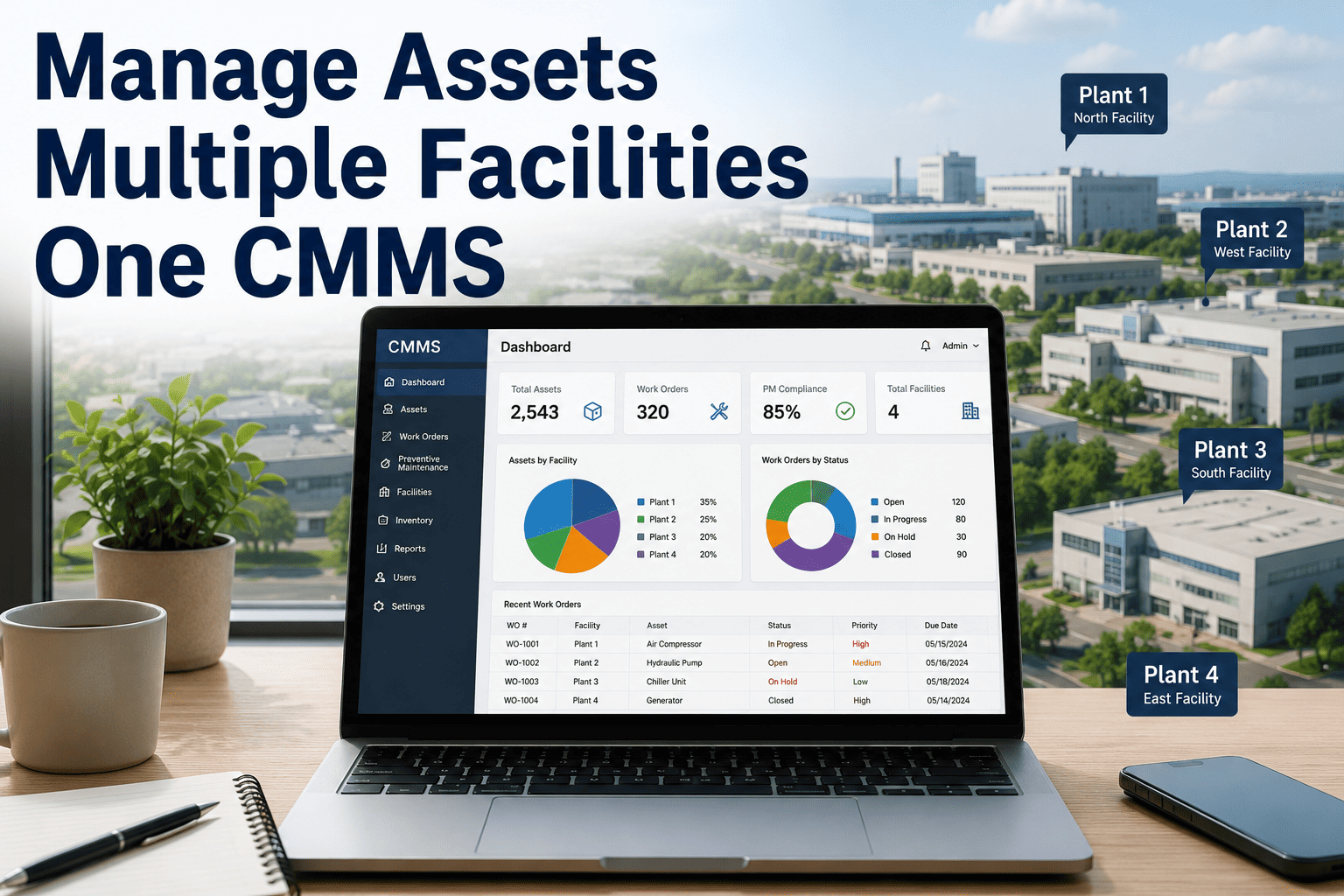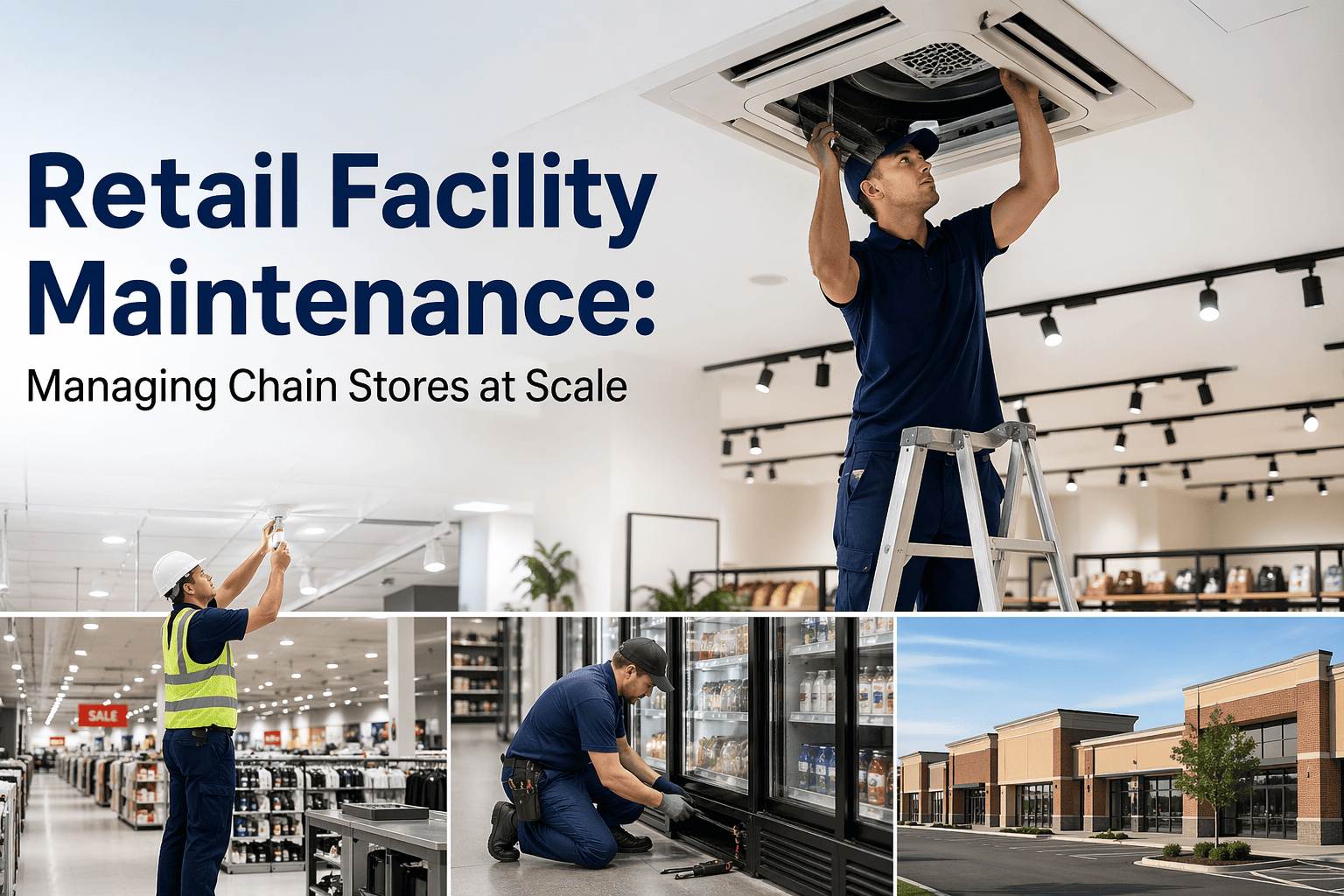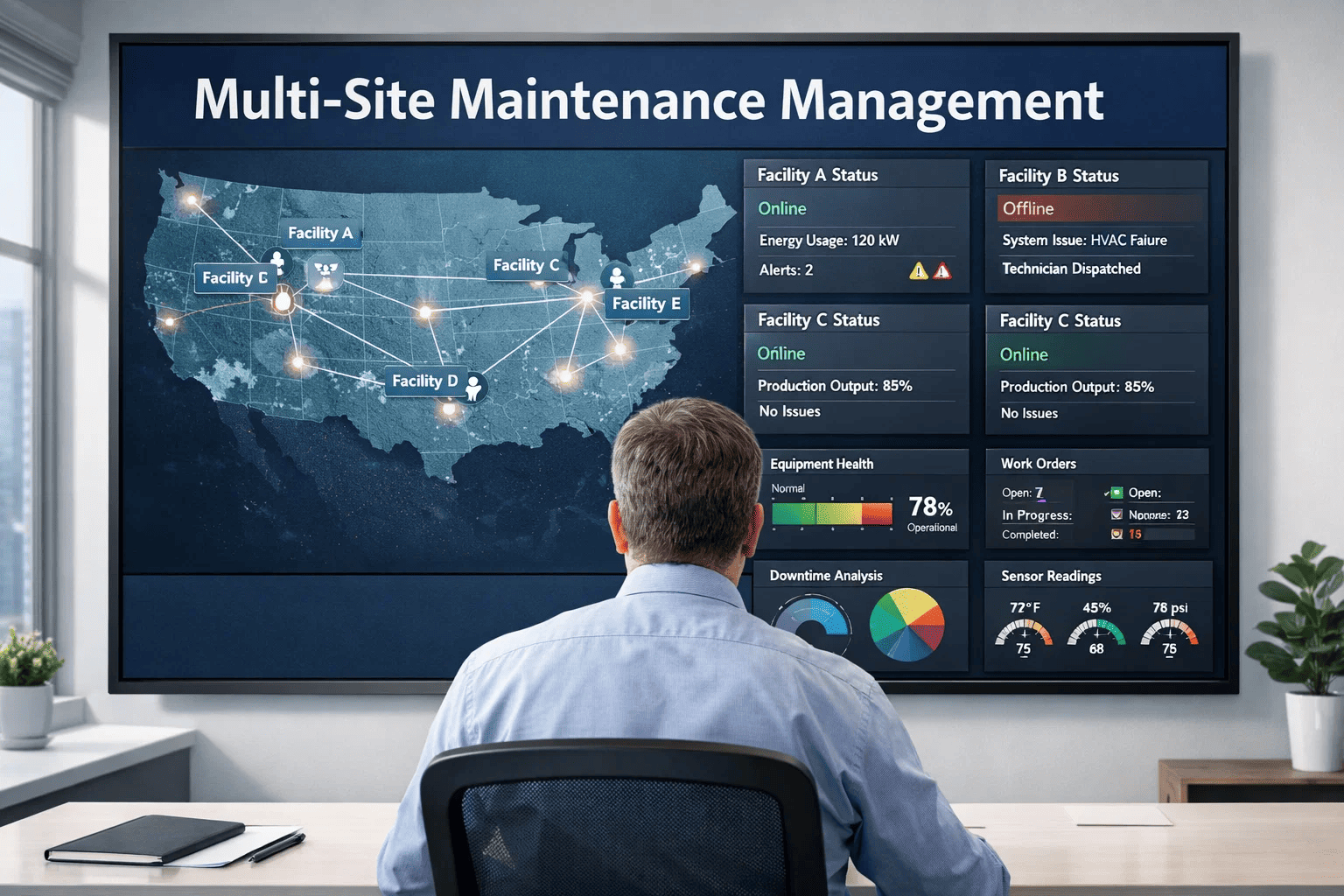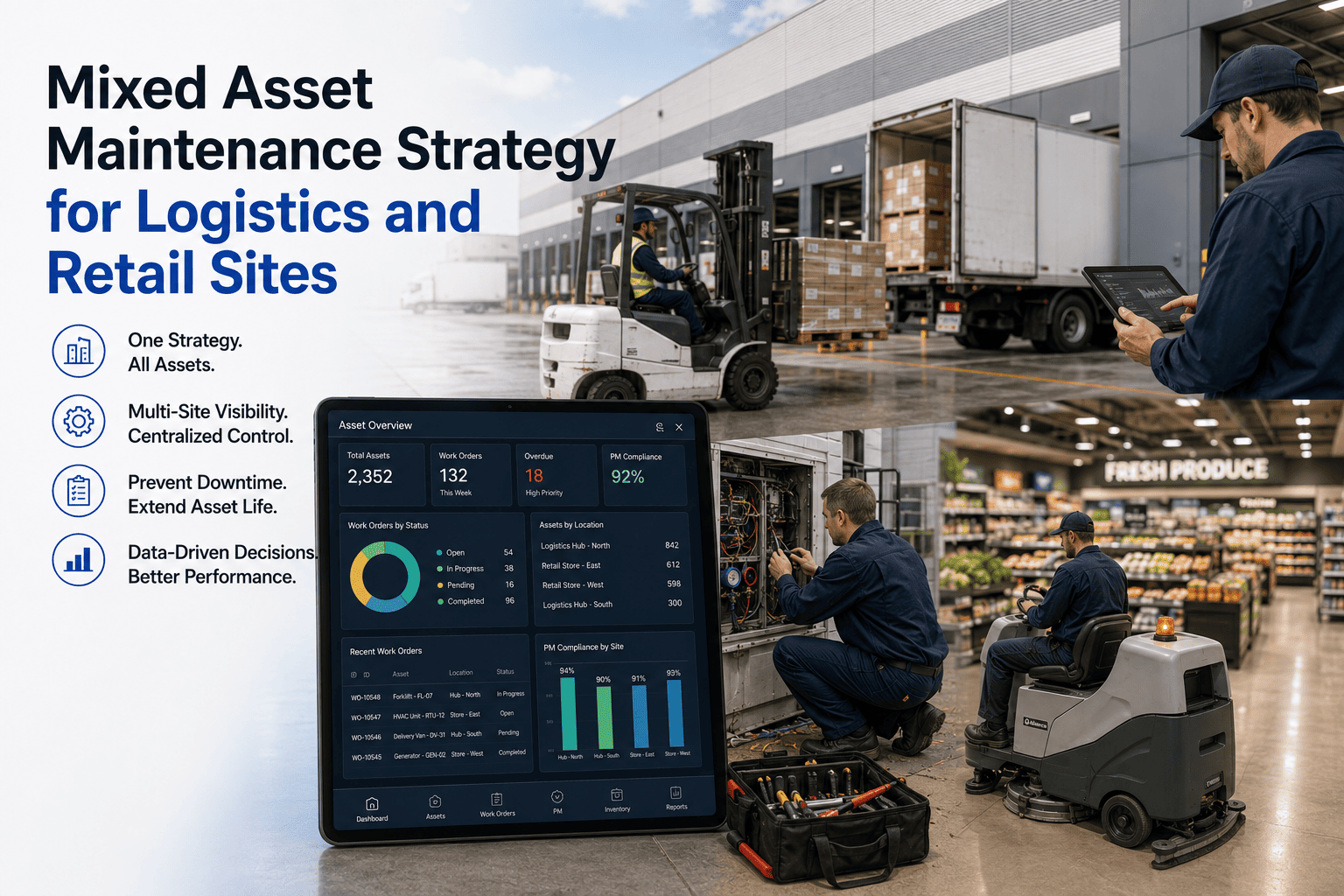
Logistics and retail operations face a maintenance challenge that no single-industry CMMS was designed for a portfolio of completely different asset classes spread across hundreds or thousands of locations. A regional retailer might run refrigeration at 1,200 stores, HVAC across 4 distribution centers, forklift fleets in 12 warehouses, delivery vans on 850 routes, and dock equipment at every cross-dock node. When the convenience store walk-in freezer fails at 2 AM three states away, the same maintenance system has to dispatch a vendor, capture the repair record, track refrigerant compliance, and feed asset performance data back into CapEx planning. A mixed-asset maintenance strategy is the only way to manage this complexity at scale to see how Oxmaint structures vehicles, stores, warehouses, and shared equipment in one unified platform, start a free trial or book a demo.
Mixed Asset Maintenance Strategy for Logistics and Retail Sites
From refrigeration at 1,200 stores to forklift fleets across 12 warehouses to delivery vehicles on 850 routes this is how logistics and retail operations centralize mixed-asset maintenance across vehicles, store equipment, and shared infrastructure.
What Is a Mixed-Asset Maintenance Strategy for Logistics and Retail?
A mixed-asset maintenance strategy is a unified approach to maintaining the dramatically different equipment classes that share a logistics or retail portfolio vehicles, refrigeration, HVAC, warehouse material handling, dock equipment, security systems, and shared store infrastructure. Rather than running five disconnected systems for five asset classes, a mixed-asset CMMS uses a single hierarchy portfolio, property, system, asset, component to organize everything from a single delivery van to a 1,200-store walk-in freezer fleet under one operational lens.
The strategic value comes from cross-asset visibility. When you can see that Brand X freezers fail 40 percent more often than Brand Y, that one warehouse has 3x the forklift battery replacements of its peers, or that a specific delivery route is burning through tires twice as fast as expected, you can make portfolio-level decisions on procurement, replacement timing, and vendor selection. Without that unified view, decisions stay reactive and CapEx becomes guesswork. To explore how Oxmaint structures mixed asset hierarchies, start a free trial or book a demo for a portfolio walkthrough.
The Six Pillars of Multi-Site Mixed-Asset Maintenance
Logistics and retail organizations that successfully manage mixed portfolios do so by structuring around six operational pillars. These are the disciplines that separate operations running 1.0x maintenance costs from those running 1.8x or higher.
Most multi-site retailers spend 60 percent more maintaining "cheaper" equipment brands over 3 years than they would have spent on premium alternatives but they only discover this after structured CMMS data exposes the pattern.
Why Logistics and Retail Operations Struggle With Mixed-Asset Maintenance
In 2024, 65 percent of companies were using a CMMS meaning 35 percent are still running maintenance on spreadsheets, paper, or memory. Logistics and retail are over-represented in that lagging 35 percent because no single off-the-shelf CMMS was designed for their asset mix. The cost shows up as emergency vendor calls, lost inventory, failed audits, and CapEx surprises that catch boards off-guard. If your operation is struggling with any of these patterns, start a free trial to see unified asset management, or book a demo for a multi-site walkthrough.
How Oxmaint Unifies Mixed-Asset Maintenance for Logistics and Retail
Oxmaint is built specifically for portfolios with mixed asset classes across many sites. The same hierarchy that tracks a single delivery van scales to manage 1,200 refrigeration units, 4 distribution centers full of material handling equipment, and the HVAC fleet that keeps it all running. One platform, one dashboard, one source of truth for VP-level decision making. Start a free trial today or book a demo with our multi-site operations team.
Disconnected Tools vs Unified Oxmaint Mixed-Asset Platform
The shift from disconnected systems to a unified mixed-asset platform is not a feature upgrade it is a structural change in how a multi-site operation makes decisions. Here is the side-by-side picture from real logistics and retail deployments.
| Operational Factor | Disconnected Tools | Oxmaint Unified Platform |
|---|---|---|
| Asset classes tracked | Each in separate system | All in one hierarchy |
| Vendor dispatch at 2 AM | Phone tree, often fails | Auto-routed to top-rated |
| Cross-site brand performance | Invisible | Dashboard view |
| Refrigerant compliance prep | 2 to 4 weeks manual | Under 2 hours export |
| DVIR and fleet inspections | Separate fleet tool | Same CMMS |
| CapEx forecasting basis | Calendar age guess | Condition + brand data |
| Emergency repair share of spend | 40 to 55 percent | Under 20 percent |
| Equipment lifecycle data quality | Fragmented | Investor-grade |
What Mixed-Asset Maintenance Delivers for Logistics and Retail Operators
Logistics and retail operators switching to Oxmaint's unified mixed-asset platform report consistent results within 12 months. The numbers below come from real multi-site deployments start a free trial to experience these gains on your own portfolio, or book a demo to see how it applies to your specific asset mix.
Mixed-Asset Maintenance Strategy Common Questions
Can Oxmaint really manage vehicles, refrigeration, HVAC, and warehouse equipment in one platform?
How does Oxmaint handle EPA refrigerant leak rate reporting across hundreds of stores?
How fast can a multi-site retailer or 3PL deploy Oxmaint across the portfolio?
Can Oxmaint generate investor-grade CapEx forecasts for board reporting?
Stop Running Five Maintenance Systems for One Operation
Whether you operate 1,200 retail stores, a national 3PL distribution network, or a hybrid portfolio of stores, warehouses, and delivery fleets Oxmaint puts every asset class on one platform with unified hierarchy, vendor scoring, compliance capture, and investor-grade CapEx forecasting. No heavy implementation. Works across multi-site portfolios. Live in days, not months.
- Real-time mixed-asset visibility across every site
- Predictive failure alerts and vendor auto-dispatch
- 5 to 10 year condition-based CapEx forecasting
Used by operations teams managing 10,000+ mixed-class assets across multi-site portfolios. Limited onboarding slots this quarter.