Emergency breakdowns cost 4.8× more than planned repairs — yet in most factories, work orders are still created manually after operators spot problems, maintenance technicians report issues during rounds, or supervisors receive phone calls about equipment failures. The delay between fault detection and work order creation introduces hours of untracked downtime, reactive scrambling, and coordination gaps that turn preventable issues into expensive emergencies. Autonomous work order generation eliminates that lag: machine faults, operator reports, sensor alerts, and inspection findings automatically trigger structured work orders with asset context, failure history, spare parts requirements, and technician assignments — before a human supervisor even opens their email. Start a free trial to see how Oxmaint generates work orders automatically from IoT alerts, operator inputs, and preventive maintenance schedules across your entire factory floor, or book a demo and we'll walk through your specific equipment and workflow integration points.
Manufacturing Operations · Smart Factory · Predictive Maintenance
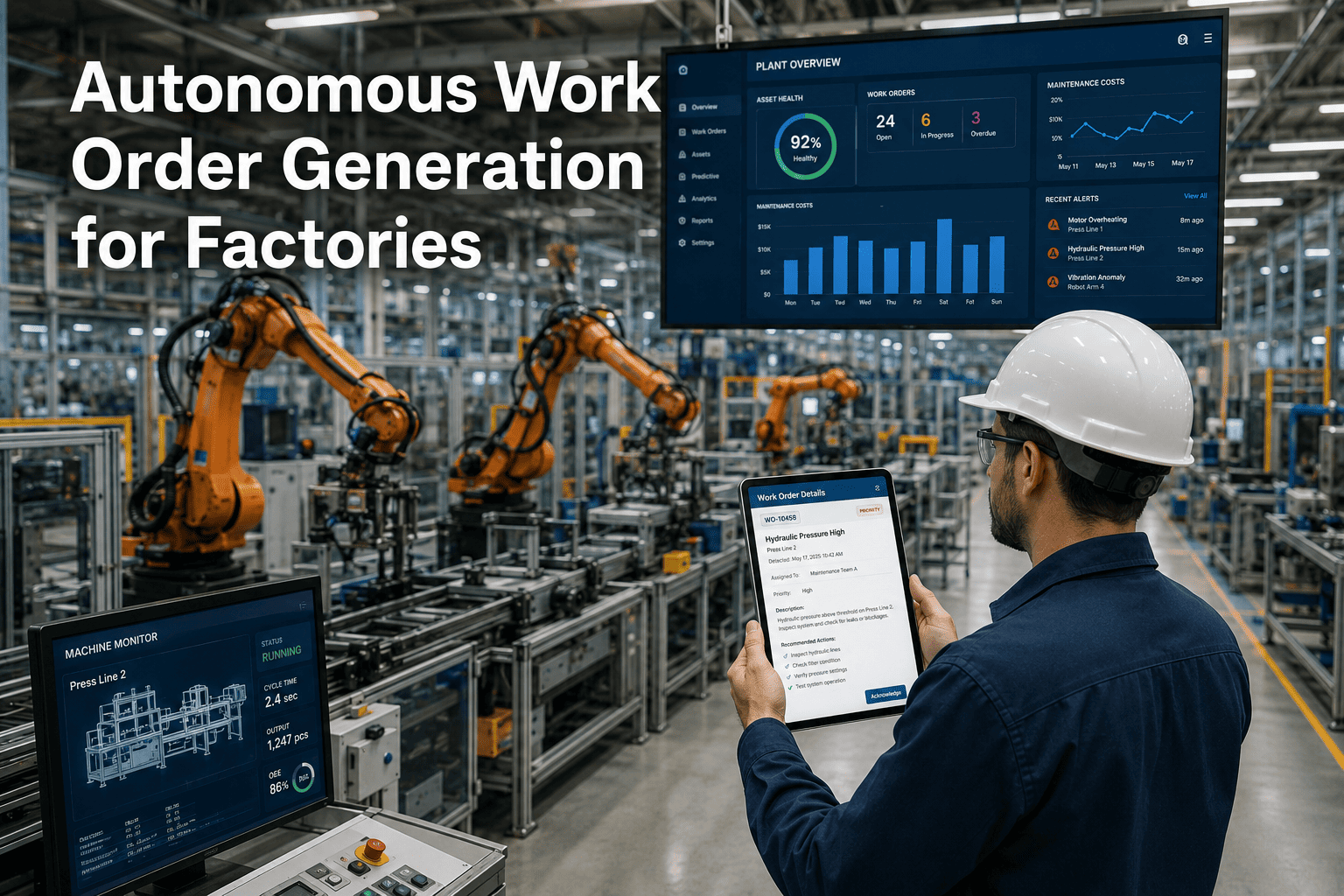
Autonomous Work Order Generation for Factories
Emergency repairs cost 4.8× more than planned work. AI-powered autonomous work order generation cuts fault-to-dispatch time from hours to seconds, reduces unplanned downtime by 32%, and ensures every maintenance event is tracked, prioritized, and assigned automatically.
4.8×
Higher Cost of Emergency Repairs vs Planned Maintenance
Emergency breakdowns require overtime labor, expedited parts procurement, and production downtime — Plant Engineering, 2024
32%
Reduction in Unplanned Downtime
Manufacturing plants using automated work order generation from IoT sensor alerts — McKinsey Manufacturing Analytics, 2023
6.2 hrs
Average Delay from Fault Detection to Work Order Creation
Manual work order creation process in factories without automation systems — ARC Advisory Manufacturing Study, 2024
89%
Work Orders Require Follow-Up Information Requests
When manually created without asset context, failure history, or spare parts data attached automatically — Reliabilityweb.com, 2023
Understanding the Problem
What Is Autonomous Work Order Generation?
Autonomous work order generation is a maintenance automation system that creates, prioritizes, and assigns maintenance work orders automatically from predefined triggers — without requiring manual supervisor intervention. Triggers include machine fault codes from IoT sensors, operator-submitted problem reports through mobile apps, scheduled preventive maintenance tasks reaching due dates, inspection findings flagged by technicians during rounds, and condition monitoring thresholds exceeded on critical assets. Each trigger initiates a structured work order containing asset identification, failure description, recommended repair procedures, spare parts requirements, estimated labor hours, priority classification, and technician assignment based on skill requirements and availability.
In traditional reactive maintenance environments, work orders are created manually: operators verbally report problems to supervisors, supervisors write paper tickets or email requests, maintenance planners transcribe information into CMMS systems, and technicians receive assignments hours or days after the initial fault occurred. Autonomous systems eliminate this coordination lag by connecting fault detection directly to work order creation and dispatch — reducing mean time to repair (MTTR) by 40–50% and ensuring every maintenance event is documented with full asset context from the moment the issue is first identified. Book a demo to see how Oxmaint's autonomous work order engine connects to your existing sensors, operator inputs, and preventive schedules to generate structured work orders instantly across your manufacturing operations.
Core Framework
Six Trigger Types That Drive Autonomous Work Order Creation
Effective autonomous work order systems respond to multiple input sources — each representing a different pathway from fault detection to maintenance action. Manufacturing facilities implementing all six trigger types achieve 95%+ work order automation rates and reduce untracked maintenance events to near zero.
01
IoT Sensor Alerts
Machine fault codes, vibration thresholds, temperature excursions, and pressure anomalies from SCADA or IIoT platforms automatically generate work orders with real-time condition data.
02
Operator-Submitted Reports
Mobile app inputs from production operators reporting abnormal noise, leaks, performance degradation, or quality issues trigger immediate work orders with photo attachments and operator descriptions.
03
Preventive Maintenance Schedules
Calendar-based or meter-based PM tasks reaching due dates auto-generate work orders 7–14 days in advance with required procedures, parts lists, and estimated labor hours pre-populated.
04
Inspection Findings
Defects identified during routine inspections — wear indicators, corrosion, alignment issues, safety hazards — automatically convert to corrective work orders with defect photos and inspector notes attached.
05
Condition Monitoring Thresholds
Predictive analytics detecting bearing wear patterns, lubrication degradation, or thermal trends crossing warning levels trigger proactive work orders before functional failure occurs.
06
Production System Integration
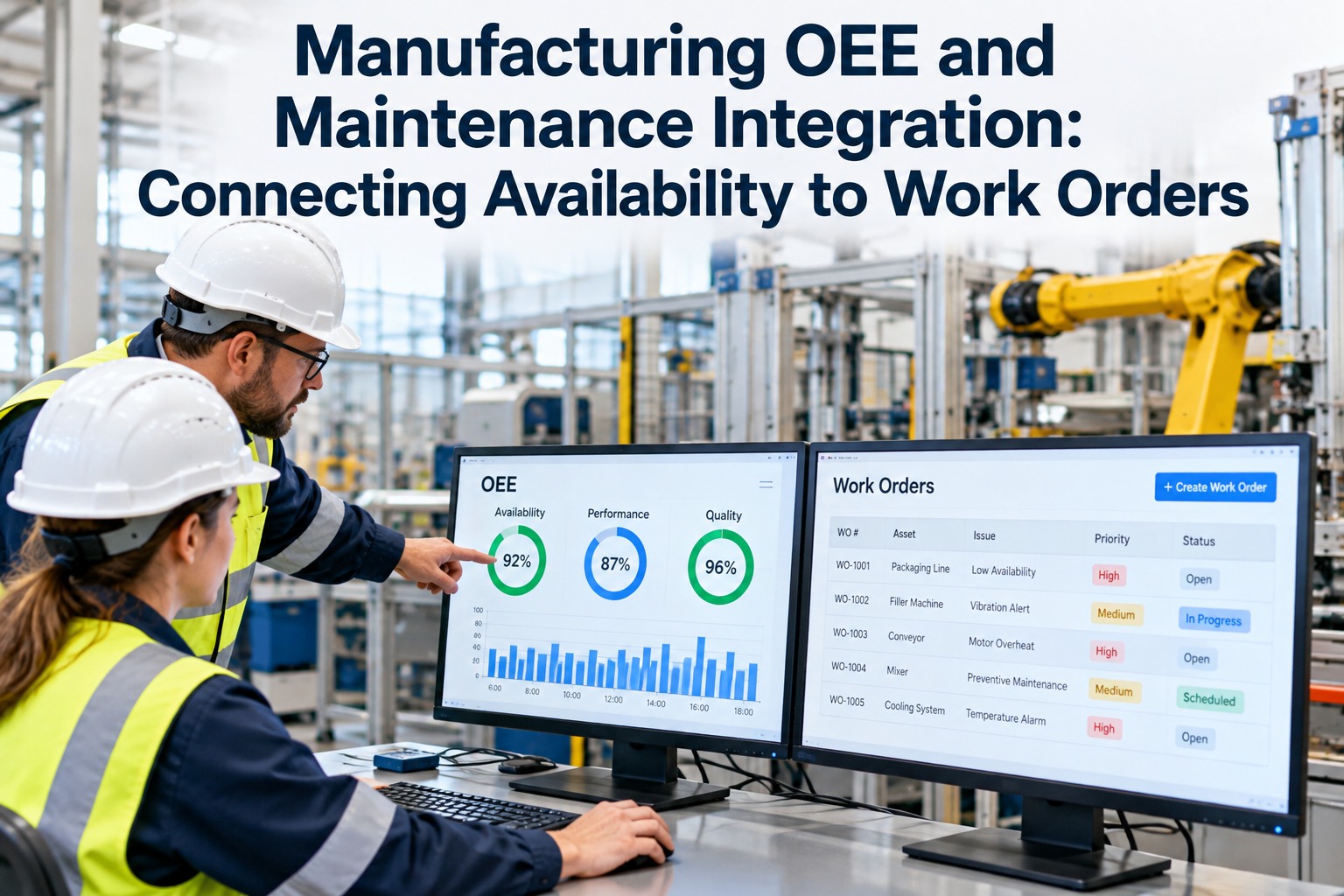
OEE drops, quality rejects, cycle time increases, or scrap rate spikes in manufacturing execution systems (MES) trigger diagnostic work orders to investigate root causes and restore performance.
Manufacturing Pain Points
Four Ways Manual Work Order Creation Costs Your Factory Every Day
Manual work order processes introduce delays, coordination gaps, and information loss that turn preventable failures into expensive emergencies — even in facilities with modern CMMS systems installed but not fully automated.
Fault-to-Dispatch Lag Time
Operators report problems verbally or via radio, supervisors write tickets when they return to their desks, planners enter work orders during admin time, and technicians receive assignments hours later — meanwhile the fault worsens from minor to critical. Factories lose an average 6.2 hours between initial fault detection and technician dispatch, during which production continues on degraded equipment accumulating secondary damage.
Incomplete Asset Context
Work orders created manually rarely include failure history, recent repair notes, parts consumption patterns, or vendor contact information — forcing technicians to search multiple systems for context before starting work. 89% of manual work orders require follow-up information requests, delaying repairs and increasing MTTR by 2.5× compared to fully-contextualized automated work orders.
Untracked Maintenance Events
Urgent problems bypass formal work order systems entirely — technicians receive verbal instructions, perform emergency repairs, and move to the next crisis without documentation. These untracked events represent 30–40% of total maintenance labor in reactive factories, creating invisible cost centers and preventing failure pattern analysis that would enable predictive interventions.
Misaligned Priority Assignment
Manual priority decisions rely on whoever creates the work order — operators, supervisors, planners — each applying different criteria for what qualifies as "urgent" versus "routine." Critical equipment failures receive the same priority as cosmetic issues, high-skill technicians waste time on tasks any apprentice could handle, and preventive work gets perpetually deferred because reactive emergencies always feel more urgent.
Oxmaint Solution
How Oxmaint Automates Work Order Generation Across Your Factory
Oxmaint connects all fault detection pathways — IoT sensors, operator inputs, inspection findings, preventive schedules — into one autonomous work order engine that generates, prioritizes, and assigns maintenance tasks without manual intervention while maintaining full traceability and asset context.
Sensor-to-Work Order Integration
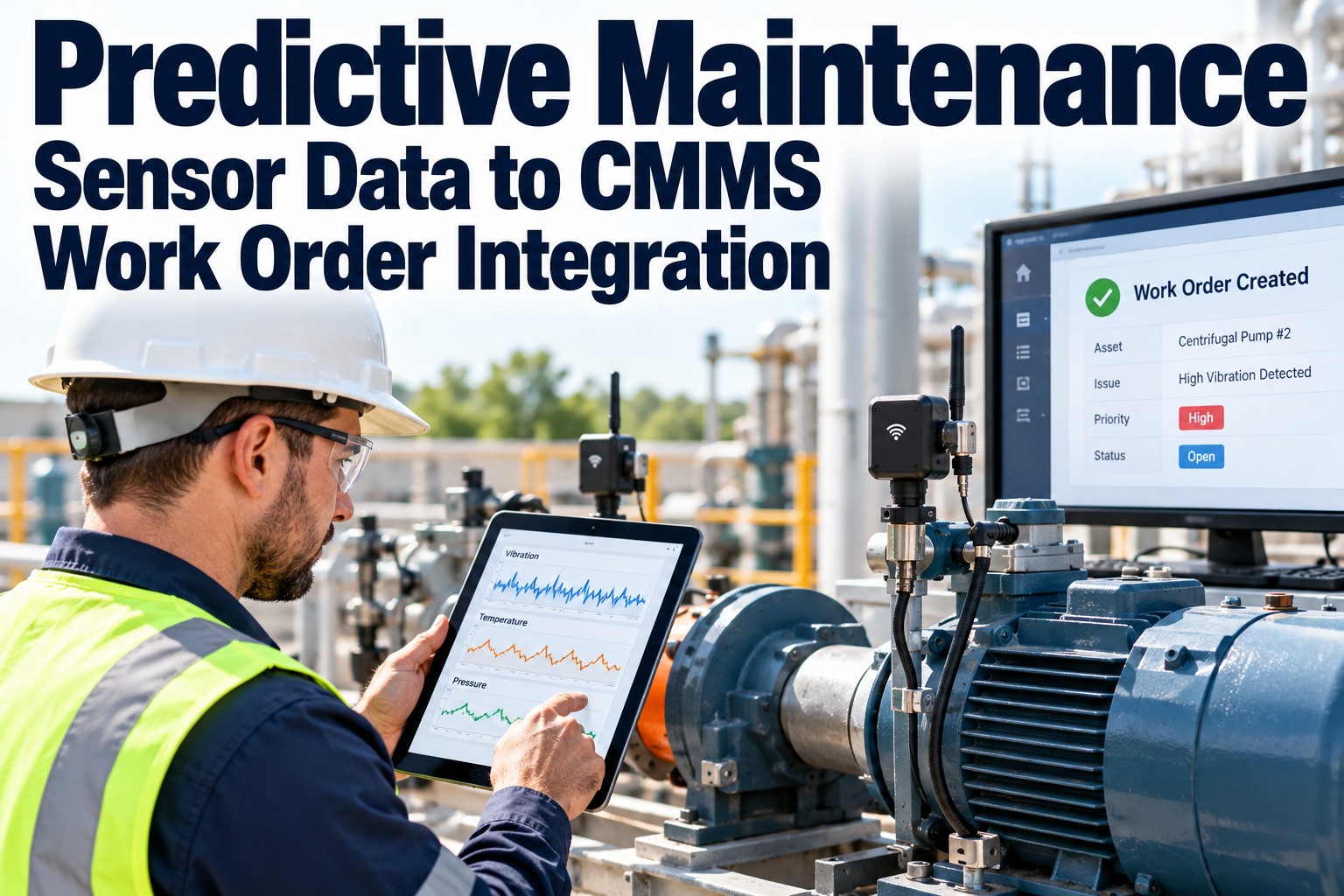
SCADA fault codes, PLC alarms, and IIoT condition alerts automatically trigger work orders with equipment ID, fault description, sensor readings, and historical failure patterns attached — technicians receive notifications within seconds of threshold exceedance.
Mobile Operator Reporting
Production operators submit problem reports via mobile app with photos, voice notes, and location tags — submissions instantly generate work orders with operator contact info, shift context, and production impact classification pre-populated.
Automated PM Scheduling
Preventive maintenance tasks auto-generate work orders based on calendar intervals, runtime hours, production cycles, or seasonal triggers — complete with procedure checklists, parts kits, tool requirements, and estimated completion times.
AI-Driven Priority Classification
Machine learning models analyze asset criticality scores, production schedules, failure mode severity, spare parts availability, and technician skill requirements to automatically assign priority levels and recommended response times for every work order generated.
Smart Technician Assignment
Work orders auto-assign to technicians based on skill certifications, current workload, physical location, shift schedules, and asset ownership zones — balancing workload distribution while ensuring high-complexity tasks reach senior craftspeople first.
Full Maintenance History Context
Every auto-generated work order includes asset failure history, recent repair notes, parts consumption trends, warranty status, vendor contacts, and recommended troubleshooting steps — eliminating information-gathering delays before technicians start work.
Before vs After
Manual Work Order Creation vs Autonomous Generation
The shift from manual to autonomous work order processes transforms maintenance response speed, information completeness, and operational visibility — reducing fault-to-repair cycles from hours to minutes while ensuring every maintenance event is tracked and analyzed for continuous improvement.
| Work Order Process Step |
Manual Creation (Traditional) |
Autonomous Generation (Oxmaint) |
| Fault Detection to Work Order |
Operator reports verbally → Supervisor writes ticket when available → Planner enters CMMS later (avg 6.2 hours delay) |
Sensor alert or operator mobile input → Work order auto-generated instantly with asset context, failure data, parts requirements |
| Asset Information Included |
Equipment ID only — technician searches for manuals, failure history, parts specs separately (avg 45 min per work order) |
Full asset profile: failure history, recent repairs, parts consumption, warranty status, vendor contacts attached automatically |
| Priority Assignment |
Supervisor judgment based on whoever complains loudest — inconsistent criteria across shifts and departments |
AI classification using asset criticality, production impact, safety risk, failure mode severity, spare parts availability |
| Technician Assignment |
Manual dispatch by supervisor — often nearest available body regardless of skill match or current workload balance |
Auto-assignment based on skill certifications, workload capacity, location proximity, shift schedules, asset ownership zones |
| Preventive Maintenance Tracking |
Calendar reminders require manual work order creation — 30–40% of scheduled PMs missed due to admin backlog |
PM tasks auto-generate work orders 7–14 days before due dates with procedures, parts lists, estimated hours pre-populated |
| Untracked Emergency Work |
30–40% of urgent repairs bypass CMMS entirely — verbal instructions, no documentation, invisible cost centers |
All maintenance events captured: sensor alerts, operator reports, inspection findings trigger formal work orders — zero untracked labor |
Measurable Impact
ROI from Autonomous Work Order Generation
Manufacturing facilities implementing autonomous work order systems measure impact across downtime reduction, labor efficiency, maintenance cost control, and data quality — with returns visible within the first 90 days of deployment.
40–50%
Reduction in Mean Time to Repair (MTTR)
Fault-to-dispatch time drops from 6+ hours to under 15 minutes with sensor-triggered autonomous work orders — Plant Engineering, 2024
32%
Decrease in Unplanned Downtime Events
Proactive work orders from condition monitoring and operator reports catch failures before functional breakdown — McKinsey, 2023
95%+
Work Order Automation Rate Achieved
Facilities integrating IoT sensors, operator apps, PM schedules, and inspection workflows into autonomous generation systems
18–25%
Maintenance Labor Productivity Gain
Technicians spend more time repairing and less time searching for information, waiting for assignments, or coordinating parts — ARC Advisory, 2024
Zero
Untracked Maintenance Events
All work — reactive, preventive, operator-reported — flows through formal work order system enabling full cost visibility and failure pattern analysis
$180K–$420K
Annual Savings per Facility
Combined impact of reduced downtime, improved labor efficiency, lower emergency repair costs in 200–500 asset manufacturing plants — Reliabilityweb.com, 2023
Common Questions
Autonomous Work Order Generation FAQ
Can Oxmaint integrate with existing SCADA, PLC, and IIoT sensor platforms to trigger work orders automatically?
Yes. Oxmaint connects to industrial control systems via OPC-UA, Modbus TCP, MQTT, REST APIs, and file-based integration methods. Fault codes, alarm states, and condition monitoring thresholds from Rockwell, Siemens, Schneider Electric, Honeywell, and other platforms trigger work orders automatically without requiring custom programming on the SCADA side. For legacy systems without network connectivity, Oxmaint provides operator-triggered work order creation via mobile app as an interim solution while sensor integration is implemented.
Start a free trial to connect your SCADA fault alerts and see autonomous work order generation live within your first week of deployment.
How does Oxmaint prevent duplicate work orders when the same fault is reported by multiple sources simultaneously?
Oxmaint's deduplication engine matches incoming triggers (sensor alerts, operator reports, inspection findings) by asset ID, fault type, and time window — consolidating multiple reports of the same issue into a single work order. If a bearing vibration alert and an operator noise report for the same motor arrive within 15 minutes, the system merges them into one work order with both data sources attached. Technicians see all related context without juggling multiple redundant tickets, and supervisors avoid dispatching two teams to the same problem.
Can the autonomous system handle emergency situations where immediate supervisor override is needed?
What happens to work orders generated for equipment that is temporarily taken offline for scheduled shutdowns or production changes?
Oxmaint integrates with production schedules and equipment status registers. When assets are marked offline for planned shutdowns, PM-triggered work orders automatically defer to the next scheduled runtime period, and sensor-based alerts are suppressed to prevent false alarms from non-operating equipment. Operators can tag equipment as "out of service" via mobile app, immediately pausing autonomous work order generation for that asset until it returns to active status. This prevents maintenance backlog clutter from shutdown periods while ensuring no work orders are lost — they simply queue for appropriate timing rather than generating during non-production windows.
Smart Factory Maintenance · Oxmaint CMMS · Autonomous Operations
Stop Losing Hours Between Fault Detection and Technician Dispatch
Oxmaint's autonomous work order generation engine connects IoT sensors, operator reports, inspection findings, and preventive schedules into one intelligent system that creates, prioritizes, and assigns maintenance work automatically — reducing MTTR by 40–50%, eliminating untracked emergency repairs, and ensuring every fault is documented with full asset context from the moment it's first detected.
✓ Sensor-triggered work orders generated in under 15 seconds
✓ AI priority classification by asset criticality and production impact
✓ Complete failure history and parts data attached automatically
No heavy implementation required · Live in days, not months · Works across multi-site manufacturing portfolios