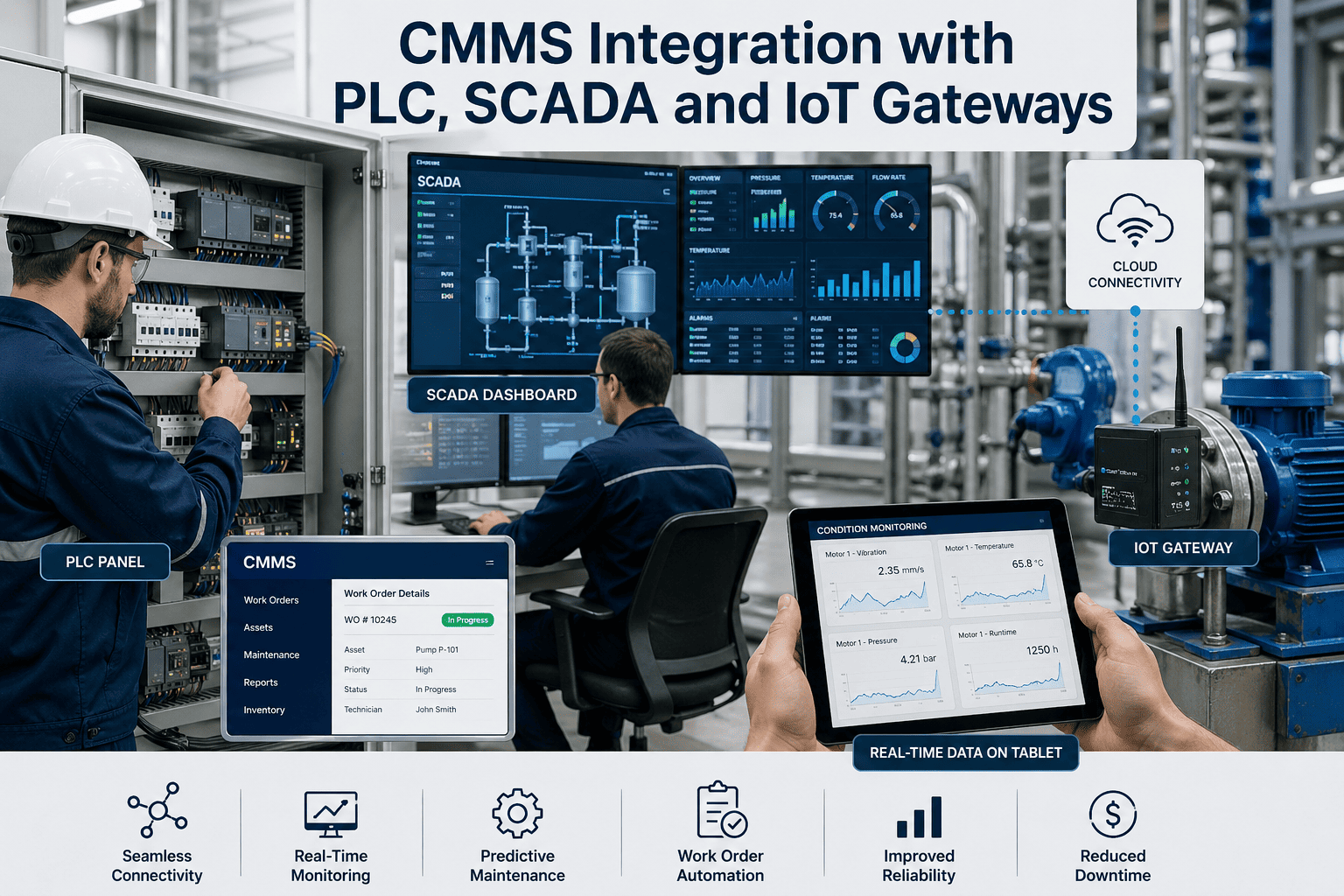
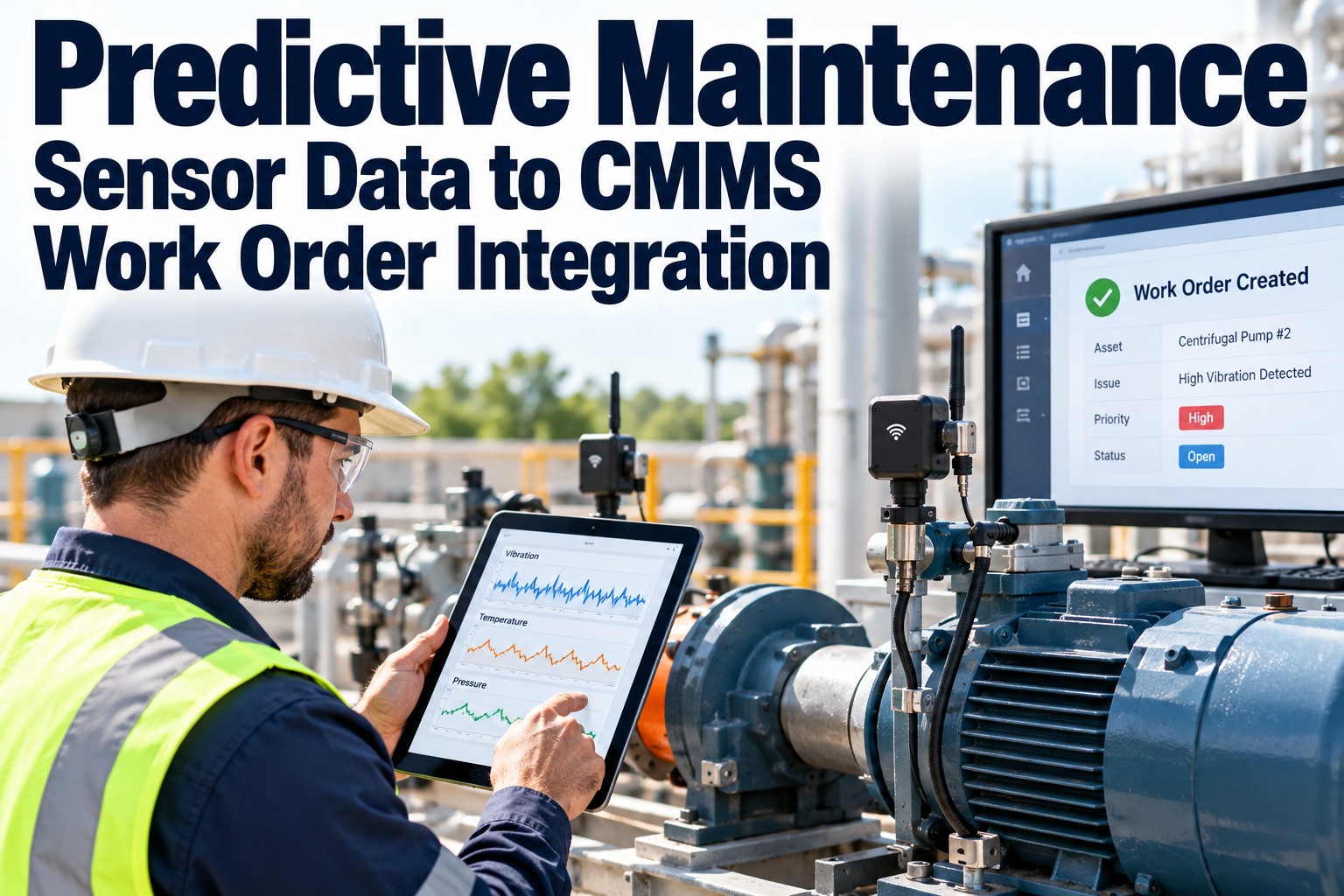
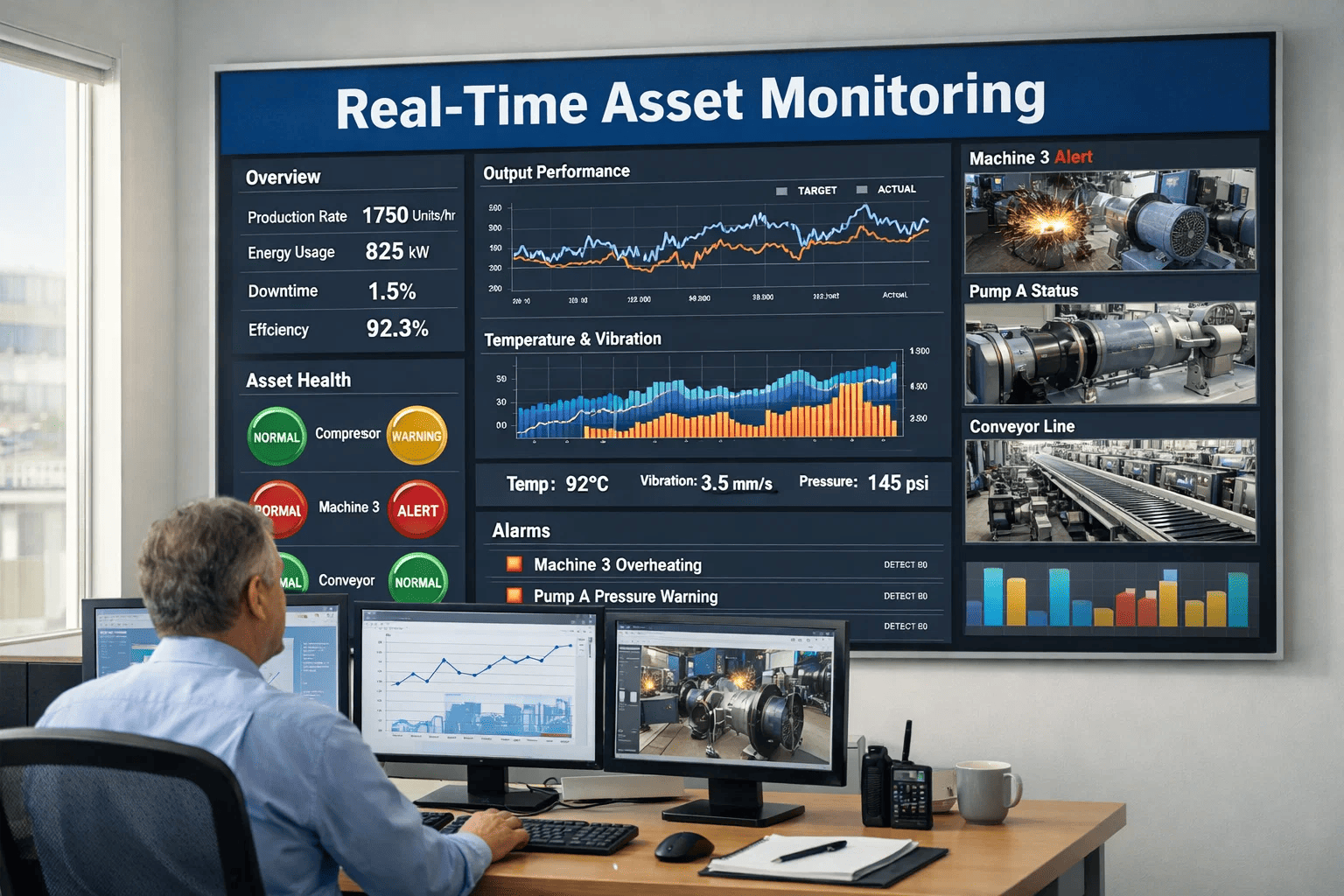
For most plants running PLCs from the 1990s alongside SCADA systems built across decades of CapEx cycles, the question is no longer whether to connect the shop floor to maintenance — it is how to do it without ripping out $40M of working automation. Modern CMMS platforms now integrate with PLC tag data, SCADA alarm streams, and IoT gateway telemetry through OPC-UA, MQTT, and REST endpoints — turning every Allen-Bradley, Siemens, Schneider, and Mitsubishi controller already on the floor into a real-time data feed for predictive maintenance, automatic work order generation, and condition-based asset health scoring. 78% of manufacturers report SCADA-CMMS integration as the highest-ROI digital initiative of the past 24 months, with payback periods averaging 7–11 months and unplanned downtime reductions of 32–45%. The teams winning this race are not the ones with the newest equipment — they are the ones whose CMMS speaks the same protocols their controllers already broadcast. If you want to see exactly how that integration looks across your existing automation stack, you can start a free trial in under five minutes, or book a demo with a solutions engineer who will walk through your specific PLC and SCADA environment.
Industrial Automation · CMMS Integration
CMMS Integration with PLC, SCADA & IoT Gateways
A practical guide to connecting your maintenance platform to legacy controllers and modern industrial IoT — without replacing a single PLC, SCADA license, or gateway you already own.
Manufacturers ranking SCADA-CMMS integration as highest-ROI digital initiative (LNS Research, 2024)
32-45%
Unplanned downtime reduction reported in plants with PLC-tag-driven CMMS work order automation
7-11 mo
Average payback period on industrial IoT-CMMS integration projects (Plant Engineering, 2024)
$2.8M
Average annual avoided downtime cost per integrated mid-size plant (250-asset benchmark)
See Your Stack Connected in 30 Minutes
Your PLCs Are Already Talking. Your CMMS Should Be Listening.
Most plants discover within the first demo session that 60-70% of their existing automation already broadcasts the data needed for condition-based maintenance — they just have no system pulling it into a work order workflow. OxMaint connects to your existing OPC-UA server, MQTT broker, or historian without changing a single line of PLC code.
What CMMS-PLC-SCADA-IoT Integration Actually Means
Integration is not a single switch — it is a stack of four layers that move equipment data from the factory floor to your maintenance platform in milliseconds. At Layer 1, PLCs and field sensors generate raw process data: motor current draw, vibration amplitude, pressure differential, cycle counts, alarm states. At Layer 2, SCADA systems and historians aggregate that data into structured tag values with timestamps. At Layer 3, an IoT gateway or message broker (OPC-UA server, MQTT broker, or REST API) exposes those tags to external systems through industry-standard protocols. At Layer 4, the CMMS subscribes to the tags it cares about — converting threshold breaches into work orders, runtime hours into PM triggers, and alarm events into condition-scored asset records. The integration does not replace the lower layers. It listens to them. To see the full data flow on your existing controllers, you can book a demo with the OxMaint integration team.
The 4-Layer Integration Architecture
L1
Field · PLCs & Sensors
Allen-Bradley ControlLogix, Siemens S7, Mitsubishi Q-Series, Schneider Modicon, vibration accelerometers, pressure transmitters, current sensors. Generates the raw process variables.
Cisco IoT, HiveMQ, AWS IoT Greengrass, Azure IoT Edge, Kepware KEPServerEX. Translates between industrial protocols and modern message queues, applies edge filtering, ensures secure outbound communication.
MQTT · AMQP · REST · Sparkplug B
L4
Maintenance · CMMS Layer
OxMaint subscribes to the tags relevant for asset health, runtime, and alarms. Auto-creates work orders on threshold breach, updates PM schedules from runtime hours, scores asset condition continuously.
REST API · Webhook · OPC-UA Client
6 Integration Pain Points Most Plants Run Into
Mixed-Vendor Controller Estates
A typical plant runs 4-7 PLC vendors across 20-40 years of CapEx cycles. Each speaks slightly different EtherNet/IP, PROFINET, or Modbus dialects.
SCADA Locked Behind Vendor APIs
Older Wonderware and FactoryTalk versions expose data only through proprietary clients — making CMMS connectivity feel like a bolt-on engineering project.
OT/IT Network Segmentation
IT will not allow CMMS direct access to Layer 1 controllers — and OT will not allow Layer 1 to expose itself to the internet. Without an edge gateway, integration stalls.
Tag Soup · No Standardisation
A plant with 80,000 PLC tags has no naming convention. Without ISA-95 or Sparkplug B namespace structure, the CMMS does not know what an asset's runtime tag actually is.
Alarm Floods, Not Work Orders
SCADA generates 3,000-12,000 alarm events per day. Without filtering and contextual logic, every minor deviation becomes an unactionable CMMS notification.
No Asset-to-Tag Hierarchy
SCADA tags exist at controller level. CMMS assets exist at equipment level. Without a hierarchy mapping, no one knows which 47 tags relate to which compressor.
How OxMaint Connects to Your Existing Automation Stack
The connection model is non-invasive by design. OxMaint does not write to PLCs, does not require firmware changes, and does not need direct access to your control network. It subscribes to data already exposed by your gateway, broker, or historian — making integration a configuration exercise, not a controls engineering project. Teams typically have their first auto-generated work order from a real PLC alarm within 5-7 days of starting. To see the connector library for your specific vendor mix, you can start a free trial and load your asset list in under an hour.
01
Native OPC-UA Client
Direct OPC-UA subscription to any historian or SCADA exposing the protocol — no middleware, no agent install on the SCADA server, no licensing surprises.
02
MQTT & Sparkplug B Listener
Subscribes to MQTT topics from edge gateways using Sparkplug B for namespace discovery — auto-mapping equipment tags to OxMaint asset records.
03
REST & Webhook Endpoints
For modern IoT platforms (AWS IoT Core, Azure IoT Hub, Particle, Losant), OxMaint exposes secure REST endpoints accepting JSON payloads with HMAC signing.
04
Threshold-to-Work-Order Engine
Configurable rules turn tag values into actions: vibration above 7.1 mm/s creates Priority-2 WO, runtime hours hitting 4,000 trigger a PM, alarm state opens a craft-routed ticket.
05
Asset-to-Tag Hierarchy Mapper
Drag-and-drop interface maps PLC tags to assets in the OxMaint hierarchy: Site > Area > Line > Asset > Component. Each asset inherits all tag subscriptions automatically.
06
Alarm Filtering & Deduplication
Built-in logic suppresses chattering alarms, groups related events, and only escalates to a work order when conditions meet operational severity thresholds.
Isolated CMMS vs OxMaint-Integrated Stack
Capability
Isolated CMMS
OxMaint Integrated
Work order trigger source
Operator phone call or paper request
PLC tag threshold or SCADA alarm event
Failure detection lag
15 minutes to 4 hours after onset
Sub-second from threshold breach
Runtime-based PM accuracy
Estimated from production schedule
Actual hours from PLC counter tag
Asset condition score
Updated quarterly by inspection
Live, recalculated on every reading
Mean time to acknowledge
22-48 minutes (manual escalation)
2-4 minutes (auto-routed to craft)
Implementation timeline
3-6 months of integration work
5-14 days for OPC-UA / MQTT setup
Required PLC code changes
Yes — controls engineering needed
None — read-only subscription
Data fidelity for predictive models
Aggregated, lossy, monthly
1-second granularity, continuous
Documented ROI from Connected Plants
41%
Mean reduction in unplanned downtime within 12 months of OPC-UA-CMMS integration go-live
3.6x
Faster mean time to acknowledge a critical alarm vs. operator-phoned work request
28%
Reduction in PM labor hours after switching from calendar-based to runtime-based scheduling
$420K
Average first-year avoided downtime cost per 100 connected critical assets (mid-market manufacturing)
Frequently Asked Questions
Will OxMaint integration require firmware changes or new code in our PLCs?
No. OxMaint uses a read-only client model — it subscribes to data already exposed by your SCADA, historian, or IoT gateway through OPC-UA, MQTT, or REST. There is no PLC programming change, no firmware update, and no rip-and-replace of existing controllers. Most plants have their first integration test running within 48 hours of starting.
Which SCADA, historian, and gateway platforms does OxMaint connect to natively?
Native connectors exist for Wonderware/AVEVA, Ignition, FactoryTalk, WinCC, OSIsoft PI, Kepware KEPServerEX, AWS IoT Core, Azure IoT Hub, HiveMQ, and any OPC-UA-compliant server. For modern IoT platforms (Particle, Losant, ThingsBoard, Cumulocity), OxMaint connects through REST and MQTT with HMAC-signed payloads.
How does OxMaint avoid drowning the maintenance team in SCADA alarm noise?
Built-in alarm filtering applies four layers of suppression: chattering deduplication, severity thresholding, time-based grouping, and operational context (no work order generated during planned maintenance windows). Plants typically see 3,000-12,000 daily SCADA alarms reduced to 8-25 actionable work orders.
What does the OT-IT network architecture look like for a secure CMMS integration?
OxMaint sits in your IT layer and connects to an edge gateway or OPC-UA server in the OT DMZ — never directly to Layer 1 controllers. The integration is outbound-only from the gateway, uses TLS 1.3 with mutual certificate authentication, and supports air-gap-friendly deployment models with on-prem brokers for plants with no outbound internet from the OT zone.
Industrial CMMS · PLC, SCADA & IoT Integration
Stop Letting Your Most Expensive Data Sit Trapped in Your Control Room.
Your PLCs already know when a motor is overheating, when a pump is cavitating, and when a conveyor is approaching a bearing failure. The only question is whether your maintenance platform is listening. OxMaint connects to your existing automation stack in days — not months — and turns the data your shop floor has been broadcasting for years into work orders, condition scores, and predictive insights your team can act on today.