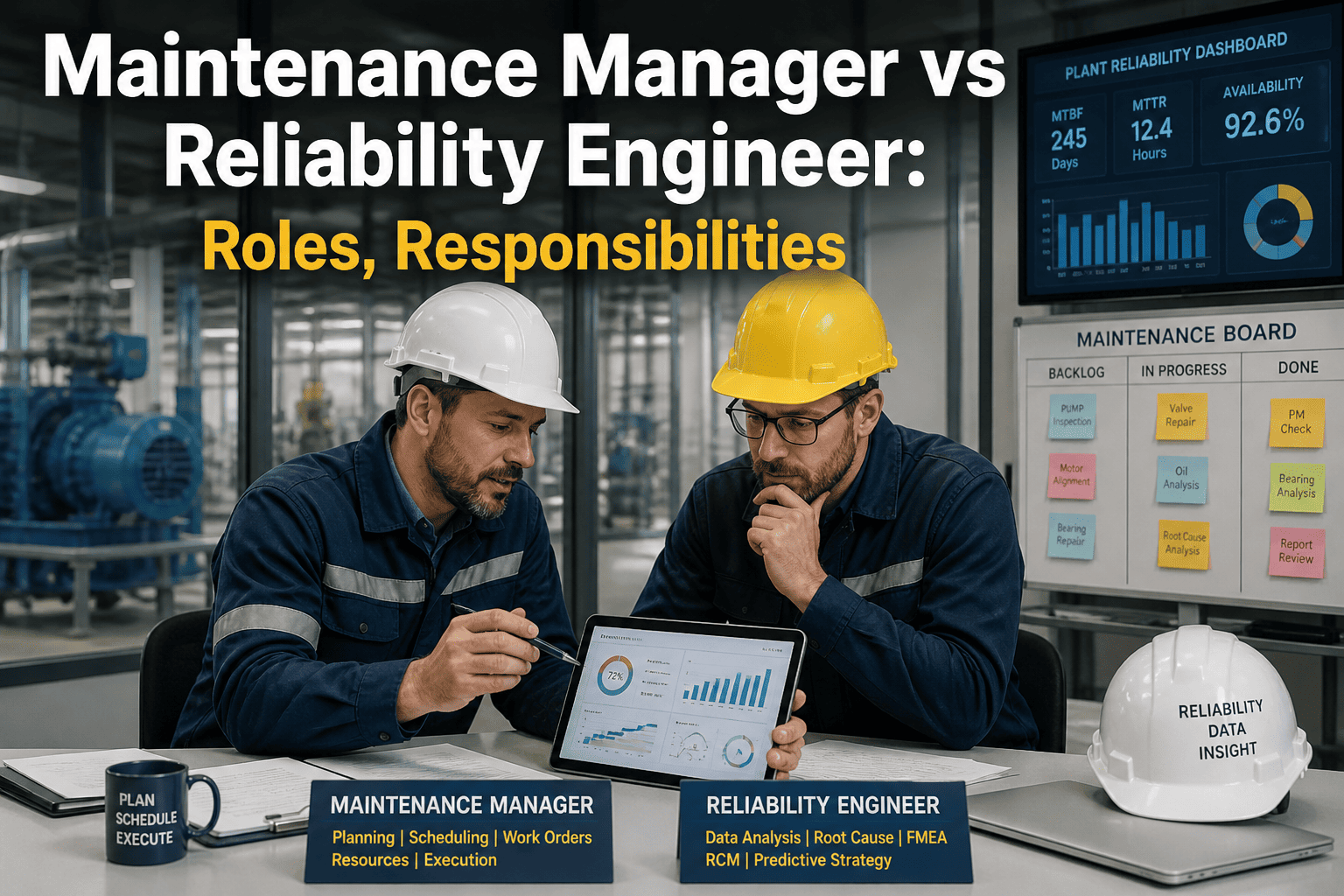
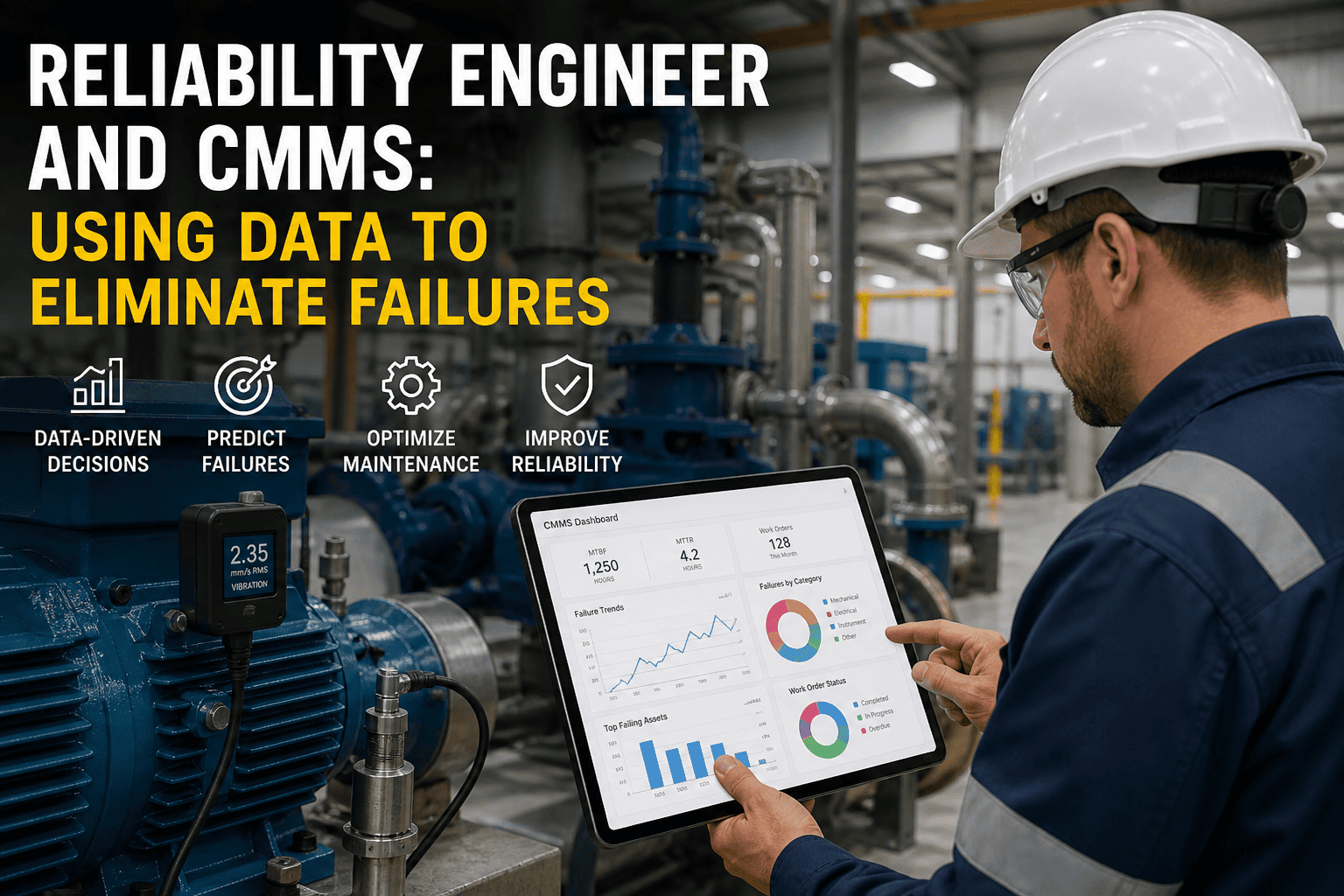
Organizations waste millions annually by confusing two critical roles: the maintenance manager who keeps operations running today, and the reliability engineer who prevents failures tomorrow. Without clarity on their distinct responsibilities, teams overlap on reactive work while predictive strategies go unexecuted. Understanding the difference between maintenance managers and reliability engineers helps facility leaders build high-performing teams where each role amplifies the other. This guide breaks down their unique skill sets, daily workflows, and how modern CMMS platforms support both in creating world-class maintenance operations. Start a free trial to see how Oxmaint aligns both roles or book a demo to optimize your maintenance structure.
Role Clarity Framework
Maintenance Manager vs Reliability Engineer: Build Teams That Prevent Failures
Stop role confusion that drains efficiency. Learn how maintenance managers execute daily operations while reliability engineers design failure-prevention systems — and why you need both.
47%
Plants with unclear role definitions
3.2x
Faster MTTR with defined workflows
68%
Improved equipment uptime w/ both roles
$2.4M
Avg annual savings from role optimization
The Core Distinction: Execution vs Prevention
Maintenance managers and reliability engineers tackle equipment performance from opposite directions. The maintenance manager is tactical — scheduling PMs, dispatching technicians, managing parts inventory, and ensuring work orders close on time. The reliability engineer is strategic — analyzing failure patterns, designing predictive programs, and engineering out chronic problems before they trigger work orders. Organizations achieve peak performance when both roles collaborate seamlessly. Start a free trial to see how Oxmaint bridges execution and strategy with unified workflows.
Maintenance Manager
Tactical Execution
Runs daily operations, manages crews, executes preventive schedules, controls budgets, and delivers on production uptime targets.
Reliability Engineer
Strategic Prevention
Analyzes root causes, designs predictive programs, optimizes PM intervals, reduces chronic failures, and improves asset lifecycles.
Overlap Zone
Data-Driven Partnership
Both rely on CMMS data — managers for work order tracking, engineers for failure trend analysis and improvement projects.
Outcome
Zero-Breakdown Culture
When aligned properly, reactive work drops below 20% and planned maintenance reaches 75%+, cutting costs by 22%.
Struggling to define roles clearly? Oxmaint's role-based dashboards give maintenance managers real-time crew visibility while reliability engineers get failure analytics and RCA tools — all in one platform.
Responsibilities Breakdown: Side-by-Side Comparison
← swipe table →
| Responsibility Area |
Maintenance Manager |
Reliability Engineer |
| Work Order Management |
Assigns, tracks, closes all work orders; ensures technician compliance |
Reviews completed work for failure trends; recommends process improvements |
| Preventive Maintenance |
Schedules and executes PM tasks per calendar or meter-based triggers |
Optimizes PM intervals using failure data; designs condition-based triggers |
| Failure Response |
Dispatches emergency crews; minimizes downtime; restores production quickly |
Conducts root cause analysis; implements corrective actions to prevent recurrence |
| Budget Control |
Manages parts inventory, labor costs, contractor spending against monthly targets |
Justifies CapEx investments with lifecycle cost analysis and failure risk models |
| Data & Analytics |
Tracks KPIs: backlog hours, PM compliance, labor utilization, cost per work order |
Analyzes MTBF, MTTR, failure modes, Weibull distributions, criticality rankings |
| Team Leadership |
Hires, trains, and coaches technicians; sets daily priorities and safety protocols |
Mentors maintenance staff on reliability methods; leads cross-functional improvement teams |
Source: Society for Maintenance & Reliability Professionals (SMRP) 2025 role definitions and Plant Engineering workforce surveys.
Daily Workflow: What Each Role Actually Does
Understanding the day-to-day differences clarifies why both roles are essential. A maintenance manager's morning starts with backlog review and crew assignments. A reliability engineer's morning starts with failure data trending and improvement project planning. Book a demo to see how Oxmaint streamlines workflows for both roles with customized dashboards.
Maintenance Manager's Day
6:00 AM – 6:00 PM
Morning safety briefing → Assign work orders → Track PM completion → Respond to breakdowns → Review parts usage → Close out shift reports.
Reliability Engineer's Day
7:00 AM – 5:00 PM
Analyze overnight failures → Run FMEA on critical assets → Design predictive routes → Meet with operations on chronic issues → Build business case for equipment upgrades.
Required Skills: Technical vs Analytical Focus
Both roles demand expertise, but the skill mix differs sharply. Maintenance managers need operational leadership and hands-on technical knowledge. Reliability engineers need data science skills and deep understanding of failure physics.
Maintenance Manager Skills
Crew management, budget control, CMMS proficiency, work order optimization, parts inventory management, safety compliance, vendor negotiation, technician training.
Reliability Engineer Skills
Root cause analysis, vibration analysis, thermography, oil analysis, FMEA/FMECA, Weibull analysis, condition monitoring, predictive modeling, CapEx justification.
Shared Competencies
CMMS data fluency, equipment knowledge, cross-functional collaboration, continuous improvement mindset, understanding of production priorities.
Certification Paths
Managers: CMMSE, FMP. Engineers: CRE, CMRP, RAM. Both benefit from Lean Six Sigma and industry-specific technical training.
Common Pain Points When Roles Are Unclear
Role Overlap & Confusion
38%
Plants report duplicated efforts when reliability engineers get pulled into daily firefighting instead of strategic work.
Reactive Maintenance Stays High
55%+
Without dedicated reliability focus, reactive work dominates because no one owns failure prevention.
Talent Retention Issues
$85k
Cost to replace a reliability engineer who leaves due to lack of role clarity and strategic mandate.
Missed CapEx Justification
$1.2M
Avg budget lost annually when reliability engineers can't build data-driven business cases for equipment upgrades.
Data Silos
42%
Organizations where maintenance and reliability use separate systems, preventing collaboration.
PM Optimization Never Happens
18%
Over-maintenance waste when reliability engineers aren't empowered to challenge outdated PM frequencies.
How Oxmaint Supports Both Roles Simultaneously
Modern CMMS platforms eliminate the friction between execution and strategy by giving each role the exact data they need in their preferred format.
1
Maintenance Manager Dashboard
Real-time work order queue, crew assignments, backlog hours, PM compliance %, parts usage, and labor cost tracking.
2
Reliability Engineer Analytics
Failure mode trending, MTBF/MTTR analysis, asset criticality scoring, RCA documentation, and predictive maintenance triggers.
3
Shared Data Foundation
Both roles access the same asset records, maintenance history, and condition data — no duplicate entry or version conflicts.
4
Collaboration Workflow
Reliability engineers flag chronic failures; maintenance managers prioritize the corrective work; system tracks improvement impact.
5
Mobile Access for Field Teams
Technicians capture failure details on mobile; reliability engineers analyze that data for patterns; managers track completion rates.
6
Continuous Improvement Loop
System auto-generates reliability projects from recurring failures; managers execute fixes; platform measures results.
Start a free trial to experience role-optimized dashboards that keep both maintenance managers and reliability engineers focused on what they do best.
Organization Structures: Reporting Lines That Work
The reporting relationship between these roles impacts collaboration quality. Three common structures each have trade-offs.
Engineer Reports to Manager
Most common in plants under 300 people
Risk: Engineer gets pulled into daily ops. Benefit: Close collaboration on improvement projects.
Parallel Reporting to VP
Best for large multi-site operations
Both report directly to VP of Operations. Ensures engineer has strategic mandate but requires strong communication.
Centralized Reliability Team
Enterprise portfolios with 5+ facilities
Reliability engineers sit in corporate center, support multiple site managers. Scales expertise but can feel disconnected.
Matrix Structure
Complex manufacturing with product lines
Engineer supports multiple production lines, dotted-line to maintenance managers. Requires excellent CMMS coordination.
"We struggled for years with reliability engineers fighting fires instead of analyzing data. After implementing Oxmaint with role-specific dashboards, our reliability team finally had time for true RCA work. Reactive maintenance dropped from 62% to 28% in eleven months, and our maintenance manager can now focus on crew efficiency instead of data mining."
— Marcus Chen, VP of Plant Operations, Global Automotive Tier 1 Supplier
Led reliability transformation across 14 manufacturing sites (18 years experience)
When to Hire: Sequencing Your Maintenance Team Build
Small operations start with a maintenance manager. As asset complexity and uptime criticality increase, reliability engineering becomes ROI-positive. Here's the typical progression.
Phase 1
Single Facility, Under $5M Revenue
Start with a strong maintenance manager who handles both tactical execution and basic PM optimization. Outsource specialized reliability work as needed.
Phase 2
Growth to $15M+, Critical Assets
Add reliability engineer when unplanned downtime costs exceed $500k annually or when chronic failures persist despite PM programs.
Phase 3
Multi-Site, $50M+ Revenue
Build centralized reliability team (1 engineer per 2-3 sites) supporting site-level maintenance managers. Standardize on enterprise CMMS.
Phase 4
Portfolio Operations, $200M+
Full reliability engineering function with specialized roles: vibration analysts, lubrication engineers, PdM coordinators, RCA specialists.
Frequently Asked Questions
Can one person do both jobs effectively?
In small facilities (under 100k sq ft), a highly skilled maintenance manager can handle basic reliability work using CMMS analytics. However, once daily firefighting exceeds 6 hours per day, reliability engineering suffers. The breakpoint is typically when reactive work stays above 45% for three consecutive months.
What's the typical salary difference between these roles?
In the US, maintenance managers average $78k-$105k depending on facility size. Reliability engineers with CRE certification average $92k-$128k due to specialized analytical skills. Senior reliability engineers at Fortune 500 plants can exceed $145k.
Should the reliability engineer have approval authority over PM schedules?
Best practice: reliability engineer recommends PM interval changes based on data; maintenance manager approves based on resource availability and production impact. Oxmaint's workflow routes PM optimization proposals through both roles for review.
Start a free trial to see collaborative approval workflows.
How does CMMS enable better collaboration between these roles?
Modern CMMS creates a single source of truth: maintenance managers track work order execution, reliability engineers analyze failure patterns from that same data. Without integrated CMMS, engineers waste 15-20 hours per week gathering data instead of analyzing it.
Book a demo to see unified data in action.
What certifications should each role pursue?
Maintenance managers benefit from CMMSE (Certified Maintenance Manager) or FMP (Facilities Management Professional). Reliability engineers should target CMRP (Certified Maintenance & Reliability Professional) or CRE (Certified Reliability Engineer). Both gain value from Lean Six Sigma Green Belt for process improvement skills.
How long does it take to see ROI after hiring a reliability engineer?
Organizations with proper CMMS support see measurable improvement in 6-9 months: reactive maintenance drops 12-18%, PM efficiency improves 15-25%, and unplanned downtime decreases 20-30%. Annual ROI typically reaches 3:1 to 5:1 after the first year.
Give Both Roles the Tools They Need to Excel
Stop forcing your maintenance manager to choose between execution and strategy. Oxmaint delivers role-optimized dashboards that let managers run daily operations efficiently while reliability engineers focus on failure prevention. One platform, two perspectives, zero role confusion.