Every maintenance team operates somewhere on a spectrum — from chasing failures reactively to predicting them before they happen. The strategy you choose determines not just your downtime and repair costs, but your team's capacity, your asset lifespan, and your organization's competitive position. Industrial research consistently shows that unplanned failures cost 4.8 times more to repair than scheduled maintenance — yet most facilities still allocate the majority of their maintenance labor to reactive response. If your team is ready to shift that ratio, start a free 30-day trial of Oxmaint's CMMS and run your preventive and predictive programs from a single platform — or book a demo to see the ROI modeled for your asset base.
Maintenance Strategy / Industrial Operations
Reactive vs Preventive vs Predictive Maintenance: Cost, Downtime & ROI Compared
A data-driven comparison of the three industrial maintenance strategies — with real cost benchmarks, downtime impact, and ROI analysis to help operations teams make the right investment decision.
4.8x
reactive repair cost multiplier
Emergency repairs cost 4.8 times more than the same work performed as scheduled preventive maintenance
25–30%
downtime reduction
Facilities moving from reactive to preventive maintenance report 25–30% reduction in unplanned downtime within 12 months
10x
ROI of predictive maintenance
McKinsey estimates predictive maintenance delivers 10x ROI by reducing maintenance costs and extending asset life in industrial settings
$50B+
annual unplanned downtime cost
Estimated annual cost of unplanned industrial equipment downtime across US manufacturing sector alone
Ready to Stop Reacting and Start Preventing?
Oxmaint's CMMS unifies preventive scheduling, condition monitoring, and predictive triggers into one platform — built for multi-site industrial operations.
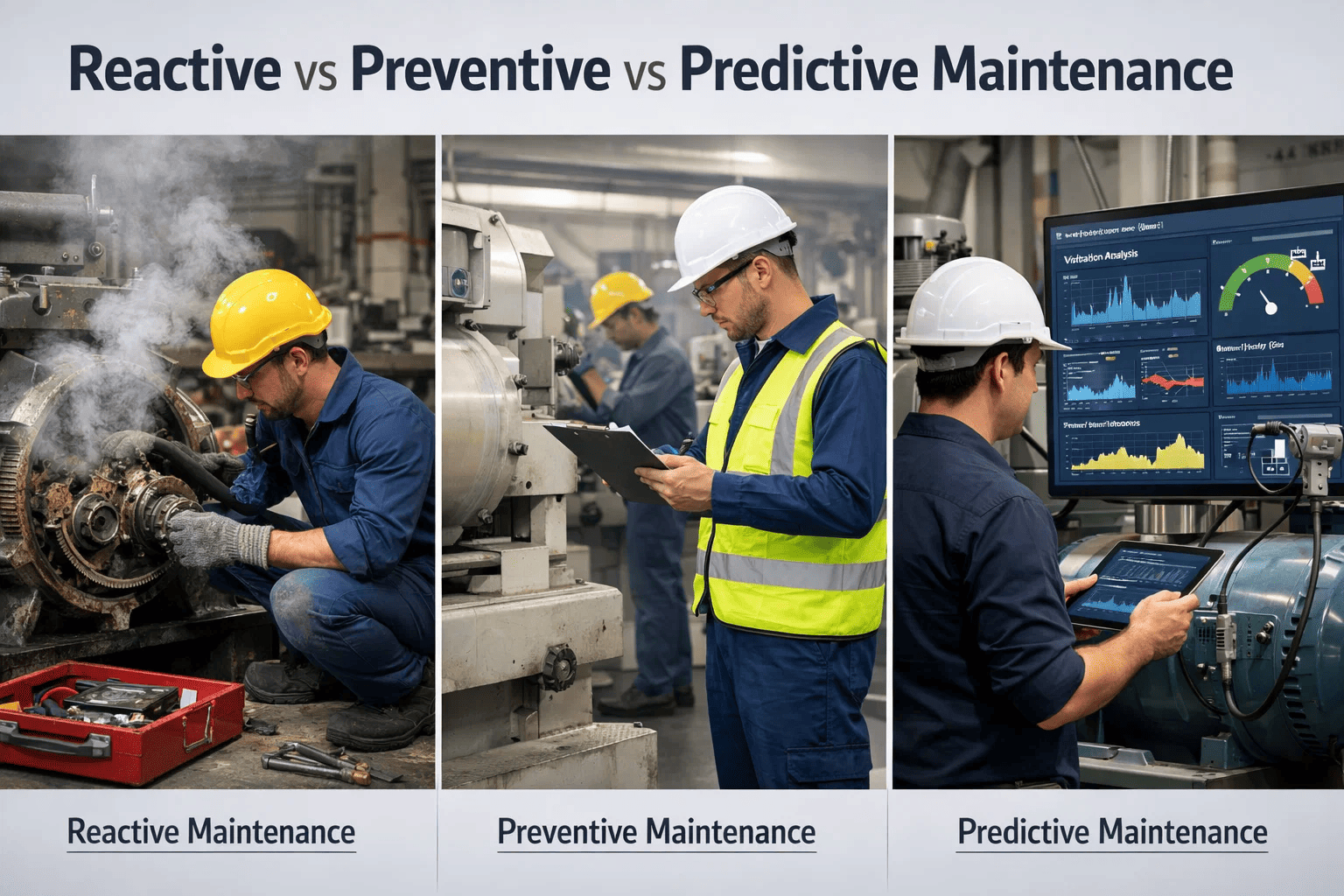
The Three Maintenance Strategies — Defined
Before comparing costs and ROI, the three strategies need precise definitions. Most industrial facilities run all three simultaneously — the question is which strategy dominates your labor allocation and which you want to shift toward. Start a free trial to audit your current strategy distribution in Oxmaint.
Reactive
Run-to-Failure (RTF)
Equipment runs until it fails, then gets repaired or replaced. Appropriate for non-critical, easily swapped assets where failure has no safety or production consequence and no failure warning exists. Default strategy for most unmanaged facilities.
Average cost: $25–$50 per labor hour equivalent in unplanned overtime and parts premium
Preventive
Time or Usage-Based PM
Maintenance performed at fixed intervals regardless of equipment condition — calendar-based, hours-based, or production cycle-based. Reduces unplanned failures but may over-service healthy equipment and under-serve degrading equipment between intervals.
Reduces unplanned downtime 25–30% vs. pure reactive — optimal for critical, maintainable assets
Predictive
Condition-Based Monitoring (CBM)
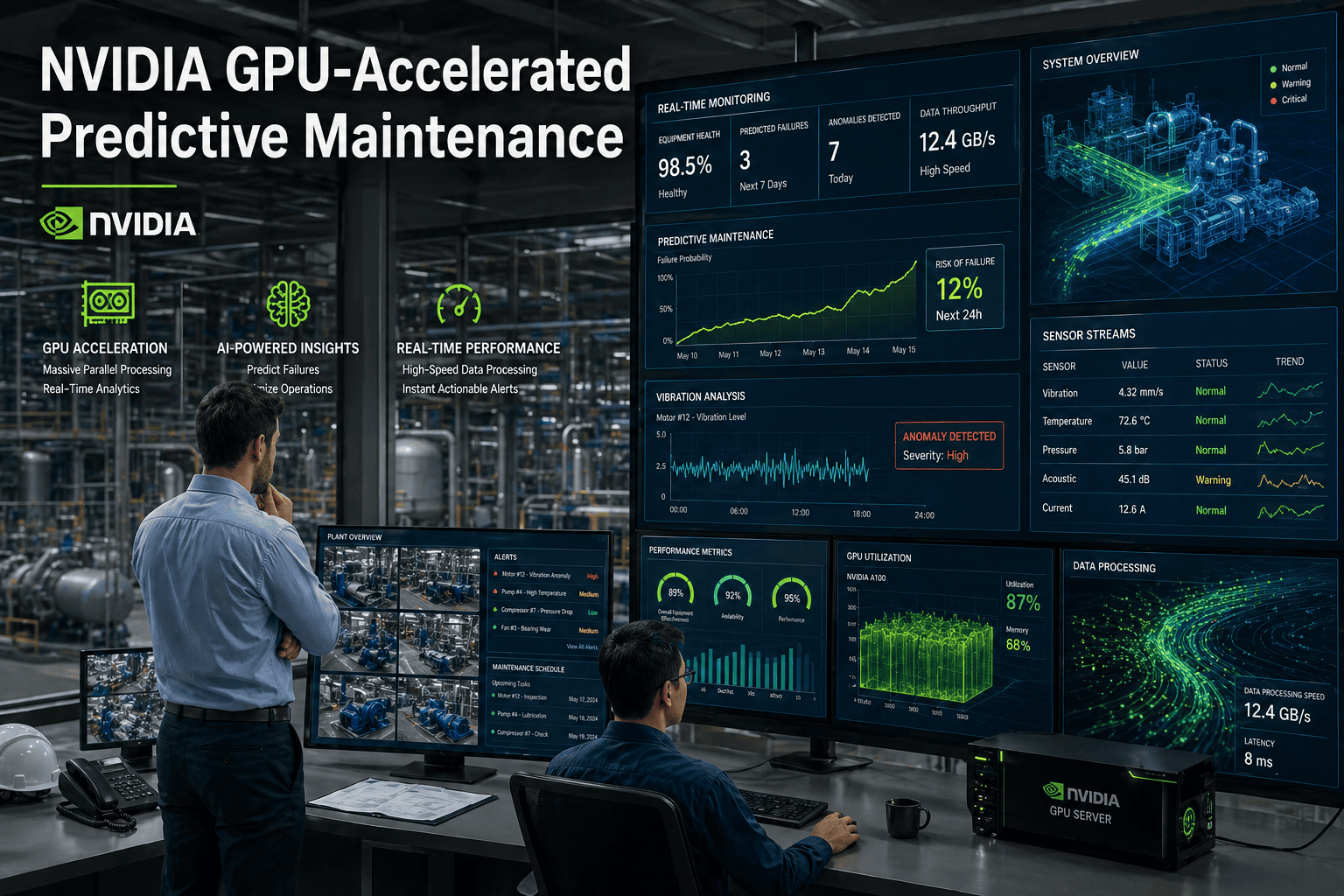
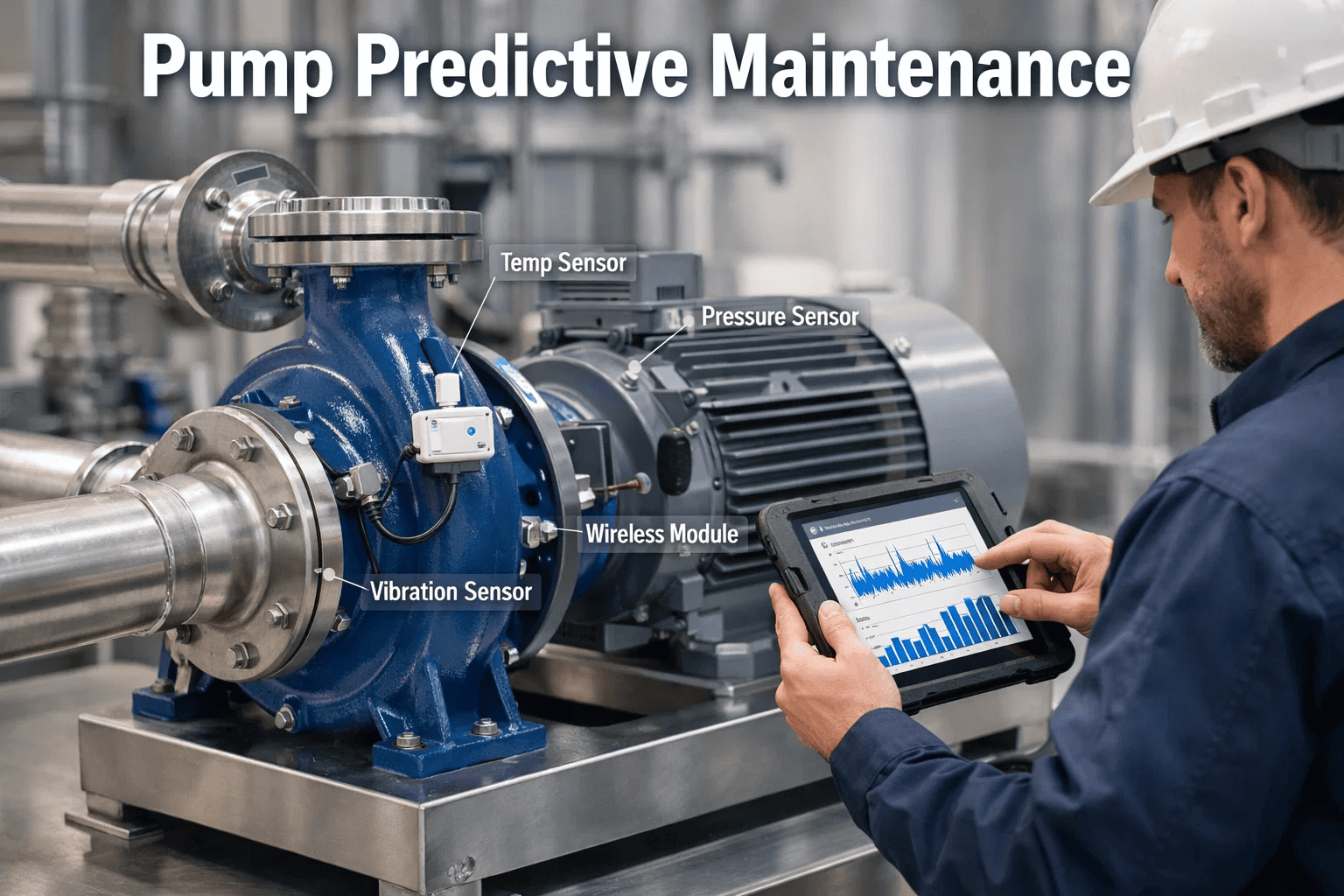
Maintenance triggered by real asset condition data — vibration analysis, thermography, oil analysis, IoT sensor feeds — rather than calendar intervals. Targets only the assets that actually need attention, maximizing resource efficiency and asset uptime.
10x ROI potential. Extends asset life by 20–40% compared to reactive strategies
Proactive
Root Cause Elimination
Identifies and eliminates the root causes of equipment degradation — contamination, misalignment, imbalance, improper lubricant selection — before they manifest as failures. Often treated as a fourth strategy in mature maintenance programs.
Addresses failure roots — reduces PM frequency requirements by up to 30% in optimized programs
Full Cost Comparison — What Each Strategy Actually Costs
The hidden costs of reactive maintenance — overtime premiums, expedited parts shipping, production loss, secondary damage — never show up on the repair invoice. Here is the complete picture. Book a demo to model the cost shift for your facility's asset base.
| Cost Factor |
Reactive |
Preventive |
Predictive |
| Labor cost per repair |
Highest (overtime, urgency) |
Moderate (scheduled) |
Lowest (planned, targeted) |
| Parts cost |
20–30% premium (expedited) |
Standard pricing |
Standard + bulk purchase savings |
| Secondary damage |
High — cascading failures common |
Low — caught before failure |
Minimal — intervene early |
| Production loss |
Uncontrolled — full line impact |
Planned — partial line impact |
Minimal — narrow window |
| Asset lifespan |
Shortened by unmanaged wear |
Maintained at OEM expectation |
Extended 20–40% beyond OEM |
| Implementation cost |
Zero upfront |
Low — CMMS scheduling |
Moderate — sensors + analytics |
| ROI timeline |
Negative — costs compound |
6–12 months payback |
18–36 months, then 10x ROI |
Why Reactive Maintenance Costs Teams Their Budget
Pure reactive maintenance isn't free — it's the most expensive option once you account for all the costs most facilities never track to their maintenance budget. Start a free trial and use Oxmaint's work order cost tracking to surface the true cost of reactive response in your facility.
01
Overtime Labor Premium
Emergency repairs occur at the least convenient times — weekends, nights, during peak production. Overtime rates add 50–100% to labor cost per hour on top of an already urgent repair.
02
Expedited Parts Shipping
Same-day or next-day parts shipping adds 20–40% to component cost and still results in hours to days of production stoppage while waiting for critical components.
03
Secondary Damage Cascade
A failed bearing damages the shaft. A failed seal contaminates the gearbox. A blown motor trips the line. Secondary damage from a single reactive failure routinely costs 3–5x the primary component value.
04
Production Loss That Never Gets Counted
Lost production revenue during unplanned downtime rarely appears on the maintenance cost report — but it's the largest real cost. A $500 bearing failure on a $10M/year production line costs thousands per hour in lost output.
Before Oxmaint vs. After Oxmaint — Real Operational Shift
Teams that implement Oxmaint's unified PM and condition monitoring platform report consistent operational shifts within the first 12 months. Start a free trial to begin the shift for your facility.
Before Oxmaint
Maintenance team 70%+ reactive response
PM schedules managed in spreadsheets with no real-time asset condition visibility
Unplanned downtime average: 8–12% of available production hours
No asset condition scoring — CapEx decisions made on gut feel
Work order history fragmented across paper, email, and legacy systems
Emergency repair cost per event: 4.8x planned equivalent
After Oxmaint
Maintenance labor shifts to 60%+ proactive — PM and condition-based work
PM schedules tied to asset condition scores with IoT and SCADA data integration
Unplanned downtime falls 25–30% within 12 months of full PM deployment
Full asset condition scoring enables data-backed CapEx forecasting 5–10 years out
Complete work order history per asset — accessible on mobile, audit-ready
Cost per maintenance event drops as planned work percentage rises
How Oxmaint Supports All Three Strategies in One Platform
Most maintenance platforms support one strategy well and the others poorly. Oxmaint was built for the reality that industrial facilities run reactive, preventive, and predictive work simultaneously — and need one system to manage all three. Book a demo to see the unified platform in action.
Preventive
PM Scheduling Tied to Asset Records
Calendar, hours-based, and production cycle-based PM triggers all configurable per asset. PM procedures linked directly to the asset record — technicians see current specifications, not outdated checklists.
Predictive
IoT and SCADA Integration
Real-time sensor data from IoT devices and SCADA systems feeds directly into asset condition scores. Condition-based maintenance triggers fire when readings cross defined thresholds — not on calendar.
OEE Tracking
Production-Line OEE Dashboards
Real-time OEE tracking per production line surfaces the direct relationship between maintenance performance and production output. Downtime events classified and analyzed to drive strategy decisions.
Asset Lifecycle
Condition Scoring and CapEx Forecasting
Every asset carries a condition score updated by inspection results and work order history. 5–10 year CapEx forecasting models built from condition data — not guesswork or annual spreadsheet estimates.
Work Orders
Full Technician Work History Per Asset
Every work order — reactive, preventive, and predictive — stored against the specific asset with technician, time, parts used, and cost. The history that feeds predictive models and strategy decisions.
Multi-Site
Portfolio-Level Strategy Reporting
Reactive vs. planned maintenance ratio tracked at every level — portfolio, property, system, and asset. Directors and VPs see strategy performance across all sites in one dashboard view.
ROI by Maintenance Strategy — Numbers at Scale
25–30%
Downtime reduction
Reactive to preventive transition within 12 months of consistent PM program execution
20–40%
Asset life extension
Condition-based predictive maintenance extends critical asset operational life versus reactive strategy
10x
Predictive maintenance ROI
McKinsey benchmark for mature predictive maintenance programs in industrial manufacturing settings
35%
Maintenance cost reduction
Average maintenance cost reduction reported by facilities shifting from predominantly reactive to preventive programs
Your Competitors Are Shifting to Preventive. The Cost of Waiting Is Measured in Failures.
Oxmaint gives maintenance, operations, and finance teams a single platform to schedule preventive work, monitor asset condition, and forecast CapEx — so reactive repairs stop eating your budget.
Frequently Asked Questions
What is the real cost difference between reactive and preventive maintenance?
The most cited benchmark is the 4.8x cost multiplier — emergency reactive repairs cost 4.8 times more than the same work performed as scheduled preventive maintenance. This multiplier captures overtime labor premiums (50–100% above standard rate), expedited parts shipping (20–40% cost premium), secondary damage from cascading failures (often 3–5x the primary component value), and production loss during unplanned stoppages. Most facilities track only the direct repair cost and see reactive as "free" until they model the full picture.
Start a free trial and use Oxmaint's work order cost tracking to model this for your asset base.
How long does it take to see ROI from switching to preventive maintenance?
Industry benchmarks show facilities implementing structured preventive maintenance programs via a CMMS seeing ROI within 6–12 months through reduced emergency repair costs, lower overtime expenditure, and avoided production losses. The key driver is PM compliance — facilities that achieve 80%+ PM completion rates on critical assets consistently see 25–30% reductions in unplanned downtime within 12 months. Oxmaint tracks PM completion rates per asset, per team, and per site so operations managers can see exactly where compliance is falling short before failures occur.
Book a demo to see PM compliance reporting configured for your facility.
What is predictive maintenance and when does it make sense to implement it?
Predictive maintenance uses real-time condition data — vibration signatures, thermal imaging, oil analysis, acoustic emission, IoT sensor feeds — to trigger maintenance interventions based on actual asset condition rather than fixed time intervals. It makes economic sense for high-value assets where failure has significant production or safety impact, where condition monitoring technology can detect degradation before failure, and where the cost of monitoring is small relative to the cost of unplanned failure. McKinsey estimates predictive maintenance delivers 10x ROI for qualifying industrial assets. Oxmaint integrates with IoT and SCADA systems to bring condition data directly into the CMMS — triggering work orders when readings cross defined thresholds.
Start a free trial to explore condition monitoring integration for your critical assets.
Can a CMMS support both preventive and predictive maintenance strategies?
A modern CMMS like Oxmaint supports all three maintenance strategies simultaneously — which is the reality for most industrial facilities. Reactive work is captured as unplanned work orders for cost tracking and pattern analysis. Preventive work runs on calendar, hours, or production cycle schedules tied to asset records. Predictive or condition-based work orders are triggered automatically when IoT sensor thresholds are crossed or inspection condition scores fall below defined levels. All three streams feed into a unified work order history per asset, enabling the trend analysis and strategy optimization that drives long-term cost reduction.
Book a demo to see how Oxmaint manages all three strategies for multi-site industrial operations.