The building envelope is one system, not four maintenance programmes. Water that enters at a failed roof flashing runs down the wall cavity and shows up as a stained ceiling three floors below and forty feet away. A perimeter sealant that's lost adhesion at the fifth-floor window head becomes an air-leakage complaint in a boardroom on the second floor. The teams that run envelope maintenance well treat the roof, the facade, the windows and the sealants as one continuous water-and-air barrier, inspected on one schedule, evidenced against one register. This guide walks that programme using OXMAINT AI, the AI-powered CMMS for facility teams that own the building shell.
Four Component Families. One Continuous Barrier. One PM Programme.
OXMAINT AI, the AI-powered CMMS/maintenance management software, holds the full envelope programme on one platform — roof, facade, windows and sealants as a single asset system, inspection cadences by elevation, thermal imaging attached per zone, and defect-to-repair chains evidenced from first leak call to final closeout.
The Envelope as a System — Not Four Separate Programmes
The reason envelope maintenance fails on paper is that roofers own the roof, glaziers own the windows, facade contractors own the walls, and nobody owns the joints between them — which is where the water actually gets in. OXMAINT AI holds the envelope as a single asset system with each component family as a subsystem. Sign up free and build your envelope register in OXMAINT AI.
The 4 Component Families — What Each One Actually Fails At
Every family has a predictable failure signature and a predictable cause. Knowing which failure mode is dominant on your building tells the PM programme where to concentrate. OXMAINT AI holds each mode as a defect classification. Book a demo to see the defect library live.
The Inspection Cadence — What, When, By Whom
Envelope inspection isn't one annual walk-around. It's a layered cadence — routine visual checks after weather events, technical inspections quarterly and semi-annually, and forensic inspections when defects trigger them. OXMAINT AI holds each cadence per elevation. Start free and build your inspection cadence.
| Inspection Type | Cadence | Who | What's Checked |
|---|---|---|---|
| Post-Storm Visual | Trigger-Based | In-house facility team | Rapid walkaround after high wind, hail, heavy rain — visible damage, leaks reported |
| Roof Drain Clearance | Quarterly | Facility team + roof contractor | Drains cleared, strainers intact, scupper flow verified, standing water noted |
| Facade Visual (Ground) | Quarterly | In-house facility team | Ground-visible cracking, spalling, staining, sealant condition on lower stories |
| Window & Sealant Sweep | Semi-Annual | Facility team + glazing contractor | Perimeter seal condition, IGU seal failures, weep drainage, gasket condition |
| Full Roof Inspection | Semi-Annual | Roofing contractor | Membrane condition, flashings, penetrations, seams, ponding, parapet |
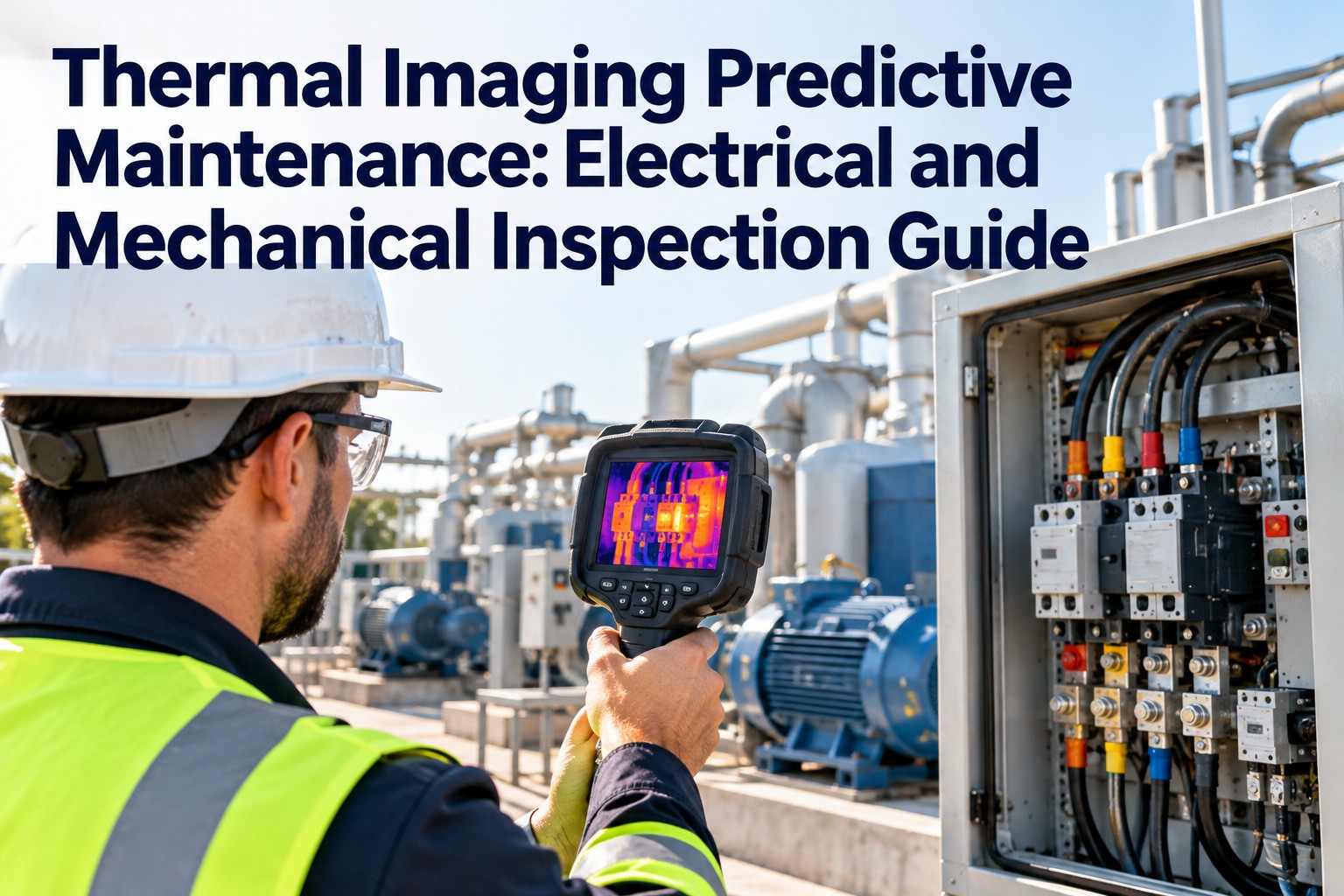
| Thermal Imaging Survey | Annual | Specialist thermographer | Air leakage paths, wet insulation, thermal bridging, membrane moisture |
| Full Facade Close-Up | Annual | Facade specialist / drone survey | Elevation-by-elevation condition survey — every panel, joint and anchor |
| Forensic Investigation | Trigger-Based | Envelope engineer | Leak location testing, water testing per ASTM E1105 / AAMA 501, opening exploration |
Thermal Imaging — What Your Camera Actually Sees
A thermal camera is the fastest envelope diagnostic tool ever built. It sees wet insulation on a roof at sunset, air leakage around a window in winter, and thermal bridging behind cladding — none of which a visual inspection catches. OXMAINT AI holds thermal images against the elevation zone they were taken on. Book a demo to see thermal imaging workflow.
One Leak Call. Fifteen Possible Paths. One Register To Solve It.
OXMAINT AI holds the envelope as one connected asset — a leak call at any location surfaces every upstream envelope defect that could be the source, on one screen, for the technician to work.
The Water-Path Defect Chain — From Leak Call to Root Cause
Water rarely appears at the point it entered. A tenant leak call on floor 6 might originate at a parapet flashing on the roof, run down a masonry cavity, and exit at an unrelated window head. The defect chain has to be traced — and evidenced — before the repair. OXMAINT AI walks the chain on one WO. Sign up free and set up your leak workflow.
The Sealant Life-Cycle — Why Re-Sealing is a Programme, Not a Job
Sealants have a service life measured in years, not the life of the building. A typical polyurethane sealant lasts 10-15 years; a high-performance silicone 15-25 years. A building that ignores the sealant schedule is quietly building envelope failures. OXMAINT AI tracks sealant installation dates and forecasts re-seal cycles. Book a demo to see sealant lifecycle tracking.
What OXMAINT AI Gives a Facility Team That Owns the Envelope
Purpose-built for teams that treat the shell as one connected system — one platform behind the inspection cadence, thermal image library, defect chain and re-seal programme. Start free and load your building portfolio into OXMAINT AI.
We spent seven months chasing a leak that showed up in a boardroom on floor two. The roofer said it wasn't the roof, the glazier said it wasn't the windows, the facade contractor said their panels tested dry. Nobody could see the whole envelope at once. When we put every open defect on every elevation onto one register and traced the water path from the parapet down through the cavity, we found it in a week. The lesson wasn't about that leak — it was about the fifteen other defects the process surfaced along the way.
Frequently Asked Questions
Roof. Facade. Windows. Sealants. One Envelope. One Programme.
Move your envelope maintenance onto OXMAINT AI — one asset register across all 4 families, elevation-zoned inspection cadences, thermal image library, water-path defect chains and sealant lifecycle scheduling on one platform.