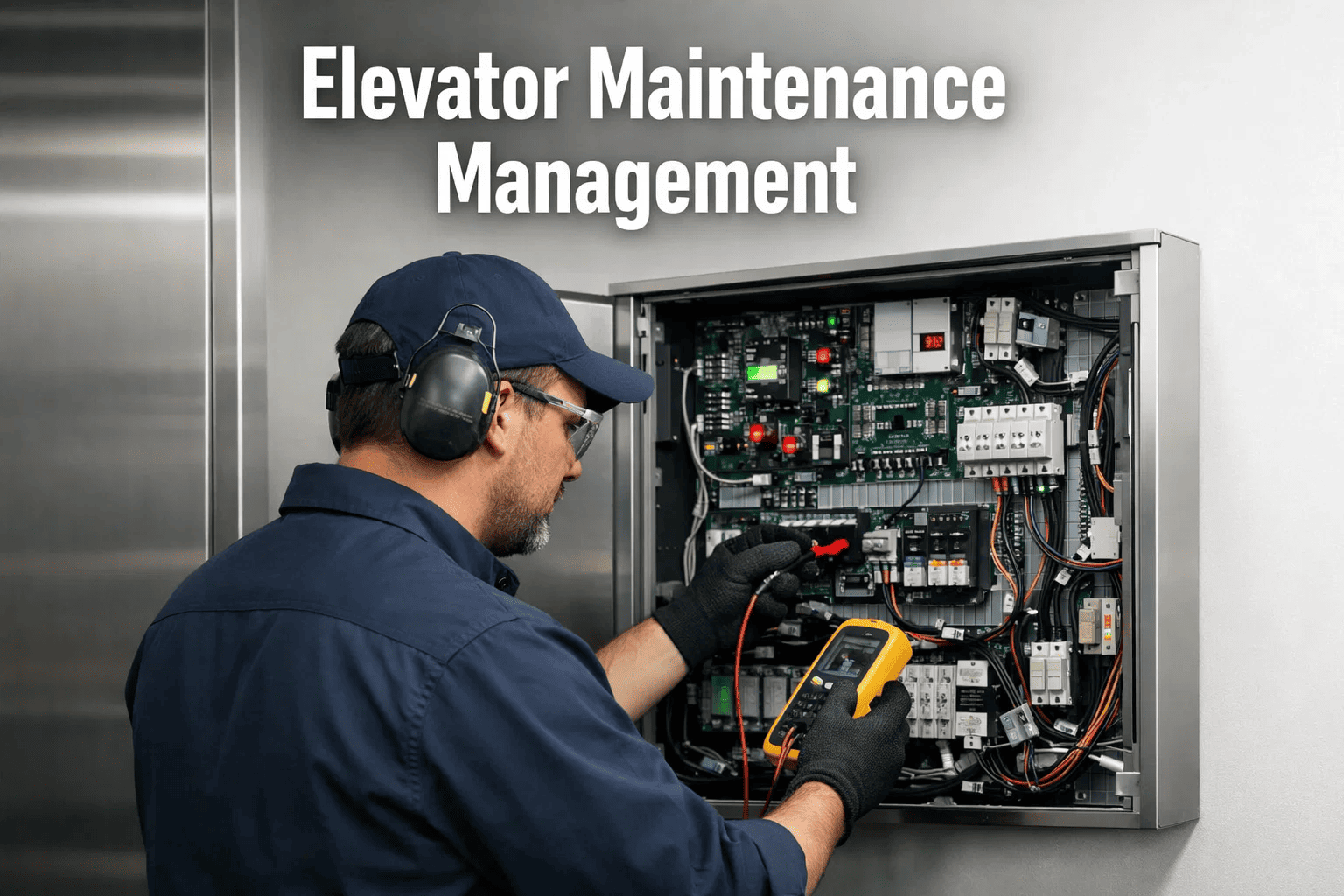
Elevator and escalator maintenance is one of the most heavily regulated, high-liability responsibilities in facility management — a single expired lift inspection or missed elevator compliance deadline can trigger fines, operational shutdowns, and severe safety risks. This vertical transport maintenance and compliance guide breaks down how commercial buildings can structure a defensible elevator maintenance program, pass elevator inspection and escalator inspection audits without scrambling, and coordinate contractors without paperwork bottlenecks. OxMaint replaces spreadsheets and reactive chaos with an AI-powered CMMS that tracks every asset, permit, and certification deadline automatically — you can Start Free Trial today or book a demo to see how it works on your portfolio.
Vertical Transport Compliance
Is your next elevator or escalator inspection deadline already at risk?
Managing vertical transportation maintenance across a commercial portfolio means juggling multiple service contractors, aging equipment, and strict jurisdictional lift inspection compliance — all while tenants demand 99% uptime. OxMaint automates the paperwork, predicts failures, and ensures every unit stays certified.
120+
Annual elevator & escalator compliance checks required for a standard 50-unit commercial portfolio
The Real Cost of Deferred Maintenance
Why elevator and escalator maintenance can't run on spreadsheets
Vertical transport is the circulatory system of any commercial building. When an elevator fails, it doesn't just inconvenience tenants — it triggers ADA complaints, voids lease SLAs, and creates immediate life-safety exposure. Yet most facility teams still track elevator service and escalator inspection dates on shared calendars or paper logs.
Worked Example
Consider a 12-floor Class A office building running 8 elevators and 2 escalators. Relying on a reactive model, the facility team averages 14 unplanned shutdowns per year, costing $28,000 in emergency contractor call-outs and $42,000 in tenant rent rebates. By migrating to an OxMaint-driven elevator maintenance program, the team shifted to predictive interventions, cutting unplanned downtime by 40% and recovering $28,000 in avoided costs within the first year.
Inspection Readiness
Tiered elevator and escalator inspection checklist
A defensible elevator safety compliance program requires documented evidence across mechanical, electrical, and operational categories. Use this tiered checklist to prepare for jurisdictional lift inspection compliance audits and internal quality reviews.
Unit-Level Tasks
- Inspect door panels, tracks, and rollers for wear
- Test intercom, emergency lighting, and alarm buttons
- Verify escalator comb plates and skirt indices
- Check oil levels, leaks, and lubrication points
- Log running hours and cycle counts digitally
System & Safety Tests
- Test brake systems and overspeed governors
- Inspect hoistway and machine room signage
- Verify fire-service recall (Phase I & II) operations
- Check emergency stop and handrail switches
- Review contractor service reports for missed items
Full Compliance Audit
- Load tests and buffer engagement verification
- Inspect mainline disconnects and controllers
- Renew permits, licenses, and jurisdictional tags
- Cross-check inventory of spare parts and belts
- Update asset lifecycle predictions and capex plans
| Inspection Type | Required Frequency | Regulatory Body / Standard | Documentation Required |
|---|---|---|---|
| Cat 1 (Elevators) | Every 12 months | ASME A17.1 / Local Code | Load test, governor response |
| Cat 5 (Elevators) | Every 60 months | ASME A17.1 / Local Code | Full load test, buffers, safety |
| Escalator Inspection | Every 6–12 months | ASME A17.2 / EN 115 | Step/skirt index, comb plate |
| Fire Recall Test | Quarterly | NFPA 72 / Local Fire Code | Phase I & II test logs |
CMMS Software Impact
How OxMaint streamlines building elevator maintenance
OxMaint is built to eliminate the blind spots of traditional facility elevator maintenance. By unifying work order management, predictive analytics, and compliance documentation into a single AI-powered EAM platform, your team can move from reactive scrambling to proactive, audit-ready operations.
Automated Compliance Tracking
Never miss a lift inspection deadline. OxMaint tracks every permit, certification, and jurisdictional requirement, automatically triggering work orders 60 days before expiration. Outcome: 100% audit-readiness and zero compliance fines.
AI-Driven Predictive Maintenance
Stop repairing after the fact. OxMaint analyzes vibration, cycle counts, and runtime data to predict elevator service failures weeks before they happen. Outcome: Cut unplanned downtime by 30–50% and extend asset lifecycles.
Digital Work Orders & Contractor Coordination
Eliminate paper logs and blind vendor coordination. Issue digital work orders to internal teams or external elevator service contractors with full SLA tracking. Outcome: Slash administrative overhead by 15+ hours per week.
Centralized Asset & Parts Inventory
Maintain a complete digital twin of every elevator and escalator, including OEM manuals and real-time spare-parts inventory levels for belts, rollers, and controllers. Outcome: Reduce parts stockouts and emergency procurement costs by 25%.
See OxMaint on your assets — book a 30-min demo
Discover how easy it is to migrate from spreadsheets to an AI-powered CMMS that guarantees your vertical transport stays certified and operational.
Frequently Asked Questions
Elevator and escalator compliance questions, answered
How often should commercial elevators and escalators be inspected?
Most jurisdictions require a full Category 1 elevator inspection annually, with a more rigorous Category 5 load test every five years under ASME A17.1 guidelines. Escalators typically require a safety inspection every 6 to 12 months depending on local code. OxMaint automatically schedules these intervals based on your specific local regulations, ensuring you never miss a deadline.
What is the difference between elevator maintenance and elevator inspection?
Elevator maintenance involves routine, ongoing servicing — like lubricating parts, adjusting doors, and replacing worn rollers — performed by elevator service contractors to keep the unit running. An elevator inspection is a formal, documented safety audit performed by a certified third party to verify code compliance. You can manage both in OxMaint by linking preventive maintenance schedules directly to compliance audit records.
Can a CMMS help manage third-party elevator service contractors?
Yes. A CMMS like OxMaint allows facility managers to issue digital work orders directly to external vendors, track their time on-site, capture photo documentation of repairs, and enforce SLA response times. You can see exactly what work was done, when, and by whom — eliminating billing disputes and paper log blind spots. To see this in action, Book a Demo today.
What happens if a lift inspection certification expires?
If a lift inspection certification lapses, the elevator must legally be taken out of service immediately, resulting in tenant disruption and potential ADA violations. Fines for operating an uncertified elevator can exceed thousands of dollars per day. OxMaint sends automated alerts 90, 60, and 30 days before expiration, automatically generating the necessary work orders to prevent any lapse.
How does predictive maintenance apply to vertical transportation?
Predictive maintenance uses IoT sensors and AI algorithms to monitor equipment conditions — like motor vibration, door cycle counts, and braking distance — in real-time. Instead of changing a belt on a fixed schedule, OxMaint analyzes the data to predict exactly when a failure is imminent, allowing you to schedule elevator service during off-hours, minimizing tenant disruption and extending asset life.
Transform your vertical transport maintenance today
Join the facility teams using OxMaint to cut downtime, pass inspections effortlessly, and take full control of their elevator and escalator compliance.
Free 14-day trial · No credit card required