A petrochemical complex spent $1.1M annually on elevated structure inspections — scaffolding 34 flare stacks, columns, and cooling towers across the facility, hiring rope access teams for 12 tank roofs, and deploying a helicopter twice per year for aerial pipeline corridor surveys. Each scaffolded inspection required 3–8 days of erection time before a single measurement was taken, pulling equipment offline and exposing riggers to fall-from-height risk on every job. In 2025, the same facility deployed a fleet of five autonomous drones that completed all 34 elevated inspections, all 12 tank roofs, and both pipeline corridor surveys in 22 total flight days — at $127,000 total cost. The drones captured 148,000 high-resolution images and 14,200 thermal frames that AI analyzed overnight, identifying 89 defects including 7 that the previous year's manual inspection had missed entirely because they were located in areas the scaffolding did not reach. The facility eliminated $973,000 in annual inspection cost, reduced elevated structure inspection time from 94 days to 22 days, and found more defects with zero human exposure to fall-from-height, confined space, or elevated temperature hazards. Autonomous drone inspection is not a technology experiment. It is the standard method for inspecting any structure where humans currently require scaffolding, rope access, cranes, or helicopters to see what a drone sees in minutes. Schedule a demo to see how drone inspection data integrates with CMMS predictive maintenance workflows.
$973K
Annual inspection cost eliminated at a single petrochemical complex
22 Days
To complete inspections that previously required 94 days of scaffolding and access
Zero
Human exposure to fall-from-height, confined space, or extreme temperature hazards
What Autonomous Drone Inspection Actually Means in 2026
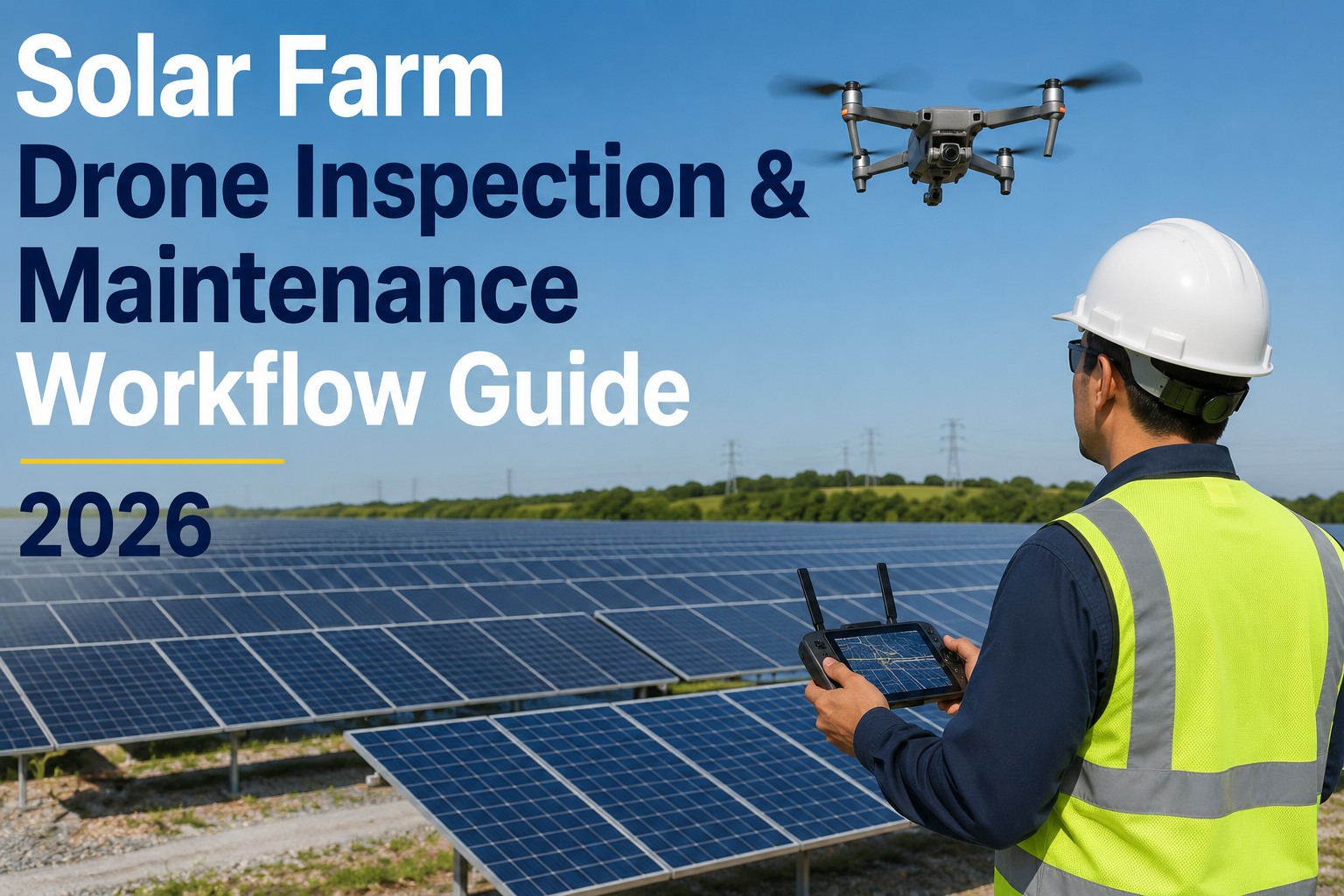
An autonomous drone inspection is not a pilot flying a remote-controlled aircraft manually while a camera operator captures images. It is a pre-programmed flight mission where the drone navigates a GPS-defined path, executes camera maneuvers at predetermined inspection points, and captures visual, thermal, and LiDAR data without human piloting input. The operator monitors the mission from a safe location and intervenes only if conditions require it. The AI processes the captured data overnight, identifying defects that human image reviewers would miss after hour four of analyzing thousands of photos. Sign up free and see how autonomous drone inspection data flows directly into CMMS asset records and predictive work orders.
Manual Piloted Drone Flights
01
Pilot-dependent quality — Image quality and coverage depend on the pilot's skill, fatigue level, and familiarity with the structure. Different pilots produce different results on the same asset.
02
No repeatability — Cannot guarantee identical camera angles between inspection cycles, making defect progression comparison unreliable or impossible.
03
Coverage gaps — Pilot must visually track the drone while framing shots. Blind spots on the far side of structures, underneath overhangs, and inside recesses go uninspected.
Autonomous Pre-Programmed Missions
01
Consistent quality — Every image captured at identical distance, angle, and overlap. AI-optimized camera parameters ensure uniform resolution across the entire inspection surface.
02
Perfect repeatability — Same flight path executed on every inspection cycle. Defect progression comparison is pixel-accurate between monthly, quarterly, or annual inspections.
03
100% surface coverage — Pre-planned flight paths guarantee every surface is captured with required overlap. No blind spots, no missed areas, no pilot-dependent gaps.
What Autonomous Drones Inspect: Five High-Value Asset Categories
Flare Stacks and Chimneys
Inspects: External shell corrosion, refractory degradation (thermal imaging), structural connections, guy wire anchors, platform integrity, and flare tip condition — to 200+ feet elevation
Replaces: $50K–$250K scaffolding events, $15K–$80K rope access teams, and $25K–$100K helicopter inspections with $3K–$8K autonomous drone missions completing in 2–4 hours
Storage Tanks and Vessel Roofs
Inspects: Roof plate corrosion, floating roof seal condition, pontoon integrity, drain systems, rim vents, and coating failure across the entire roof surface
Replaces: Confined space tank entry, scaffold access to external shell, and manual roof walks on floating roofs — capturing 100% of the roof surface vs. the 10–20% visible during a walkdown
Rooftops and Building Facades
Inspects: Roof membrane condition, flashing integrity, HVAC equipment status, gutter and drain blockage, facade panel displacement, and cladding corrosion
Replaces: Man-lift and cherry picker deployment ($2K–$8K per day), ladder access safety exposure, and roof walks that inspect 5–10% of surface area per visit
Cooling Towers and Structures
Inspects: Fill media condition, structural member corrosion, fan deck integrity, drift eliminator status, and basin silt levels — including internal flythrough missions on shutdown towers
Replaces: Internal scaffolding ($80K–$200K), confined space entry procedures, and hot work permits with 4–8 hour autonomous missions capturing 100% internal and external surfaces
148,000 images captured per facility cycle. AI analyzes them overnight. OxMaint ingests drone-captured visual, thermal, and LiDAR data directly into asset records — auto-generating severity-ranked work orders from every defect detected without manual image review.
Start Free Trial
AI-Powered Image Analysis: What the Drone Sees
01
Autonomous Flight Execution
The drone executes a pre-programmed GPS waypoint mission around the structure — maintaining constant distance, capturing overlapping frames at 80% forward and 60% side overlap, and switching between visual and thermal cameras at defined inspection points. Flight time per asset: 15–90 minutes depending on structure size.
02
3D Photogrammetric Reconstruction
Overlapping images are stitched into a georeferenced 3D model of the structure with sub-centimeter accuracy. Every pixel maps to a physical coordinate on the asset surface. Defects identified in 2D images are automatically located in 3D space for precise repair scoping.
03
AI Defect Detection and Classification
Computer vision models trained on millions of industrial defect images identify corrosion, cracking, coating failure, structural deformation, missing components, and thermal anomalies. Each finding classified by type, severity, area, and location with a confidence score. Processing: 148,000 images analyzed in under 8 hours.
04
Progression Tracking Between Cycles
Because autonomous flights repeat identical paths, the AI compares current images to previous inspection cycles at pixel-level precision — calculating corrosion growth rate, crack propagation velocity, and coating deterioration speed. A single defect observed across three cycles becomes a degradation trajectory with remaining useful life estimation.
05
CMMS Integration and Work Order Generation
Findings exceeding action thresholds auto-generate work orders in OxMaint with: annotated image, 3D location on the asset, defect type and severity, dimensional measurements, progression rate, and recommended repair action. The maintenance planner reviews prioritized findings — not 148,000 raw images.
Thermal Imaging: The Invisible Defects Drones Reveal
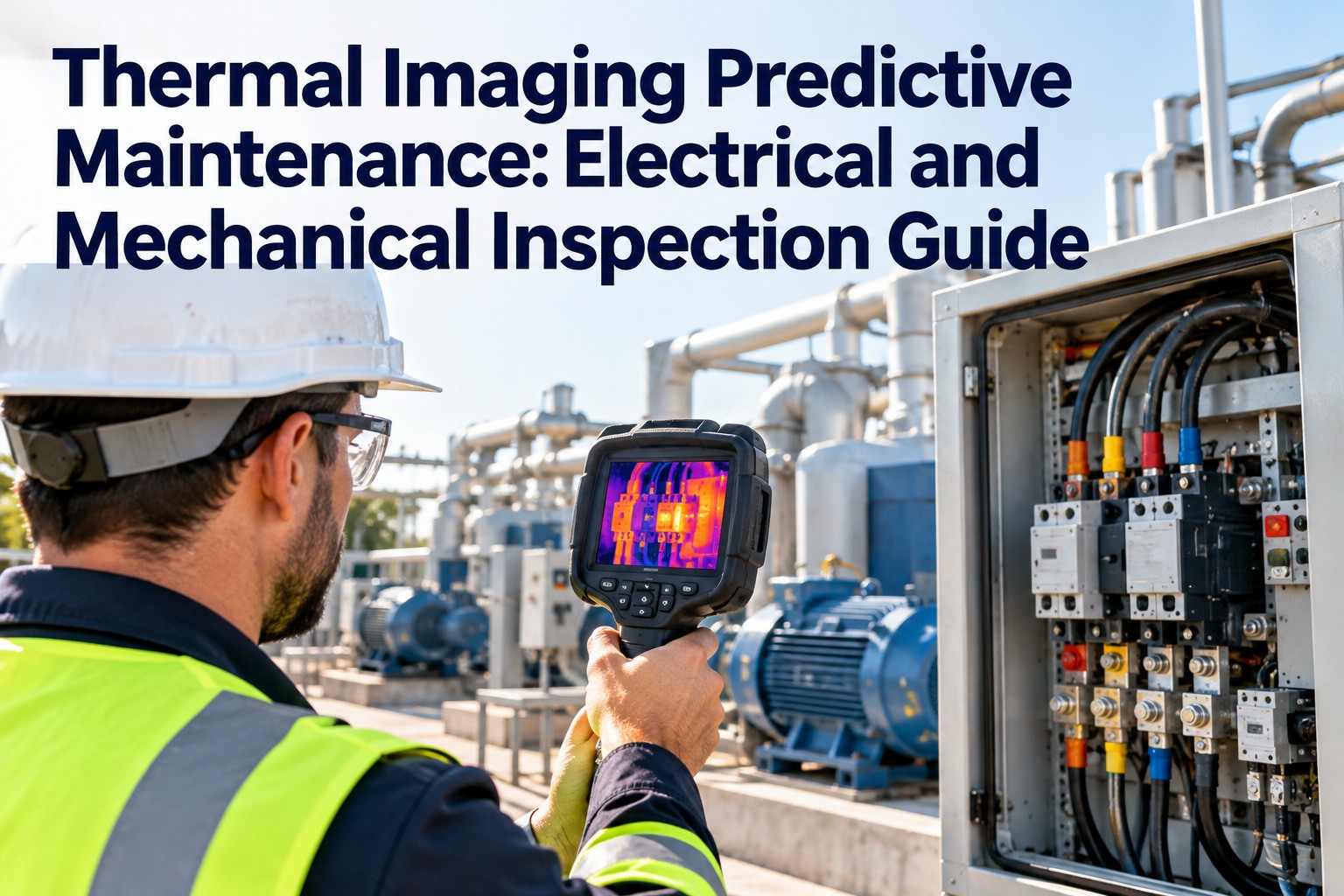
Thermal cameras mounted on autonomous drones detect defects invisible to visual inspection — refractory degradation inside stacks, insulation failures on piping, electrical hot spots on outdoor equipment, and moisture intrusion in roof membranes. A visual camera shows a healthy-looking flare stack. The thermal camera reveals a 340°F hot spot indicating refractory failure that would have caused shell burnthrough within weeks.
Financial Impact: The ROI of Autonomous Drone Inspection
88%
Inspection cost reduction
$127K autonomous drone program replacing $1.1M annual scaffolding, rope access, and helicopter inspection — documented at a single petrochemical facility.
77%
Time reduction
22 flight days replacing 94 days of scaffolding erection, inspection, and dismantling. Equipment returns to service weeks sooner.
100%
Surface coverage
Pre-programmed flight paths guarantee every surface inspected with required overlap. Manual methods cover 10–20% and miss defects in unreachable areas.
Zero
Worker fall exposure
Every scaffolding event, rope access deployment, and elevated work permit eliminated. Operators monitor missions from ground level. Safety risk reduced to near zero.
30-Day Autonomous Drone Program Deployment
Week 1
Asset Prioritization and Flight Planning
Identify elevated structures currently inspected via scaffolding or rope access
Create GPS-referenced 3D models of target structures from existing drawings
Design autonomous flight paths with required image overlap and camera angles
Configure CMMS asset records to receive drone inspection data feeds
Start with your highest-cost scaffolded inspections — the savings fund the entire drone program.
Week 2
First Autonomous Missions and Data Capture
Execute first autonomous flights on priority structures
Capture visual and thermal imagery at programmed inspection points
Validate image quality, coverage completeness, and GPS accuracy
Upload raw data to AI processing pipeline for overnight analysis
First structure completed in hours vs. days. Side-by-side comparison against previous manual findings.
Week 3
AI Analysis and CMMS Integration
AI processes captured imagery — identifying and classifying all defects
3D photogrammetric models generated with defect locations mapped
Findings auto-generate prioritized work orders in OxMaint
Compare AI findings against previous manual inspection reports
Week 4
Program Expansion and Scheduling
Document cost savings vs. traditional methods for program justification
Create annual autonomous flight schedule for all target structures
Set up recurring mission profiles for quarterly or annual inspections
Establish progression tracking baseline for multi-cycle defect trending
By week 4, you have a fully operational autonomous drone inspection program with CMMS integration.
The Scaffolding Truck Can Stay in the Yard. The Drone Already Found It.
OxMaint connects autonomous drone inspection systems — DJI, Skydio, Flyability, and custom platforms — directly into your CMMS. Every defect detected by AI becomes a measured, classified, prioritized work order. Every flight builds the progression history that predicts when repairs are needed. Your inspectors make decisions. The drone does the dangerous part.
Frequently Asked Questions
Do we need to own drones or can we hire inspection service providers?
Most organizations start by hiring autonomous drone inspection service providers — specialized firms that bring the aircraft, pilots, and processing software — rather than purchasing a fleet. The CMMS integration works identically: service provider data feeds into your OxMaint asset records and generates work orders regardless of who operates the drone. Facilities with 50+ annual inspections typically transition to owned fleets within 12–18 months for cost optimization, while smaller programs remain service-contracted permanently.
Can autonomous drones fly inside confined structures like tanks and cooling towers?
Yes. Cage-protected drones like the Flyability Elios and similar platforms are designed specifically for indoor and confined space autonomous inspection. These aircraft navigate inside vessels, tanks, boilers, cooling towers, and ductwork — using LiDAR-based collision avoidance to fly safely in GPS-denied environments. Internal autonomous missions capture 100% surface coverage that would require scaffolding, confined space entry, and multi-day shutdown procedures with human inspectors.
Book a demo to see confined space drone inspection data integrated with CMMS predictive workflows.
What regulatory approvals do we need for autonomous drone flights at industrial facilities?
In the United States, autonomous industrial drone flights operate under FAA Part 107 rules. The drone operator needs a Remote Pilot Certificate. For flights over people or beyond visual line of sight (BVLOS), additional waivers may be required depending on the facility location and airspace classification. Most industrial facility inspections occur within the facility boundary under standard Part 107 rules. OxMaint tracks drone certification, pilot licensing, and airspace authorizations as part of the inspection management workflow.
How does AI defect detection accuracy compare to human image review?
AI achieves 92–96% defect detection accuracy on standard industrial defect types (corrosion, cracking, coating failure, thermal anomalies), maintaining that accuracy across all 148,000 images without fatigue. Human image reviewers achieve 85% accuracy in the first hour but degrade to 55% by hour four — missing defects in the later images they review. For autonomous drone programs generating tens of thousands of images per inspection cycle, AI analysis is the only practical option. Human reviewers verify AI-flagged critical findings rather than reviewing every image.
What is the realistic ROI for deploying autonomous drone inspection alongside CMMS?
ROI is immediate from the first eliminated scaffolding event. A single autonomous drone inspection of a flare stack ($3K–$8K) replacing a scaffolded inspection ($50K–$250K) delivers 6–30× return on a single mission. A petrochemical facility with 30+ elevated structures documents $973K annual savings. Commercial building portfolios save $150K–$500K annually from eliminated man-lift and rope access costs. The safety value of eliminating worker fall exposure is immeasurable but increasingly material to insurance premiums and OSHA compliance.
Start free and calculate your facility's drone inspection ROI from your current scaffolding spend.