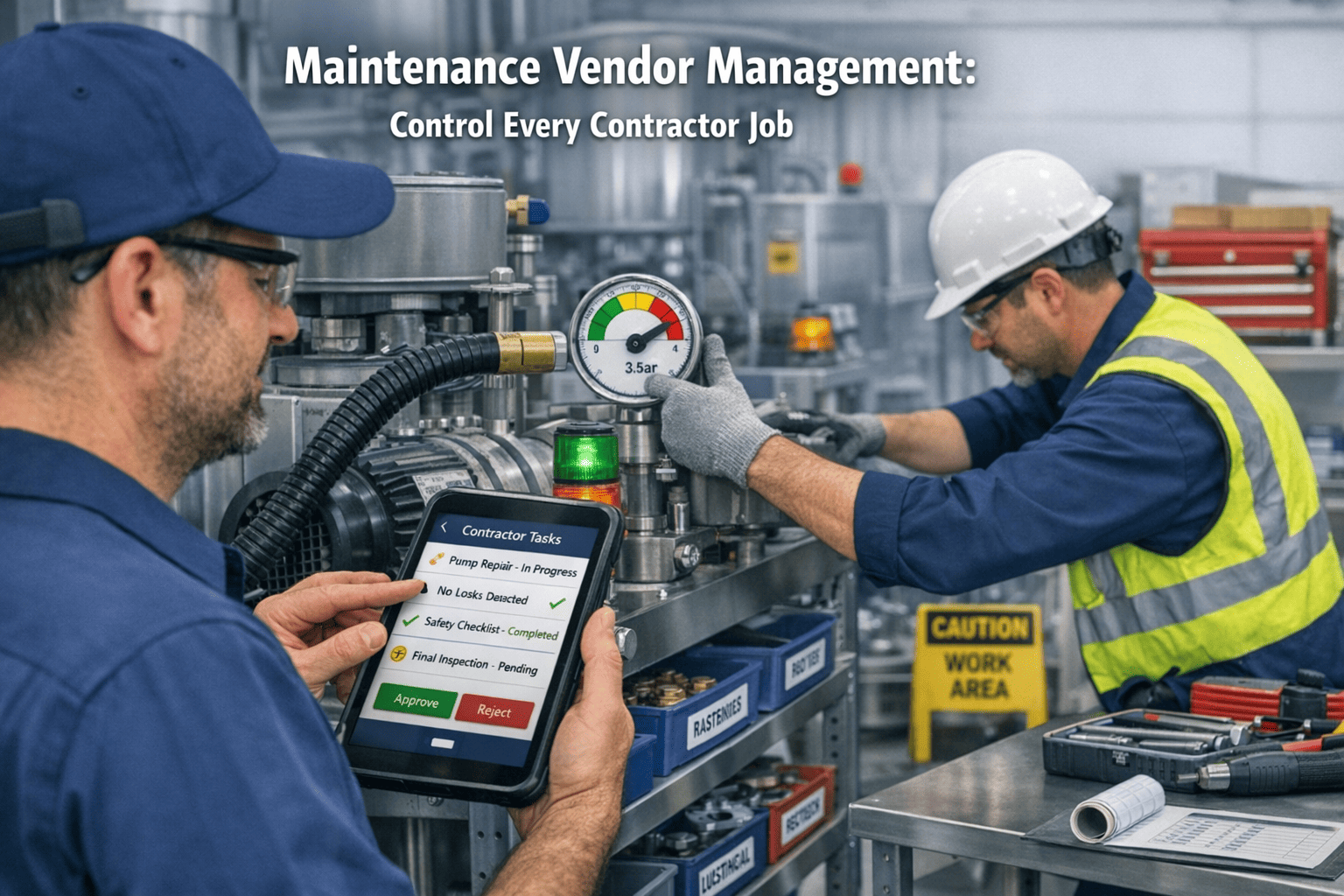
Most facility vendor management runs on memory, not measurement. Roughly two-thirds of commercial facility managers have no formal performance tracking beyond invoice approval, which means contractors are judged by emotion, by reputation, or by whatever went wrong most recently — not by what they actually delivered against what they promised. The tell is hiding in the contracts themselves: nearly every facility management agreement contains service-credit clauses that have never once been invoked. Not because vendors always hit their targets, but because nobody has the timestamp evidence to prove a breach occurred. An SLA without real-time compliance tracking is a handshake agreement with extra paperwork. For a facility manager or operations director running a portfolio of outsourced trades, this gap is expensive — undocumented rework, SLA credits never claimed, and compliance penalties from missed intervals are estimated to cost $8,000 to $22,000 per vendor every year. This guide covers the three instruments that turn a vendor relationship from a handshake into a governed one: SLAs, scorecards, and access control. Start a free Oxmaint trial and score every vendor from real work order data, or book a demo to see SLA breaches flagged with timestamp evidence.
Facility Management · Vendor Governance · For FM & Ops Directors
Managing Maintenance Vendors & Contractors in Facilities
SLAs, scorecards, and access control for outside contractors — how to get reliable work from your facility maintenance vendors, protect service quality, and replace memory-based evaluation with evidence.
-
67%
of FMs have no formal vendor performance tracking
-
$8–22K
lost per vendor per year to untracked performance
-
18–28%
outsourced cost reduction with scorecards in 12 months
-
91% vs 70%
SLA compliance with tracking versus without
Three Instruments of Control
What Turns a Handshake Into Governance
Reliable contractor work does not come from a better relationship — it comes from three instruments working together. Each answers a different question, and a gap in any one is where service quality leaks away.
- SLA — defines what "on time" means A tiered response-and-resolution commitment per priority level. Without it, "urgent" is a matter of opinion; with it, every work order has a clock. The SLA is only real if a timestamp proves whether the window was met.
- Scorecard — measures who actually delivers A standing record of response time, first-time fix, safety compliance, and cost variance per vendor. It converts renewal from a conversation into a negotiation backed by evidence, and turns "I think they're good" into a number.
- Access control — gates who gets on site Insurance, certifications, and safety documentation verified before a contractor arrives. An expired certificate should block a work-order assignment automatically, because uninsured contractor liability is the facility's problem, not the vendor's.
These are not three separate systems — the SLA sets the target, the scorecard records the result, and access control decides who is even eligible to try. Book a demo to see all three run from one vendor record.
The SLA Backbone
A Four-Tier Response Framework Vendors Will Sign
Every enforceable FM agreement uses a tiered priority structure — tight enough to protect operations, realistic enough that contractors will commit to it. This is the industry-consensus starting point across commercial, healthcare, retail, and manufacturing portfolios.
| Priority | Response | Resolution | Example |
|---|---|---|---|
| P1 Critical | 30 min | 4 hrs | Power loss, flood, safety hazard |
| P2 Urgent | 2 hrs | 24 hrs | HVAC down, partial outage |
| P3 Routine | 8 hrs | 5 days | Minor repair, single fixture |
| P4 Scheduled | 48 hrs | 30 days | Planned PM, cosmetic work |
Data centres and healthcare tighten P1 to 24/7 coverage with sub-30-minute response. Below 90% compliance on emergency dispatch, a vendor should trigger a performance improvement plan or SLA credit recovery. Sign up for Oxmaint to run every work order against its SLA clock.
Why the Credits Are Never Claimed
The Evidence Gap That Costs the Most
The reason SLA credits go unclaimed is not leniency — it is the absence of a timestamped record. Follow the sequence and it becomes clear why the money stays on the table.
-
1
The contract promises a window
A four-hour P1 resolution, a first-time-fix expectation, a credit clause if the window is missed. On paper the accountability looks airtight. -
2
The work happens without timestamps
Creation, acknowledgement, arrival, and resolution are never captured at each stage, so nobody can say precisely when the vendor was dispatched or when the job actually closed. -
3
The breach cannot be proven
Without stage timestamps there is no evidence a window was missed, so the credit clause is unenforceable and the FM lets it go rather than argue from memory. -
4
The vendor learns targets are soft
Once contractors see response times are not measured, performance drifts. When they know the clock is running automatically, it improves — often without renegotiating a single rate.
Timestamping every stage is what converts contract language into enforceable accountability — and evidence that stands up in a dispute. Book a demo to see stage timestamps captured automatically.
The Scorecard That Backs a Renewal
Eight KPIs That Turn Reviews Into Negotiations
A vendor scorecard is only as good as the data feeding it. These metrics are all measurable from work order data, and each links to an outcome an operations director is accountable for — without them, vendor reviews are opinions.
| KPI | Signal | Action Threshold |
|---|---|---|
| Emergency SLA compliance | Dispatch within window | Below 90% triggers a PIP |
| First-time fix rate | Workmanship quality | Low rate drives callbacks |
| 30-day callback rate | Failures soon after service | Above 8% triggers contract review |
| Cost variance | Quoted vs actual invoice | Over 10% signals change-order abuse |
| Safety & permit compliance | JSA, permits, training currency | Any expired cert flags the vendor |
| Documentation completion | COI, reports, sign-off attached | Gaps create liability exposure |
Tracking first-time fix per vendor and feeding it into the renewal scorecard is associated with a 40% reduction in 30-day callback rate — quality improves because it is finally being counted. Sign up for Oxmaint to generate scorecards from work order data.
Oxmaint for Vendor Management
How Oxmaint Governs Contractors
-
SLA Clock
Every Work Order Timed
Timestamp creation, acknowledgement, arrival, and resolution on every job, calculating SLA compliance against each vendor's contracted windows automatically — with breach evidence that holds up in a dispute.
-
Auto Scorecards
Built From Real Data
Generate vendor scorecards from work order data — response time, first-time fix, safety compliance, cost variance, and quality — producing performance trends and procurement recommendations without manual collection.
-
Breach Escalation
Flagged, Not Forgotten
If a vendor does not acknowledge or update a work order within the SLA window, the breach is flagged automatically, the FM is notified, and the violation is recorded against the scorecard — no manual tracking.
-
Access Control
Expired Cert, Blocked Assignment
Store insurance and certification expiry per vendor with 30-day advance reminders, and block a contractor with a lapsed certificate from receiving new work orders — protecting the facility from uninsured liability.
-
Compliance Records
Attached to the Asset
Every COI, safety briefing, and completion report stored against the asset and work order it belongs to — cutting audit-preparation time versus searching paper files before an inspection.
-
Renewal Leverage
History for Negotiation
Historical cost and performance data available at renewal, so contract negotiations run on documented trends rather than the most recent incident — the difference between an opinion and a position.
Frequently Asked
Vendor & Contractor Management Questions
What response times should a new FM service agreement use?
Industry consensus is a four-tier structure: 30 minutes response and 4 hours resolution for P1 critical, 2 hours and 24 hours for P2 urgent, 8 hours and 5 days for P3 routine, and 48 hours and 30 days for P4 scheduled. Data centres and healthcare tighten P1 to 24/7 coverage with sub-30-minute response. The framework is deliberately tight enough to protect operations but realistic enough that contractors will sign to it — and it only works if every tier is tracked against its clock with timestamp evidence. Book a demo to see tiered SLA rules configured.
Why do so few facilities claim their SLA credits?
Because they lack the timestamp evidence to prove a breach. Most FM contracts contain service-credit clauses that have never been invoked — not because vendors always meet targets, but because when the stages of a work order (creation, acknowledgement, arrival, resolution) are not captured, nobody can demonstrate the window was missed. The clause becomes unenforceable, and the facility manager writes it off rather than argue from memory. Real-time SLA tracking turns that contract language into enforceable accountability worth real money.
How should contractor access and compliance be controlled?
By verifying insurance certificates, certifications, and safety documentation before a contractor is assigned work — and enforcing it automatically. Store each vendor's insurance and credential expiry dates, send advance reminders as they approach lapse, and block any vendor with an expired certificate from receiving new work orders. This matters because contractor safety violations, missing JSA documentation, and expired certifications create liability that lands on the facility owner, not the vendor. Automating the gate removes the manual oversight that inevitably slips. Sign up for Oxmaint to enforce certificate-based assignment blocking.
Does scorecarding actually improve vendor performance?
Yes, and often without renegotiating rates. Industry benchmarking finds that structured vendor scorecarding and CMMS-based SLA tracking reduce outsourced maintenance costs 18–28% within 12 months, with SLA compliance rising to around 91% with automatic escalation versus 70% without. The mechanism is simple: when vendors know their response times and fix rates are measured automatically, performance improves. Tracking first-time fix per vendor and including it in the renewal scorecard is associated with a 40% drop in 30-day callbacks. Book a demo to start scoring vendors.
Define · Measure · Gate · Renew
Stop Evaluating Vendors From Memory
Every unclaimed SLA credit, every callback nobody counted, every contractor who arrived with an expired certificate, and every renewal argued from the last incident is service quality and money leaking through an ungoverned relationship. Oxmaint gives facility managers and operations directors one platform to run every work order against its SLA clock, score every vendor from real data, block unqualified contractors before assignment, store compliance records against the asset, and walk into renewals with documented performance — so outsourced work is governed, not just hoped for.