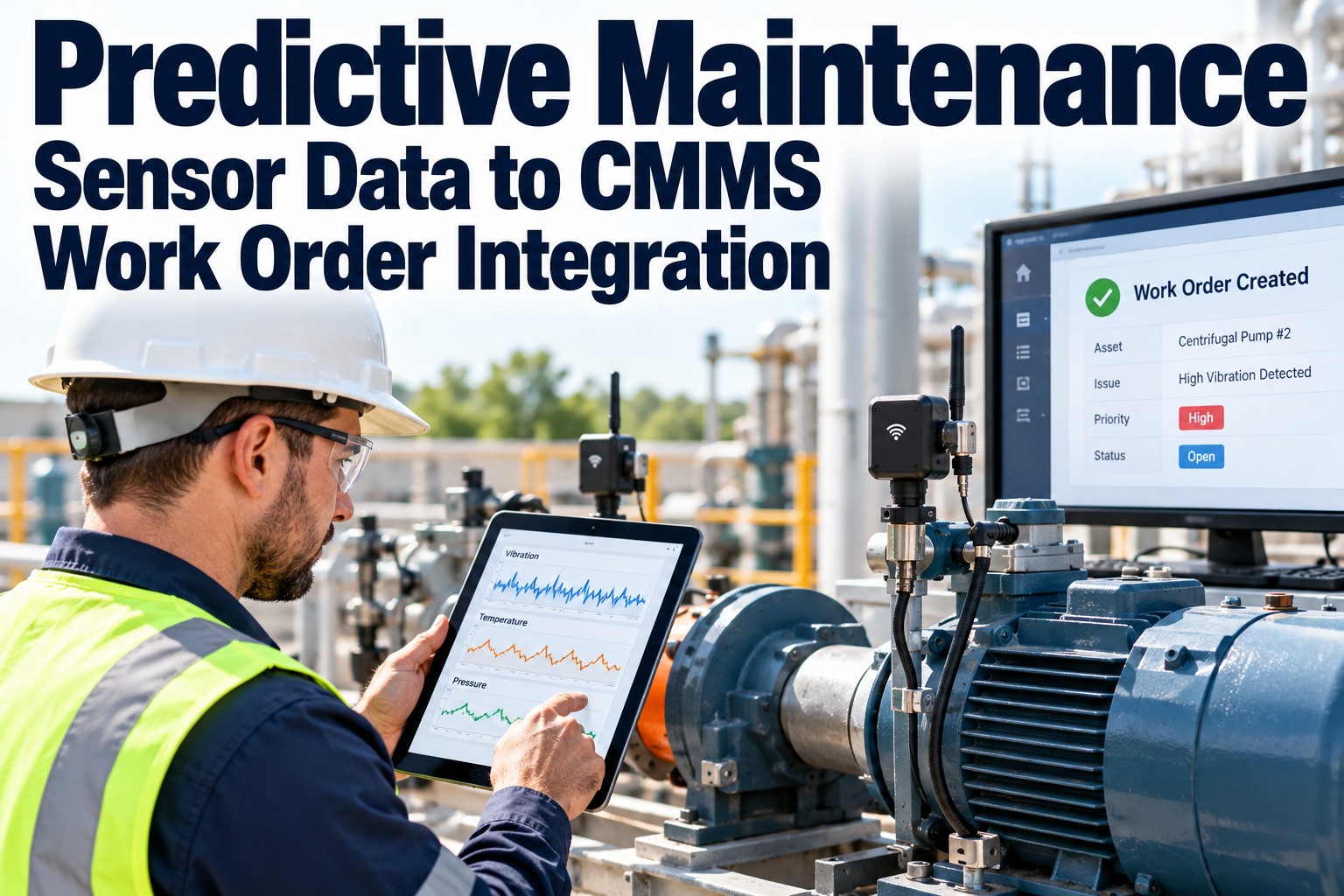
Every maintenance team knows the frustration: a vibration sensor flags a pump anomaly at 2 AM, but nobody investigates until the morning shift arrives — by then, the bearing has seized and the production line is down. This disconnect between detection and action costs industrial facilities an estimated $50 billion annually in unplanned downtime. A closed-loop maintenance system eliminates this gap entirely by linking IoT sensors, autonomous inspection robots, and CMMS-driven work orders into one continuous, self-correcting cycle where every anomaly is detected, physically validated, repaired, and verified — automatically. Book a demo to discover how Oxmaint connects your sensors, robots, and work orders into a single automated maintenance pipeline.
What Makes Maintenance "Closed-Loop" — and Why It Matters
In traditional maintenance, the workflow is linear and fragmented: a sensor triggers an alarm, a technician manually investigates, findings are communicated verbally or via email, and a work order is eventually created in a separate system. Each handoff introduces delays and information loss. A closed-loop system transforms this into a continuous cycle where detection, validation, action, and verification happen automatically — and the output of one step feeds directly into the next.
The "loop" closes when post-repair sensor readings confirm the fix was successful and feed that outcome back into the system's learning model. If readings remain abnormal, the cycle restarts — ensuring no issue is marked as resolved until the equipment actually returns to healthy operating parameters. Sign up for Oxmaint to start building closed-loop workflows for your critical assets.
IoT Sensors
Inspection Robots
LOOP
CMMS Work Orders
Sensor Confirmation
The Hidden Cost of Disconnected Maintenance Workflows
When sensors, inspections, and work orders operate in silos, the gaps between them become the most expensive part of your maintenance operation.
PLC Sensor Integration: Building the Detection Foundation
The first layer of any closed-loop maintenance system is reliable, real-time data from the plant floor. PLC sensor integration connects your existing industrial sensors — vibration, temperature, pressure, acoustic, and current — directly to your CMMS through programmable logic controllers and IoT gateways. This eliminates manual data collection and enables automatic threshold monitoring with instant alert routing.
Vibration Monitoring
Accelerometers on rotating equipment detect bearing wear, imbalance, and misalignment. PLC-level FFT analysis triggers alerts within seconds of deviation.
Thermal Analysis
RTDs and thermocouples monitor motor windings, bearings, and process temperatures. Trend analysis flags gradual increases that signal developing faults.
Pressure Sensing
Hydraulic and pneumatic transducers detect leaks, blockages, and pump degradation. Real-time anomaly detection triggers inspection workflows instantly.
Acoustic Emission
Ultrasonic microphones detect compressed air leaks, electrical discharge, and early-stage bearing defects invisible to conventional sensor types.
Autonomous Inspection Robots: Eliminating False Positives Before Work Orders Are Created
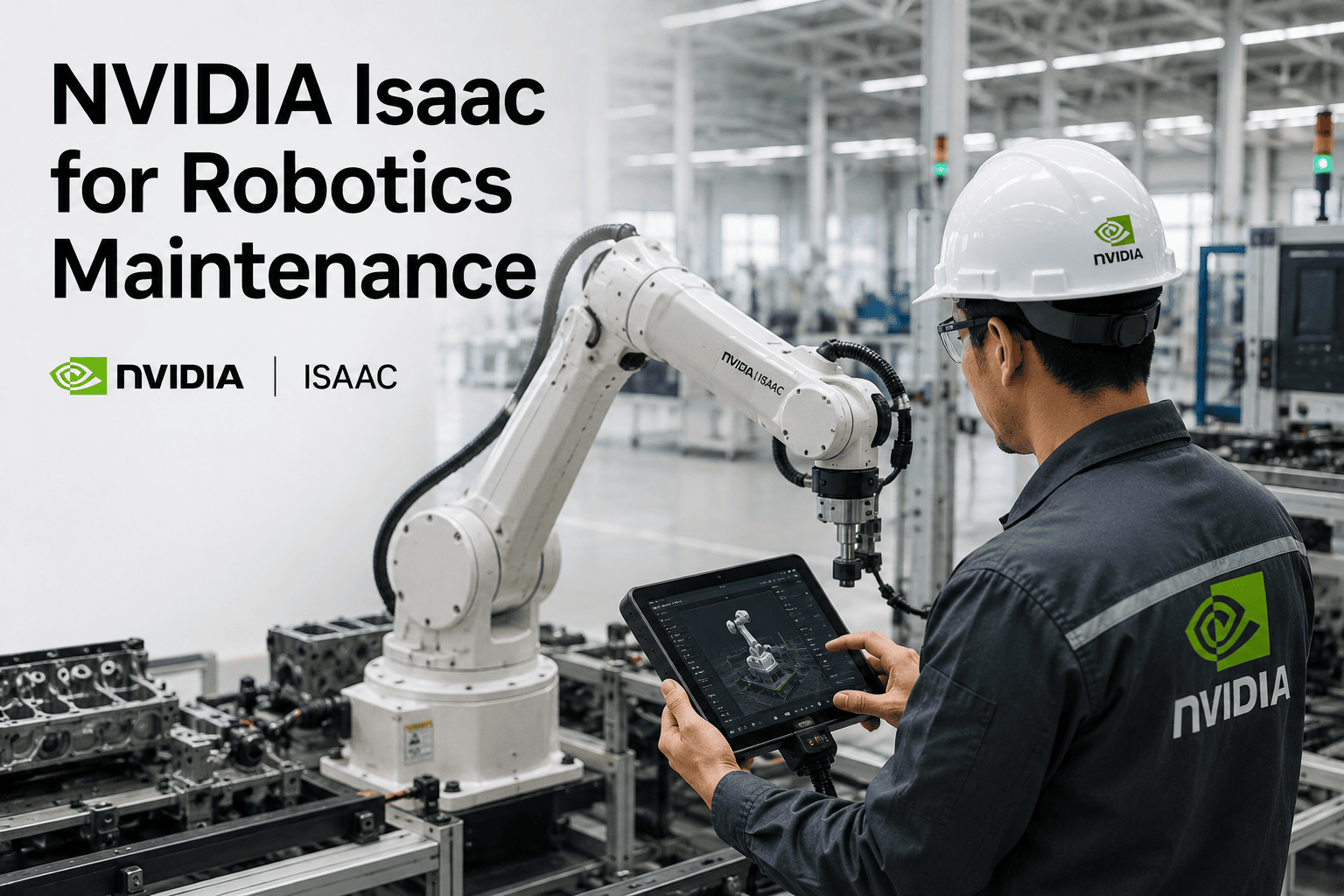
Sensor alerts alone generate too many false positives — wasting technician time on phantom issues while real problems queue behind them. Inspection robots serve as the critical validation layer that physically confirms anomalies before any work order is generated. Dispatched automatically when sensors breach thresholds, these robots capture thermal images, ultrasonic readings, visual evidence, and gas measurements that transform raw alerts into confirmed, actionable diagnostics. Book a demo to see how robot validation integrates with Oxmaint work orders.
From Sensor Alert to Verified Repair in Under 60 Minutes
Here is what the closed-loop cycle looks like in practice — a real-world scenario showing how Oxmaint orchestrates the detect-validate-repair-verify pipeline automatically.
Threshold Breach Detected
Vibration sensor on Pump P-401 reads 8.5 mm/s RMS velocity — exceeding the 7.0 mm/s threshold. PLC triggers alert to Oxmaint and dispatches the nearest patrol robot.
Robot Inspection Confirms Anomaly
Mobile robot arrives at P-401, captures thermal image showing bearing temperature at 92°C (baseline: 65°C), and records audio signature consistent with inner race defect.
CMMS Auto-Generates Work Order
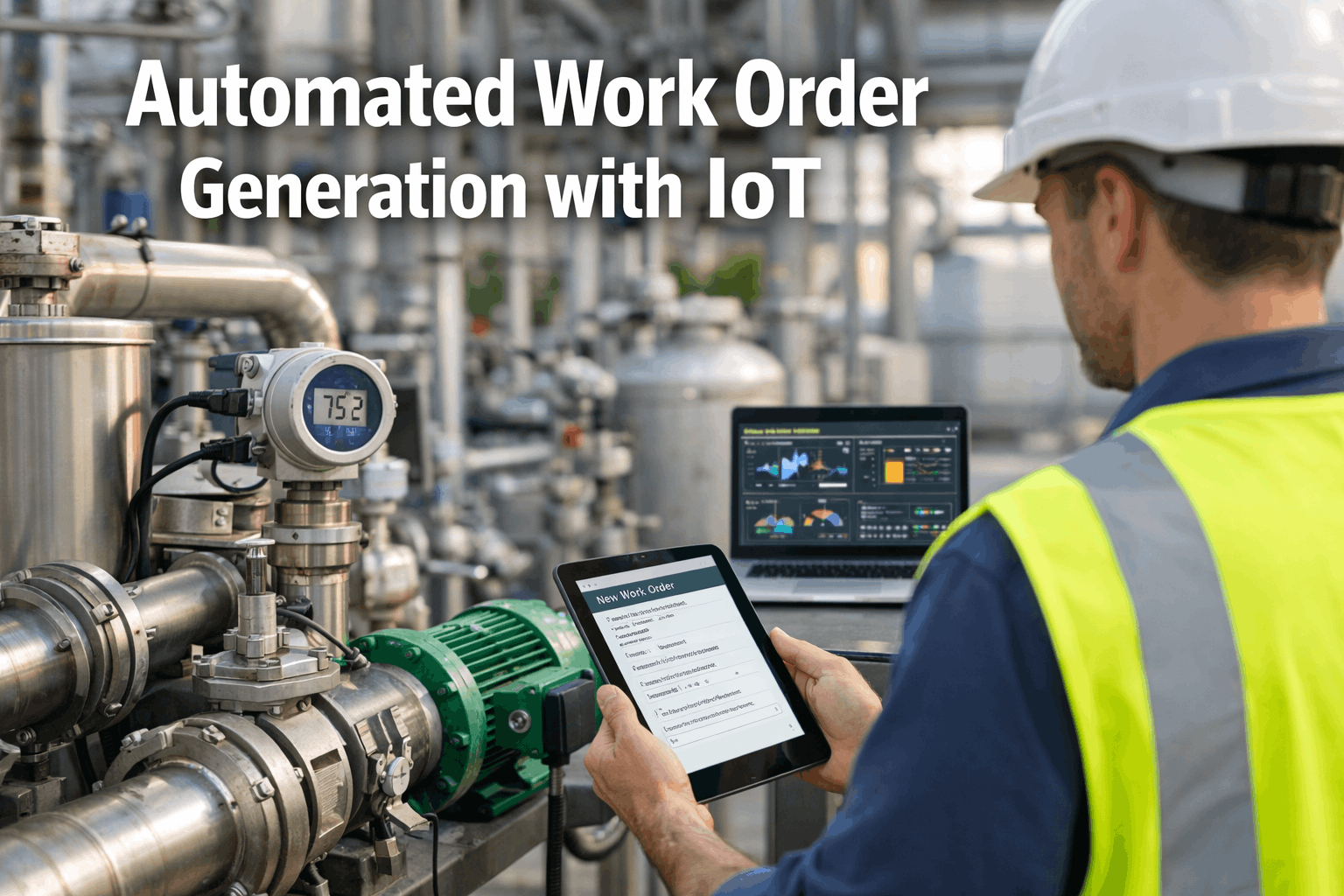
Oxmaint creates WO-7842 (Priority 2), attaches sensor trend data + robot thermal image, assigns to the on-shift technician, and reserves bearing SKF-6310 from inventory.
Repair Completed and Documented
Technician replaces the bearing using the attached procedure. Closes the work order with repair notes, before-and-after photos, and time-to-repair logged automatically.
Sensor Verifies — Loop Closed
Vibration drops to 2.1 mm/s, temperature normalizes at 58°C. Oxmaint confirms resolution, updates asset history, and feeds the outcome into predictive models. The loop is closed.
Fragmented Workflows vs. Closed-Loop Automation
See how every stage of the maintenance process changes when sensors, robots, and CMMS work as a unified system instead of separate tools.
Measured Impact of Sensor-Robot-CMMS Integration
Facilities that connect IoT sensors and inspection robots through CMMS-driven work order automation report compounding improvements across downtime, labor, accuracy, and equipment lifespan.
Three-Phase Deployment: Sensor Integration to Full Closed-Loop
Implementing a closed-loop maintenance system does not require replacing your entire infrastructure overnight. A phased approach lets you capture value at each stage — starting with sensor-to-CMMS connectivity, adding robot validation, and progressively automating verification and learning. Book a demo to get a deployment plan customized for your facility.
The real breakthrough in maintenance is not smarter sensors or faster robots — it is connecting them into a single system where the output of detection becomes the input for validation, and the output of repair becomes the input for verification. That continuous feedback loop is what separates world-class reliability from expensive firefighting.
— Industrial IoT and Reliability Engineering DirectorBuild Your Closed-Loop Maintenance System with Oxmaint
Stop managing sensors, inspections, and work orders in disconnected silos. Oxmaint unifies your IoT data, robot diagnostics, and maintenance execution into one intelligent platform where every anomaly is detected, validated, repaired, and verified — automatically, every time.