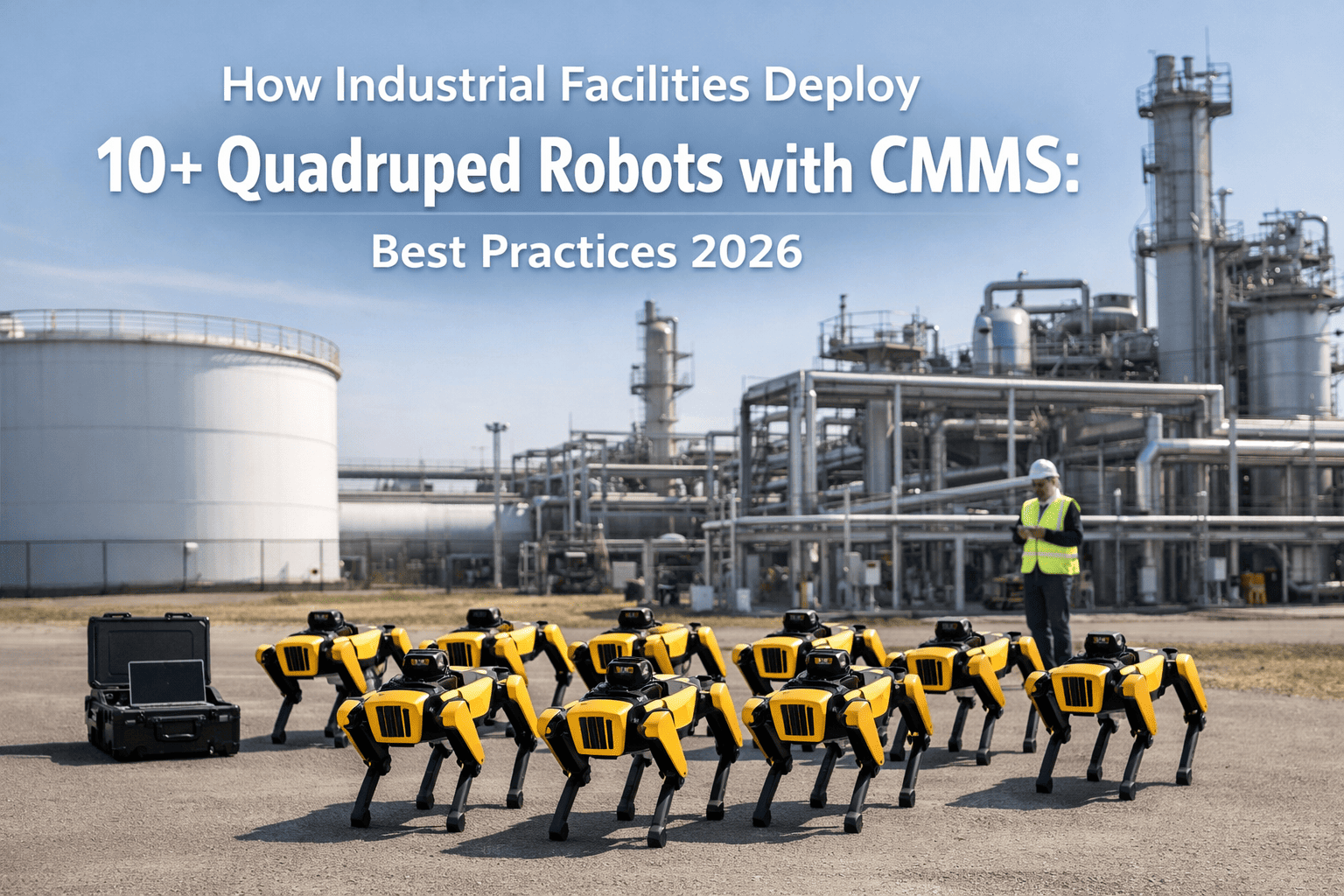
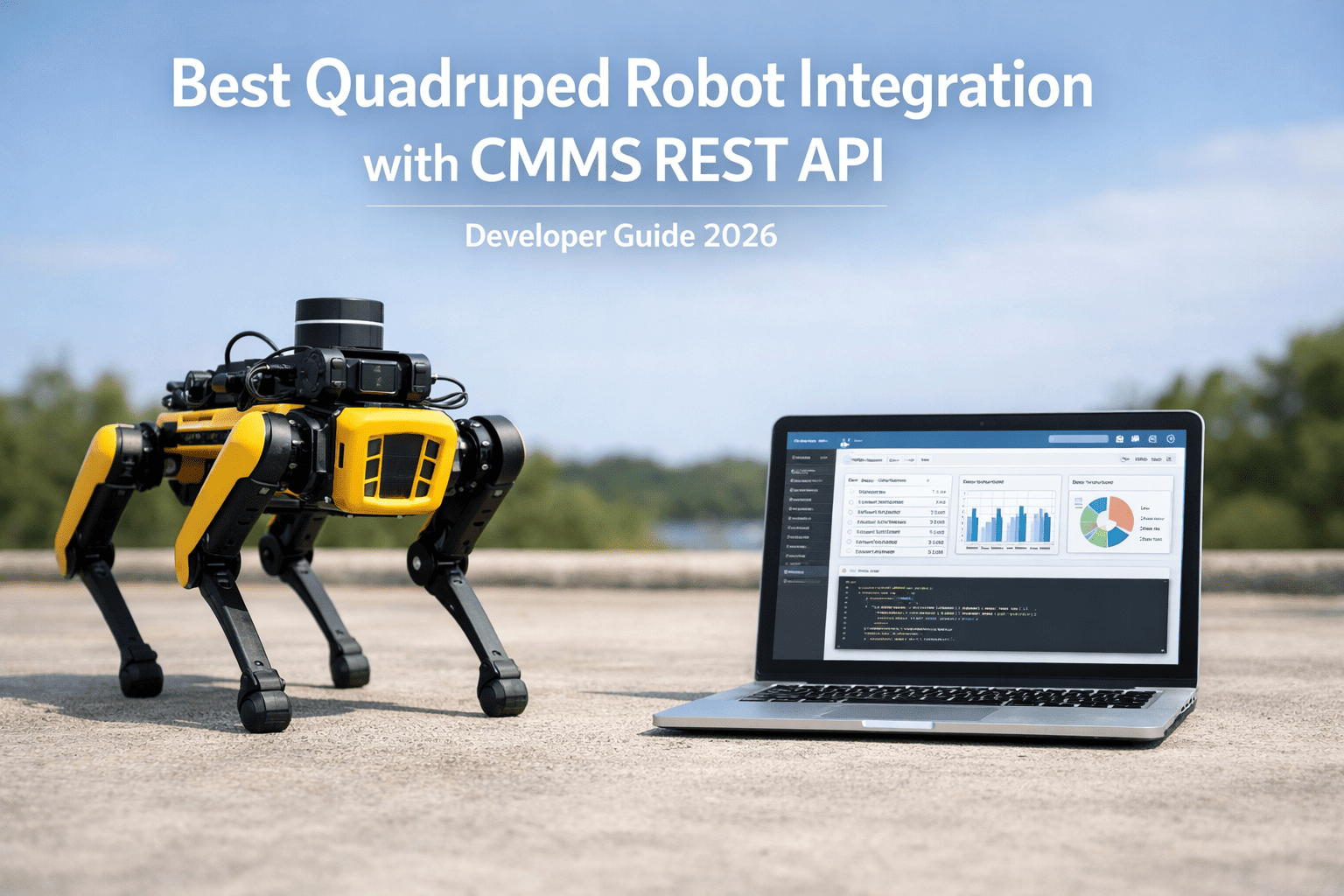
Predictive maintenance inspection is undergoing a major shift as facilities move beyond manual rounds toward autonomous robotic platforms. In 2026, two technologies lead this transformation—aerial inspection drones and quadruped ground robots—each offering distinct advantages depending on your terrain, assets, and operational goals. The inspection robots market is projected to grow from $6.76 billion in 2026 to nearly $30 billion by 2034, driven by industries demanding safer, faster, and more accurate asset monitoring. Whether you manage a refinery, power plant, or manufacturing floor, choosing between these platforms directly impacts how effectively your CMMS captures and acts on inspection data. Sign up for Oxmaint to centralize inspection data from any robotic platform. This guide breaks down every factor that matters—terrain capability, sensor payloads, battery endurance, cost, and integration with maintenance workflows.
Inspection Drones vs. Quadruped Robots for Predictive Maintenance
What Makes Aerial and Ground Robots Different
The fundamental difference is simple: drones fly and robots walk. But the operational implications of that distinction shape every aspect of your predictive maintenance program—from which assets you can inspect to how frequently data reaches your CMMS. Understanding these core differences prevents costly mismatches between platform capabilities and facility requirements.
Inspection Drones
Quadruped Robots
Where Drones Win: Aerial Inspection Advantages
Inspection drones dominate scenarios that require height, speed, or broad-area coverage. Enterprise platforms like the DJI Matrice 350 RTK and Skydio X10 carry multi-sensor payloads across large sites in a fraction of the time required by ground-based methods. A single drone can survey an entire wind farm, pipeline corridor, or refinery exterior in one flight session—feeding thermal, visual, and LiDAR data directly into your maintenance management platform for automated analysis. Sign up for Oxmaint to connect drone inspection data to automated work orders.
Unlimited Vertical Reach
Inspect flare stacks, wind turbines, transmission towers, and cooling towers at any height—eliminating scaffolding costs that can exceed $50,000 per setup.
Rapid Site Coverage
Survey kilometers of pipeline, solar arrays, or facility perimeters in a single flight. Enterprise drones cover 10–50x more area per hour than any ground-based method.
Autonomous Route Replay
Program inspection flight paths once and replay them repeatedly for consistent, comparable datasets. AI-powered obstacle avoidance enables operation in complex structural environments.
Where Quadruped Robots Win: Ground Inspection Advantages
Quadruped robots like Boston Dynamics Spot and ANYbotics ANYmal bring capabilities that no drone can match at ground level. Their four-legged design navigates stairs, grated walkways, uneven floors, and tight corridors—environments where aerial platforms cannot safely operate. With payload capacities reaching 14 kg, they carry comprehensive sensor suites for thermal imaging, acoustic analysis, gas detection, and LiDAR mapping during autonomous patrol routes that run 24/7 with automated docking and recharging. Book a demo to see how Oxmaint manages ground robot inspection workflows.
Hazardous Zone Operation
ATEX/IECEx certified models like ANYmal X operate in explosive Zone 1 environments—refineries, chemical plants, and offshore rigs where human entry requires extensive safety protocols.
Physical Manipulation
With robotic arms, quadrupeds turn valves, open doors, flip switches, and physically interact with equipment—bridging the gap between inspection and intervention.
24/7 Autonomous Patrol
Self-docking charging stations enable continuous facility monitoring without human intervention. Spot can complete autonomous inspection rounds and recharge itself indefinitely.
Full Specification Comparison Table
This side-by-side breakdown covers every technical and operational factor maintenance teams evaluate when selecting between aerial and ground-based inspection platforms for predictive maintenance programs.
| Factor | Inspection Drones | Quadruped Robots | Winner |
|---|---|---|---|
| Vertical access | Unlimited (FAA altitude rules apply) | Stairs and ramps only | Drone |
| Indoor navigation | Limited; GPS-denied is challenging | Excellent SLAM-based autonomy | Robot |
| Coverage speed | Up to 45 mph across large areas | ~1.6 m/s walking pace | Drone |
| Sensor payload | 2.7–6 kg | Up to 14 kg | Robot |
| Battery endurance | 40–59 min flight | 60–90 min operation | Robot |
| Physical interaction | None (observation only) | Valve turns, door opening, switches | Robot |
| Weather tolerance | IP55; limited in high wind/rain | IP54–IP67; snow, rain, dust | Robot |
| Acoustic inspection | Rotor noise interferes | Stable, close-proximity readings | Robot |
| 3D mapping range | Exterior structures; large scale | Interior facilities; room-level detail | Tie |
| Deployment cost | $10K–$25K per unit | $50K–$150K+ per unit | Drone |
| Operator training | FAA Part 107 + platform cert | 1–2 day manufacturer training | Robot |
| CMMS integration | API export to CMMS platforms | API + fleet management software | Tie |
AI Vision and Sensor Capabilities Compared
The sensors mounted on your inspection platform determine which defects you can detect, how early you catch degradation, and how accurately your predictive maintenance models perform. Both drones and quadrupeds support advanced sensor suites, but each platform has distinct advantages for specific sensing modalities.
AI-Powered Visual Inspection
High-resolution RGB cameras (up to 64 MP on drones, 12 MP PTZ with 30x zoom on quadrupeds) feed machine learning models that detect cracks, corrosion, delamination, and structural defects. Drones capture wider fields of view; robots provide closer, more stable imagery for fine-detail analysis.
Thermal Imaging (FLIR)
Radiometric thermal cameras detect electrical hotspots, insulation failures, bearing overheating, and steam leaks. Quadrupeds deliver more stable, close-proximity thermal readings on ground-level equipment.
Acoustic Leak Detection
Ultrasonic arrays identify compressed air leaks, partial discharge, and mechanical anomalies. Drone rotor noise makes aerial acoustic sensing impractical—this is a clear quadruped strength.
LiDAR 3D Scanning
Generate high-fidelity point clouds for digital twin creation and change detection. Drones map exterior structures at scale; quadrupeds produce detailed interior facility models with room-level precision.
Optical Gas Imaging (OGI)
Visualize methane, VOC, and SF6 leaks across large areas rapidly. Drones cover entire pipeline corridors and tank farms in single flights—far more efficient than ground-based gas surveys.
Gauge and Dial Reading
AI-powered visual recognition reads analog gauges, pressure meters, and flow indicators. Quadrupeds provide stable, repeatable angles for accurate automated readings across every patrol.
Best Platform by Industry and Asset Type
The right platform depends on what you inspect, where your assets sit, and what data your predictive maintenance program needs. Many organizations deploy both in complementary roles. Here is how leading industries are matching platforms to their inspection requirements in 2026.
Connecting Inspection Data to Your CMMS
Raw inspection data only creates value when it triggers action. The critical bridge between robotic inspection and predictive maintenance is your CMMS—the platform that converts thermal anomalies, vibration trends, and visual defects into prioritized work orders assigned to the right technician with the right parts. Without this connection, inspection images accumulate in folders and findings get lost in email chains.
Build a Smarter Inspection-to-Repair Pipeline
Oxmaint centralizes inspection data from any robotic platform—turning thermal anomalies into work orders, vibration trends into predictive alerts, and every inspection round into a measurable reduction in unplanned downtime.
Investment Analysis: Cost and ROI Breakdown
Choosing an inspection platform involves more than comparing sticker prices. Total cost of ownership includes sensors, training, maintenance, software subscriptions, and operational savings. Here is how the economics compare for a typical mid-size industrial facility running weekly inspection cycles.
Frequently Asked Questions
Start Building Your Robotic Inspection Program
Whether you choose drones, quadruped robots, or both—Oxmaint ensures every inspection generates actionable maintenance intelligence. Real-time asset tracking, automated work orders, and predictive analytics in one platform built for maintenance teams managing complex, high-value assets.