AI Root Cause Analysis Automation: From Sensor Alert to Fix in Minutes

Connect with Industry Experts, Share Solutions, and Grow Together!

Join Discussion Forum
ai-root-cause-analysis-automation-sensor-alert-to-fix

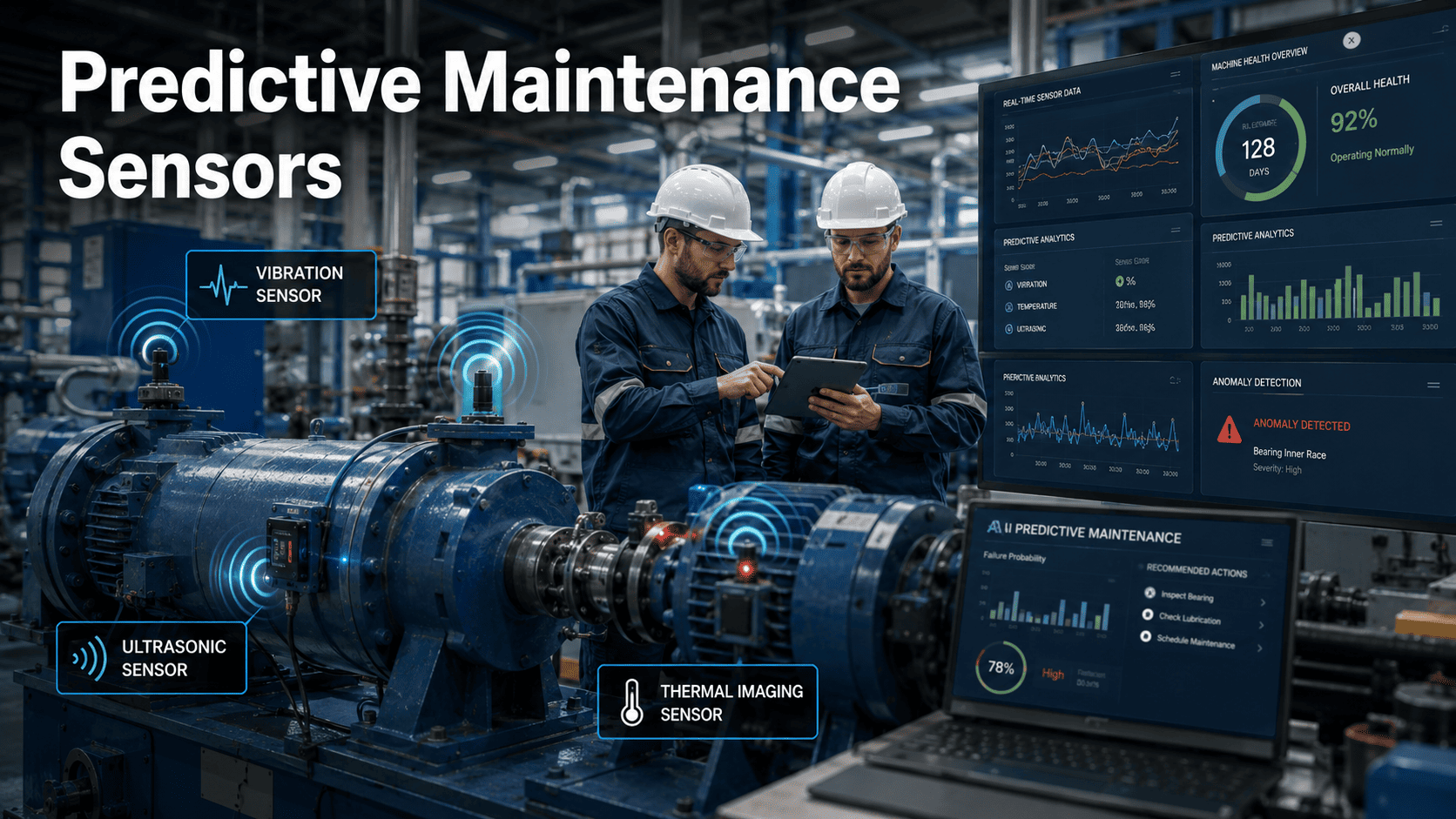
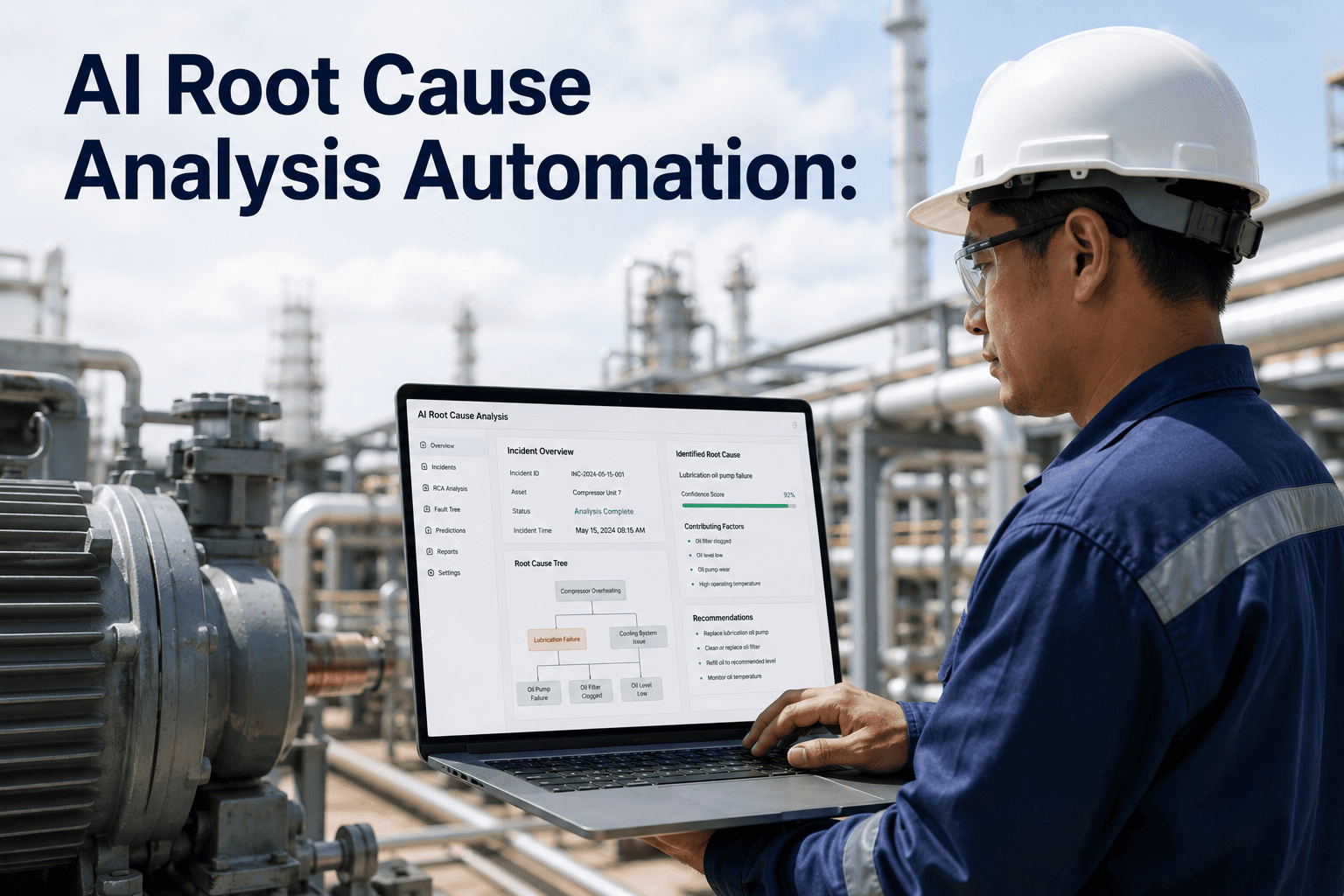
A sensor fires an alert at 3:47 AM. By 3:49 AM, OxMaint has already correlated it with three related asset readings, retrieved the two most similar historical failure signatures from your repair database, generated a ranked list of probable root causes, and created a work order with the recommended diagnostic steps pre-populated. Before your on-call technician has found their keys, the diagnosis is already in progress — start a free trial to see automated RCA working on your actual assets, or book a demo and we will walk through your current failure response process.

Cut MTTR by 60% Starting Today
Identify Hidden Cost Leaks Instantly with AI Root Cause Analysis
  • Sensor-to-diagnosis in under 2 minutes
  • Predictive failure alerts before breakdown occurs
  • Automatic work order generation with diagnostic brief
No heavy implementation required · Works across multi-site portfolios · Live in days, not months
Start Free Trial See Your Asset ROI in 30 Minutes
Used by operations teams managing 10,000+ assets
60%
reduction in MTTR when AI-assisted RCA is deployed vs manual diagnosis
Aberdeen Research, 2024
4.8×
higher cost of emergency repairs vs planned maintenance work orders
Plant Engineering Survey
78%
of industrial failures have detectable precursors 14+ days before breakdown
GE Digital Reliability Study
$240K
average cost of one hour of unplanned downtime in discrete manufacturing
Siemens Industrial Report

Root Cause Analysis Has Always Been the Most Valuable — and Most Time-Consuming — Maintenance Task

Traditional root cause analysis requires an experienced engineer to manually correlate sensor data, review work order history, consult OEM documentation, and apply domain knowledge to arrive at a probable cause. This process takes hours to days — during which the asset is either offline, running degraded, or masking a worsening condition. The result is reactive: the failure has already occurred before analysis begins.

AI Root Cause Analysis Automation changes the sequence entirely. Instead of diagnosing after failure, an AI RCA engine correlates incoming sensor signals with historical failure patterns in real time — matching symptoms to known failure modes before the failure completes. When a bearing temperature rise is correlated with a simultaneous vibration frequency shift and cross-referenced against three previous similar events on the same equipment class, the AI generates a probable cause within minutes of the first alert — not after the motor burns out.

OxMaint's AI RCA engine operates across your entire asset portfolio — correlating IoT signals, SCADA data, condition monitoring readings, and work order history to compress the time from sensor alert to actionable diagnosis. Facilities using automated RCA see measurable reductions in MTTR, unplanned downtime, and repeat failures within the first quarter of deployment — start a free trial to see it working on your asset data, or book a demo to walk through a live failure scenario.

Every hour between sensor alert and diagnosed root cause costs your operation money. AI RCA eliminates that gap — from hours to minutes.

Six Core Stages of AI Root Cause Analysis Automation

01

Signal Detection
IoT sensor, SCADA alarm, or manual reading triggers the RCA pipeline. Threshold breach or anomaly pattern initiates automated response.
02

Multi-Signal Correlation
AI correlates the triggering alert with concurrent readings from related sensors — identifying co-occurring patterns that indicate systemic vs isolated failure.
03

Historical Pattern Match
Current sensor pattern is matched against historical failure signatures from the same asset, same equipment class, and same failure mode type stored in OxMaint.
04

Fault Tree Generation
AI generates a ranked fault tree — probable root causes ordered by match confidence, with supporting evidence from historical repairs and OEM failure mode documentation.
05

Work Order Auto-Creation
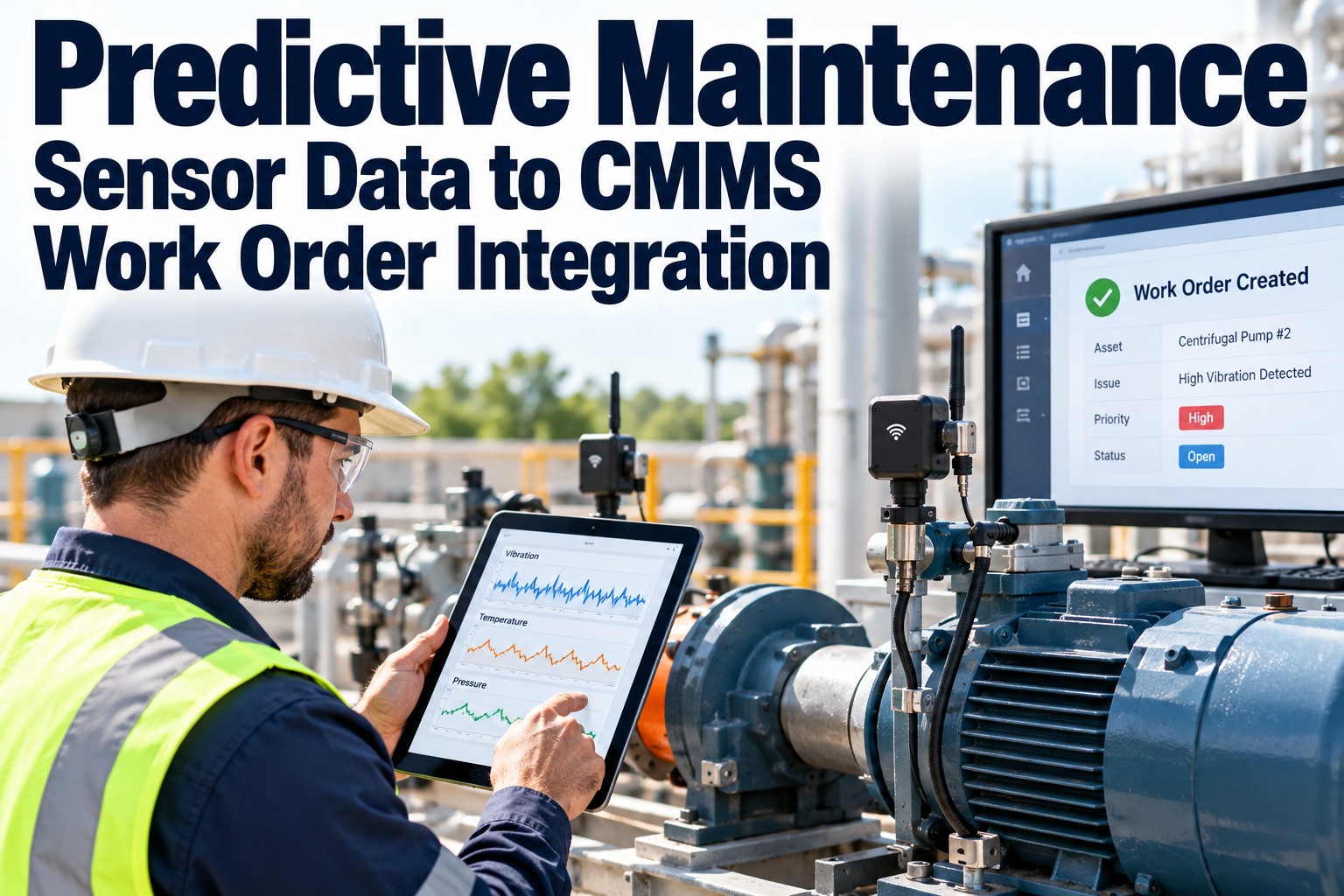
A work order is created with the diagnostic brief pre-populated — probable cause, recommended diagnostic steps, parts likely required, and relevant OEM documentation linked.
06

Continuous Learning Loop
Confirmed diagnoses and repair outcomes feed back into the pattern library — improving future RCA accuracy and expanding the system's failure knowledge base with every closed work order.

Why Manual RCA Fails at the Speed Modern Operations Require

Hours Lost to Manual Correlation
Manual RCA requires an engineer to pull sensor logs, work order history, and OEM documentation from multiple systems and synthesize them manually. In complex multi-asset events, this takes 4–12 hours — hours during which production is stopped or equipment is running degraded toward a worse failure.
Expertise Dependency
Accurate RCA requires deep equipment knowledge that typically resides in one or two senior engineers. When they are unavailable — on leave, retired, or overwhelmed — diagnosis quality drops and MTTR spikes. Operations cannot afford single points of human failure for critical diagnostic capability. Start a free trial to distribute RCA intelligence across your team.
Misdiagnosis and Repeat Failures
Without historical pattern matching, technicians frequently treat symptoms rather than causes. A bearing replaced without identifying the lubrication failure that caused it will fail again in 60–90 days. Repeat failures cost 2.3× more than initial failures due to accelerated collateral damage — and they signal a systemic RCA failure, not a parts problem.
Data Exists, Insight Does Not
Modern facilities generate enormous volumes of sensor and operational data. The failure warning that could have predicted the breakdown was recorded — it just was not correlated with the other signals that gave it meaning. Data without automated analysis is noise. OxMaint converts that noise into actionable RCA. Book a demo to see how.

OxMaint AI RCA: From Sensor Alert to Fix in Minutes

01
Real-Time Multi-Sensor Correlation
OxMaint correlates incoming sensor alerts with concurrent readings across related assets — identifying compound failure signatures that single-sensor threshold monitoring misses entirely. Vibration, temperature, pressure, and current draw are analyzed together, not in isolation.
02
Historical Failure Pattern Matching
Every closed work order with a confirmed root cause becomes a pattern in OxMaint's RCA library. When a current alert signature matches a historical pattern at 85% or above, the system identifies the probable cause and recommended corrective action from the repair record that resolved it.
03
AI Fault Tree Generation
For novel failure patterns without a direct historical match, OxMaint generates a fault tree — ranking probable causes by probability based on asset class, operating conditions, maintenance history, and OEM failure mode documentation — giving technicians a structured diagnostic starting point in minutes.
04
Automatic Work Order With Diagnostic Brief
The RCA output automatically populates a work order — probable root cause ranked by confidence, recommended diagnostic sequence, parts likely required, safety precautions, and linked OEM documentation. Technicians arrive at the asset with a diagnosis, not a blank page.
05
Escalation and Notification Routing
High-confidence RCA findings are routed to the appropriate technician level based on failure severity and required skill set. Critical failures with production impact generate immediate escalation to maintenance managers and operations leadership — no manual triage required.
06
CapEx Trigger Intelligence
When RCA patterns indicate an asset is entering end-of-life — escalating failure frequency, declining time between failures, increasing repair cost per event — OxMaint flags the asset for CapEx review and projects replacement timing into the 5–10 year capital forecast automatically.
Operations teams that automate RCA cut emergency repair costs by 40–60%. Every delayed implementation is a maintenance budget leak that continues compounding.

Manual RCA Process vs OxMaint AI RCA: The Real Difference

Factor Reactive: Manual RCA Planned: OxMaint AI RCA
Time to Diagnosis 4–12 hours — manual data correlation across systems Under 2 minutes — automated correlation from first alert
Expertise Required Senior engineer availability — single point of failure AI distributes expert knowledge to every technician
Historical Pattern Use Engineer memory — varies by individual Full repair history searched automatically every time
Work Order Quality Blank work order — technician diagnoses on site Pre-populated with probable cause, steps, and parts
Repeat Failure Rate High — symptoms treated, root causes missed 40% lower — root cause confirmed before closure
Downtime Duration 8–24 hours — diagnosis time adds to repair time 2–6 hours — technician arrives with diagnosis in hand
CapEx Visibility Asset replacement driven by failure, not forecast RCA patterns trigger automatic CapEx forecast update
Emergency Repair Cost 4.8× higher than planned — emergency logistics overhead Planned intervention — parts staged, window selected

Measured Outcomes from AI-Assisted RCA Deployments

60%
MTTR Reduction
Facilities deploying AI RCA report 60% reduction in mean time to repair within 6 months of activation on primary production assets
40%
Lower Breakdown Costs
Transition from reactive to predictive failure response reduces total maintenance spend by 35–45% — with emergency repair cost reductions driving the majority of savings
78%
Precursor Detection Rate
AI correlation detects precursors in 78% of failures that had available sensor data — giving operations teams 14–60 days of advance warning before catastrophic breakdown
10×
ROI on Predictive Maintenance
US Department of Energy benchmark: predictive maintenance programs return 10× investment over time-based maintenance alone — with AI RCA as the core enabler

Operations teams switching to automated RCA see 40% lower breakdown costs on average — start a free trial to experience this shift on your own assets, or book a demo to walk through a live failure diagnosis scenario.

AI Root Cause Analysis: Frequently Asked Questions

How does OxMaint's AI RCA engine handle failure modes it has never seen before?
For novel failure signatures without a direct historical match, OxMaint's AI generates a fault tree based on the asset's equipment class, component configuration, operating conditions, and OEM failure mode documentation. The fault tree ranks probable causes by probability — giving technicians a structured diagnostic starting point even for uncommon failure modes. Each novel failure that is diagnosed and closed with a confirmed root cause becomes a new pattern in the library, improving future accuracy for similar events across the fleet.
Does OxMaint AI RCA require IoT sensors to function?
No. While IoT and SCADA integration enables real-time automated correlation, OxMaint's RCA capabilities operate on manually recorded condition monitoring data — vibration readings, oil samples, insulation tests, and inspection findings entered by technicians. The historical pattern matching and fault tree generation functions work from the work order and maintenance record database regardless of sensor connectivity. IoT integration accelerates the speed of detection; the RCA intelligence layer works with or without it.
How quickly does OxMaint's RCA accuracy improve after deployment?
The RCA accuracy improves in two phases. Immediately at deployment, OxMaint applies its equipment-class failure mode knowledge base — providing useful fault trees from day one. As your team closes work orders with confirmed root causes over the following months, accuracy improves progressively as the system learns your specific assets, operating conditions, and failure patterns. Facilities with existing digital work order histories can import them to immediately seed the pattern library with years of accumulated data.
Can OxMaint's AI RCA be used for compliance documentation in regulated industries?
Yes. OxMaint's RCA records — including sensor data, correlation evidence, fault tree, confirmed root cause, and corrective action — are stored as permanent asset records with full audit trail. For GMP-regulated environments, pharmaceutical manufacturing, food processing, and other regulated industries, the RCA documentation chain satisfies CAPA (Corrective and Preventive Action) requirements and provides the audit evidence required for regulatory inspections. Every RCA closure is timestamped, technician-attributed, and linked to the associated work order and asset record.
OxMaint AI RCA Platform

Stop Losing Millions to Failures That Were Already Warning You

Turn every sensor alert into a diagnosed, work-ordered, parts-staged repair action — before the failure completes.

  • Real-time multi-sensor correlation and pattern matching
  • Predictive failure alerts 14–60 days before breakdown
  • Automatic CapEx trigger when RCA patterns signal end-of-life
See measurable results in the first 30 days · Limited onboarding slots available this quarter
By Jack Edwards

Experience
Oxmaint's
Power

Take a personalized tour with our product expert to see how OXmaint can help you streamline your maintenance operations and minimize downtime.

Book a Tour

Share This Story, Choose Your Platform!

Connect all your field staff and maintenance teams in real time.

Report, track and coordinate repairs. Awesome for asset, equipment & asset repair management.

Schedule a demo or start your free trial right away.

iphone

Get Oxmaint App
Most Affordable Maintenance Management Software

Download Our App