Aviation maintenance is the final checkpoint before every aircraft takes flight — and the technicians certified to run those checks are leaving the workforce faster than the industry is creating replacements. Boeing's 2024 Pilot and Technician Outlook projects a global shortfall of 626,000 maintenance technicians by 2041. Legacy training models built on fixed classroom cycles, paper-based procedures, and generic certification schedules are structurally incapable of closing that gap. AI-powered learning transforms the equation — adapting instruction to individual skill profiles, embedding knowledge capture into every maintenance event, and giving MRO managers real-time visibility into workforce readiness that no classroom program has ever delivered.
Build a Workforce That Learns Every Time It Works
Oxmaint puts guided procedures, live performance data, and adaptive learning tools into every technician's hands from day one. No lengthy onboarding. No paper-based workflows. No training programs that expire the moment someone leaves a classroom.
What Is AI-Powered Learning for Aviation Maintenance?
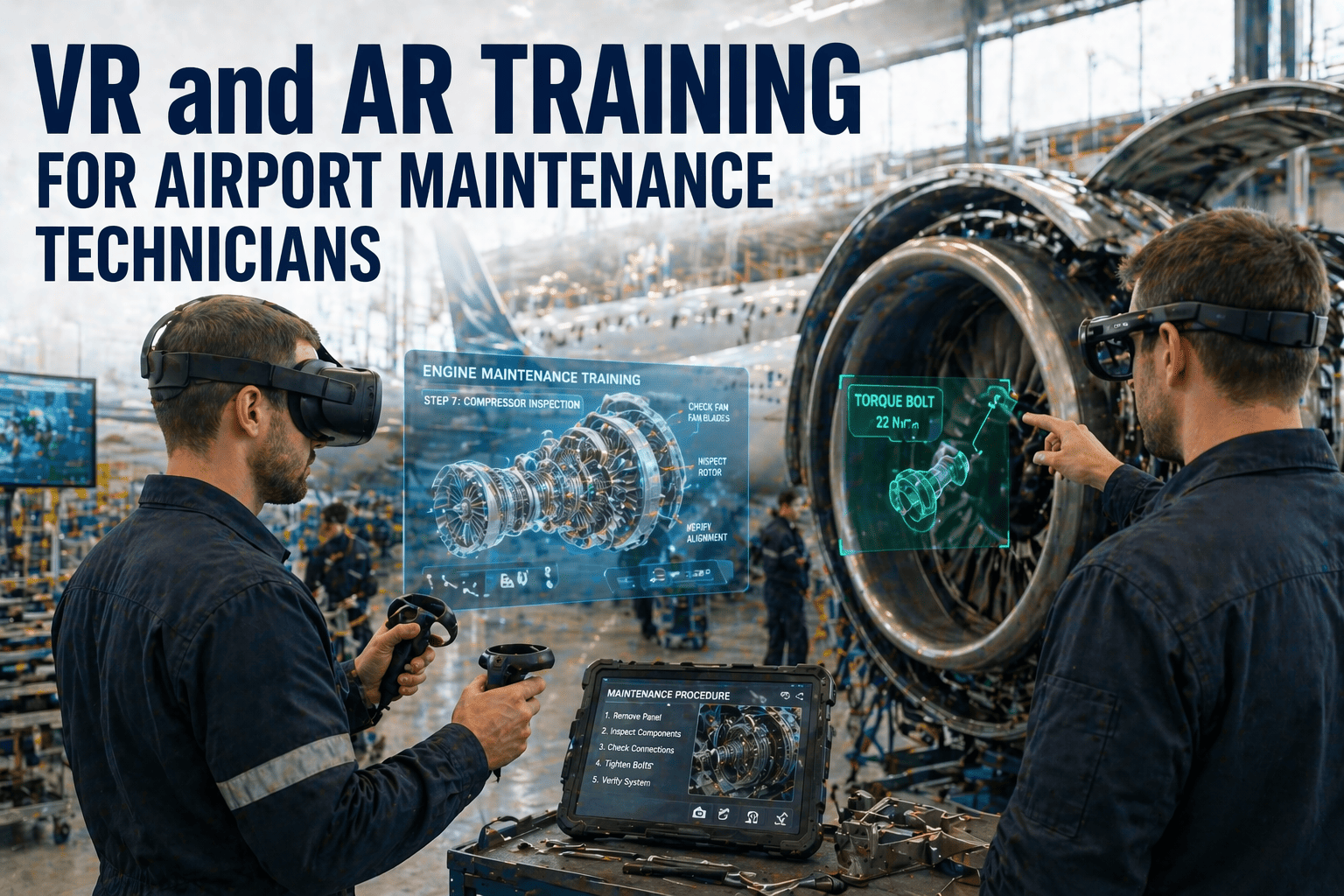
AI-powered learning in aviation maintenance refers to intelligent training infrastructure that adapts in real time to each technician's knowledge gaps, task history, and on-the-job performance data. Unlike conventional programs where every trainee follows the same curriculum at the same pace, AI-driven platforms analyze task completion patterns, error frequency, and assessment scores to deliver targeted instruction exactly when and where it is needed. The outcome is measurable: technicians reach independent task qualification 30 to 40 percent faster, with higher first-pass rates on inspections and dramatically lower rework costs across the first year of deployment. If you want to see what that looks like for your operation, start a free trial for 30 days and book a demo with our team.
The platform effect compounds over time. Each completed work order adds a data point. Each resolved fault adds a case study. Each technician's progression builds a competency profile that supervisors can use for task assignment, advancement decisions, and regulatory sign-offs. Aviation organizations using AI-integrated CMMS platforms report 28 percent fewer repeat defects within 90 days — not because the procedures changed, but because the people executing them finally have a system that teaches, tracks, and adjusts as they work.
The Four Pillars of AI-Driven Aviation Technician Development
Why Traditional Aviation Training Programs Are Failing
The training model that built today's aviation maintenance workforce was designed for a different era — one with stable rosters, long tenure, and minimal system complexity. That era is over. Today's MRO environment demands faster onboarding, tighter compliance documentation, and continuous skill development for technicians managing increasingly software-dependent aircraft. The legacy model cannot deliver any of those things at scale. Here is where the failure points are concentrated. When you're ready to fix them, start a free trial or book a demo to walk through Oxmaint's approach.
How Oxmaint Builds the Next-Generation Aviation Technician
Oxmaint's CMMS and asset management platform operates on a single principle: every maintenance event is a learning event. From first-day onboarding to advanced task qualification, the platform guides technicians through procedures, captures their performance data, and gives supervisors the real-time visibility they need to develop talent deliberately — not reactively. The four-stage progression below shows how organizations move from paper-based training to a continuously improving workforce. Ready to see the platform in full? Start a free trial for 30 days and book a demo with a specialist who knows your industry.
Traditional Training vs AI-Powered Learning: A Direct Comparison
The performance gap between conventional training methods and AI-integrated maintenance platforms is not marginal — it compounds across every training cycle, every technician cohort, and every aircraft event. Below is what the numbers show when organizations make the shift. When the comparison is clear, start a free trial or book a demo to see Oxmaint's platform demonstrated on real aviation data.
| Training Dimension | Traditional Training | AI-Powered Platform (Oxmaint) |
|---|---|---|
| Time to Task Qualification | 12–18 months (fixed curriculum) | 6–10 months (adaptive progression) |
| Knowledge Retention at 30 Days | 30–40% of classroom content retained | 65–75% via applied reinforcement |
| Technician Error Rate (Year 1) | 12–18 per 1,000 tasks | 4–7 per 1,000 with guided workflows |
| Supervisor Visibility | Periodic assessments only | Real-time competency dashboards |
| Institutional Knowledge | Lost when senior techs retire | Captured, indexed, permanent |
| Regulatory Audit Readiness | Manual compilation: 2–5 days prep | Digital records: ready in minutes |
| Training Cost Per Technician | $18,000–$28,000 per qualification cycle | 35–45% reduction via compressed timelines |
| Multi-Site Consistency | Requires on-site instructors at each facility | Standardized delivery across all MRO sites |
The ROI of AI-Powered Aviation Maintenance Training
Frequently Asked Questions
How does Oxmaint support aviation technician certification compliance across multiple regulatory bodies?
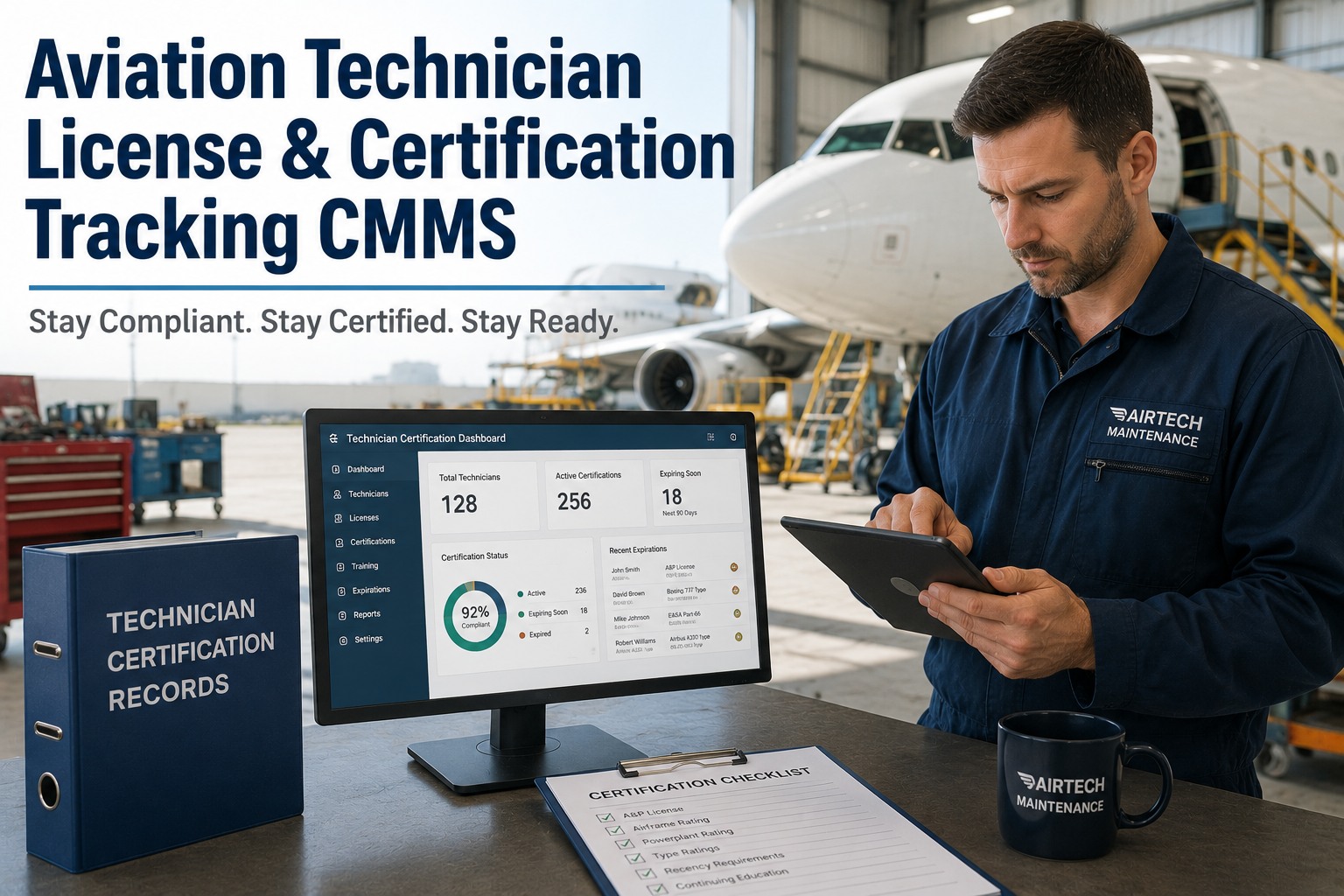
Oxmaint creates a time-stamped, digitally signed record of every maintenance task a technician completes — capturing the procedure version, parts consumed, supervisor authorization, and photographic inspection evidence in a searchable audit trail. These records satisfy FAA Part 145, EASA Part-145, CASA, and Transport Canada documentation requirements without any manual compilation before regulatory visits. Supervisors can generate individual competency reports showing task authorization history, qualification currency, and recurrent training status in minutes, not days. The platform's multi-site architecture means a technician's full record follows them across facilities, and an MRO organization can produce portfolio-level compliance documentation from a single dashboard.
Can Oxmaint handle training programs across multiple MRO facilities with different aircraft types?
Yes. Oxmaint is built specifically for multi-site operations with a portfolio hierarchy — Portfolio, Property, System, Asset, Component — that supports multiple facilities, each with their own asset registries, work order queues, and technician rosters. Maintenance procedures can be standardized across an entire MRO network or tailored to the specific aircraft types, fleet age, and operating environment of individual facilities. Portfolio managers get consolidated visibility across all sites while facility-level supervisors work within their own operational environment. Organizations managing 5 to 50 facilities routinely use the platform to enforce consistent training standards while accommodating site-specific requirements.
How quickly can a mid-size MRO facility be operational on Oxmaint?
Most mid-size MRO organizations complete deployment and reach full operational use within 4 to 6 weeks. The first phase covers asset registry import, work order template configuration, and technician account setup. The second phase activates mobile deployment, digital inspection forms, and supervisor dashboard configuration. The third phase enables IoT integration, performance analytics, and CapEx forecasting for capital equipment decisions. Oxmaint does not charge implementation fees or require dedicated IT resources for deployment. Initial ROI — measured through reduced rework and faster work order close rates — is typically visible within the first 90 days of live operations.
What happens to existing maintenance records and technician history when we migrate from paper-based systems?
Oxmaint's onboarding process includes a structured data migration pathway for importing historical asset records, service histories, and procedure libraries into the platform. Paper-based records are digitized and tagged to specific assets, creating an unbroken service timeline from the first recorded event through to live operations. Existing technician qualification records and task authorizations are imported and mapped to individual profiles. Once the platform is live, every new maintenance event automatically contributes to the institutional knowledge base and individual competency records — so the knowledge accumulated over decades of operations is preserved, searchable, and continuously building from day one.
Train Faster. Certify Smarter. Operate Safer.
Aviation maintenance excellence starts with a workforce that learns continuously — not just in classrooms. Oxmaint gives your MRO the infrastructure to close the technician gap, preserve institutional knowledge, and deliver audit-ready compliance documentation without the overhead of legacy training programs. 626,000 technicians are needed. Start building yours today.