At a major US international airport, ground crews drive a manual FOD sweep across 13,000 feet of runway every six hours — five vehicles, ten inspectors, twelve total runway closures per day. In 2024, that airport missed a half-inch metal bracket lying near the touchdown zone of Runway 27R for 41 minutes. A regional jet ingested it on rotation. The repair invoice was $312,000 plus three days of aircraft-on-ground. The bracket had fallen from a tug at 04:18 — the manual sweep was scheduled for 04:30. AI-powered drones flying autonomous patterns at 30-minute intervals would have detected the object inside two minutes of it landing on the surface. Boeing estimates that FOD costs the global aviation industry $4 billion annually, with 55% of debris discovered in apron and stand areas — exactly where computer vision drones outperform manual inspection by orders of magnitude. Book a demo to see how OxMaint logs every drone-detected FOD event into auditable work orders, asset history, and FAA-compliant inspection records.
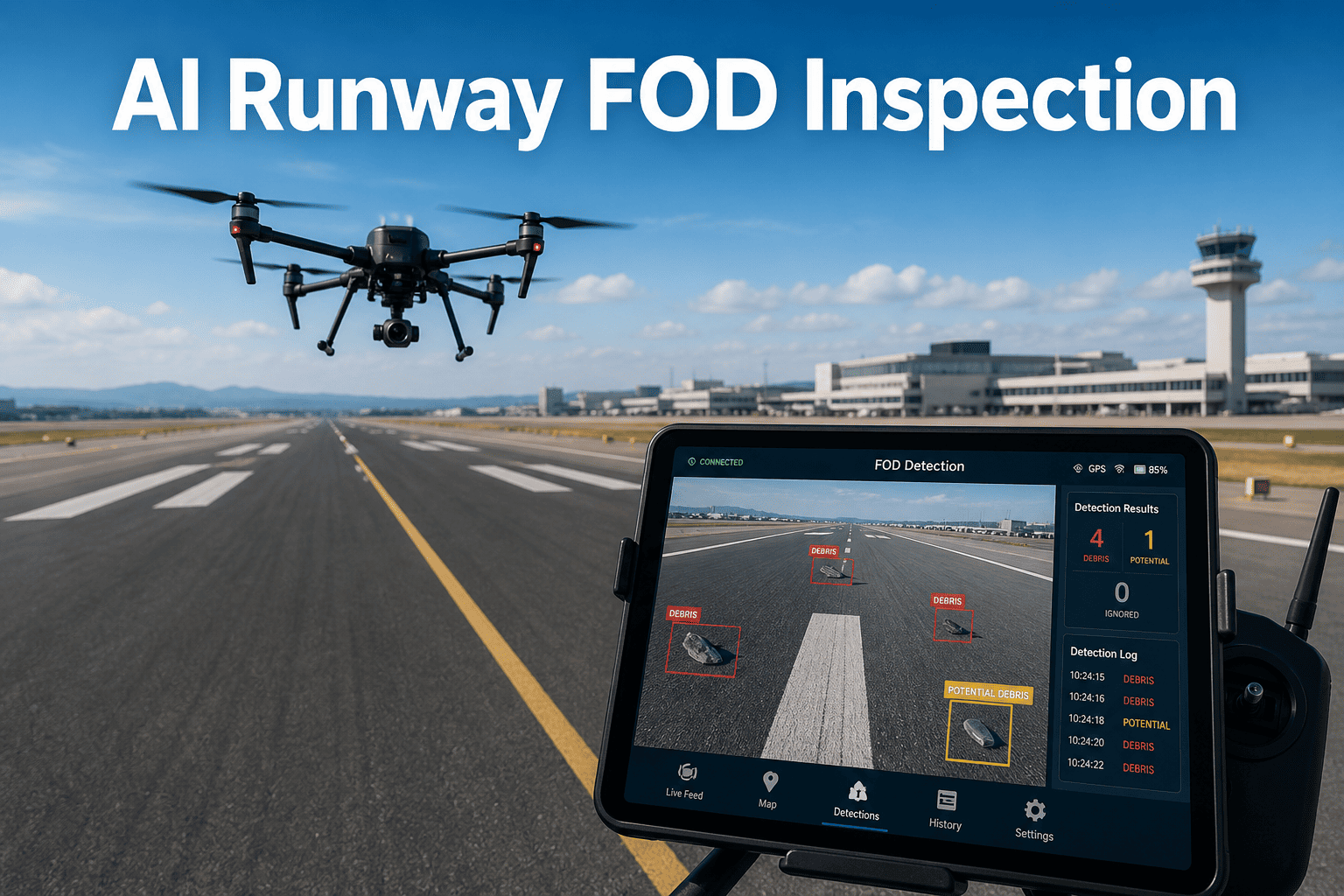
Computer Vision FOD Detection — Logged in OxMaint CMMS
From Drone Alert to Work Order in 90 Seconds
AI drone scans · auto-generated FOD work orders · GPS pin · photo evidence · FAA-ready audit trail
$4B
Annual global aviation FOD damage
Boeing global FOD cost estimate
55%
Of FOD discovered on aprons and stands
Airports Council International, 2025
$869.4M
FOD detection systems market — 2025
Reaching $1.5B by 2034 at 6.13% CAGR
$64M
Cost of single 36-hour airspace event
Gatwick 2018 — 140,000 passengers stranded
What Are Computer Vision Drones for Runway FOD Inspection?
Computer vision drones for runway FOD inspection are autonomous or semi-autonomous unmanned aerial vehicles equipped with high-resolution cameras, thermal sensors, and onboard AI inference engines that detect, classify, and geotag foreign object debris on runways, taxiways, and aprons — without requiring runway closure or human inspectors on the active surface. The drone flies a pre-programmed pattern at low altitude, streams imagery to a ground station via 5G or private LTE, and a deep-learning model — typically a CNN or vision transformer trained on labeled FOD datasets — flags hazards in real time and pushes the alert into the airport's CMMS as a priority work order.
This is a structural shift from traditional FOD management. Manual inspections take 20 to 45 minutes per runway pass, require active runway closure, and depend entirely on human visual acuity in variable light and weather. AI drones complete the same coverage in under 8 minutes, fly during operational gaps, and detect objects as small as a 6mm bolt with documented accuracy above 90 percent in production deployments at Aena (Spain), Heathrow, and Changi. The output is not just a debris alert — it is a timestamped, geotagged, photo-evidenced record that flows directly into an asset-management system for compliance reporting under FAA AC 150/5210-24, ICAO Annex 14, and EASA runway safety standards. Start a free trial to see how OxMaint converts every drone detection into a closed-loop work order, or book a demo for your operations team.
The Six-Layer Architecture of an AI Drone FOD System
A production-grade computer vision drone inspection program is not just a drone — it is a six-layer technology stack where each component must integrate with the others to deliver compliant, auditable runway safety. Below is how the layers fit together when fed into OxMaint as the system of record.
01
Autonomous Flight Platform
Tethered or free-flight UAV with RTK-GPS positioning, weather-rated airframe, and pre-loaded mission patterns covering full runway, taxiway, and apron coverage.
02
Multi-Spectral Sensor Suite
High-resolution RGB camera, thermal IR for night and subsurface anomaly detection, and millimeter-wave radar for adverse weather operation.
03
Onboard Edge AI Inference
CNN or vision transformer model running on edge GPU, classifying debris by material, size, and risk in milliseconds — no cloud round-trip required.
04
Private 5G or LTE Backhaul
Dedicated low-latency network transmits live imagery, telemetry, and detection metadata to ground operations — proven at Aena's San Sebastian deployment.
05
CMMS Work Order Engine
OxMaint receives the alert, auto-creates a P1 FOD work order with photo, GPS pin, and asset link — dispatching the nearest available crew automatically.
06
Compliance and Audit Layer
Every detection, response time, and resolution stored against FAA AC 150/5210-24 reporting fields — exportable for safety audits in under three minutes.
Why Manual FOD Inspections Are Failing Modern Airports
Manual runway sweeps were designed for an era of 200 daily operations. Today, hub airports run 1,500 to 3,000 operations per day, with turnaround times under 30 minutes and zero tolerance for debris-induced incidents. The economics and the risk profile no longer align — and every facility manager running an airside maintenance program should know exactly where the gaps are.
Detection Latency Kills Aircraft
Manual sweeps every 4–6 hours leave debris undetected for the entire interval. A bolt that lands at hour one stays for five — and one rotation is all it takes.
Runway Closure Cost Per Sweep
A 25-minute manual inspection at a Tier-1 hub blocks 8–12 movements. At $7,200 average revenue per slot, that is $86,000+ in displaced traffic per sweep.
No Audit Trail for FAA Reviews
Paper logs and clipboard checklists cannot prove inspection coverage during an FAA Part 139 audit. Missing evidence triggers findings, fines, and remediation orders.
Inspector Exposure on Live Pavement
Sending humans onto active surfaces creates jet-blast, runway-incursion, and vehicle-collision risk. Drones fly the same pattern with zero personnel exposure.
Zero Subsurface Visibility
Visual inspection cannot see hairline cracks, moisture infiltration, or thermal anomalies under the pavement. Thermal-imaging drones detect failures months earlier.
Labor Cost Spirals at Scale
A 24/7 manual program at a hub airport requires 12–18 FTE inspectors. In high-cost markets like Australia and Germany, that is a $1.4M–$2.1M annual line item.
Each of these pain points compounds the next. A missed detection becomes an incident; an incident becomes an FAA finding; a finding triggers a remediation program that costs more than the AI drone deployment would have cost in the first place. Book a demo to walk through your runway operations with our team and see how OxMaint closes the loop, or start a free trial and configure your first drone-fed work order template today.
How OxMaint Operationalises Drone-Detected FOD Events
A computer vision drone is only as valuable as the maintenance system that receives its alerts. OxMaint sits at the centre of the FOD response loop — converting raw drone telemetry into compliant, closed work orders that satisfy FAA, ICAO, and EASA documentation requirements without manual data entry.
Auto-Generated P1 Work Orders
Drone detection triggers a priority FOD work order in OxMaint with GPS coordinates, photo evidence, and severity classification — dispatched to the nearest crew in under 90 seconds.
Asset-Linked Inspection History
Each runway, taxiway, and apron section is a tracked asset. Every drone scan, every detection, every clearance event accrues to that asset's lifecycle record automatically.
FAA Part 139 Audit Export
One-click export of all FOD detection, response, and resolution data formatted for FAA AC 150/5210-24 self-inspection reporting — three minutes vs three days.
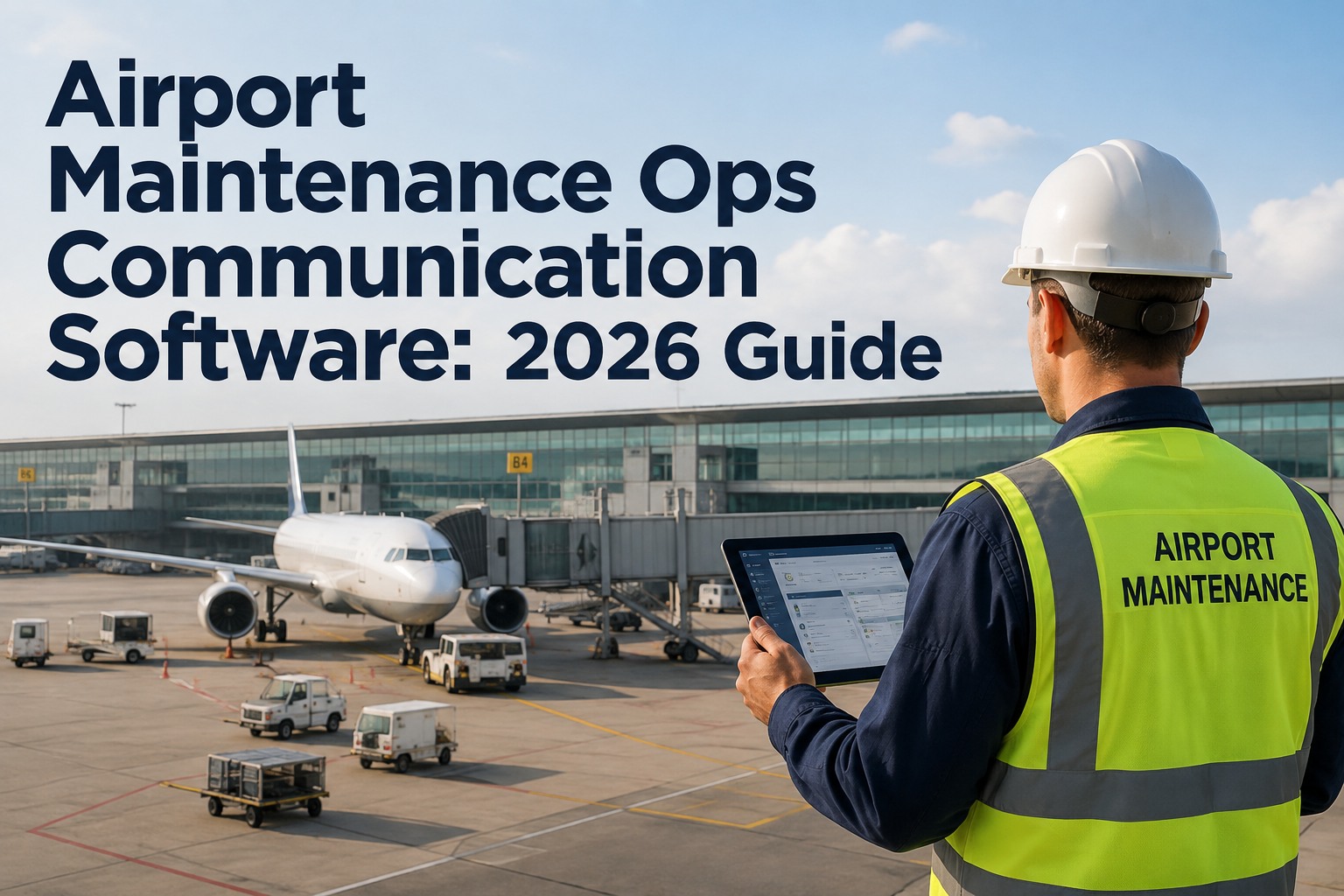
Mobile Crew Dispatch and Closeout
Ground crews receive the work order on phone or tablet, navigate to the GPS pin, capture clearance photo, and close the order — synced to the central system in real time.
Predictive Maintenance Triggers
OxMaint correlates thermal anomalies from drone scans with pavement asset history — generating preventive work orders for crack sealing or joint repair before failure.
Multi-Site Portfolio Reporting
For airport groups operating multiple facilities, the portfolio dashboard rolls up FOD KPIs, response times, and detection volumes across every runway in the network.
Manual Sweeps vs AI Drone Inspections — Side by Side
The clearest way to evaluate the case for AI drone inspections is to put a typical manual program next to a computer-vision-driven program for the same runway. Below is a like-for-like comparison drawn from published deployments at Aena, Heathrow, Changi, and Atlanta Hartsfield-Jackson.
| Metric |
Manual Inspection |
AI Drone + OxMaint |
| Inspection cycle time per runway pass |
20–45 minutes |
5–8 minutes |
| Frequency achievable per shift |
2–4 sweeps |
12–24 autonomous patrols |
| Smallest object reliably detected |
~25mm in good light |
6mm in any light condition |
| Runway closure required |
Yes — full closure each pass |
No — flies during gaps |
| Personnel on active pavement |
4–10 inspectors |
Zero |
| Detection accuracy in fog or rain |
Severely degraded |
Maintained via radar fusion |
| Photo and GPS evidence per detection |
Manual, inconsistent |
Automatic, geotagged |
| FAA Part 139 audit prep time |
2–3 days manual assembly |
Under 3 minutes — one click |
| Annual labor cost (Tier-1 hub) |
$1.4M–$2.1M |
$280K–$420K |
| Subsurface anomaly detection |
None |
Thermal imaging — early warning |
The economic argument is decisive — but the safety argument is what closes deals at the executive level. Start a free trial to model the comparison against your own runway program, or book a demo with our airport operations specialists.
ROI and Operational Results — What Airports Are Actually Reporting
Below are the outcomes airports operating computer vision FOD programs combined with a CMMS system of record have publicly reported in 2024 and 2025. These are not marketing projections — these are the working numbers behind FAA, ICAO, and EASA case study submissions.
82%
Reduction in inspection cycle time
From 30-min manual to 5-min autonomous
6×
Increase in inspection frequency
From 4 to 24 daily coverage passes
73%
Drop in FOD-related incident reports
First 12 months post-deployment
$1.6M
Avoided cost per prevented engine event
Ingestion repair + AOG + delay cascade
90s
Drone alert to dispatched work order
OxMaint auto-routing to nearest crew
3 min
FAA Part 139 audit pack export
vs 2–3 days manual evidence assembly
Frequently Asked Questions
Do AI drone FOD systems comply with FAA Part 139 self-inspection requirements?
Yes — AI drone systems satisfy FAA AC 150/5210-24 when paired with a CMMS that captures inspection records, response times, and corrective actions. OxMaint stores every drone detection as a timestamped, geotagged work order with photo evidence — fully exportable in the format expected during a FAA Part 139 self-inspection program audit. No paper records, no spreadsheet gaps.
How small an object can a computer vision drone reliably detect?
Production deployments at Aena (Spain) and Changi (Singapore) consistently detect objects as small as 6mm — bolts, screws, gravel fragments — at flight altitudes between 30 and 50 feet AGL. Detection accuracy depends on sensor resolution, AI model training, and lighting, but published results from 2024–2025 trials show above 90% precision in operational conditions, including night and light precipitation.
Can the drone fly while the runway is active, or does it require closure?
Modern programs operate the drone during operational gaps and along edge corridors at low altitude — no runway closure required. Tethered drone platforms used at several US hubs operate continuously from a fixed perimeter point with NOTAM coordination. The drone is always in known airspace, transmitting position to ATC, and recalled instantly if airspace conflict arises.
How does OxMaint handle drone alerts during a high-volume FOD event?
OxMaint queues every detection as an individual P1 work order with priority scoring based on object size, location, and proximity to active operations. The dispatch engine assigns each order to the nearest qualified crew, surfaces the highest-risk items to the operations supervisor, and tracks every clearance with timestamp, photo, and signature — closing the loop in real time across as many concurrent events as the field team can handle.
AI Drone FOD Inspection — Logged in OxMaint
Your Next FOD Event Is Already on Its Way to the Runway. Will You Detect It in 90 Seconds or 90 Minutes?
Computer vision drones detect debris faster, document better, and cost less than any manual program at scale. OxMaint is the system of record that turns every drone alert into a closed, audit-ready work order — automatically.