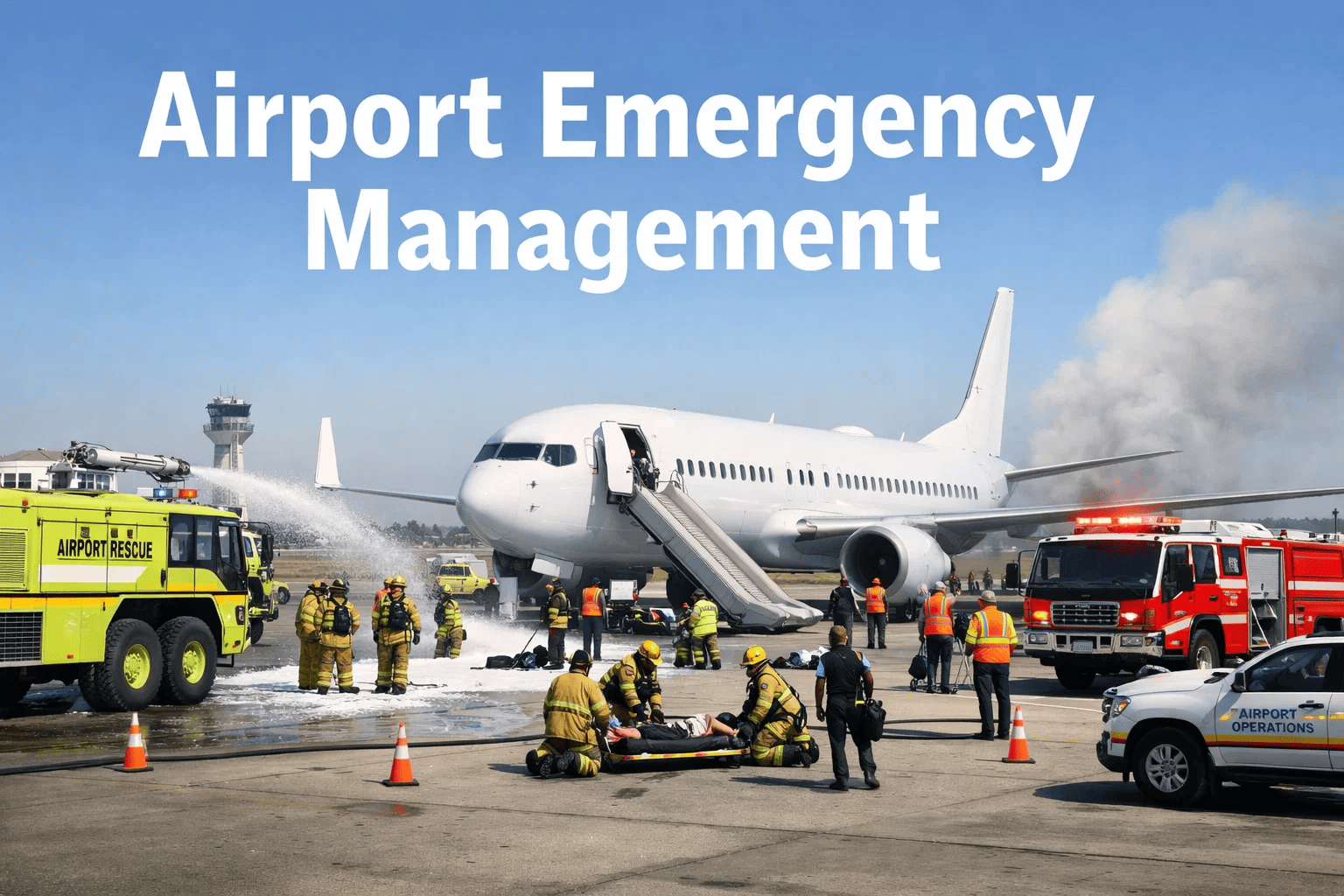
At 02:14 on a Tuesday morning, a fuel spill in the fuel farm of a major international airport activated the Airport Emergency Plan. The operations center had 4 minutes to coordinate ARFF response, evacuate the area, notify ground handlers, isolate utilities, and confirm the incident commander was in position. The outcome depended entirely on whether the maintenance team's documentation — valve locations, utility isolation procedures, ARFF equipment readiness, and hazmat containment protocols — was current, accessible, and actionable. Airports where maintenance and emergency operations are disconnected systems fail that four-minute test. Start a free OxMaint trial and connect your maintenance records to emergency readiness from day one — or book a demo to see the emergency maintenance workflow.
ARFF coordination, emergency equipment readiness, maintenance-backed crisis response, and CMMS-driven documentation — the operational framework for airports that can't afford to improvise under pressure.
FAA-required ARFF response time to runway threshold from station
62%
Of airport emergency failures linked to equipment readiness gaps at the time of incident
$2.8M
Average cost of a significant airport emergency event excluding aircraft value
Annual
FAA Part 139 full-scale emergency drill requirement for all certificated airports
The 5 Emergency Categories Every Airport Must Plan For
FAA Advisory Circular 150/5200-31C defines the emergency types that must be addressed in every Airport Emergency Plan. Each category demands a different set of maintenance-ready resources and documented response procedures.
Aircraft Accidents
On-airport and off-airport aircraft accidents. ARFF vehicles and agent supply must be at required quantities. Crash net, foam agent levels, and equipment operability are maintenance-critical for this response category.
ARFF apparatus daily inspection required
Fuel Spills & Fires
Fuel farm incidents, refueling area spills, and GSE fires. Isolation valve locations, containment berm integrity, foam agent availability, and utility cutoff accessibility must be in the current maintenance record.
Containment infrastructure monthly inspection
Structural Failures
Terminal collapse, bridge failure, jetway structural incident. Structural inspection records and corrective action histories must be accessible to emergency coordinators — to identify at-risk areas and plan evacuation routes.
Structural inspection per engineering schedule
Utility Failures
Power outage, water main rupture, HVAC failure in critical areas. Backup power system readiness, generator test records, and utility isolation procedure documentation must be current to enable rapid crisis response.
Generator and UPS weekly testing required
Bomb Threats & Security
Security incidents requiring terminal evacuation, sweep procedures, or area isolation. Access control system operability and communication system maintenance records directly affect response execution capability.
Communication system monthly test
Natural Disasters
Hurricanes, earthquakes, flooding, and severe weather. Structural integrity records, drainage system maintenance, and emergency generator capacity documentation are critical for disaster preparedness planning and response.
Seasonal preparedness inspection — pre-storm
The Maintenance Readiness Gap That Makes Emergencies Worse
Emergency plans fail at execution when the equipment needed for response is not serviceable, not where it's supposed to be, or documented in a system that incident commanders can't access in real time. These four gaps are the most common maintenance-related contributors to poor emergency outcomes.
01
ARFF Apparatus Not at Full Readiness
Fire fighting vehicle inspections are mandated daily under FAA Part 139. When inspections are logged on paper and not tracked in a real-time system, deferred maintenance accumulates undetected. On the day of an aircraft incident, the foam agent quantity is low, the pump hasn't been tested this week, and the response is degraded before it starts.
62% of emergency failures linked to equipment readiness gaps
02
Utility Isolation Procedures Not Current
In a fuel spill or fire event, the incident commander needs the exact location of isolation valves, the correct procedure to close them, and confirmation that the valve was last tested and is functional. If this information lives in a binder on a shelf in the maintenance office — not accessible at the incident command point — the response is slower and more dangerous.
Avg. 8-minute delay when isolation procedures require manual lookup
03
Backup Power Systems Untested
Emergency generators, UPS systems, and automatic transfer switches require regular testing to confirm they will operate when commercial power fails. When testing records are on paper and not tracked with automatic overdue alerts, generators go months without load testing — and fail on the first real demand during a power outage emergency.
Generator failure rate drops 74% with weekly load test adherence
04
Post-Incident Documentation Incomplete
After an emergency event, FAA and insurance requirements demand a complete record of the incident timeline, response actions, equipment used, and corrective actions taken. When maintenance teams create these records retrospectively from memory, accuracy suffers, regulatory findings result, and the same gaps repeat in the next exercise.
35% of post-incident FAA reviews cite incomplete maintenance documentation
How OxMaint Builds Emergency Maintenance Readiness
OxMaint connects emergency equipment maintenance, testing schedules, and documentation to a single platform — so readiness is continuous, not a condition achieved only before scheduled inspections.
ARFF Apparatus Daily Inspection Tracking
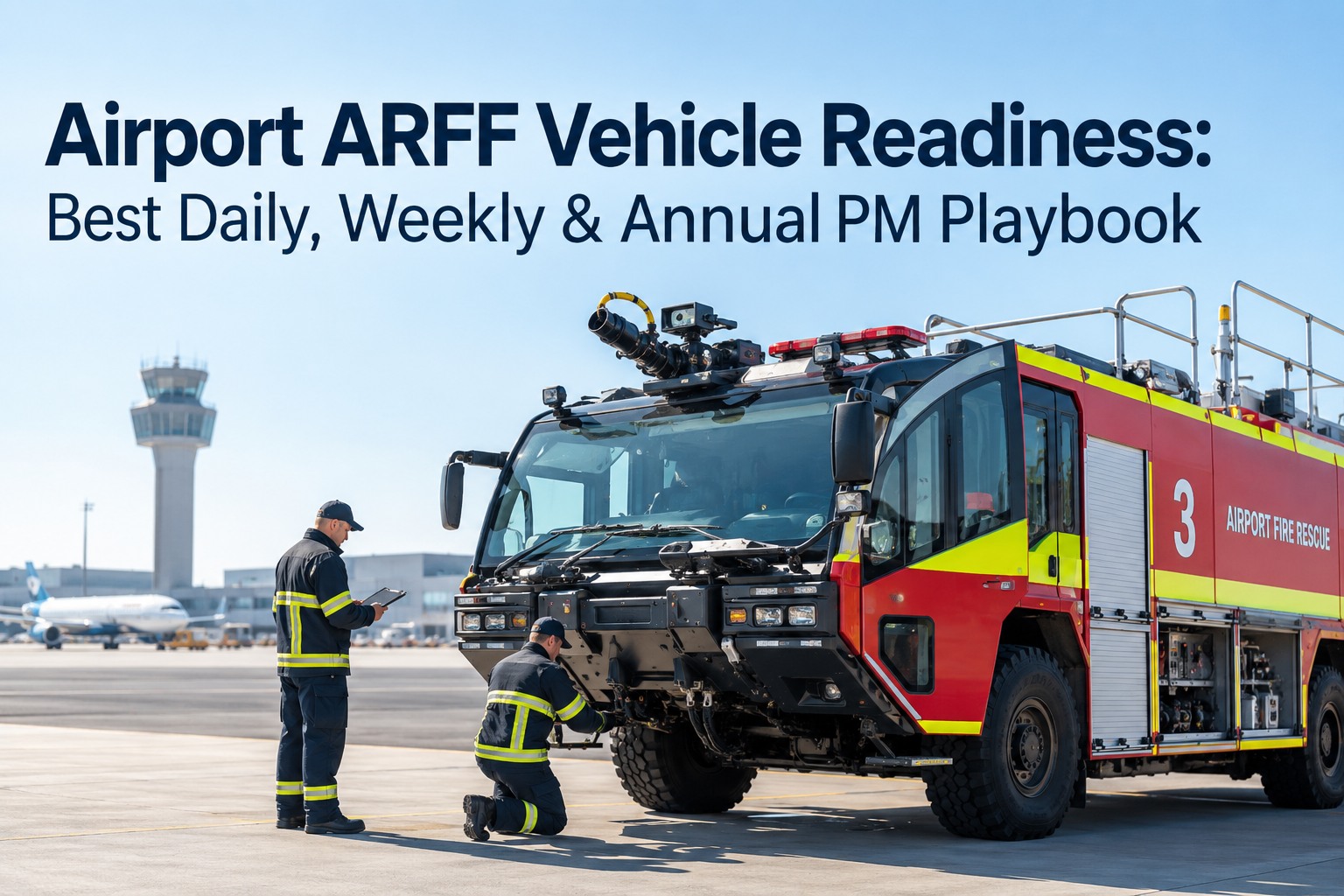
Configure mandatory pre-shift digital checklists for every ARFF vehicle — foam agent quantity, pump operability, hose condition, agent tank levels, vehicle start check, lighting, and communications. Every check is timestamped, signed, and stored. When the FAA inspector asks for 90 days of ARFF daily inspection records, the export takes 60 seconds.
Emergency Generator & UPS Testing Schedules
Schedule weekly load tests, monthly full-duration runs, and annual capacity certifications for every backup power system. OxMaint generates the work order automatically, assigns it to the electrical team, and tracks completion with required test parameters: load percentage, duration, transfer switch response time, and battery voltage readings logged per test.
Critical Infrastructure Asset Registry
Every emergency-critical asset — fuel isolation valves, fire suppression systems, emergency communication panels, containment infrastructure, flood barriers — is an asset in OxMaint with its location, last inspection date, operating procedure, and maintenance history. Incident commanders can pull the asset record from a mobile device at the incident scene rather than calling the maintenance office for procedure documents.
FAA Part 139 requires annual full-scale emergency drills with documented outcomes and corrective actions for deficiencies found. OxMaint creates a work order for each corrective action identified during drills — assigned, scheduled, and tracked to completion. The drill record links directly to the corrective action work orders, creating the audit trail that FAA inspectors require on the next certification review.
Incident Work Order Creation from the Field
When an emergency event occurs, maintenance technicians create work orders from the mobile app at the incident scene — capturing equipment deployed, actions taken, time stamps, photos, and technician signatures in real time. The incident record is built during the response, not reconstructed after. Post-incident reporting is accurate, complete, and submitted on time.
Compliance Dashboard for Part 139 Emergency Requirements
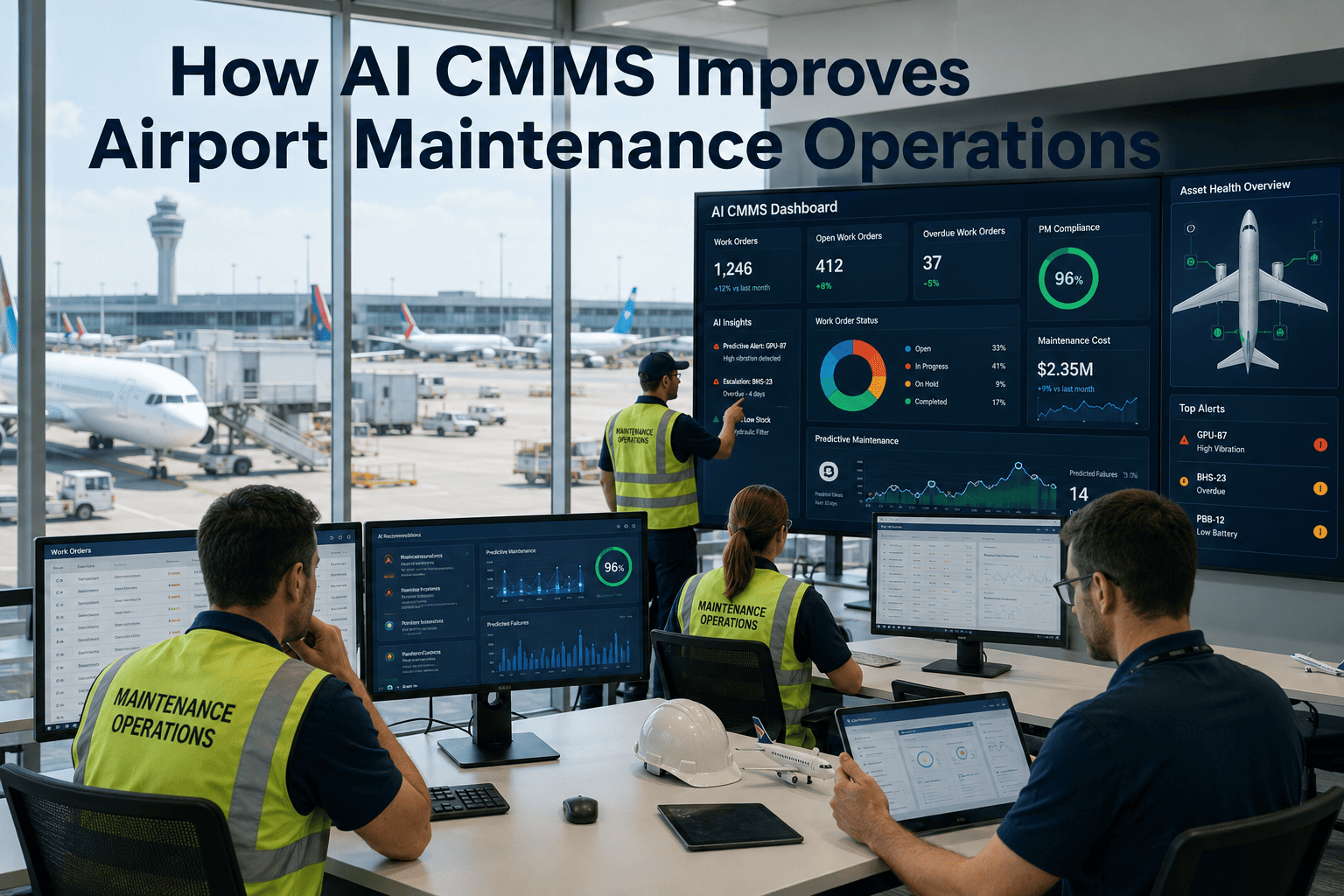
View the status of all FAA Part 139 emergency maintenance requirements on a single dashboard — ARFF inspection compliance rate, generator test status, emergency lighting inspection schedule, communication system test history, and drill corrective action completion. Directors see the full readiness picture without calling each department for a status update.
Emergency Readiness: Reactive vs. Maintenance-Backed Response
Readiness Requirement
Reactive Approach
OxMaint Maintenance-Backed
ARFF daily inspection
Paper form — often backdated or incomplete
Digital checklist — timestamped, mandatory completion
Generator testing
Ad hoc — test when someone remembers
Auto-scheduled weekly — overdue alerts fire immediately
Emergency procedure access
Binders in maintenance office — not at incident scene
Mobile asset record — accessible at incident location
Drill corrective actions
Listed in drill report — never formally tracked
Work order per deficiency — tracked to completion
Incident documentation
Reconstructed from memory post-event
Created in real time at incident scene on mobile
FAA audit readiness
Hours of document retrieval before each inspection
Filtered export in under 5 minutes — always ready
Equipment condition visibility
Known only when failure occurs
Live condition score per asset — before failure
Post-incident reporting
Incomplete — details lost in 24 hours
Complete record built during response — photos, signatures
Scroll right to view full table on mobile
Readiness Is Not an Event — It's a Daily Practice
OxMaint turns emergency maintenance readiness from a pre-inspection sprint into a continuous operational baseline.
ARFF daily inspections, generator testing schedules, critical infrastructure records, and post-incident documentation — all in one platform. Most airport maintenance teams complete their first emergency equipment inspection routes within 48 hours of setup. Start your free trial or book a demo to see the emergency readiness workflow.
With consistent weekly load test adherence tracked in CMMS
92%
FAA audit pass rate with digital records
vs. 67% for teams using paper-based inspection logs
5 min
To generate full 90-day inspection export
vs. hours of manual retrieval from paper files before FAA audits
100%
Drill corrective actions tracked
Work orders created per deficiency — never lost in a report binder
Frequently Asked Questions
What ARFF maintenance records does FAA Part 139 actually require?
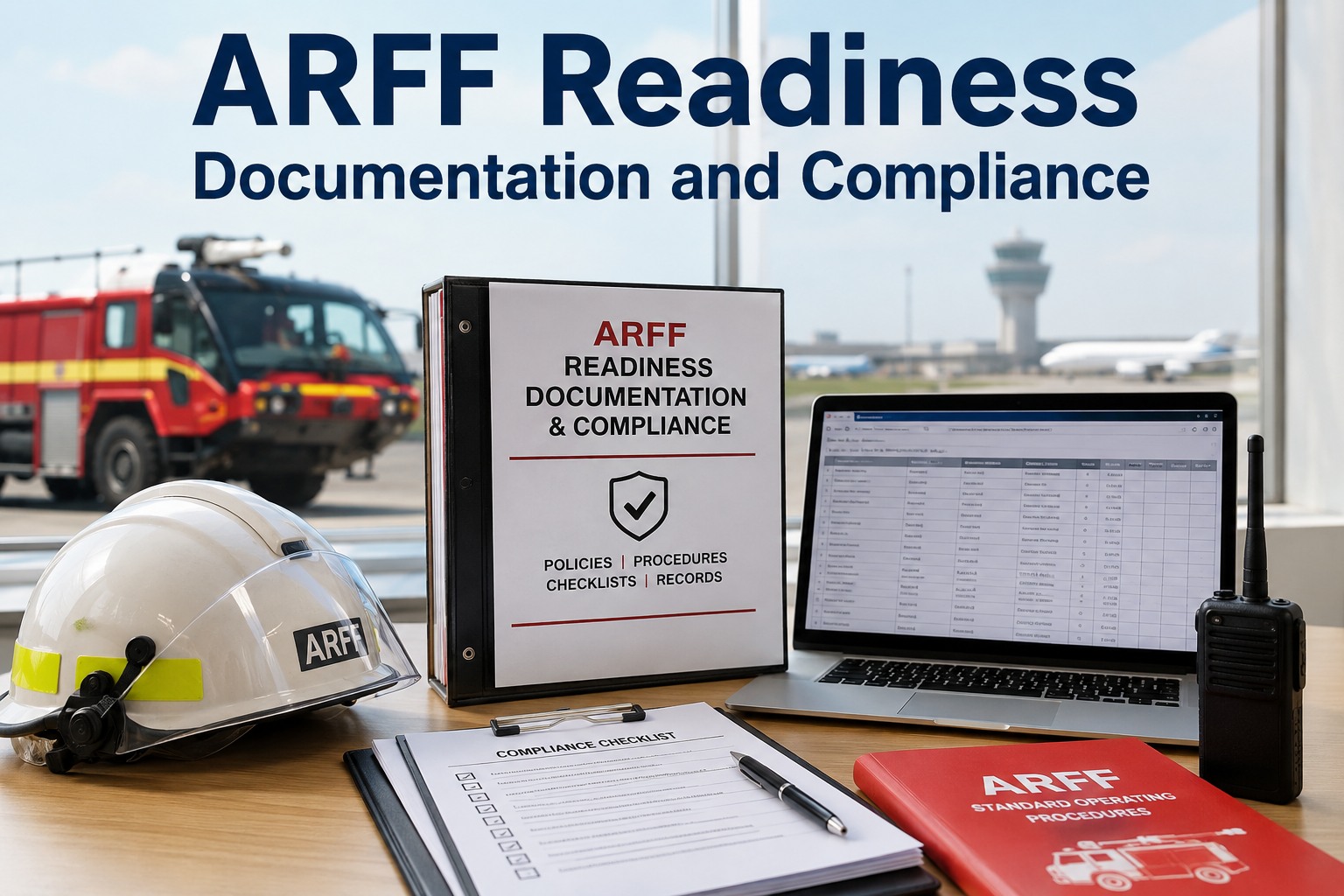
FAA Part 139.319 requires that ARFF vehicles be inspected at each operational period (typically each shift) to confirm the vehicle is in operable condition. Records of these inspections must be maintained for 24 months. Additionally, required agent quantities must be verified daily, and records of agent replenishment must be kept. The critical compliance requirement is that inspections are documented in a way that demonstrates actual completion — not just signature on a form that can be backdated. OxMaint's digital checklist generates a timestamped, device-signed record that meets this standard and cannot be backdated.
How frequently should airport emergency generators be tested?
Best practice and most regulatory frameworks require generator load testing at minimum once per week (15-30 minutes at 30%+ load), full-duration load testing at minimum once per month (at least 2 hours at full rated load), and annual capacity certification by a qualified electrical engineer. Automatic transfer switch testing should accompany monthly load tests to confirm proper failover. OxMaint schedules all three test types as separate PM tasks with different frequencies — the weekly test triggers every Monday, the monthly test triggers on the first of each month, and the annual certification generates a work order in advance with the external contractor pre-assigned.
How should airport maintenance teams document emergency drill findings?
FAA Part 139 requires that each annual full-scale drill result in a documented after-action report identifying deficiencies and the corrective actions taken to address them. In OxMaint, the drill itself is a scheduled work order — it opens before the drill date and closes after the drill with the after-action findings attached as documentation. Each deficiency identified during the drill then generates its own corrective action work order, assigned to the responsible team, with a required completion date. When the FAA inspector asks to see how last year's drill findings were resolved, every corrective action is traceable from the drill record to its completion work order.
Can OxMaint support emergency maintenance readiness for a new terminal construction phase?
Yes. During construction phases, temporary emergency equipment — portable generators, temporary fire suppression systems, construction fence perimeter monitoring — requires the same maintenance documentation as permanent infrastructure. OxMaint supports temporary asset classification within the system, so construction-phase emergency equipment has the same inspection schedules, work order trails, and documentation quality as the permanent airport systems. This is particularly relevant for FAA Part 139 compliance, which applies to the operating airport regardless of whether portions are under construction, and for handover documentation when permanent systems come online.
Protect Your Airport. Document Your Readiness.
Emergency Plans Are Only as Good as the Maintenance Records Behind Them. OxMaint Makes Yours Unassailable.
ARFF daily inspection checklists. Generator load test scheduling. Critical infrastructure asset registry. Emergency drill corrective action tracking. Post-incident documentation from the field. Audit-ready export in minutes. OxMaint connects every maintenance activity to the emergency readiness standards your airport is legally and operationally required to maintain.