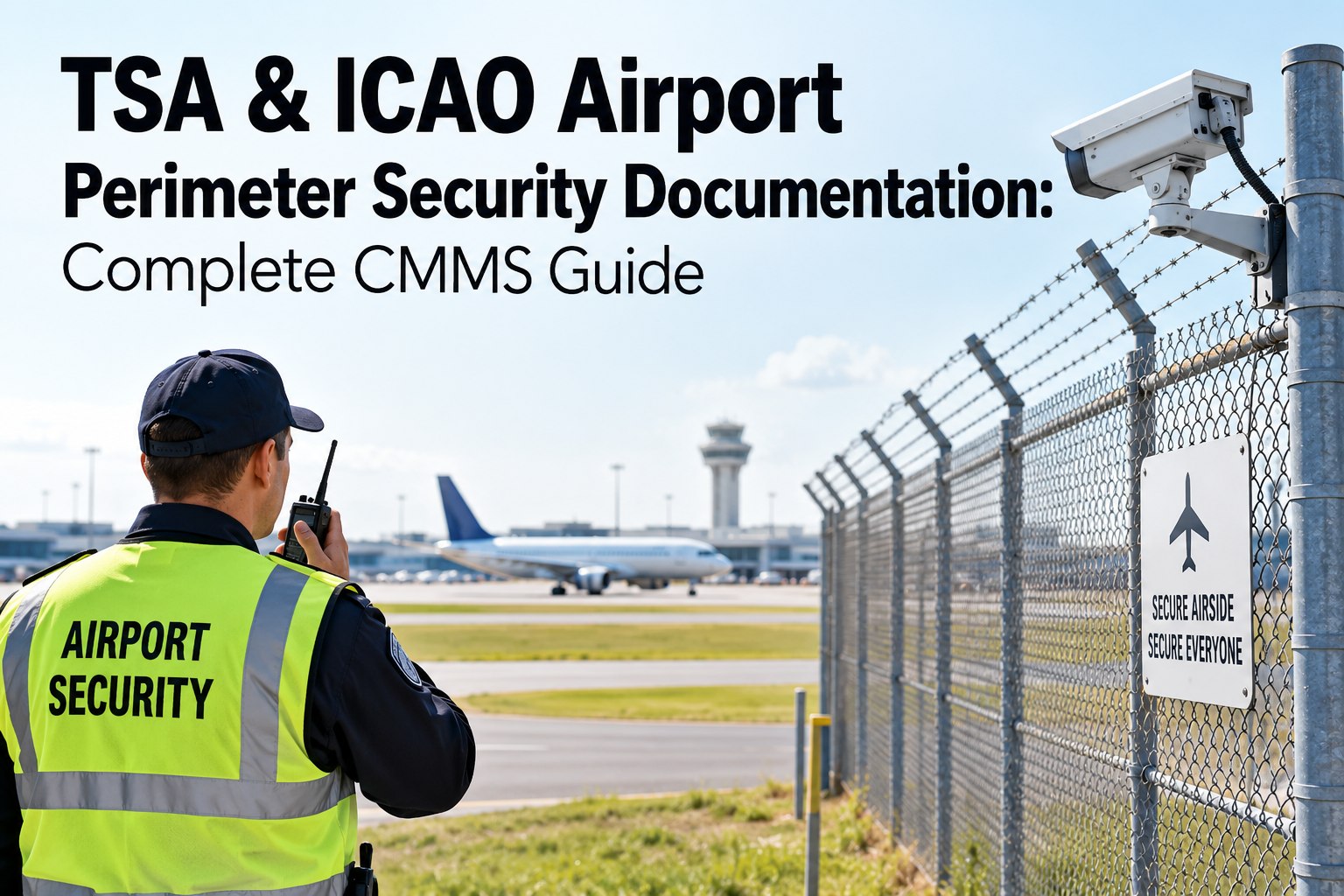
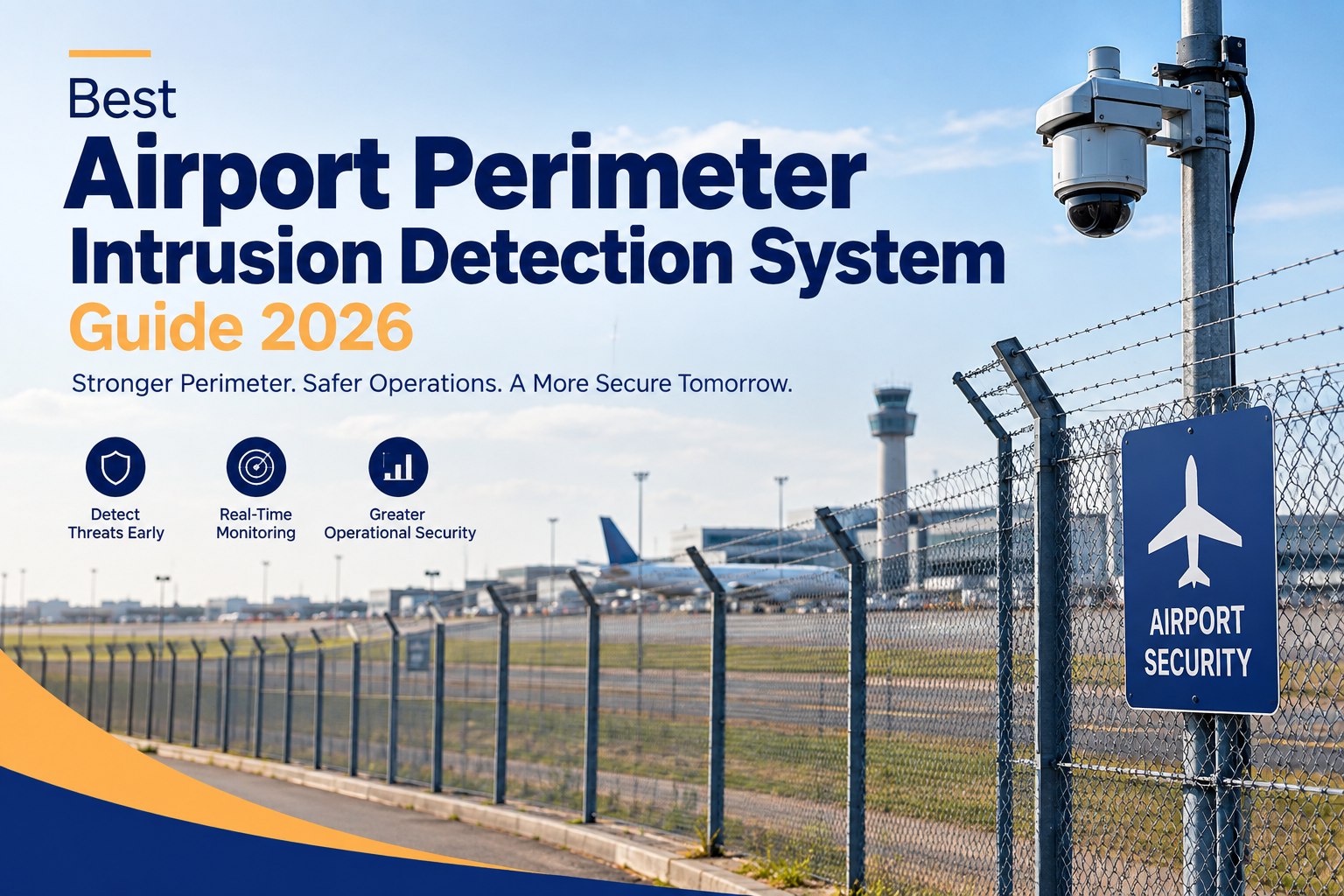
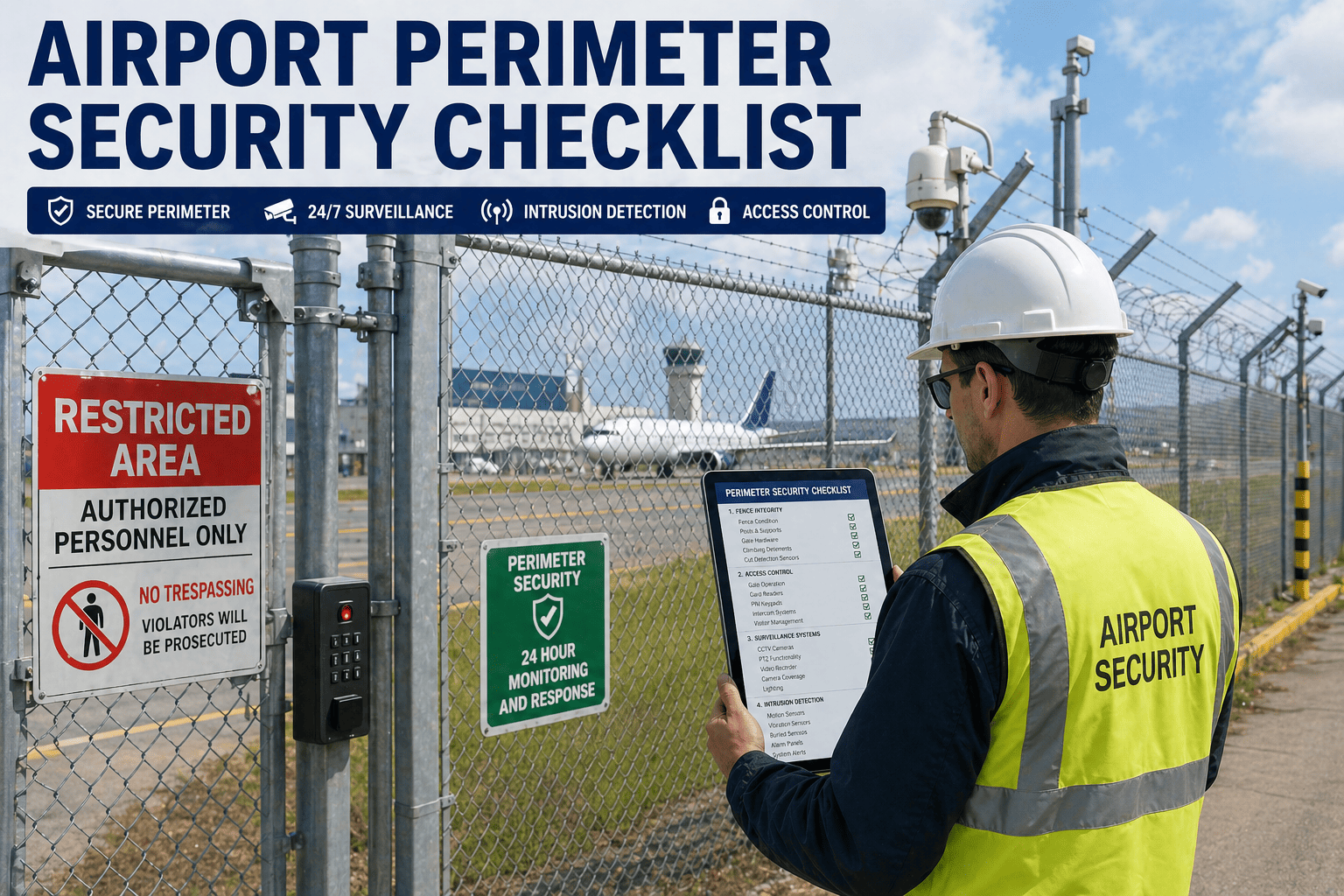
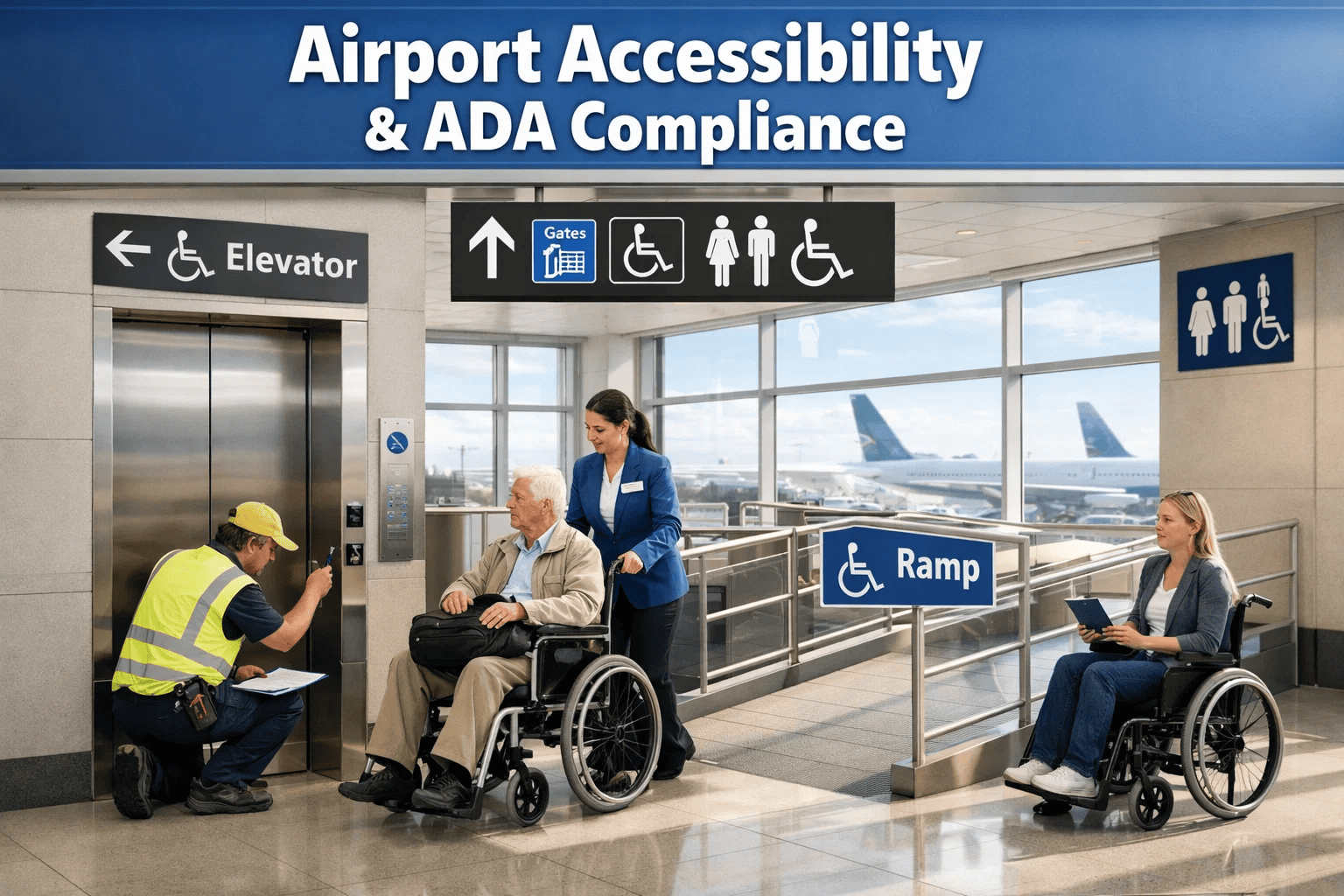
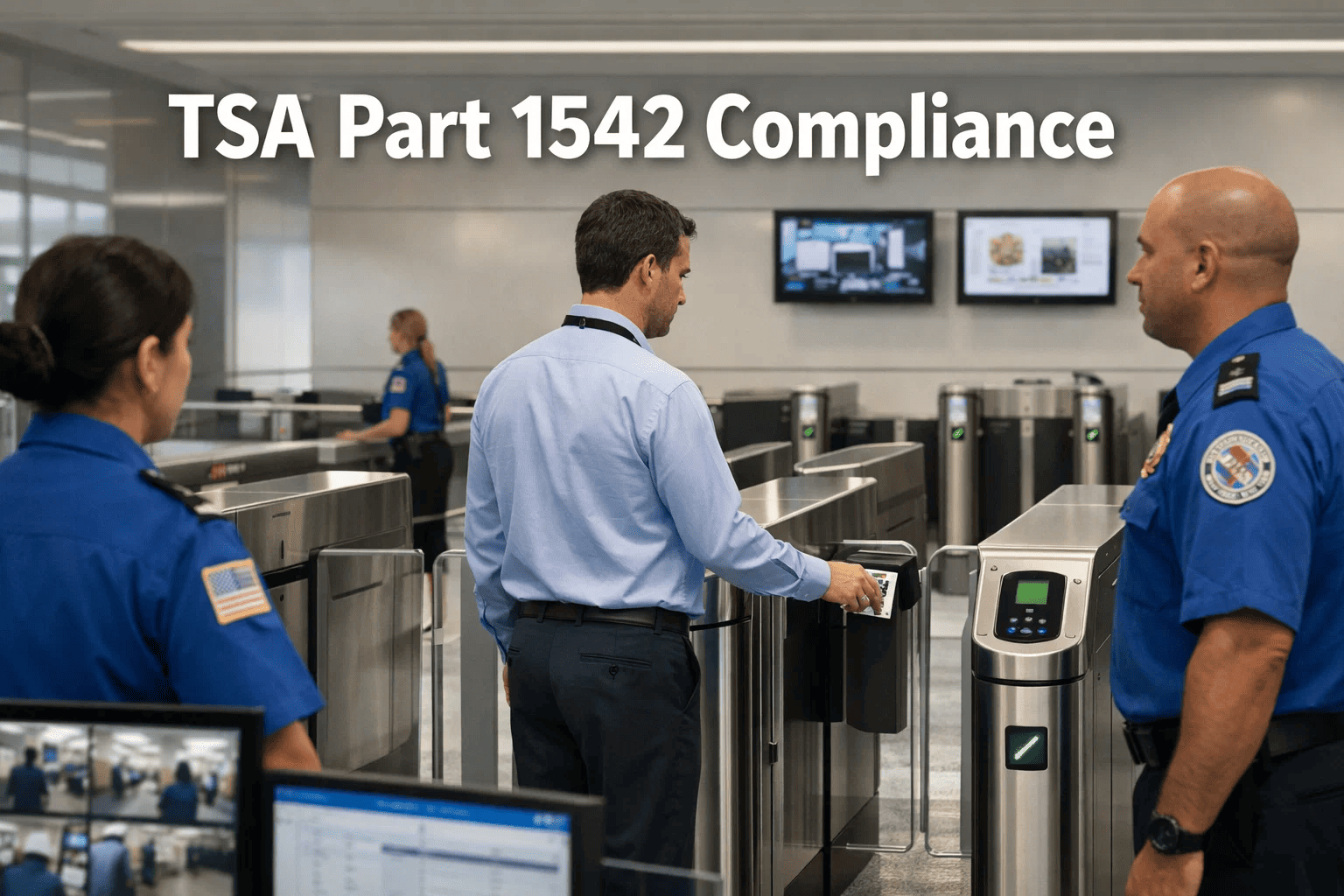
An airport perimeter is among the most regulated boundaries on earth. Under 49 CFR Part 1542, every commercial service airport must maintain an active Airport Security Program — and that program requires continuous maintenance of fencing, access control hardware, surveillance systems, and intrusion detection infrastructure. A single unmaintained section of perimeter fencing is not just an infrastructure gap. It is a TSA compliance violation with immediate operational and regulatory consequences. The airports that treat perimeter security as a maintained asset portfolio — not a static installation — are the ones that pass audits, prevent incidents, and avoid the operational shutdowns that follow security breaches. Start a free trial with Oxmaint and build a TSA-compliant perimeter security maintenance program from day one — or book a demo to see how CMMS compliance tracking manages security infrastructure across your entire airport boundary.
Perimeter Security · Fencing · Surveillance · TSA 1542 · Compliance Tracking
A Secure Perimeter Is Not
a Static Installation.
It Is a Maintained Asset.
Every meter of airport perimeter fencing, every access control gate, every CCTV camera, and every intrusion sensor is a maintainable asset with an inspection schedule, a failure mode, and a compliance requirement attached. Managing them reactively is not a security strategy — it is a gap waiting to be discovered by an auditor, or exploited by a threat actor.
Oxmaint tracks every perimeter security asset — fencing panels, gates, sensors, cameras — with scheduled inspections, real-time fault reporting, and audit-ready compliance documentation built in.
TSA 1542 Compliance
Fencing Inspection
CCTV Asset Tracking
Access Control PM
Intrusion Detection
Audit Documentation
25+
Miles of Perimeter
A large international airport can have over 25 miles of secured perimeter boundary requiring structured maintenance programs
1,800+
Access Control Points
Major hub airports manage hundreds to thousands of access-controlled gates, doors, and checkpoints requiring regular inspection
4.8x
Emergency Repair Cost
Unplanned security system failures cost 4.8x more to repair than scheduled maintenance interventions on the same assets
Zero
Tolerance for Gaps
TSA 1542 compliance requires continuous, documented maintenance — a single unresolved defect can trigger audit findings and operational consequences
The Regulatory Framework
What TSA 49 CFR Part 1542 Requires from Airport Security Maintenance
Part 1542 mandates that airports with commercial service maintain a TSA-approved Airport Security Program (ASP) — and that the physical security infrastructure supporting that program is continuously maintained, inspected, and documented. Maintenance gaps are compliance gaps.
Requirement
Perimeter Integrity
All perimeter barriers — fencing, walls, natural barriers — must be continuously maintained to deter and detect unauthorized access. Gaps, damage, or structural failures must be identified rapidly and remediated under documented timelines.
Requirement
Access Control Systems
All vehicle and pedestrian access control points must remain operational. Electronic gate hardware, badge readers, and vehicle barriers require regular calibration, battery backup testing, and mechanical inspection to ensure failsafe operation during power interruptions.
Requirement
Surveillance Coverage
CCTV systems covering the security identification display area (SIDA) and perimeter access points must maintain defined coverage and recording continuity. Camera failures that create surveillance gaps require documented immediate response protocols.
Requirement
Inspection Records
All inspection and maintenance activities on security infrastructure must be documented with timestamps, inspector identification, findings, and corrective actions taken. Records must be retained and available for TSA review on demand — paper logs do not meet this standard reliably.
Asset Categories
Every Perimeter Security Asset That Needs a Maintenance Program
Airport perimeter security infrastructure spans physical, electronic, and detection categories — each with distinct failure modes, inspection frequencies, and compliance requirements. A single CMMS platform managing all categories eliminates the coordination gaps that create security vulnerabilities. Book a demo to see how Oxmaint's asset registry handles all perimeter security categories in one place.
Physical Barrier
Perimeter Fencing
Chain-link, welded mesh, anti-climb panels, and concrete barriers require regular structural inspection — checking for corrosion, ground clearance, post integrity, and anti-climb topping. Storm events and ground movement accelerate degradation in ways that only regular patrol-based inspection detects.
Access Control
Security Gates and Vehicle Barriers
Automated security gates, hydraulic vehicle barriers, and badge reader systems require mechanical, electrical, and software maintenance. A gate that fails open is a critical security event. A gate that fails closed during an emergency evacuation is a life safety failure. Both are preventable with structured PM.
Surveillance
CCTV Cameras and PTZ Systems
Perimeter and SIDA surveillance cameras require lens cleaning, housing integrity checks, coverage angle verification, and recording system continuity testing. A camera that appears operational but has a dirty lens or misaligned housing creates a hidden surveillance gap that appears compliant but is not.
Detection
Intrusion Detection Sensors
Ground-based radar, vibration detectors, fence-mounted sensors, and thermal imaging systems require regular calibration, sensitivity testing, and false-alarm rate analysis. Sensors that generate excessive false alarms get tuned down over time — a well-known security posture degradation that structured maintenance prevents.
Illumination
Perimeter Security Lighting
Lighting failures along the perimeter create surveillance gaps that override the capability of even well-maintained camera systems. LED luminaire maintenance, photocell control testing, and backup generator integration need to be managed as part of the perimeter security asset program — not as separate facilities work.
Communication
Emergency Call Stations and PA Systems
Emergency call points along the perimeter boundary and PA systems in secure areas require regular functional testing and battery backup verification. These assets are invisible in normal operations but must perform without failure in the incident scenarios they exist to support.
Oxmaint Solution
How Oxmaint Manages Airport Perimeter Security Compliance
Oxmaint's compliance tracking and work order management platform is built for exactly the kind of structured, auditable maintenance program that 49 CFR Part 1542 requires — and that modern airport security departments need to operate effectively at scale. Start a free trial and set up your perimeter security inspection program with CMMS support from day one.
Asset Registry
Full Security Infrastructure Inventory
Every perimeter fence panel, gate, camera, sensor, and lighting unit is registered as an individual asset at a specific location. Asset hierarchy links each component to its zone, sector, and runway proximity — making inspection planning and incident investigation precise and fast.
Scheduled Inspections
TSA-Aligned PM Schedule Templates
Inspection schedules for each asset category are pre-configured to align with 1542 requirements — daily perimeter patrols, weekly gate function tests, monthly camera coverage verification, quarterly sensor calibration. Work orders auto-generate and are dispatched to the security team mobile app.
Compliance Documentation
Audit-Ready Inspection Records
Every perimeter inspection is documented digitally — inspector ID, timestamp, GPS location, findings, photographs, and corrective action taken. TSA audit requests are fulfilled in minutes by generating a structured compliance report covering any date range, asset category, or perimeter zone.
Fault Management
Immediate Defect Reporting and Escalation
When an inspector identifies a fence breach, camera failure, or gate malfunction, a high-priority work order is created in real time — triggering immediate escalation to the security manager and facilities team. Resolution timelines are tracked and documented against TSA response time requirements.
Lifecycle Management
Security Asset Condition Tracking
Each security asset carries a condition score that updates after every inspection. Oxmaint's CapEx forecasting module uses condition trends and asset age to project replacement timelines — giving the security director data-backed budget requests instead of reactive emergency procurement.
Multi-Zone Management
Perimeter Zone and Sector Mapping
Oxmaint's asset hierarchy supports perimeter zone organization — grouping assets by sector, zone, or terminal boundary. Compliance reporting and work order management can be filtered by zone, making it easy to manage different security teams across different parts of a large airport perimeter.
Compliance Management
Manual Security Maintenance vs. CMMS-Driven Perimeter Program
| Area |
Manual / Paper-Driven Approach |
Oxmaint CMMS-Driven Approach |
| Inspection Scheduling |
Manual reminders — missed inspections common |
Auto-generated work orders — 0% scheduling gaps |
| Defect Response Time |
End-of-shift paperwork — hours before escalation |
Real-time work order — immediate escalation on detection |
| Compliance Records |
Paper binders — incomplete, not searchable |
Digital, searchable, audit-ready in minutes |
| Asset Condition Tracking |
No condition history — replacement is reactive |
Condition score tracks every asset — CapEx forecasting built in |
| Sensor Calibration Management |
Calendar-based, often deferred — sensitivity degrades |
PM schedule enforced — calibration history logged per sensor |
| TSA Audit Readiness |
Hours to compile — gaps create findings |
Minutes to export — complete, defensible, no gaps |
Operational Impact
The Cost of Unmanaged Perimeter Security Infrastructure
4.8x
Emergency vs. Planned Repair Cost
Reactive perimeter security repairs — gate replacements, camera system failures, sensor outages — cost nearly 5x more than planned preventive interventions on the same systems
35%
Reduction in Unplanned Failures
Structured PM programs on electronic security assets reduce unexpected failures by 30–40% — a critical outcome when any single failure constitutes a potential compliance event
100%
Inspection Completion Rate
CMMS-enforced PM schedules with mandatory digital sign-off achieve completion rates that paper-based patrol logs cannot approach — eliminating the missed-inspection gaps that create TSA audit findings
Minutes
Instead of Hours for Audit Prep
Digital inspection records searchable by date, asset, zone, and inspector reduce TSA compliance report generation from a half-day manual exercise to a minutes-long export
Expert FAQ
Airport Perimeter Security Maintenance — Common Questions
What inspection frequency does TSA 49 CFR Part 1542 require for airport perimeter fencing?
Part 1542 requires that airports maintain their perimeter continuously — which in practice means daily patrol inspections of the full perimeter boundary, supplemented by more detailed structural inspections on a frequency appropriate to the size and condition of the fencing infrastructure. Most airport security programs specify daily vehicle patrol of the full boundary, weekly foot inspection of high-risk sections, and quarterly structural inspection of all fencing components. Oxmaint supports all of these frequencies simultaneously — auto-generating the appropriate work order type for each inspection tier, assigning to the security patrol team, and capturing GPS-tagged completion records that prove each patrol was completed at the required frequency.
How should airport security teams document perimeter defects to satisfy TSA audit requirements?
TSA auditors reviewing perimeter security records look for four things: that an inspection occurred at the required frequency, that defects were identified and recorded with specificity, that corrective actions were initiated within a defined response timeframe, and that resolution was confirmed and documented. Paper logs typically fail on specificity and response time tracking — they record that an inspection happened but not what was found, when the repair was dispatched, or when resolution was confirmed. Oxmaint captures all four data points: inspection timestamp, defect details with photo evidence, work order dispatch time for corrective action, and resolution confirmation with completing technician signature. The audit trail is complete, timestamped, and exportable in structured report format on demand.
How does Oxmaint handle sensor calibration management for perimeter intrusion detection systems?
Each intrusion detection sensor — ground radar, fence vibration detector, thermal camera, or IR beam — is registered as an individual asset in Oxmaint with its own PM schedule. Calibration work orders are generated at the specified interval (typically quarterly for electronic sensors), assigned to the appropriate technical team, and completed through a structured digital checklist that captures the specific calibration parameters for that sensor type. Historical calibration data accumulates in the asset record — enabling trend analysis that identifies sensors whose sensitivity is drifting over multiple calibration cycles. This is the key metric that prevents the sensitivity-tuning-down pattern that gradually degrades perimeter detection capability without triggering any individual alarm event.
Can Oxmaint integrate with existing airport security management systems and access control platforms?
Yes. Oxmaint integrates with downstream security management systems through API connections and event-based triggers. When an access control platform detects a gate hardware fault or a camera management system flags a recording failure, that event can be pushed to Oxmaint as a fault notification — automatically generating a maintenance work order linked to the relevant asset in the CMMS registry. This integration means that electronic security infrastructure faults reported by dedicated security management platforms are captured in the same CMMS workflow as physical perimeter inspections — creating a unified maintenance record for the entire perimeter security program in one place, for one compliance report.
Every Fence Panel. Every Camera. Every Gate. Every Inspection. Tracked.
Build a Perimeter Security Maintenance Program That Passes Every TSA Audit
Oxmaint gives airport security and facilities teams a single platform to manage every perimeter asset — with TSA-aligned inspection schedules, real-time defect reporting, audit-ready compliance documentation, and CapEx forecasting for security infrastructure replacement. No paper logs. No missed inspections. No compliance gaps.