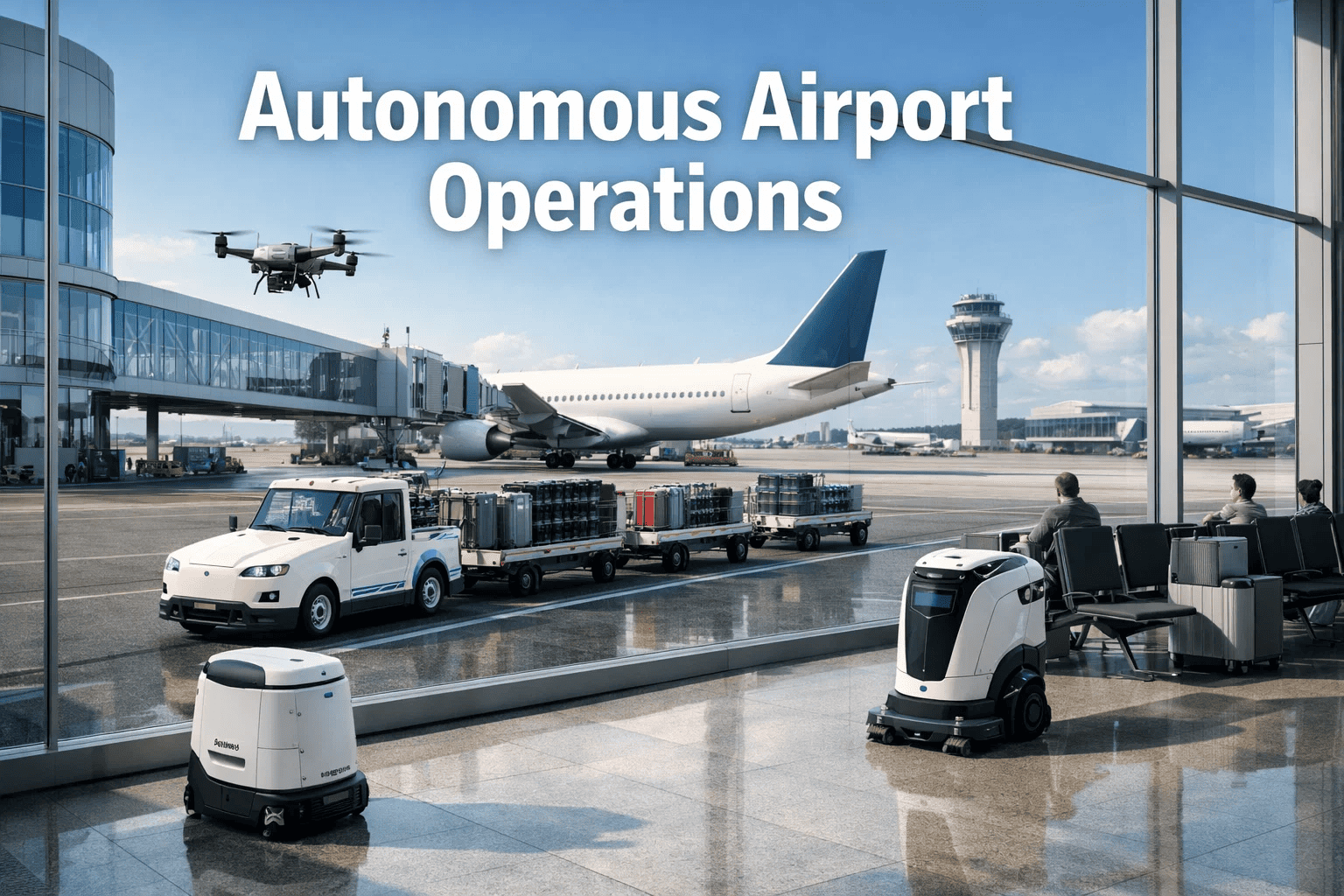
At Incheon International Airport, self-driving baggage tugs now complete 70% of apron tug operations without a human driver — navigating autonomously between aircraft, sorting areas, and gates while OxMaint-class maintenance platforms monitor their battery health, route performance, and service intervals in the background. At Singapore Changi, robotic cleaning machines cover 1.2 million square feet of terminal floor daily on autonomous schedules, while drone inspection systems replace 6-hour manual airfield light inspections with 40-minute automated sweeps. This is not a distant future — it's happening at scale today. If your airport's maintenance team is still managing autonomous and smart equipment on paper-based service records, start a free OxMaint trial and bring your maintenance intelligence to the same level as your automation — or book a demo to see how the platform handles autonomous equipment fleets.
Self-driving tugs, robotic cleaning systems, drone inspections, and AI-powered automation are transforming airport operations. Here's what's deployed, what's coming, and how maintenance teams manage it all.
Global airport automation market by 2030 — 18.4% CAGR from 2024
70%
Of tug operations at leading airports now completed autonomously
40 min
Drone inspection time vs. 6 hours manual for full airfield lighting audit
35%
Labor cost reduction in terminal cleaning from robotic deployment
The Autonomous Airport Technology Stack
Autonomous airport technology operates across four distinct domains — each with different maturity levels, operational requirements, and maintenance challenges. Understanding the stack clarifies both where AI is delivering measurable value today and what your maintenance team will be managing in the next 36 months.
Ramp
Autonomous Ground Vehicles
Deployed at Scale
Self-driving baggage tugs (AGV/AMR)
Autonomous pushback tractors
Electric autonomous belt loaders
Autonomous fuel bowser positioning
Incheon, Schiphol, Frankfurt — live deployments
Terminal
Robotic Cleaning Systems
Widely Deployed
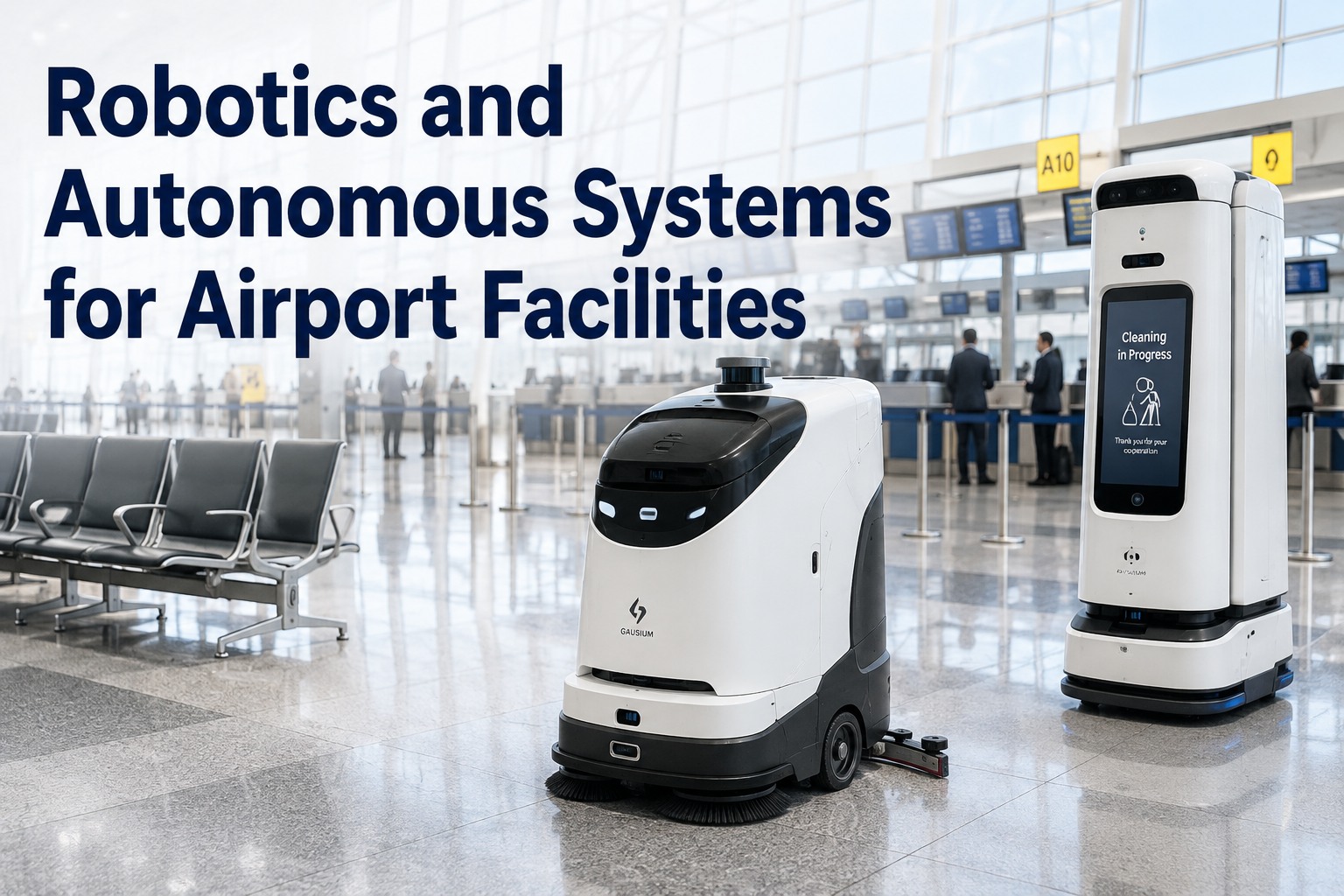
Autonomous floor scrubbers and sweepers
UV disinfection robots (post-COVID standard)
Window cleaning robotic systems
Baggage hall and concourse robots
Changi: 1.2M sq ft covered daily by autonomous cleaners
Airfield
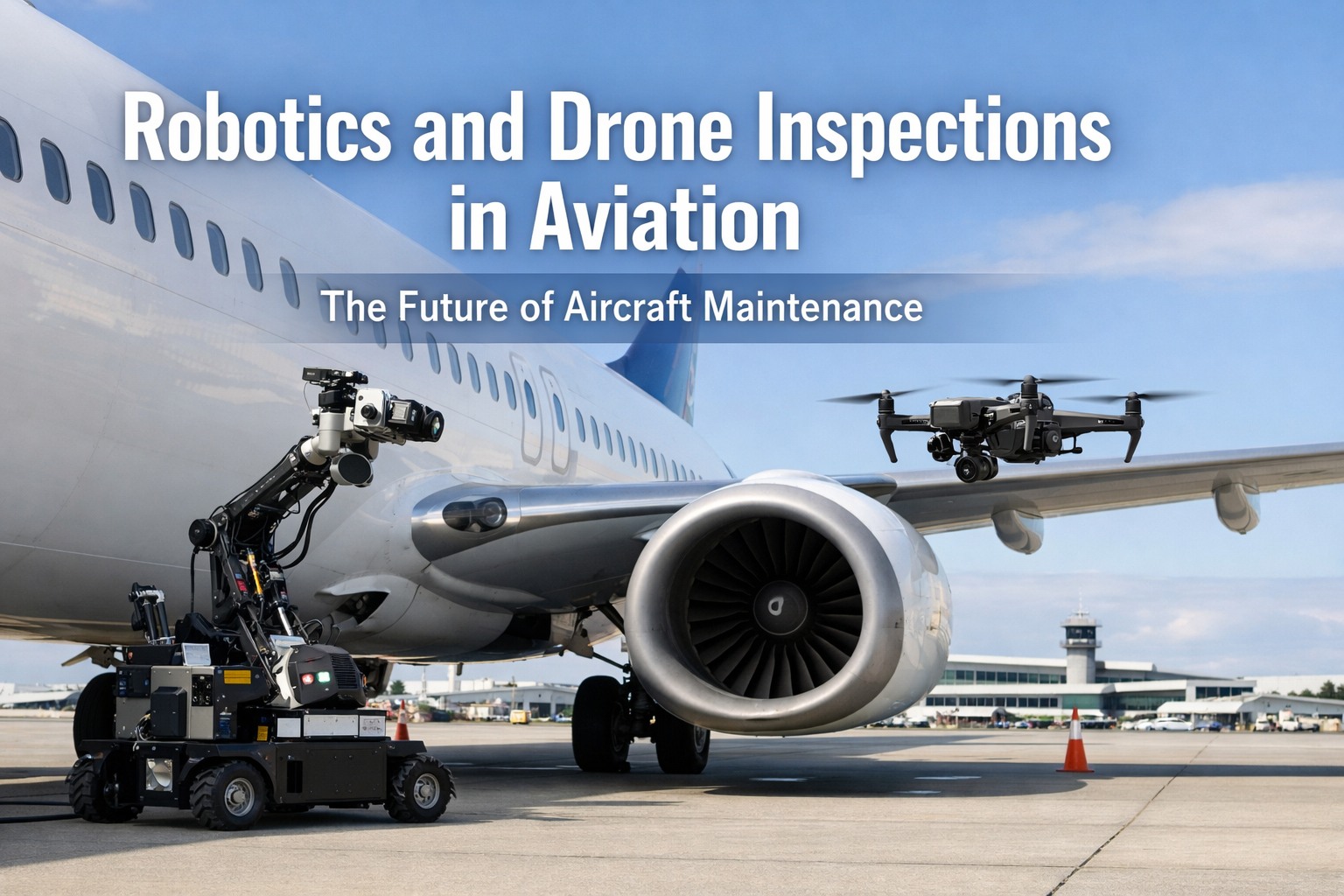
Drone Inspection Systems
Rapidly Expanding
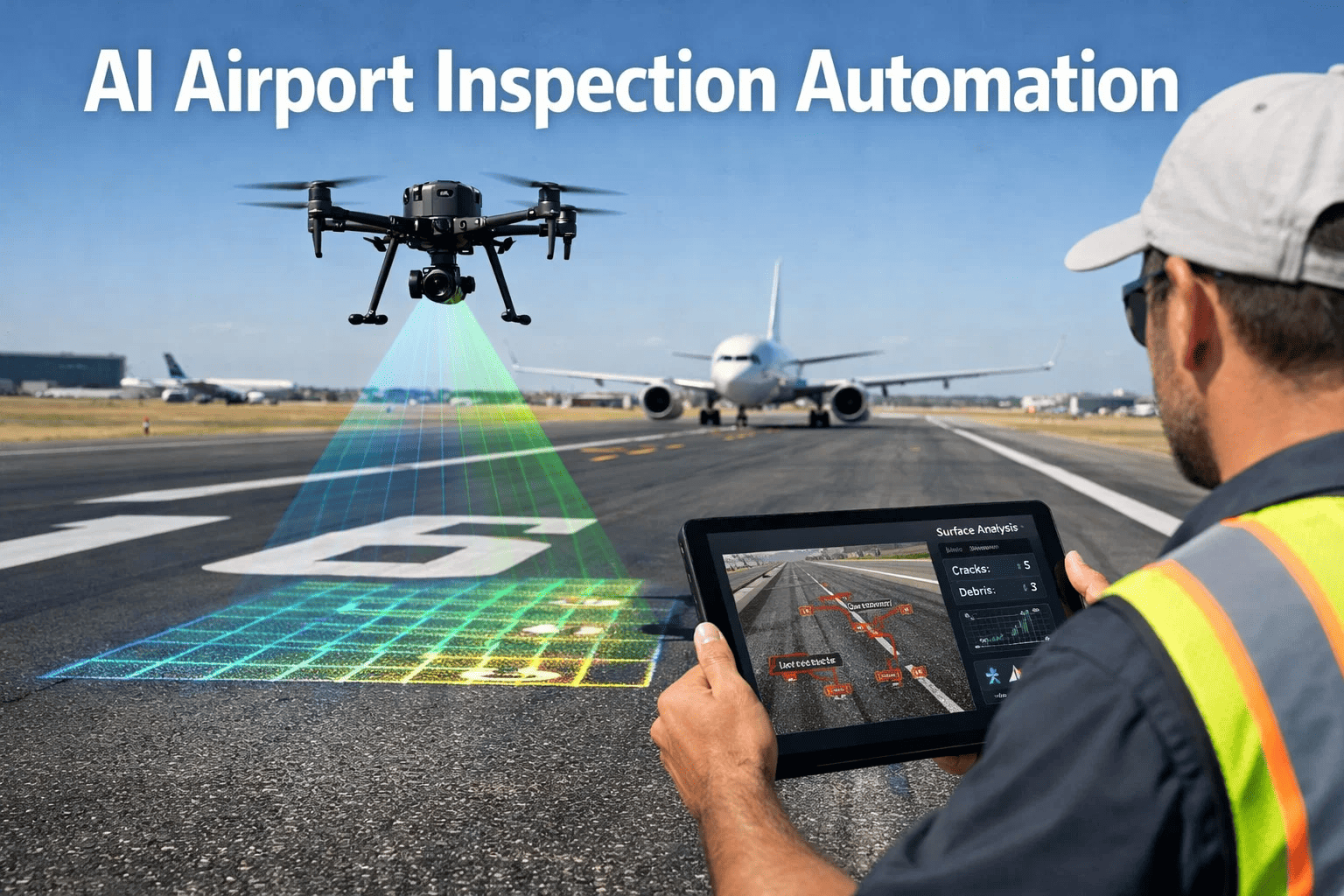
Airfield lighting inspection drones
Runway surface condition assessment
Perimeter fence monitoring drones
Aircraft damage inspection (post-FOD)
40-minute drone sweep vs. 6-hour manual inspection
AI Ops
AI Operations Management
Emerging Standard
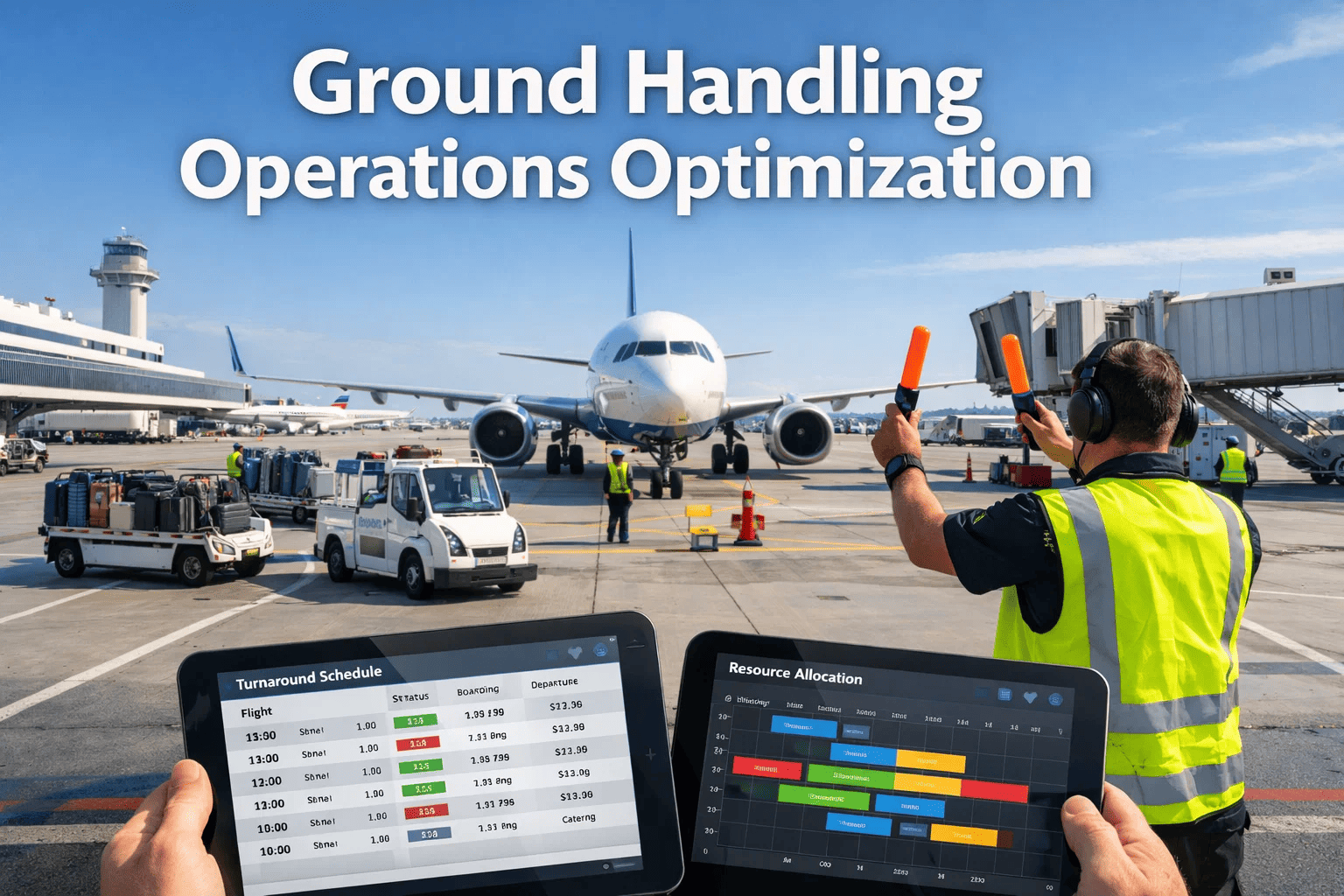
Predictive turn time optimization
AI-driven GSE dispatch scheduling
Real-time resource reallocation
Predictive gate conflict resolution
3.1x ROI on AI-assisted vs. manual dispatch
Self-Driving Tugs: How They Work and What They Need
Autonomous tugs use a combination of LiDAR, GPS, computer vision, and magnetic guidance to navigate apron areas without a driver. They operate on programmed route networks, communicate with air traffic ground control via digital interfaces, and return to charging stations autonomously. The operational case is clear — but their maintenance requirements are significantly different from conventional diesel tugs.
Predictable from telemetry — scheduled before failure
CMMS integration
Manual work order entry
Auto-generated work orders from telemetry thresholds
Scroll right to view full table on mobile
The Maintenance Challenge of Autonomous Airport Equipment
Autonomous and smart airport equipment creates a new category of maintenance complexity that traditional GSE maintenance programs are not designed to handle. These four challenges are shaping how leading airports are restructuring their maintenance operations.
Sensor Calibration Cycles
Autonomous vehicles depend on LiDAR, camera, and ultrasonic sensors that drift over time from vibration, temperature cycling, and impact. Calibration must occur at defined intervals — not just when behavior degrades. A tug navigating on misaligned sensors creates a collision risk before the error is visible to an operator.
Calibration: every 500 operating hours or quarterly
Battery Health Management
Lithium-ion traction batteries in autonomous tugs and cleaning robots degrade at a predictable rate — but the degradation accelerates with thermal stress, deep discharge cycles, and inadequate cooling. Battery state-of-health monitoring and capacity testing at defined intervals are the primary PM activities for electric autonomous fleets.
Capacity test: every 250 full discharge cycles
Software and Map Update Management
Autonomous vehicles operate on route maps that must be updated when gate configurations, construction zones, or apron layouts change. An autonomous tug operating on an outdated map navigates toward physical barriers that no longer match its internal model. Software version control and map validation are maintenance tasks — not IT tasks.
Map validation: after every gate or apron reconfiguration
Multi-Vendor Fleet Coordination
Most airports deploy autonomous equipment from multiple vendors — robotic cleaners from one supplier, autonomous tugs from another, drone inspection systems from a third. Each has its own diagnostic interface, service documentation, and PM schedule. Without a unified CMMS layer, the maintenance team manages 4–6 disconnected systems with no consolidated fleet health view.
Unified CMMS: single source of truth for all vendors
How OxMaint Manages Autonomous Airport Equipment
OxMaint provides the unified maintenance layer across conventional and autonomous airport equipment — connecting telemetry-triggered work orders, calibration schedules, battery health tracking, and multi-vendor documentation in a single platform.
01
Autonomous Equipment Asset Registry
Every autonomous vehicle, robotic cleaner, and drone inspection system is an asset in OxMaint with its manufacturer, software version, sensor types, battery specification, and full maintenance history. When a calibration is due or a battery health check is required, the work order is generated automatically — assigned to the technician with the relevant diagnostic certification.
02
Telemetry-Triggered PM Scheduling
OxMaint integrates with autonomous vehicle telemetry outputs via API — when a tug reaches 500 operating hours, 250 discharge cycles, or a pre-defined sensor deviation threshold, a work order is automatically generated. Maintenance happens at the right time — before failure — without a technician manually monitoring operational data in a separate system.
03
Battery Health Tracking Per Unit
Each battery pack is tracked as an asset component within its parent vehicle record. Capacity test results, temperature event logs, and charge cycle counts are logged to the battery asset record at each PM. OxMaint's condition scoring highlights batteries approaching end-of-life for proactive replacement — before capacity degradation disrupts operations during a turn.
04
Drone Inspection Workflow Management
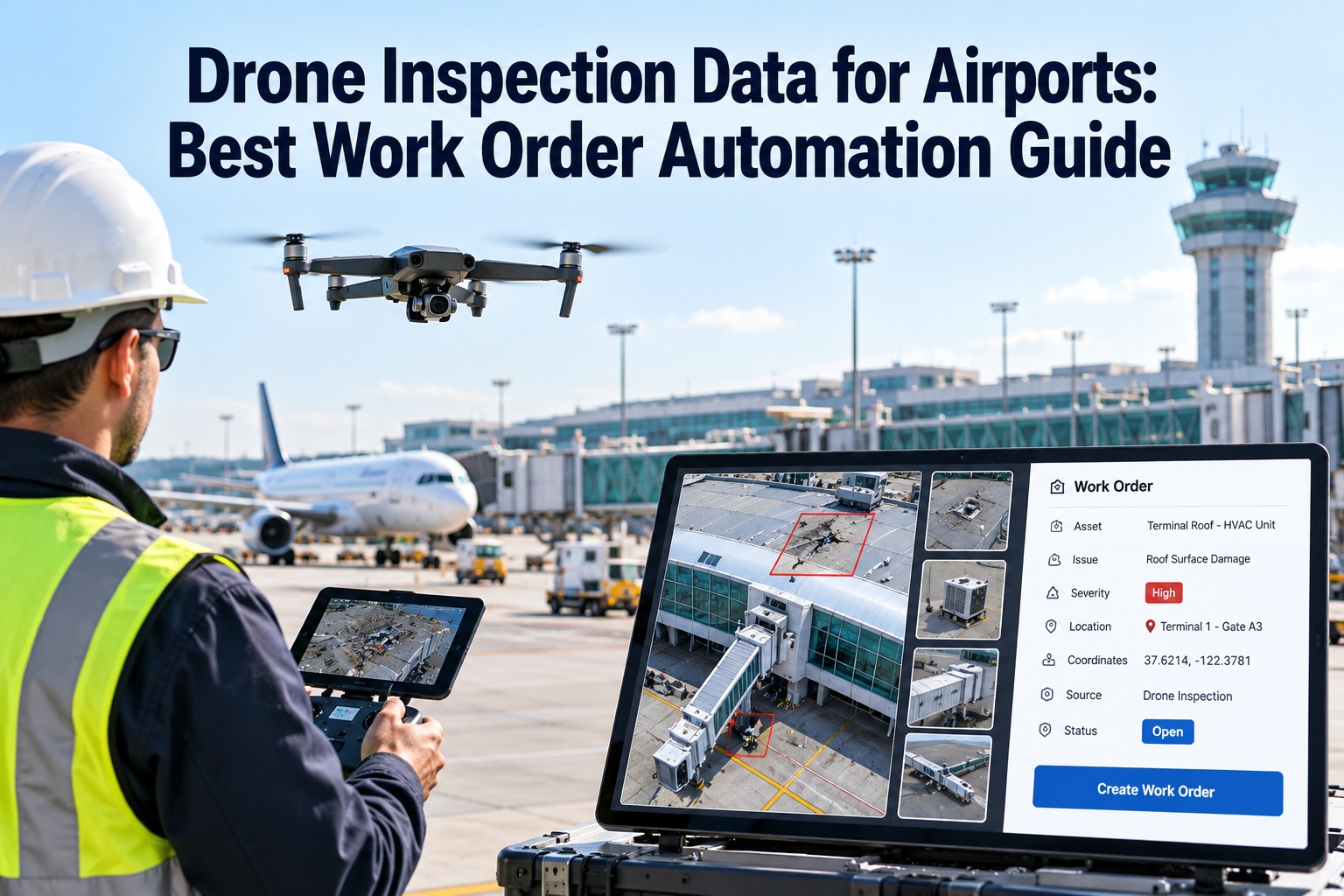
Schedule airfield lighting audits, runway surface inspections, and perimeter checks as recurring work orders in OxMaint. Drone inspection results — photos, condition ratings, defect coordinates — are attached to the relevant airfield asset record. When a lighting unit requires repair, the work order is generated from the inspection finding and assigned to the electrical team immediately.
05
Multi-Vendor Fleet Health Dashboard
View the maintenance status of every autonomous vehicle across all vendors — in one dashboard. OxMaint normalizes maintenance data from different equipment types into a unified asset condition view. Directors see which autonomous equipment units are in PM, which are at risk, and which are performing to schedule — without logging into four separate vendor portals.
06
CapEx Forecasting for Autonomous Fleet Replacement
OxMaint's rolling CapEx model projects autonomous fleet replacement costs 5–10 years out — based on operating hours, battery cycle counts, and condition scoring trends. When the capital planning team needs to know what the autonomous tug fleet replacement will cost in years 4 and 5 of the current program, the answer comes from asset data — not from vendor sales estimates.
Ready to Manage Your Autonomous Fleet?
Autonomous airport equipment is only as reliable as the maintenance program behind it. OxMaint gives you the unified management layer your smart airport needs.
Asset registry, telemetry-triggered PM, battery health tracking, drone inspection workflows, and multi-vendor dashboards — all in one platform. Most airport maintenance teams are running their first autonomous equipment inspection routes within 48 hours. Start your free trial today or book a demo to see the autonomous equipment workflow.
Across ramp operations using AI scheduling and autonomous GSE
Frequently Asked Questions
What regulatory approvals are required to deploy autonomous tugs on airport ramps?
Autonomous tug deployment requires coordination with the airport operator, airlines, and applicable aviation authority (FAA in the US, EASA in Europe). Most approvals are governed under the airport's ground operations manual and Air Traffic Control ground movement procedures, rather than federal aircraft certification. The tug manufacturer typically provides the safety case documentation required for apron certification. Key requirements include speed limiting within operational zones, emergency stop systems meeting defined response time specifications, and proof of compliance with apron lighting and marking visibility standards. Most operational approvals take 6–18 months for initial deployment on dedicated route networks.
How do autonomous cleaning robots handle irregular terminal areas and obstacles?
Modern robotic cleaning systems use SLAM (Simultaneous Localization and Mapping) technology to build a real-time map of their environment and navigate around dynamic obstacles — seated passengers, luggage carts, and cleaning supply trolleys. Permanent obstacles are mapped during initial deployment and updated periodically by maintenance teams. The key maintenance task is confirming that sensor suite operation is within specification, as a degraded obstacle detection system in a busy terminal creates both safety risks and cleaning coverage gaps. OxMaint schedules sensor verification checks as mandatory pre-deployment inspections for robotic cleaning units.
What training do airport maintenance technicians need for autonomous equipment?
Technicians maintaining autonomous airport equipment require skills across three domains: standard electrical/EV maintenance (battery systems, charging infrastructure, motor controllers), sensor system diagnostics (LiDAR calibration, camera adjustment, software diagnostic interfaces), and safety system verification (emergency stop circuits, geofencing validation, speed limiting confirmation). Most equipment vendors provide certification training — typically 3–5 days per equipment type. Airports deploying autonomous equipment should plan for 30–40% of their GSE maintenance team to receive autonomous equipment certification in the first year of deployment, with the remainder trained as operations expand.
How does drone inspection data integrate with airport maintenance management systems?
Drone inspection systems generate structured inspection data — geo-tagged photos, condition ratings, defect classifications, and GPS coordinates — that can be exported as structured data or directly integrated with CMMS platforms via API. In OxMaint, the integration pathway is straightforward: the drone inspection export maps to the relevant airfield asset (lighting unit, runway segment, perimeter fence section), with each defect finding generating a work order for the responsible maintenance team. The inspection record links the photo evidence to the work order that resolved the deficiency — creating a complete defect-to-repair audit trail that satisfies FAA Part 139 airfield inspection documentation requirements.
Manage the Airport of Tomorrow, Today
Autonomous Equipment Needs Smart Maintenance. OxMaint Is the Unified Platform That Makes It Work.
Asset registry for autonomous tugs, robots, and drones. Telemetry-triggered PM scheduling. Battery health tracking by unit. Drone inspection workflow management. Multi-vendor fleet dashboard. CapEx forecasting for autonomous fleet replacement. OxMaint connects your smart airport equipment to the maintenance intelligence that keeps it operating at full capability — on every shift, at every gate.