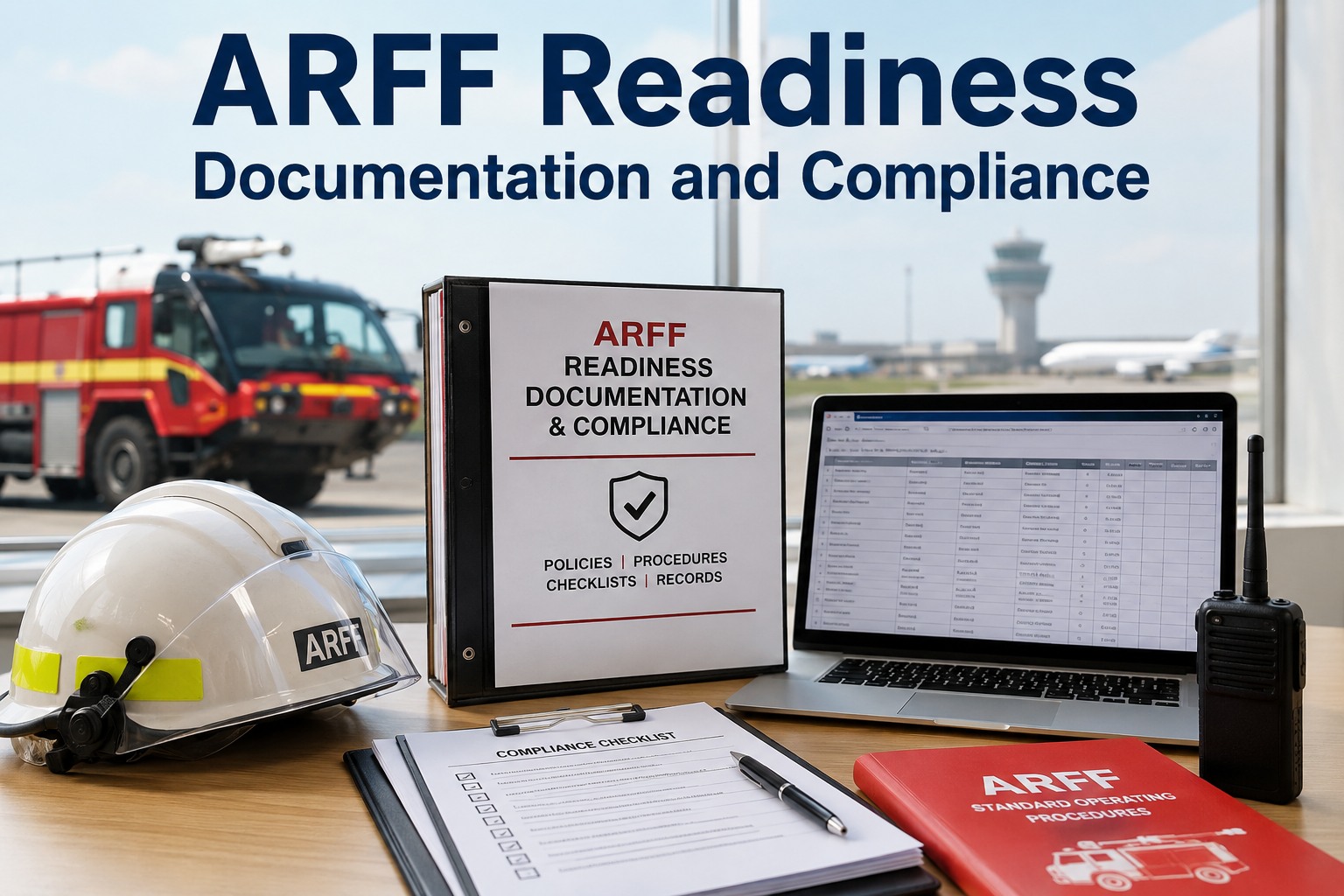
FAA Part 139 certification is not a one-time achievement — it is a continuous operating license that an airport can lose at any point if maintenance documentation, self-inspection records, or ARFF readiness cannot be demonstrated on demand. A single deficiency finding on an unannounced FAA inspection can trigger a certificate action that grounds commercial operations at the airport until the corrective action is formally accepted by the regional office. Oxmaint's airport CMMS is purpose-built to support Part 139 compliance — giving airport operations teams structured self-inspection programs, digital maintenance documentation, and audit-ready compliance packages that stand up to FAA scrutiny. With over 500 certificated airports in the USA managing Part 139 obligations across pavement, ARFF, marking, lighting, and wildlife hazard programs, the difference between passing and finding-laden inspections comes down to the quality of documented evidence behind each required program element. Book a demo and see Oxmaint's Part 139 compliance workflow for your airport.
FAA Part 139 certification requirements, mandatory maintenance and inspection programs, ARFF readiness standards, self-inspection documentation protocols, and how a modern CMMS supports continuous Part 139 compliance — covering Class I through Class IV airports and key 14 CFR Part 139 subpart D obligations.
Pass Every FAA Inspection — With Documentation That Speaks for Itself
Oxmaint gives airport operations teams structured Part 139 self-inspection checklists, digital maintenance records with audit trails, and ARFF readiness tracking — all exportable in one click when the FAA inspector walks through the door.
Part 139 Certification Classes — What Each Requires
FAA Part 139 certification is structured by airport class, determined by the type of air carrier operations conducted. Each class carries specific maintenance, staffing, and documentation obligations.
Scheduled Service, Large Aircraft
Full Part 139 requirements. Scheduled ARFF index A through E based on longest aircraft served. All subpart D maintenance programs required in full. Most comprehensive compliance obligation.
Scheduled Service, Small Aircraft Only
Reduced ARFF requirements. Full airfield maintenance and self-inspection documentation still required. Commonly applies to regional airports serving turboprop and small jet operations.
Unscheduled Air Carrier Operations
Charter and unscheduled operations with large aircraft. Full maintenance documentation requirements. ARFF may be reduced to index A with FAA deviation approval based on operations frequency.
Unscheduled, Small Aircraft Only
Most limited certification class. Airfield safety area, lighting, marking, and self-inspection documentation still required. Minimum ARFF index applies when air carrier operations are conducted.
The 8 Core Part 139 Maintenance Program Requirements
These are the primary subpart D (Operations) maintenance and inspection obligations that every certificated airport must sustain continuously — not just at inspection time.
Personnel and Training
All airport operations personnel handling Part 139 obligations must complete initial and recurrent training documented per FAA-approved programs. Training records must be produced on demand.
Pavement — Runways and Taxiways
All movement areas must be maintained in a condition safe for aircraft operations. PCN ratings must match or exceed ACN requirements. Pavement distress, FOD, and edge condition documented on each inspection.
Safety Areas
Runway safety areas (RSA) must conform to AC 150/5300-13A dimensional requirements. Object penetrations, drainage issues, and ground cover condition documented each inspection cycle.
Marking, Signs, and Lighting
Runway and taxiway marking must meet retroreflectivity standards. Airfield signs and edge lighting serviceability checked each movement area inspection. Outages reported to ATC within 2 hours.
ARFF — Equipment and Agents
ARFF vehicles, extinguishing agents, and response capability must be maintained continuously at the required index. Response time testing, apparatus PM, and agent inventory documented per FAA-approved ARFF plan.
Handling and Storing Hazardous Materials
Fueling operations, deicing agent storage, and spill response plans documented and maintained per OSHA and Part 139 standards. Annual program review with updated spill response procedures required.
Self-Inspection Program
Daily movement area inspections using FAA-approved checklists. Deficiencies logged, corrective actions tracked to closure, and records retained for 24 months minimum. Most common finding in FAA Part 139 inspections.
Wildlife Hazard Management
Airports serving certain air carrier operations must maintain a wildlife hazard management plan. Wildlife strikes, attractant surveys, and mitigation action documentation required throughout the year.
Where Part 139 Compliance Programs Fail — Common FAA Findings
Incomplete Self-Inspection Records
§139.327 self-inspection documentation gaps are the single most cited deficiency in FAA Part 139 inspections. Missing daily records, unsigned checklists, and untracked deficiency closures create immediate compliance exposure.
ARFF Apparatus PM Not Current
ARFF vehicle preventive maintenance gaps — particularly quarterly pump tests, hose inspection records, and foam proportioner verification — are a top-5 Part 139 finding category at Class I and II airports.
Training Records Not Retrievable on Demand
FAA inspectors expect personnel training records to be produced at the time of inspection. Paper-based training logs stored in multiple locations or incomplete since last FAA cycle create immediate findings.
Pavement Distress Not Tracked to Resolution
Identifying pavement distress in daily inspections is only half the obligation — tracking corrective action to closure with documented completion evidence is what the FAA verifies. Open deficiencies without closure records are violations.
How Oxmaint Supports Continuous FAA Part 139 Compliance
Digital Daily Inspection Checklists
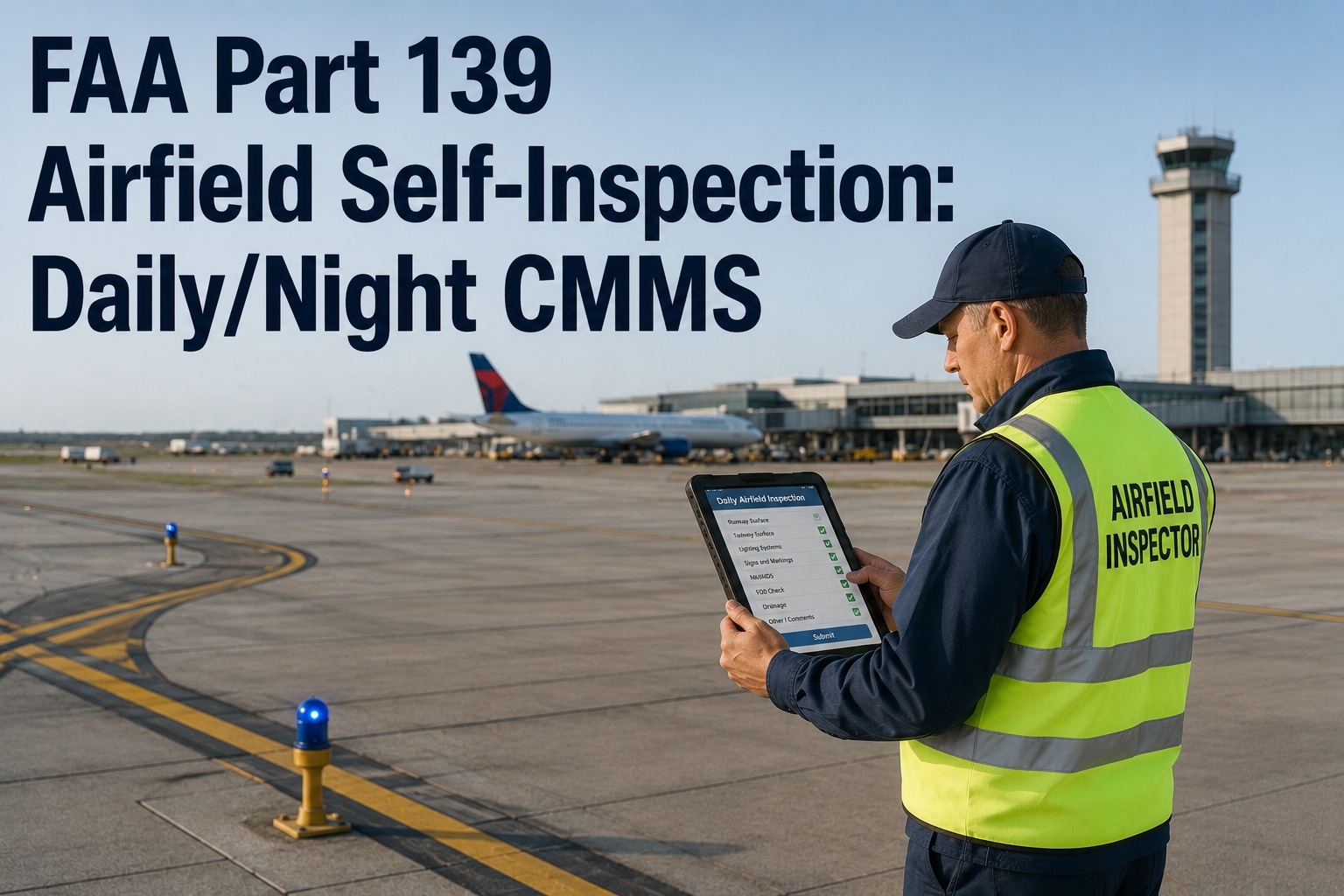
FAA-aligned digital inspection forms for movement areas, safety areas, marking, lighting, and ARFF — completed on mobile, time-stamped, and auto-archived. No paper, no missing signatures.
Deficiency-to-Closure Work Orders
Every inspection finding auto-generates a tracked work order. Corrective actions are assigned, deadline-monitored, and closed with photographic evidence — creating the complete deficiency closure record FAA inspectors require.
ARFF Apparatus PM and Response Readiness
ARFF vehicle PM schedules, quarterly pump tests, foam agent inventory, and apparatus certification records managed in Oxmaint with auto-alerts for upcoming and overdue compliance items.
Personnel Training Records — Always Current
Initial and recurrent training completions logged per staff member, with expiration alerts and digital certificates stored against each personnel record. Print on demand for FAA inspector requests.
One-Click FAA Inspection Documentation
Generate a complete Part 139 compliance package — self-inspection records, deficiency closure log, ARFF readiness documentation, and training records — in minutes when the FAA inspector arrives.
Wildlife Hazard Program Documentation
Wildlife strike log, attractant survey records, mitigation action tracking, and annual program review documentation maintained in Oxmaint — meeting §139.337 documentation requirements year-round.
Paper-Based Compliance vs Oxmaint-Managed Part 139 Program
Frequently Asked Questions
What are the most common deficiencies cited in FAA Part 139 inspections?
The most frequently cited Part 139 deficiencies are: incomplete or unsigned self-inspection records (§139.327), deficiency items identified but not tracked to closure, ARFF apparatus PM gaps including quarterly pump testing, out-of-date personnel training records, and pavement distress without documented corrective action. Oxmaint addresses all five directly through structured digital programs. Start free to configure your self-inspection program this week.
How long must FAA Part 139 self-inspection records be retained?
Under 14 CFR §139.327, airport operators must retain self-inspection records for a minimum of 24 months. FAA inspectors can and do request records covering the full prior inspection cycle — which may span more than two years. Oxmaint archives all inspection records with timestamps indefinitely, with configurable export formats for FAA-requested documentation packages.
Does Oxmaint support the FAA-required ARFF index compliance documentation?
Yes. Oxmaint manages ARFF vehicle PM schedules (including quarterly pump and pressure tests), foam agent inventory tracking with expiration alerts, response time test documentation, and ARFF personnel certification records — all tied to the airport's certificated ARFF index. When agent inventory or apparatus PM falls behind schedule, Oxmaint escalates automatically. Book a demo to see the ARFF compliance module.
Can Oxmaint generate a complete Part 139 compliance package for an unannounced FAA inspection?
Yes — and this is one of Oxmaint's most valued capabilities at certificated airports. With all self-inspection records, deficiency closure documentation, ARFF readiness records, and personnel training files stored in the platform, airport operations directors can generate a complete, print-ready compliance package in under 15 minutes regardless of when the FAA inspector arrives. No advance warning required.
Never Get Caught Unprepared for an FAA Part 139 Inspection Again.
Oxmaint gives certificated airports digital self-inspection programs, deficiency-to-closure work order tracking, ARFF readiness documentation, and one-click audit packages — all compliant with 14 CFR Part 139 subpart D requirements. Deploy in weeks without an IT project. Start free today and have your self-inspection program running before the next inspection cycle.