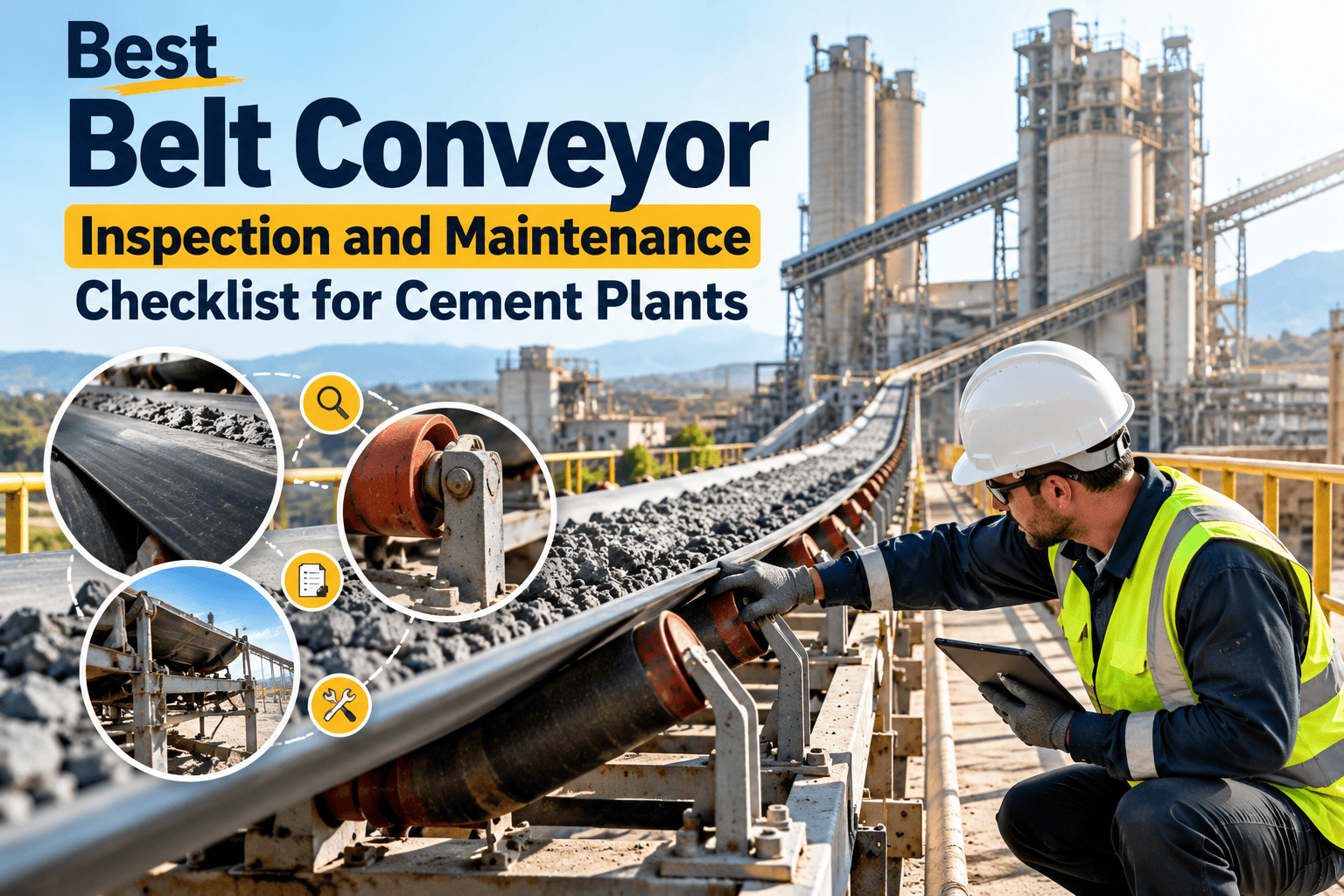
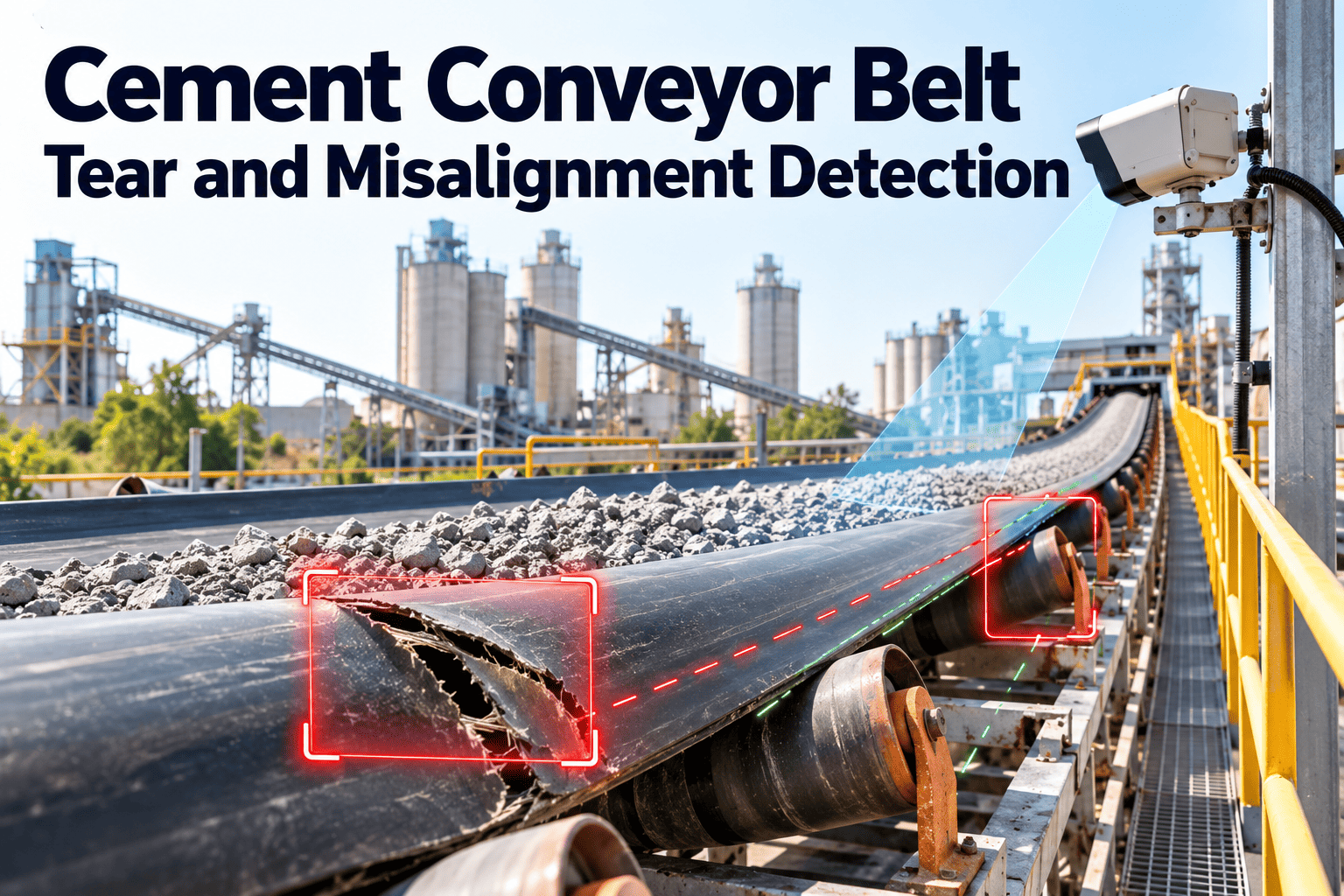
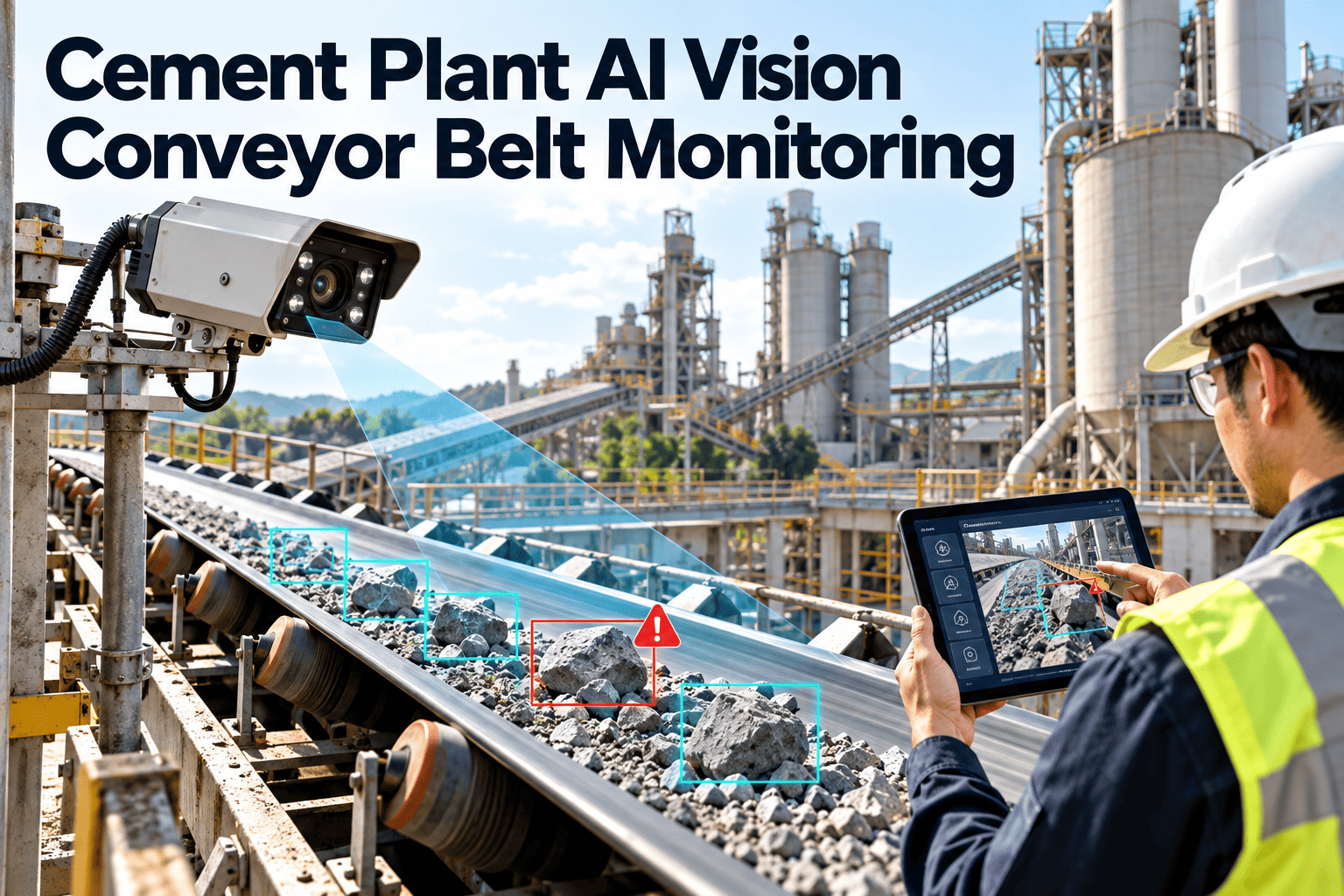
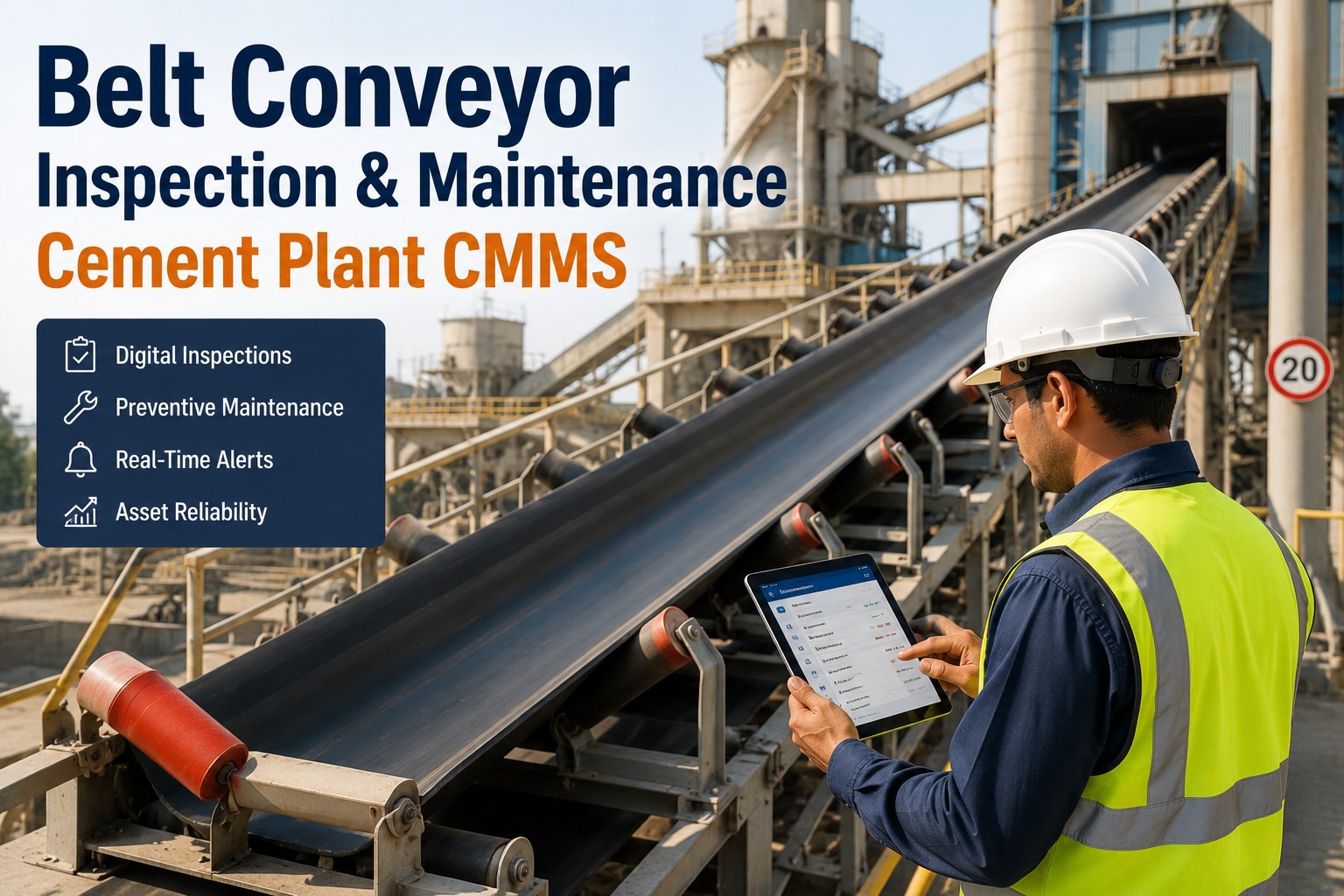
A cement plant's conveyor network moves 50,000 to 200,000 tonnes of raw material every single day — and a single belt tear that goes undetected for even 20 minutes can cascade into a full kiln shutdown costing your plant $50,000 to $200,000 in lost production, emergency repairs, and material waste. AI vision systems now detect belt tears, edge damage, and misalignment in real time — frame by frame, 24 hours a day — and automatically trigger a CMMS work order before the damage reaches the point of no return. Book a demo to see how Oxmaint integrates AI conveyor vision alerts directly into predictive work order workflows for cement plants.
50%
Reduction in unplanned conveyor downtime with AI vision monitoring in the first year
95%+
Accuracy in detecting belt tears, misalignment, and edge damage using trained AI models
$200K
Maximum cost per unplanned kiln stop caused by a conveyor feeding failure
45 days
Typical time to first prevented failure after AI conveyor monitoring goes live
Why Conveyors Fail Silently
The Gap Between Your Cameras and Your Maintenance Team
Your cement plant already has cameras mounted above every major conveyor line. The problem is not visibility — it is intelligence. Those cameras record everything and analyze nothing. A hairline longitudinal tear forming on the belt's return side at 2 AM will grow for six hours before a morning walk-around catches it, by which point the damage has extended three meters and belt replacement — not patch repair — is now the only option. AI vision closes the gap between recorded footage and real-time action.
Longitudinal Tear
92% of tears start as hairline cracks on belt underside — invisible to walkaround inspection
Belt Misalignment
78% of edge damage cases trace back to lateral drift that went uncorrected for over 3 shifts
Splice Joint Failure
65% of catastrophic belt breaks originate at splice joints with no prior visual inspection flag
Material Carryback
84% of return-side belt damage is caused by accumulated carryback that no one cleaned in time
What AI Actually Detects
Six Fault Types Your Vision System Must Catch — Before They Escalate
Not all belt damage is equal. A surface scratch has days of lead time. An active longitudinal tear near a splice joint can propagate to full belt failure in under an hour at operating speed. Here is what a trained AI vision system monitors, and what the maintenance response looks like when each fault type is detected.
Fault Type
How AI Detects It
Risk Window
CMMS Response
Longitudinal Tear
Frame-by-frame surface analysis detects crack propagation rate and width on both top and return belt surfaces
20–60 min
Immediate work order — belt speed reduction triggered, crew dispatched to assess patch vs. replace
Edge Damage
Lateral drift tracked in real time — AI flags deviation beyond 25mm from center before edge contact occurs
2–8 hrs
Priority work order — idler alignment inspection and tracking roller adjustment within current shift
Splice Joint Wear
Splice recognition model flags each joint pass — tracks surface separation, fastener protrusion, and belt lift at joint
4–24 hrs
Scheduled work order — plan re-splicing at next planned maintenance window before joint separation
Material Carryback
Return-side camera detects material accumulation on belt underside and roller surfaces using contrast analysis
6–48 hrs
Routine work order — belt scraper inspection and cleaning crew scheduled within 48 hours
Oversized Rock / Tramp Metal
Object detection model identifies foreign material on belt surface before it reaches transfer chutes or crushers
Immediate
Instant alert — belt stop command or manual intervention before material reaches crusher feed
Surface Wear Progression
Belt thickness estimation via texture analysis — AI tracks wear rate and projects remaining useful life
Weeks
Planned replacement work order — belt procurement initiated at 70% wear threshold before failure risk zone
Turn Every Conveyor Camera into a 24/7 Maintenance Trigger
Oxmaint connects AI conveyor vision alerts directly to your maintenance workflow. Every detected fault — tear, misalignment, carryback, or splice wear — becomes an auto-generated, prioritized work order assigned to the right crew with the camera frame attached as evidence. No manual step between detection and dispatch.
How the Technology Works
From Existing Camera to Intelligent Fault Detection — The Architecture
AI conveyor monitoring does not require replacing your existing camera infrastructure. Industrial AI processing units connect to existing camera feeds and run deep learning models trained specifically for cement plant conditions — dust, heat shimmer, vibration, and low-light environments. The result is a detection system that achieves over 95% accuracy even in the harshest zones, feeding structured fault data directly into your CMMS.
01
Existing Cameras — No Replacement Required
Industrial-grade cameras already installed above your conveyor lines connect to an edge AI compute unit. Positive-pressure dust-proof housings protect lens surfaces. Dual-mode visible and thermal feeds maintain detection capability in heavy dust zones where visible light alone is insufficient.
02
Edge AI Processes Every Frame in Real Time
Deep learning models — trained specifically on cement plant conveyor conditions — analyze each video frame for belt surface integrity, lateral position, splice joint status, and foreign object presence. Detection happens at the edge with sub-second latency. No cloud round-trip delay between anomaly and alert.
03
Fault Classified, Severity Scored, Work Order Auto-Created
When a fault is detected, the AI classifies fault type, assigns severity, and sends a structured alert to Oxmaint via API. The CMMS automatically generates a work order — fault type, location, affected belt segment, camera frame image, and recommended action attached. The maintenance crew receives the full picture before they leave the control room.
04
Field Team Executes and Documents via Mobile
Technicians access the work order on their mobile device — including the flagged camera frame, belt location reference, and past maintenance history for that conveyor. Inspection findings, repair actions, and photos are logged at the asset in real time. Work order closes automatically when repair is confirmed, updating the belt health record.
05
Trending Builds Belt Lifecycle Intelligence
Every fault detection, repair action, and inspection result accumulates into a belt lifecycle record in Oxmaint. Wear rate trends enable precise replacement timing — replacing belts at the right time rather than too early (wasting budget) or too late (risking catastrophic failure). Fleet-level dashboards show which belts are approaching decision thresholds across your entire plant.
Conveyor by Conveyor
Where Monitoring Delivers the Most Value in a Cement Plant
Not every conveyor carries equal risk. The cement production chain has seven conveyor-critical stages — and a failure at any one of them stops everything downstream. Prioritizing AI monitoring by production impact ensures your monitoring investment pays back fastest.
"We started with AI cameras on just two conveyor lines as a pilot. Within 45 days, the system detected a belt edge tear that our routine inspection had missed — it would have caused a full line shutdown within a week. That single save paid for the entire pilot. We've now expanded to 14 camera points covering kilns, crushers, and all major conveyors. Unplanned downtime on monitored equipment dropped by over 50% in the first year."
Maintenance Planning Engineer
Cement Plant, Western India — 3.2 MTPA Capacity
CMMS Integration
What Happens After the AI Detects a Fault — The Oxmaint Workflow
Fault detection without a maintenance execution system is an alarm with no action attached. The real value of AI conveyor monitoring comes from what happens in the 90 seconds after detection — when a structured work order reaches the right technician with the full fault picture, before the damage progresses further.
A
Alert Fires
AI detects fault. Severity classified. Fault location, belt ID, and camera frame image packaged into structured API payload sent to Oxmaint in real time.
B
Work Order Created
Oxmaint auto-generates prioritized work order. Crew assigned by shift. Fault evidence, belt history, and action scope attached. Critical faults escalate to supervisor immediately.
C
Field Execution
Technician opens work order on mobile — reviews camera frame, belt location, and past repair history. Inspection completed. Findings, photos, and repair actions logged at the asset.
D
Record Closed
Work order closure updates the belt lifecycle record — fault history, repair timeline, parts consumed, and next inspection interval automatically set based on fault type and severity.
Oxmaint + AI Vision — Measured Outcomes in Cement Plants
50%
Drop in unplanned conveyor stops
8–14 mo
Typical full ROI payback period
25–40%
Reduction in belt maintenance cost
60 days
To first auto-prevented belt failure
6–8 wk
Full deployment timeline, existing cameras
Frequently Asked Questions
AI Conveyor Belt Monitoring in Cement Plants: Common Questions
Can AI conveyor monitoring work with our existing cameras, or do we need to replace the entire system?
How does the AI maintain detection accuracy in cement plant conditions — dust, heat shimmer, and vibration?
Detection models for cement plants are trained specifically on cement plant visual conditions — not generic factory environments. Dust interference is managed through positive-pressure camera housings that maintain lens clarity, and dual-mode thermal plus visible light cameras maintain detection even in zero-visibility dust events. AI models trained on plant-specific data typically achieve 95%+ detection accuracy within the first 30–60 days as the models calibrate to local lighting, dust levels, and belt surface texture.
Book a demo to review detection accuracy benchmarks for cement plant conditions similar to your facility.
What is the difference between AI vision monitoring and the vibration sensors we already have on our conveyor drives?
Vibration sensors on drive motors detect bearing degradation and imbalance in rotating components — they cannot see belt surface damage, lateral drift, or splice joint deterioration. AI vision detects the visual fault signatures that vibration sensors miss entirely: a growing longitudinal tear, edge contact against the frame, carryback on the return run, or foreign material on the belt surface. The two technologies are complementary — vibration catches mechanical drivetrain issues, vision catches belt and material handling faults. Oxmaint aggregates both data streams into a single conveyor health score.
Start a free trial to see how Oxmaint combines vibration and vision data into one conveyor asset health view.
How quickly does a detected belt fault translate into a work order reaching the maintenance crew?
Detection to work order creation in Oxmaint takes under 90 seconds for automated fault types. The AI detects the fault, classifies it, and sends a structured API payload to Oxmaint — which auto-creates the work order, assigns it to the on-shift crew, and pushes a mobile notification with the camera frame image attached. For critical fault types — active longitudinal tear, tramp metal, or belt stopped against a frame — supervisor escalation happens simultaneously with crew dispatch. No manual step exists between detection and the technician's phone alerting.
Book a demo to walk through the full detection-to-dispatch timeline for your plant's shift structure.
Does Oxmaint replace our existing DCS or SCADA system for conveyor monitoring?
No — Oxmaint functions as the maintenance execution and asset history layer alongside your existing DCS and SCADA systems, not as a replacement for them. Your DCS continues managing process control and belt speed commands. AI vision alerts feed into Oxmaint, which handles work order creation, crew assignment, inspection documentation, and belt lifecycle records. When your DCS flags a motor overload and the AI vision simultaneously detects misalignment, Oxmaint correlates both signals into one root cause work order — eliminating duplicate dispatch and providing the full picture.
Start a free trial to test the DCS and SCADA integration path for your control system environment.
Your Conveyors Move Everything. Your Monitoring Should Too.
Every hour a belt tear goes undetected is an hour your kiln feed is one failure away from a $200,000 shutdown. Oxmaint connects AI conveyor vision to automatic work order generation — so every fault your cameras see becomes a tracked, assigned, and documented maintenance action. Deploy across your full conveyor network in 6–8 weeks. No camera replacement required.