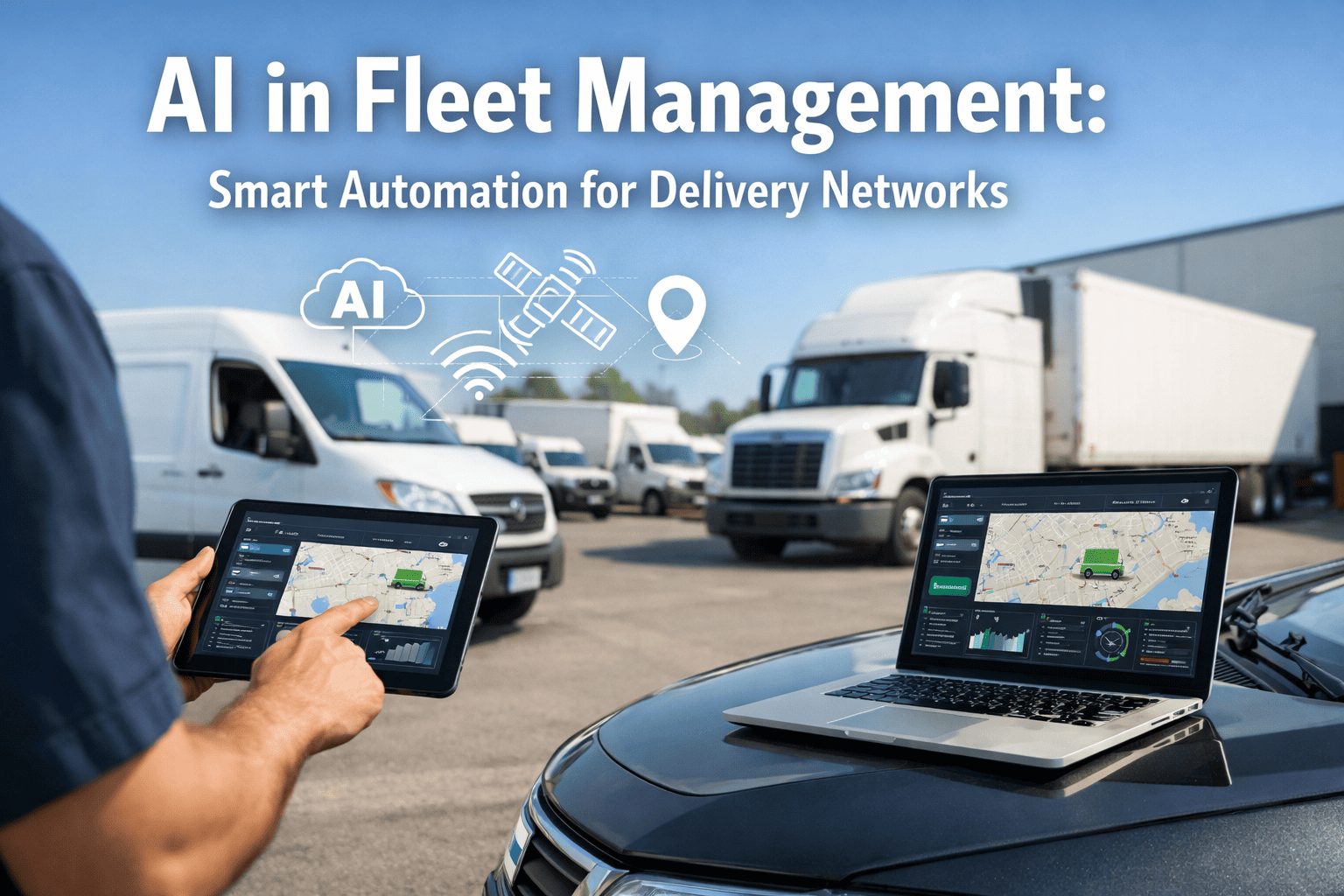
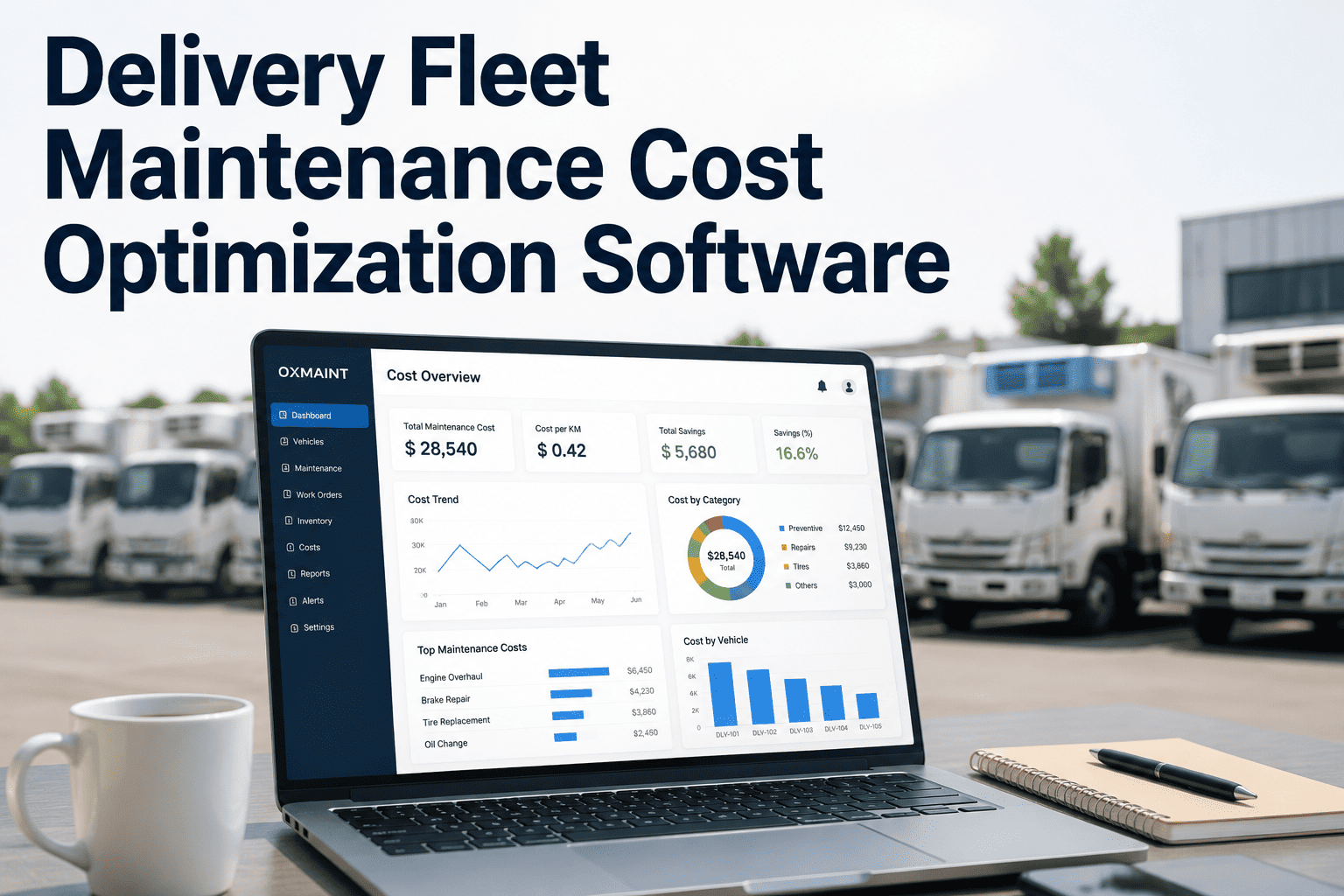
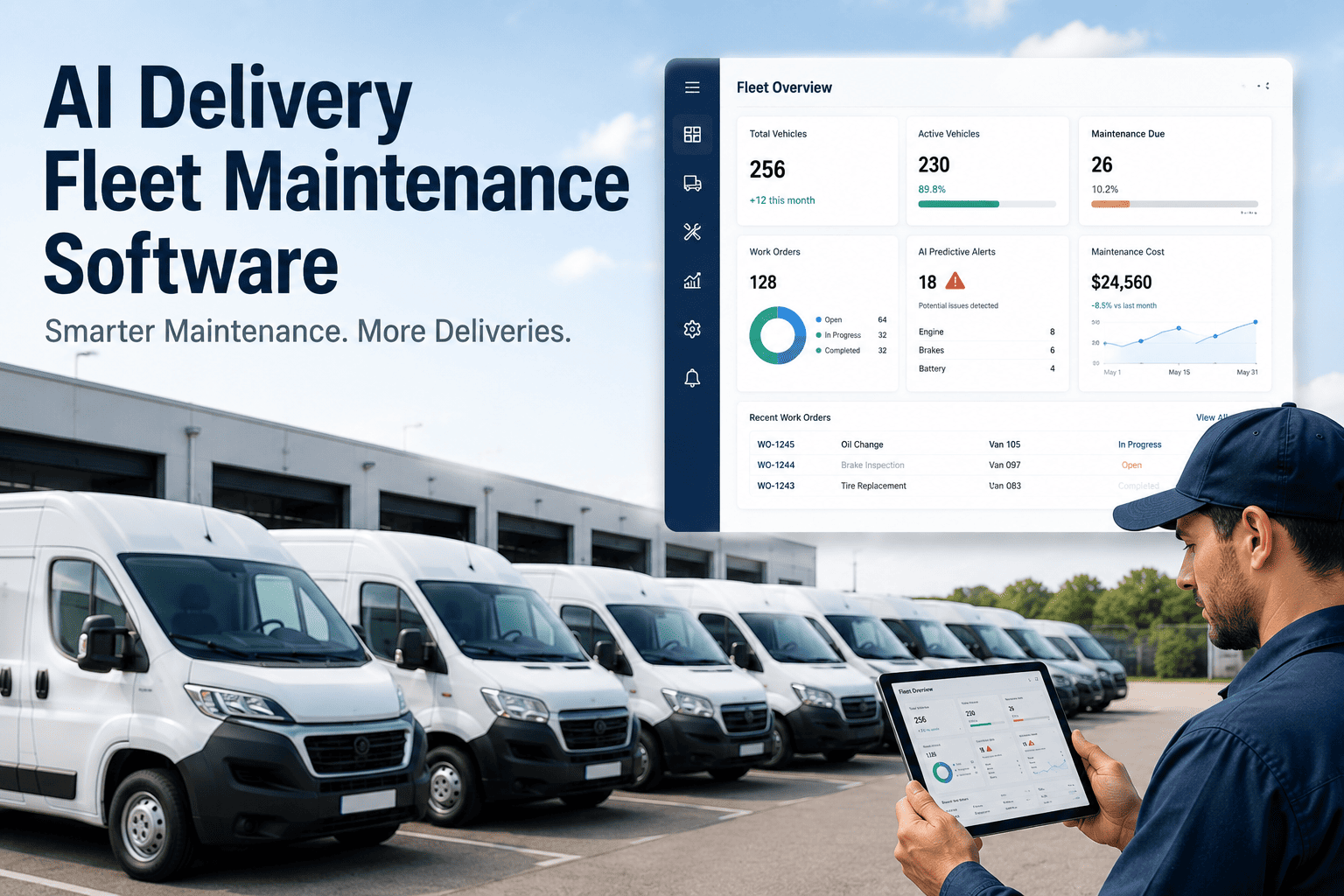
Delivery networks run on precision. A vehicle that breaks down mid-route, a driver routed inefficiently, or a maintenance event that was not predicted in time — each one costs more than the incident itself. It costs customer trust, SLA compliance, and the cumulative margin that separates profitable delivery operations from ones that are always catching up. Artificial intelligence is changing the operating model for fleet management — not as a future capability, but as a live advantage that delivery companies are deploying right now. See how Oxmaint brings AI to your fleet or book a demo to explore smart automation built specifically for delivery operations.
40%
fewer unplanned breakdowns in delivery fleets using AI-powered predictive maintenance
23%
average fuel cost reduction from AI dynamic route optimisation in delivery operations
3x
faster defect-to-repair cycle when AI automates work order generation and assignment
$6.2B
AI fleet management market size in 2026 — the fastest-growing segment in logistics technology
The Delivery Fleet Problem AI Was Built to Solve
Traditional fleet management relies on human judgment at every decision point — when to service a vehicle, how to route a driver, when to reorder parts. AI replaces that dependency with systems that process more variables, more consistently, and faster than any manual process can match.
The Problem
Maintenance is scheduled by calendar — not by actual vehicle condition. Breakdowns happen because the schedule did not account for how the vehicle was actually used.
AI Solution
Predictive models analyse telematics, engine diagnostics, and usage patterns to forecast failures before they happen — triggering service at the right time, not a fixed date.
The Problem
Dispatchers build routes manually the night before. Conditions change — traffic, weather, late pickups — and the plan is already out of date by the time drivers start.
AI Solution
AI optimisation engines recalculate the most efficient delivery sequence in real time throughout the day — automatically adjusting for conditions as they change.
The Problem
Fleet managers review inspection reports manually. Defect patterns across the fleet are invisible until they have already caused multiple failures and repair costs.
AI Solution
AI analyses inspection data fleet-wide to detect patterns — recurring fault types by vehicle model, correlation between driver behaviour and component wear — before they become systemic failures.
AI-powered fleet management — live in under a day
Oxmaint connects predictive maintenance, automated inspections, and real-time fleet analytics in one platform for delivery operations.
Start Free Trial
How AI Works Inside a Delivery Fleet
AI in fleet management is not a single system — it is a layered set of models each applied to a specific operational decision. Here is how the technology maps to the actual workflow of a delivery network.
Vehicle Health
01
Sensor Data Ingestion
Engine diagnostics, tyre pressure, brake wear indicators, and telematics feeds are continuously collected from every vehicle in the fleet and fed into the AI model in real time.
AI Processing
02
Pattern Recognition
Machine learning models compare current vehicle signatures against historical failure patterns to identify which components are showing early degradation indicators.
Action Layer
03
Automated Work Orders
When a risk threshold is reached, the system automatically generates a work order, assigns it to the available technician, and flags the vehicle before its next dispatch cycle.
Outcome
04
Breakdown Prevented
The vehicle is serviced proactively. The breakdown never happens. The driver completes the route. The client receives on time. The cost of emergency repair and downtime is avoided entirely.
Core AI Capabilities in Fleet Management
AI analyses the gap between what a maintenance schedule says should happen and what sensor and usage data says will actually happen. Vehicles that are driven harder, loaded heavier, or operated in more demanding conditions need service sooner — AI accounts for that automatically, not by a fixed date on a calendar.
40%
fewer unplanned breakdowns
25%
longer asset service life
3x
lower repair cost vs. reactive
AI routing does not just find the shortest path — it finds the most efficient sequence considering delivery time windows, vehicle load, driver hours, real-time traffic, and fuel cost simultaneously. The optimisation runs continuously, not just at the start of the day, so dispatchers always have the best plan available regardless of what changes mid-shift.
23%
fuel cost reduction
18%
more stops per shift
15%
lower driver overtime
AI scoring analyses harsh braking, aggressive acceleration, cornering forces, and speed profiles per driver — correlating behaviour patterns with vehicle wear, fuel consumption, and accident risk. Coaching interventions are triggered automatically, not after an incident. Fleets using AI driver monitoring see measurable reductions in both safety incidents and maintenance cost within 60 days.
28%
fewer accident incidents
18%
fuel saved per driver
22%
less vehicle wear from behaviour
AI monitors inspection completion rates, document expiry timelines, driver licence and medical certificate currency, and regulatory threshold compliance across the entire fleet simultaneously. Alerts escalate automatically when any item approaches risk — no manual tracking, no human oversight required, no compliance gap discovered after it has already become a violation.
100%
inspection coverage trackable
Zero
compliance surprises with automated alerts
60%
faster audit preparation
All four AI capabilities — in one fleet platform
Oxmaint combines predictive maintenance, driver analytics, automated work orders, and compliance monitoring without requiring multiple disconnected tools.
Book a Demo
AI Fleet Management: What Changes Day to Day
For the Fleet Manager
Dashboard shows every vehicle's health score, PM status, and open defects — no calls to depot required
AI flags vehicles approaching service thresholds 14 days in advance — maintenance planned, not reactive
Breakdown trends visible by vehicle type, route, driver, and season — patterns identified before they repeat
Compliance status for every document, certificate, and licence visible in one screen with automated expiry alerts
For the Dispatcher
Vehicle availability screen shows cleared, grounded, and in-maintenance status in real time before route assignment
AI route suggestions optimise for time windows, load, traffic, and driver hours — updated dynamically all day
Vehicles with open critical work orders are automatically blocked from dispatch — no manual coordination needed
Post-trip defect reports arrive instantly from drivers — repair scheduled overnight, vehicle ready for next morning
For the Technician
Work orders arrive with full defect detail, vehicle history, and parts requirement — no diagnosis from scratch
Parts inventory levels visible before starting a job — no delays waiting for components that should be in stock
AI identifies recurring fault patterns on specific vehicles — technicians know where to look before they start
Work order completion logged digitally — service history updated instantly, no paper records to file
AI vs. Manual Fleet Operations: The Performance Data
| Fleet KPI |
Manual Operations |
AI-Powered Operations |
Improvement |
| Unplanned Breakdown Rate |
8–12 per 100 vehicles/month |
4–6 per 100 vehicles/month |
40% reduction |
| PM On-Time Compliance |
72% average completion rate |
95%+ with automated scheduling |
+23 percentage points |
| Fuel Cost Per Route |
Baseline with static routing |
23% lower with AI optimisation |
23% savings |
| Defect-to-Repair Time |
18–36 hours average |
6–12 hours with automated work orders |
3x faster |
| Inspection Completion Rate |
68–78% across fleet |
95–100% with digital enforcement |
30% improvement |
| Emergency Repair Cost |
$4,700 average per incident |
Reduced by 60–70% through prevention |
60%+ cost avoided |
Delivery companies that have deployed AI fleet management report that the technology pays for itself within 6 to 9 months — not from a single use case, but from the compounding effect of fewer breakdowns, lower fuel spend, and faster repair cycles operating simultaneously.
Fleet Technology Intelligence Report
AI Adoption in Delivery Networks, 2026
What to Look for in an AI Fleet Management Platform
01
Predictive Maintenance Engine
Should go beyond calendar-based scheduling. Look for models that incorporate actual vehicle usage, telematics data, and fault history to recommend service before failure probability rises.
02
Automated Work Order Flow
Defects reported by drivers or flagged by sensors should generate and assign work orders automatically — no human step between detection and technician assignment.
03
Real-Time Fleet Visibility
A single dashboard showing every vehicle's health status, PM due dates, open defects, and dispatch readiness — updated live without requiring manual reporting from depot teams.
04
Mobile Driver Integration
Drivers complete inspections and report defects from their phones. The system captures structured data — not free text — that feeds directly into the AI model and work order system.
05
Fleet Analytics and Benchmarking
Trend data by vehicle, driver, route, and depot. The platform should identify which assets, people, or locations are driving cost and downtime — not just report that problems exist.
06
Compliance Automation
Document expiry tracking, inspection completion monitoring, and regulatory alert management should run automatically — surfacing compliance gaps before they become violations.
How Oxmaint Delivers AI Fleet Management for Delivery Networks
Most fleet management tools were designed for asset tracking. Oxmaint was built for operational intelligence — connecting the maintenance workflow, driver inspection process, compliance tracking, and performance analytics into a single AI-powered platform that delivery teams can run without a data science department. Start for free and have your fleet AI dashboard live in under a day.
AI-Driven PM Scheduling
Oxmaint analyses vehicle usage and maintenance history to recommend service windows that prevent failures — not just honour a calendar date that may be too early or too late.
Automated Defect-to-Work-Order Flow
Any defect submitted through the Oxmaint driver app instantly generates a prioritised work order — assigned, tracked, and logged without a single manual step between driver and technician.
Live Fleet Health Dashboard
One screen shows every vehicle's PM status, open defects, dispatch readiness, and upcoming service dates — updated in real time so dispatchers and fleet managers always have current information.
Mobile Inspection Platform
Drivers complete structured pre-trip and post-trip inspections from their phone in under 5 minutes. Completion rates are tracked automatically and reported to fleet managers weekly.
Intelligent Parts Demand Forecasting
Oxmaint tracks parts usage patterns across the fleet to identify which components are approaching replacement frequency — allowing proactive restocking before a stockout delays a repair.
Fleet Performance Benchmarking
Breakdown rates, PM compliance, repair cost, and uptime percentage are compared across vehicles, drivers, routes, and depots — so management can see exactly where performance is lagging and why.
40%
reduction in unplanned breakdowns for delivery fleets using AI-powered maintenance management
95%+
vehicle uptime achievable when predictive maintenance and digital inspections run together
1 day
typical time to have your AI fleet dashboard live and operational on Oxmaint
Your Delivery Fleet Deserves Smarter Operations
AI fleet management is not a future investment — it is the current standard for delivery networks that want to stay competitive on cost, reliability, and service quality. Oxmaint puts predictive maintenance, automated compliance, real-time visibility, and fleet analytics into one platform your team can run from day one.
Frequently Asked Questions
How does AI improve fleet maintenance compared to traditional scheduling?
Traditional maintenance schedules service vehicles at fixed mileage or time intervals regardless of how they were actually used. AI analyses real vehicle data — engine diagnostics, telematics, fault history, route intensity — to recommend service when it is actually needed. This prevents breakdowns that calendar-based schedules miss and avoids unnecessary servicing that happens too early.
Is AI fleet management only for large delivery operations?
No. The operational benefits of AI — predictive maintenance, automated work orders, real-time fleet visibility — apply to delivery operations of any size. A 10-vehicle fleet benefits just as much from avoiding a single unplanned breakdown as a 500-vehicle enterprise does at scale. Modern platforms like Oxmaint are designed to be accessible and deployable without a large technology team.
What data does an AI fleet management system need to be effective?
The most important data inputs are vehicle usage records, maintenance history, driver inspection reports, and telematics or engine diagnostic data. The more completely and consistently this data is captured through a digital platform, the more accurately the AI can identify patterns and make predictions. Starting with digitised inspection and maintenance records is the essential first step.
How quickly does Oxmaint show results for a delivery fleet?
Most Oxmaint customers see measurable operational improvements within 30 to 60 days. Inspection completion rates improve immediately once drivers shift to the mobile platform. Overdue PM backlog is cleared within the first few weeks as the scheduling system takes over. Breakdown frequency reductions become visible over 60 to 90 days as the predictive model accumulates fleet data and refines its recommendations.