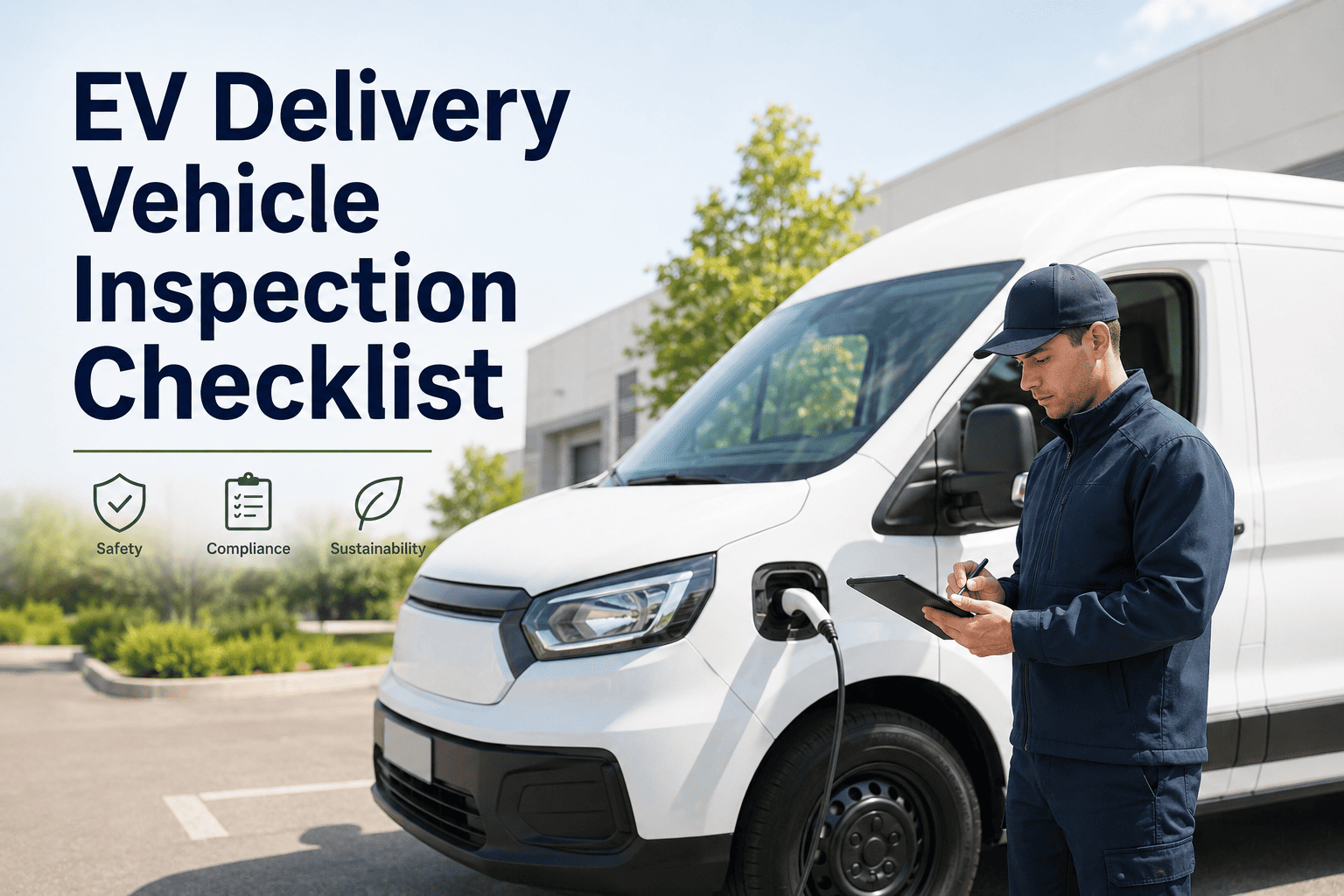
Breakdowns don't wait for convenient moments. For delivery fleets, a single vehicle out of commission means missed deliveries, angry customers, and emergency repair bills that blow your budget. The fix isn't responding faster — it's preventing the problem entirely with a structured preventive maintenance program.
Checklist + Free Template · Delivery Operations Management
Delivery Fleet Preventive Maintenance Checklist
Everything your drivers and fleet managers need to inspect, document, and maintain delivery vehicles — before a breakdown costs you a customer.
$448B
Lost annually due to unplanned fleet downtime in the US
40%
Of breakdowns are preventable with regular inspections
3x
Higher repair costs for reactive vs. preventive maintenance
25%
Longer vehicle lifespan with consistent PM programs
What Is a Delivery Fleet Preventive Maintenance Checklist?
A preventive maintenance (PM) checklist is a structured inspection guide used before, during, and after delivery routes to catch wear, identify emerging issues, and document vehicle condition. It covers everything from engine fluids to tire pressure to brake responsiveness — giving drivers and fleet managers a consistent, repeatable process.
Used properly, it replaces guesswork with documentation. Every inspection becomes a data point. Every data point helps predict the next failure before it happens on the road.
Why Most Fleets Skip It (And Pay the Price)
01
No standardized process
Drivers check different things each time — or nothing at all
02
Paper logs get lost
Inspection records disappear when you need them most — audits, claims, compliance
03
No visibility across vehicles
Fleet managers can't see which trucks are overdue until something breaks
04
Reactive firefighting
Spending more on emergency tows and overnight repairs than scheduled service
The Complete Delivery Fleet PM Checklist
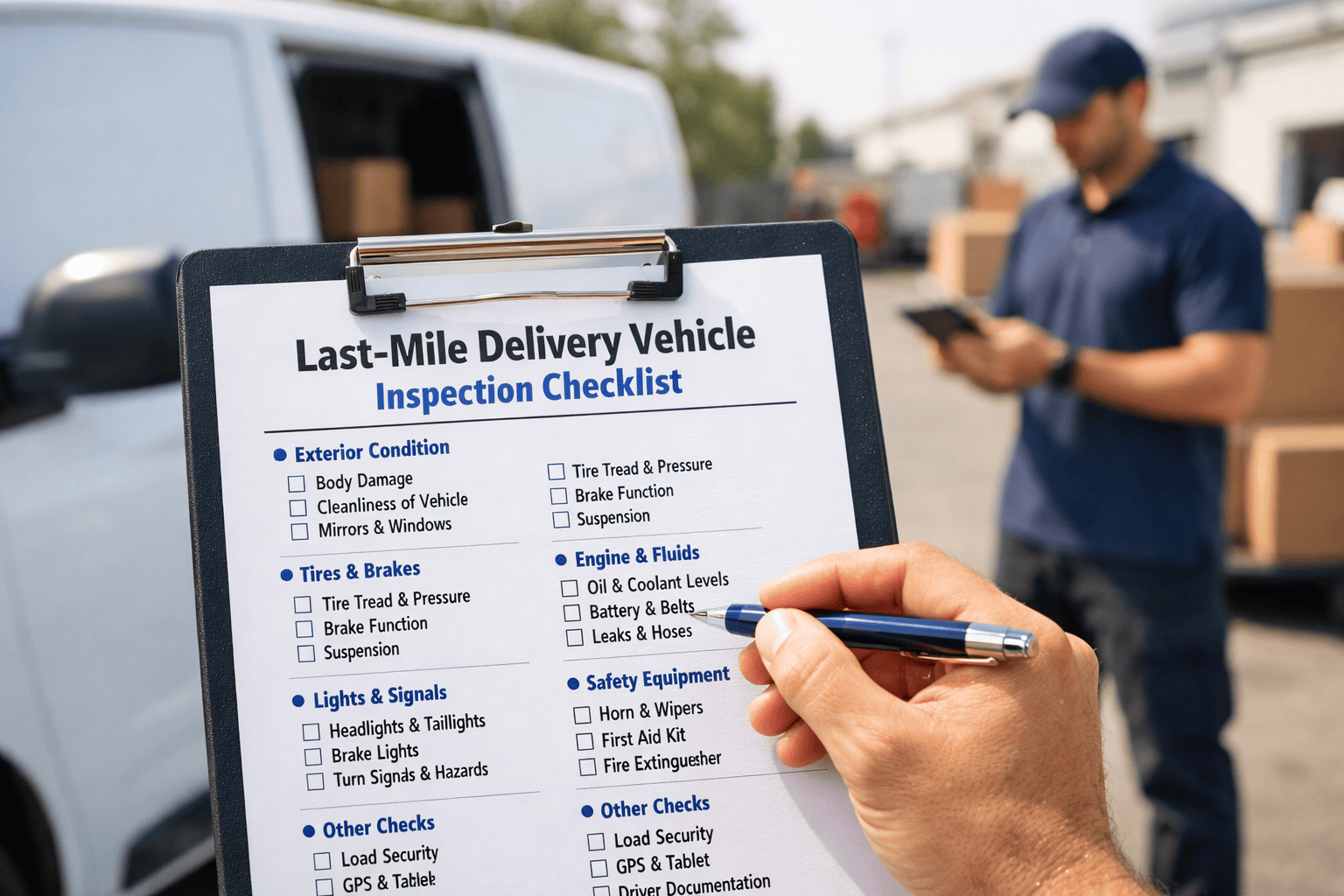
This checklist is organized into four inspection frequencies — daily pre-trip, weekly, monthly, and quarterly. Use all four to build a complete maintenance cadence across your fleet.
Engine & Fluids
Engine oil level
Coolant / antifreeze level
Windshield washer fluid
Brake fluid level
Power steering fluid
No visible leaks under vehicle
Tires & Wheels
Tire pressure (all 4 + spare)
Tire tread depth — no visible wear
No cuts, bulges, or sidewall damage
Lug nuts tight on all wheels
Lights & Signals
Headlights (high & low beam)
Brake lights
Turn signals (front & rear)
Reverse lights
Hazard / emergency flashers
Cargo area lights functional
Brakes & Steering
Brake pedal firmness — no soft feel
Parking brake holds on incline
Steering wheel — no excessive play
No pulling or drifting when braking
Cab & Safety
Seatbelts functional for all seats
Horn works
Mirrors clean & properly adjusted
Windshield — no cracks or obstructions
Wipers operational
Dashboard warning lights — none active
Cargo & Exterior
Cargo doors open, close, latch properly
No loose or unsecured cargo
No visible body damage since last trip
Fire extinguisher present & charged
Under the Hood
Battery terminals — clean, no corrosion
Belts — no fraying or cracking
Hoses — no leaks or soft spots
Air filter — check for clogging
Chassis & Suspension
Shocks and struts — no bounce or noise
Exhaust — no unusual smoke or sound
Frame — no visible cracks or rust
Wheel alignment — check for unusual tire wear patterns
Documentation
Registration current and in vehicle
Insurance card current
DVIR logs from past week — filed
Odometer reading logged
Brake System
Brake pad thickness measurement
Rotor condition — no scoring or warping
Brake lines — inspect for leaks
ABS warning light function test
Drivetrain
Transmission fluid level & condition
Differential fluid check
CV axle boots — no cracks or grease leaks
Driveshaft — no excessive play or vibration
Electrical & HVAC
Battery load test
Alternator output check
Cabin heating & A/C function
Defroster — front and rear
Oil & Filters
Oil and filter change (or per mileage)
Fuel filter replacement
Cabin air filter replacement
Engine air filter replacement
Tires & Alignment
Tire rotation
Full wheel alignment check
Wheel balancing
Spare tire inspection & inflation
Safety Systems
Full OBD-II diagnostic scan
Emergency kit contents verified
Fire extinguisher inspection tag current
DOT compliance review completed
Stop managing this on paper or spreadsheets
Digitize your fleet PM checklist. Assign inspections, track completion, and get automatic alerts when vehicles are overdue — all in one place.
DVIR Compliance: What Fleet Operators Must Know
The FMCSA requires a Driver Vehicle Inspection Report (DVIR) for every commercial vehicle before and after each trip. Non-compliance can result in out-of-service orders, fines, and liability exposure in the event of an accident.
Required Fields
Driver name and signature
Vehicle ID or unit number
Date, time, and odometer reading
Location of inspection
Parts and accessories inspected
List of any defects found
Certifying signature after repairs
Parts to Inspect (49 CFR 396.11)
Service brakes including trailer brake connections
Parking (hand) brake
Steering mechanism
Lighting devices and reflectors
Tires, wheels, and rims
Horn
Windshield wipers
Rear-vision mirrors
Coupling devices
Emergency equipment
Non-Compliance Risk
Up to $16,000 per violation for serious infractions
Vehicle placed out-of-service immediately
Driver disqualification in repeat cases
Increased insurance premiums post-incident
Civil liability exposure in accident claims
DOT audit risk raised for entire fleet
PM Schedule by Mileage: At-a-Glance Reference
| Service Task |
Every 3K–5K mi |
Every 15K–25K mi |
Every 30K–50K mi |
Every 60K–100K mi |
| Oil & filter change |
Yes |
|
|
|
| Tire rotation |
Yes |
|
|
|
| Air filter replacement |
|
Yes |
|
|
| Brake inspection (full) |
|
Yes |
|
|
| Fuel filter |
|
|
Yes |
|
| Transmission fluid |
|
|
Yes |
|
| Coolant flush |
|
|
Yes |
|
| Spark plugs |
|
|
|
Yes |
| Timing belt / chain |
|
|
|
Yes |
| Brake fluid flush |
|
|
|
Yes |
Pro Insight
High-mileage delivery vehicles (120+ miles/day) should compress their PM intervals by 20–30%. City driving with frequent stops accelerates brake and engine wear faster than highway mileage.
Fleet Manager Tip
Group vehicles by route type — city vs. highway — and set separate PM schedules for each group. One-size schedules lead to over-maintaining low-mileage vehicles and under-maintaining high-use ones.
What a Digital Fleet PM Program Looks Like
Paper checklists and spreadsheets fail at scale. When your fleet grows past 5 vehicles, manual tracking becomes a liability. Here is what digitizing your PM program with a fleet CMMS actually changes.
Without Digital PM System
Drivers skip inspections — no accountability
Paper DVIRs filed late or lost entirely
No alert when a vehicle is overdue for service
Fleet manager chases individual drivers for updates
DOT audit prep takes days of manual search
No data to predict which vehicle fails next
VS
With OxMaint Fleet CMMS
Mobile inspection forms — completed at the vehicle
Digital DVIR auto-logged with timestamp & driver ID
Automatic PM alerts by mileage or date
Fleet dashboard shows every vehicle's status in real time
Full maintenance history exportable in one click
Failure patterns visible across the entire fleet
Your Fleet PM Checklist, Digitized and Ready
OxMaint lets your drivers complete inspections from their phone, automatically schedules preventive maintenance by mileage or calendar, and gives fleet managers a live view of every vehicle's status. No more paper logs, missed services, or compliance surprises.
Digital DVIR inspections on mobile
Automated PM scheduling by mileage or date
Real-time fleet status dashboard
Full audit-ready maintenance history
Frequently Asked Questions
What is a DVIR and is it legally required?
A Driver Vehicle Inspection Report (DVIR) is a federally mandated pre- and post-trip inspection form required under 49 CFR 396.11 for commercial motor vehicles. It must document the condition of key vehicle systems, list any defects, and be signed by the driver. Failure to complete or retain DVIRs is a compliance violation subject to significant fines and potential out-of-service orders.
How often should delivery trucks be serviced?
At minimum: daily pre-trip inspections, weekly supervisor reviews, monthly brake and drivetrain checks, and quarterly full-service appointments. Service intervals should also be tied to mileage — most delivery trucks require oil changes every 3,000–5,000 miles and full brake inspections every 15,000–25,000 miles depending on load and route type.
What is included in a delivery truck inspection template?
A complete delivery truck inspection template covers: engine fluids, tire pressure and tread, all lighting systems, brake function, steering response, cargo door and latch condition, safety equipment presence, cab interior controls, and exterior damage check. The DVIR format specifically required by FMCSA covers 10 defined parts and accessories for commercial vehicles.
Can I use a digital checklist instead of paper DVIR forms?
Yes. FMCSA accepts electronic DVIRs provided they capture all required data fields and include a certified driver signature. Digital fleet maintenance platforms like OxMaint allow drivers to complete inspections on mobile, automatically timestamp entries, and store records in a searchable, audit-ready format — far more reliable than paper logs.
How does preventive maintenance reduce fleet costs?
Preventive maintenance reduces fleet costs by catching wear before it becomes failure. A planned brake pad replacement costs $150–$300. Waiting until pads fail damages rotors, calipers, and can cause accidents — bringing costs to $1,500+ per axle. Consistent PM programs typically deliver 25–40% lower maintenance costs and significantly reduce emergency towing and expedited parts expenses.