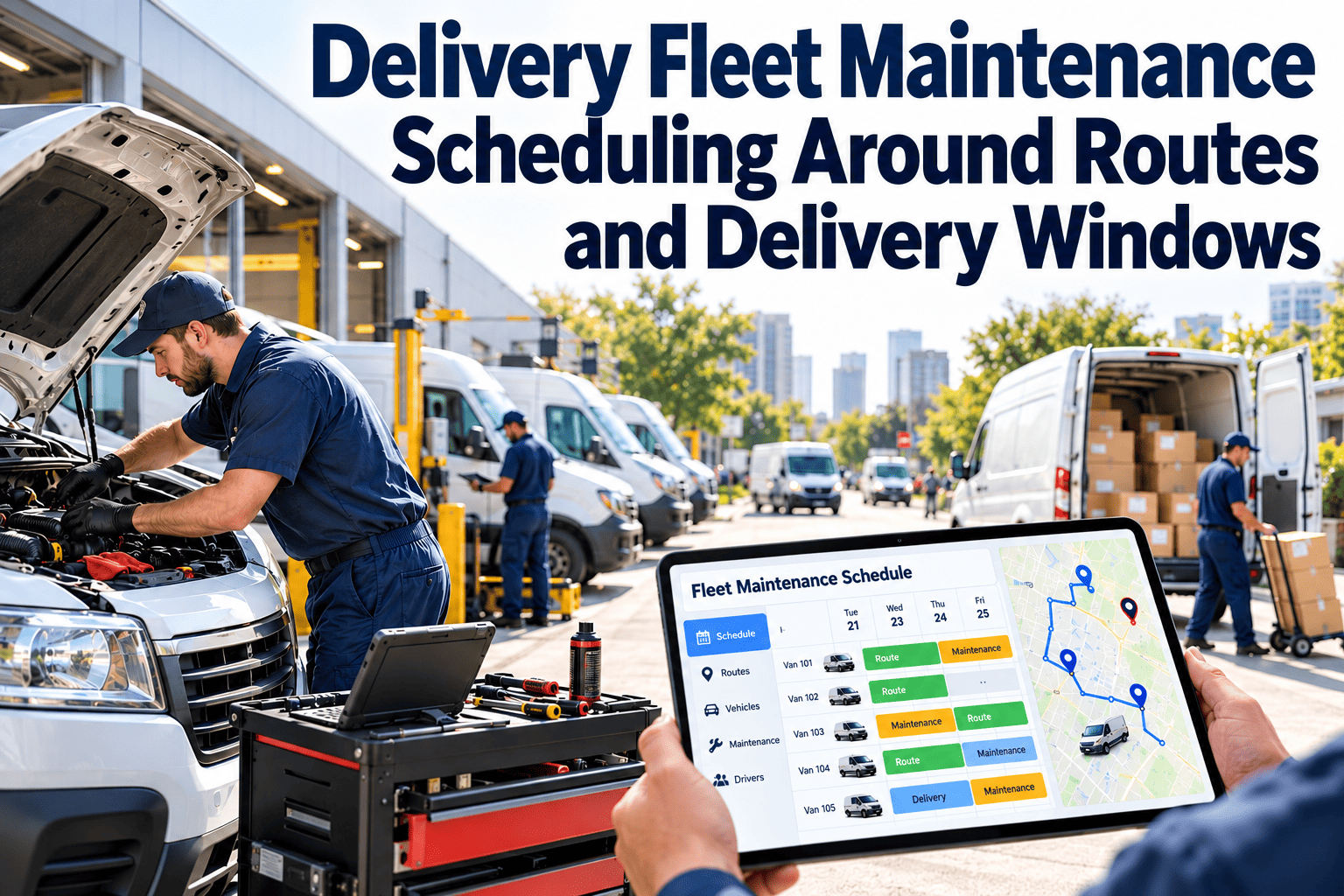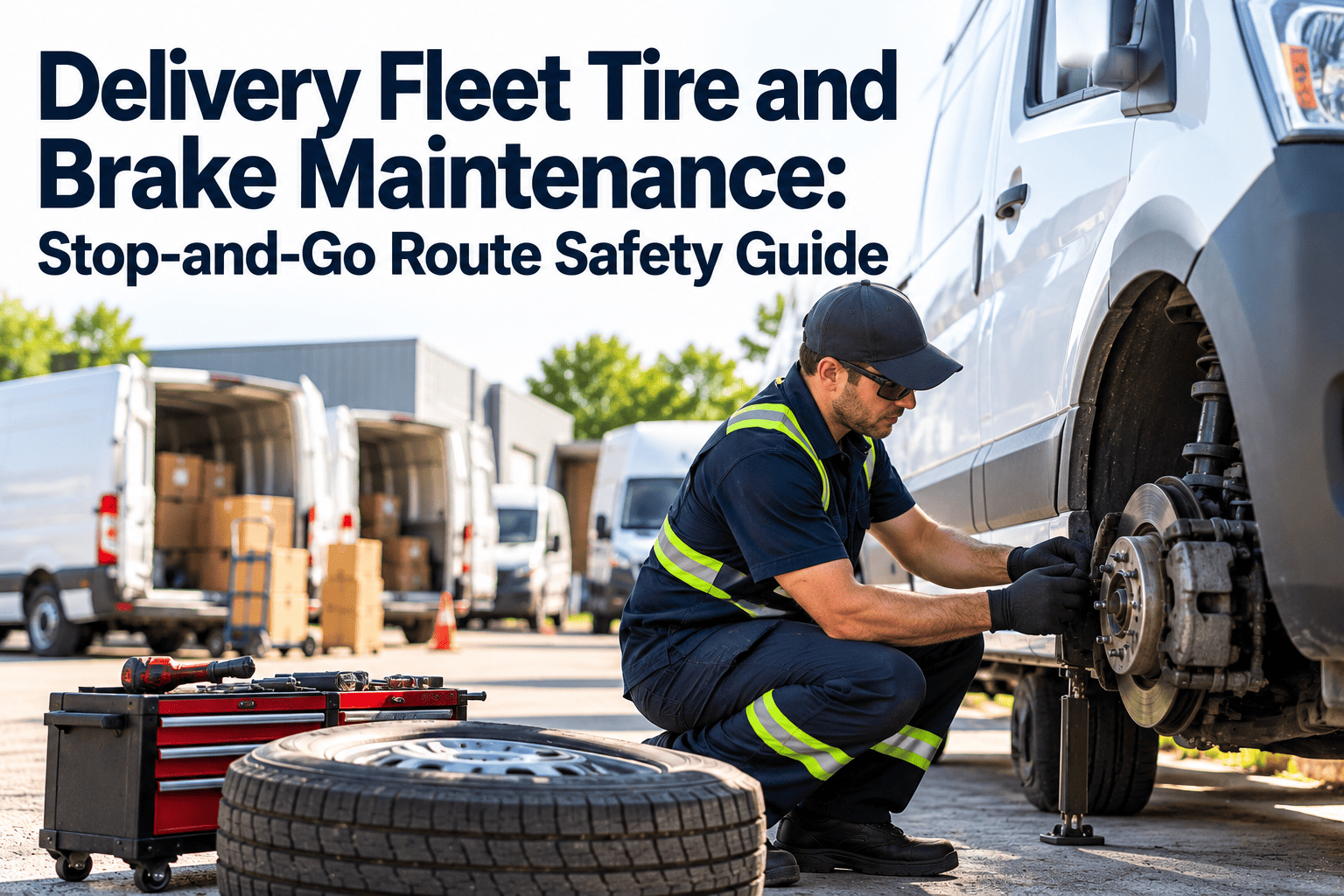
Tires and brakes carry every delivery van through every stop, and they are the two systems that give out first on stop-and-go routes. They are also where preventive maintenance pays back fastest, because wear is measurable, predictable and cheap to track. A worn pad or an underinflated tire found in the yard costs minutes. The same problem found at the roadside costs a tow, a missed route and a safety risk. Delivery fleet tire and brake maintenance works best as a measured program, and teams can track tire and brake wear in Oxmaint to turn inspection readings into planned replacements.
Delivery Fleet Tire and Brake Maintenance: Stop-and-Go Route Safety Guide
Measure wear, forecast replacements and keep the two most safety-critical systems on your vans ahead of failure instead of behind it.
Two Systems, One Shared Risk
Tires and brakes work together to stop the van, and a problem in one often hides a problem in the other. Treat them as a pair when you plan inspections.
- Tight turns scrub tread, especially on front tires
- Curb contact damages sidewalls and bends wheels
- Heavy payload raises heat and flex in every tire
- Frequent parking in debris-filled areas raises puncture risk
- Hundreds of applications per shift wear pads quickly
- Repeated heating and cooling stresses rotors
- Heavy loads increase braking energy at every stop
- Short trips can leave moisture and corrosion on components
Why the pairing matters
An underinflated tire lengthens stopping distance and wears unevenly, while a dragging brake overheats a wheel and damages the tire. Inspecting one without the other misses half the story.
Tire Maintenance: The Weekly and Monthly Rhythm
Tire programs succeed on small, frequent actions. Pressure is the most important, and it is the one most often skipped.
| Task | Suggested Frequency | Who Does It | Why It Matters |
|---|---|---|---|
| Visual tire check for damage and foreign objects | Every pre-trip | Driver | Catches punctures, bulges and cuts early |
| Cold pressure check against placard | Weekly, or per tire monitoring alerts | Technician or yard staff | Prevents wear, heat and fuel waste |
| Tread depth measurement | At every PM | Technician | Feeds replacement forecasting |
| Rotation | On a fixed distance cycle set for the vehicle | Technician | Evens wear between positions |
| Alignment check | After impacts, suspension repairs and abnormal wear | Technician | Stops rapid edge wear |
| Wheel torque and rim inspection | After any wheel removal and at PM | Technician | Prevents loose wheels and cracked rims |
Set intervals from the vehicle maker's guidance and the tire manufacturer's recommendations, then tune them using your own wear readings per route group.
Read the Wear Pattern, Fix the Cause
A worn tire is a diagnostic record. The pattern of wear points to the problem, and replacing the tire without fixing the cause just repeats the cost.
Stop Replacing Tires Without Knowing Why They Wore
Oxmaint records tread depth, pressure and wear findings against each vehicle, so patterns show up and causes get fixed.
Setting Tread Depth Thresholds
Legal minimum tread depth is a floor, not a target. Many fleets set earlier internal thresholds so replacements happen before grip and safety suffer.
The exact depths belong in your own policy. Choose them with your tire supplier and insurer, apply them consistently and record every reading.
Brake Maintenance: Measure, Do Not Guess
Brake life on delivery routes varies widely between vans and between drivers. Measured readings turn that variation into a forecast.
Components beyond the pads
A complete brake inspection includes rotors, calipers, hoses, fluid condition and the parking brake. Brake fluid absorbs moisture over time, so replace it on the manufacturer's schedule even when pads still look fine.
Brake Warning Signs Drivers Should Report
Drivers feel brake problems before any inspection measures them. Train them to report these symptoms the same day.
A soft pedal, pulling under braking or an active brake warning should hold the van from dispatch until a technician clears it.
Hybrid and Electric Vans: Different Wear, Same Inspections
Regenerative braking reduces friction brake use, which can extend pad life. It does not remove the need to inspect.
- Less frequent pad replacement on many routes
- Lower brake dust and heat load
- Rotors and calipers can corrode when rarely used
- Tires often wear faster because of vehicle weight and torque
Work Order Triggers That Prevent Surprises
Automatic triggers keep tire and brake work from relying on memory. Each trigger below can generate a work order without anyone remembering to ask.
| Trigger | Resulting Work Order | Priority |
|---|---|---|
| Tread depth below the planning threshold | Tire replacement planned with parts reserved | Scheduled |
| Tread depth below the replace threshold | Immediate tire replacement and van hold | Urgent |
| Projected pad replacement within the next cycle | Brake service at the next PM visit | Scheduled |
| Driver reports pulling or soft pedal | Brake inspection and van hold | Urgent |
| Impact or curb strike reported | Tire, wheel and alignment inspection | High |
| Distance since last rotation reached | Tire rotation with pressure and torque check | Scheduled |
| Brake fluid interval reached | Fluid test or replacement | Scheduled |
Cost Control Without Cutting Corners
Tires and brakes are repeating costs, so small improvements compound across a fleet. The savings come from discipline, not from cheaper parts.
- Maintain correct pressure, since underinflation wears tires faster and raises fuel or energy use.
- Fix alignment promptly so one bad axle does not consume a set of tires.
- Replace tires in matched sets or pairs per the manufacturer's guidance to avoid driveline strain.
- Track cost per mile for tires and brakes by route group to find outliers.
- Review driver patterns, because harsh braking and curb contact are coachable.
- Negotiate supplier pricing using forecast volumes from planned replacements.
Documented care protects the business
When a tire or brake related incident occurs, a complete record of inspections, readings and repairs shows that the fleet acted responsibly. Fragmented records leave that question unanswered.
Seasonal and Payload Effects on Tires and Brakes
The same van wears differently in January, July and the weeks before a holiday. Adjust inspection depth to match the season rather than running one flat routine.
Payload is the hidden variable
A van loaded close to its rated weight brakes harder and flexes its tires more at every stop. Record route load patterns so you can see why some vans consume parts faster than others with similar mileage.
Wheel Ends: The Overlooked Link Between Tires and Brakes
Wheel bearings, hubs, lug nuts and rims sit between the tire and the brake. Faults here can masquerade as tire or brake problems.
- Check lug nut torque after any wheel removal and again after a short running period, because wheels can settle.
- Listen for humming or rumbling that changes with speed, which often points to a failing wheel bearing.
- Inspect rims for cracks and bends after curb strikes, since a bent wheel causes vibration and uneven wear.
- Look for grease or fluid on the inside of a wheel, which can signal a failing seal contaminating the brake.
- Check for heat differences between wheels after a run, as a hot wheel may have a dragging brake.
- Replace worn hub components in pairs when the manufacturer recommends it, to keep the axle balanced.
When a tire wears abnormally and the alignment is correct, the wheel end is the next place to look before blaming the tire itself.
Specification Discipline: Buy and Fit the Right Parts
Parts quality and specification affect both cost and safety. A fleet that standardizes specifications spends less time diagnosing surprises.
- Use the load index and speed rating the manufacturer specifies
- Standardize on a small number of models per van type
- Record the tire brand, size and installation date per position
- Keep records of warranty and adjustment claims
- Use parts meeting the original equipment specification or better
- Replace pads and rotors as matched sets on each axle
- Record part numbers and supplier on every brake job
- Track early failures back to batches and suppliers
Why records matter here
When a pad set wears out unusually fast, the part number and supplier on the work order tell you whether it is a route issue or a parts issue. Without that detail the cause stays a guess.
Tire and Brake Lifecycle in the Maintenance Record
Treat every tire and every brake set as a tracked component with its own history, not as an anonymous consumable.
After a few cycles, this history tells you the real cost per mile of each tire and brake choice, which is the evidence needed for better purchasing decisions.
Measures That Show Progress
Track these indicators monthly and compare them across route groups.
Compare like with like
Compare vans of the same model, load profile and route type when judging results. A brake job interval on a dense urban route says little about a suburban route, so group the data before drawing conclusions.
Review the program twice a year
Revisit thresholds, intervals and supplier choices in a short review each spring and autumn. Adjust only what the data supports, and write the reason for each change on the record so the next review starts from evidence.
Frequently Asked Questions
How often should delivery van tire pressure be checked?
When should delivery van brake pads be replaced?
Why do front tires wear faster on delivery vans?
Do electric delivery vans need less brake maintenance?
Can Oxmaint trigger tire and brake work orders automatically?
Keep Your Vans Stopping Safely and Rolling Longer
Bring tire and brake inspections, forecasts and work orders into one system built for delivery fleet maintenance.