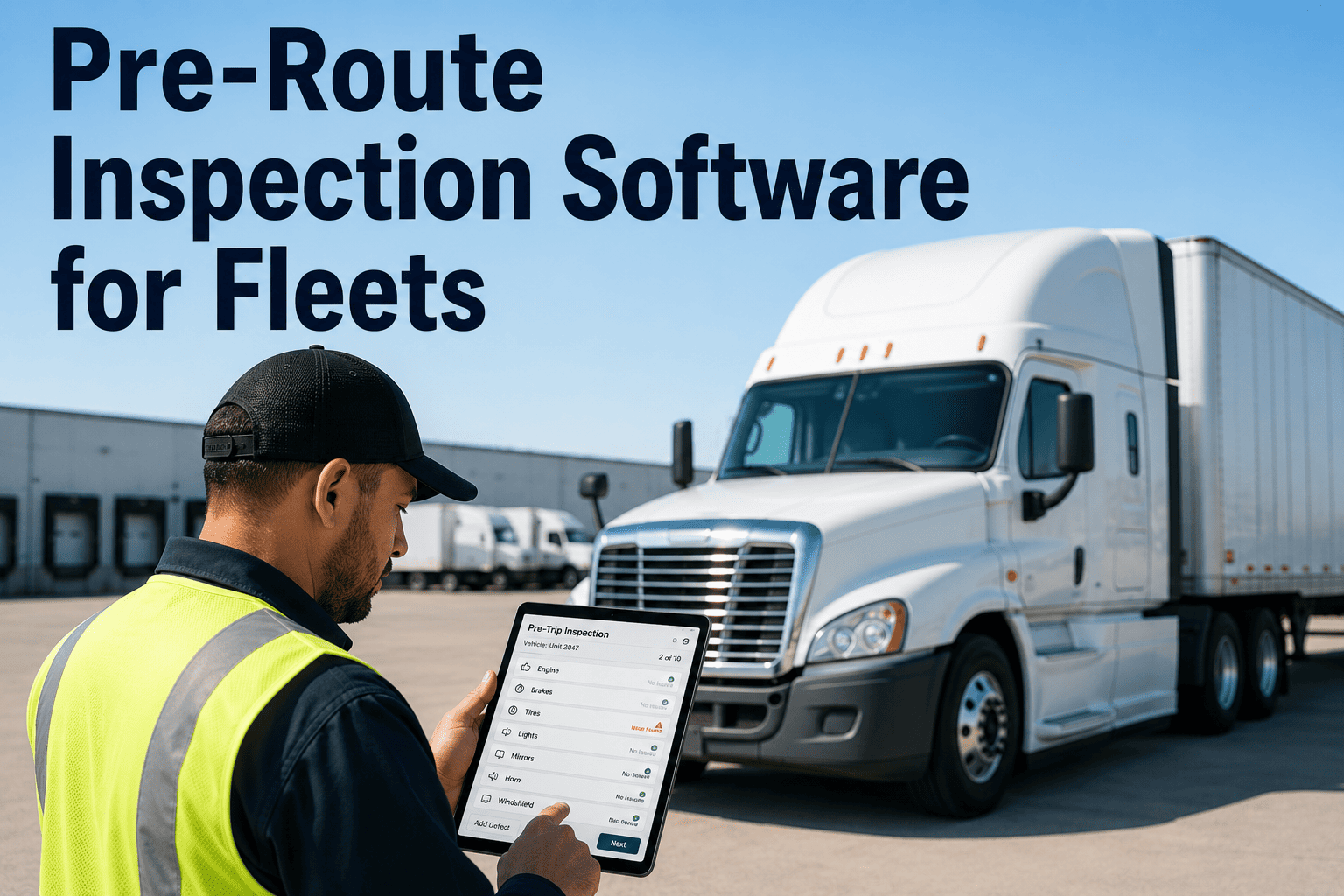
Tires are the second-largest maintenance expense in any delivery fleet — and most of that cost is completely avoidable. Under-inflation runs undetected for weeks on courier vans doing 300 stops a day. Rotation intervals get missed because no one has visibility across 40 vehicles. A tire that could have been retreaded for $80 gets scrapped for $280 because nobody flagged its tread depth in time. And when a loaded delivery van blows a tire on a highway at 7 AM, the towing, emergency service, and missed deliveries cost more than a full year of tire tracking software. OxMaint's tire maintenance software for delivery fleets tracks every tire from the moment it's fitted — recording wear patterns, inspection history, rotation schedules, and service costs per vehicle and per route. Fleets that manage tires with OxMaint reduce tire costs by up to 30% and extend average tire life by 25%. See it live at Oxmaint, or book a 30-minute demo with a fleet tire specialist.
Delivery Fleet Tire Maintenance Software
Track every tire on every van, bike, and truck in your fleet. Inspections, wear, rotations, replacements, and cost-per-mile — all in one dashboard. Stop replacing tires on guesswork.
Why Tire Management Breaks Down in Delivery Fleets
Delivery fleets are hard on tires in ways other operations aren't. Stop-and-go city routes, kerb loading, and high daily mileage create wear patterns that a calendar-based inspection schedule misses entirely.
Urban delivery routes create uneven front-axle wear from constant braking. Without position-specific tread tracking, worn tires stay on the same axle until they fail — instead of being rotated to extend life.
Skipped rotations shorten tire life by 30–40% and generate thousands in unnecessary replacement spend per vehicle per year. Most fleet managers discover they missed a rotation only when they order a replacement.
Without per-tire lifecycle records, fleet managers cannot compare brands, identify which routes destroy tires fastest, or catch vehicles that are chronically over-consuming rubber — until the annual budget review shows a problem.
A tire in the retreadable range costs $80 to refurbish. A tire that crosses into scrap costs $280 to replace. Without tread depth tracking, most fleets lose that $200 difference on every tire that slips past the retread window.
Every Tire Has a Story — OxMaint Tracks the Whole Thing
From the moment a tire is fitted to the moment it leaves the fleet, OxMaint records a complete lifecycle trail — so you always know the real cost and condition of every tire in your operation.
Tire received, assigned a unique ID, and logged in depot inventory with purchase price, manufacturer, and date. OxMaint tracks spare tire stock per depot and fires low-inventory alerts before you run short during peak season.
Tire fitted to a specific vehicle and axle position. Opening odometer reading recorded. From this point, OxMaint tracks mileage per tire — not just per vehicle — giving accurate per-tire wear data regardless of driver changes.
Mobile inspection app records tread depth at each scheduled check. Tread readings below threshold trigger automatic maintenance work orders. Mechanics sign off digitally — no paper forms, no clipboard chasing.
OxMaint calculates rotation intervals from actual mileage data, not calendar assumptions. Rotation alerts fire before the interval is missed — preventing the uneven wear patterns that cut tire life by 30–40%.
At removal, OxMaint records tread depth, mileage, and removal reason. If the tire is in retreadable condition, it routes to the retread queue — saving $200 per tire compared to premature scrap. All data available for warranty claims.
Full lifecycle report available after every tire is retired: cost-per-mile, total mileage achieved, brand performance comparison, and route-based wear analysis. Use this data to negotiate supplier contracts and choose better tire brands.
OxMaint tracks every tire across your entire delivery fleet — wear, rotations, cost-per-mile, and retread eligibility — so every replacement decision is based on data, not a hunch. Book a 30-minute walkthrough with a fleet tire specialist.
Tire Maintenance KPIs: Industry Average vs OxMaint Fleets
Data from courier and delivery fleet deployments across van, HGV, and cargo bike operations. Every figure is achievable without capital investment in new vehicles.
| Tire Management KPI | Without Tracking | With OxMaint | Difference |
|---|---|---|---|
| Average Tire Lifespan | Baseline | +25% longer | Extended lifecycle |
| Tire Replacement Cost/Year | Baseline | 30% lower | Significant savings |
| Missed Rotation Events/Year | 8–12 avg. | Under 1 avg. | 90% reduction |
| Roadside Tire Failures/Year | 3–5 avg. per 20 vans | Under 1 avg. | 75% fewer failures |
| Tires Scrapped vs Retreaded | 80% scrapped | 40% retreaded | $200 saved per tire |
| Inspection Completion Rate | 55% | 97% | +42 points |
OxMaint Tire Tracking — What Every Fleet Manager Gets
Purpose-built features for delivery fleet tire operations — not adapted from a general CMMS tool that treats a tire like any other component.
Drivers and mechanics complete tire inspections on a mobile device — recording tread depth, pressure, damage, and notes per axle position. Results sync instantly to the fleet dashboard without any data entry by office staff.
Rotation intervals are set by mileage, and OxMaint monitors each vehicle's odometer against those intervals. When a rotation is due, a maintenance work order is created automatically — no manual schedule-checking required.
OxMaint calculates cost-per-mile for every tire based on purchase price and total mileage achieved. This lets fleet managers compare brands side-by-side with real data — not manufacturer claims — at each replenishment cycle.
Spare tire inventory is tracked per depot with low-stock alerts. Planners see how many spare tires are on the shelf at each location before scheduling rotation work — preventing jobs from being started without a spare available.
OxMaint links tire wear rates to specific routes — identifying which delivery zones accelerate tire degradation. Route planners can use this data to rotate high-wear routes across vehicles, distributing wear load more evenly.
Every tire carries a full service history including all inspection readings, rotation dates, repair events, and removal reason. This history supports warranty claims and is available for compliance audits without any manual document retrieval.
Frequently Asked Questions
A Blown Tire at 7 AM Costs More Than a Year of Tracking Software
OxMaint gives delivery fleet managers complete tire visibility — inspections, rotations, wear trends, cost-per-mile, and retread eligibility — in a single mobile-first dashboard. Start free today and see every tire in your fleet within 24 hours.