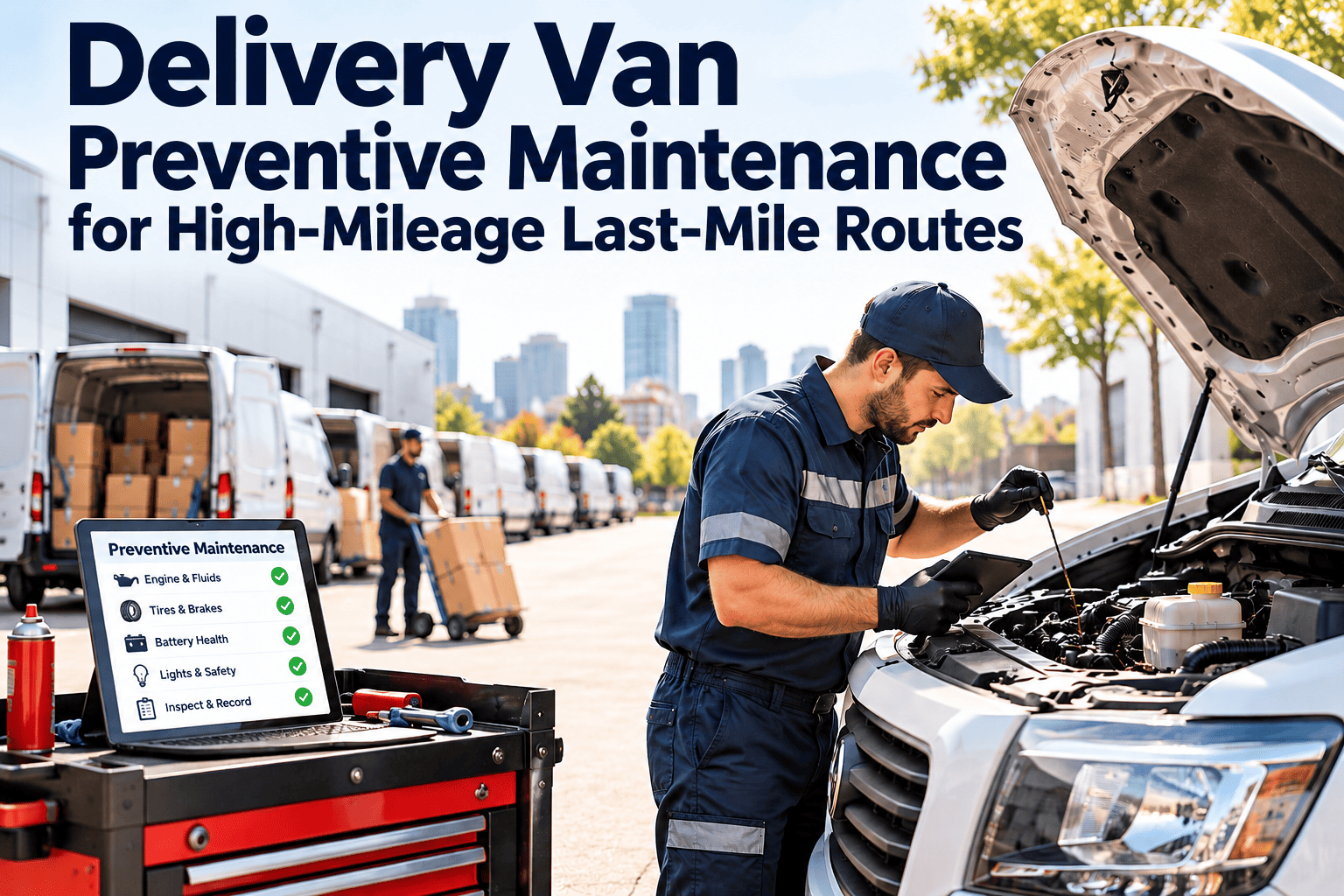
A delivery van that makes dozens of stops an hour does not age like a passenger vehicle. Short hops, constant door cycles, heavy payload and long idle periods wear brakes, tires, transmissions and emissions systems far faster than the odometer suggests. Fleets that service on distance alone often learn this only when a van dies mid-route. Delivery van preventive maintenance built around duty cycle, not just miles, keeps high-mileage vans earning for years longer. If you want to see how that looks in practice, you can start building a van PM schedule in Oxmaint around your own routes.
Delivery Van Preventive Maintenance for High-Mileage Last-Mile Routes
Stop-and-go routes consume vans faster than any other duty. Plan oil, brake, tire, transmission and emissions service around real wear, so vans reach 200,000 miles on schedule instead of on a tow truck.
Mileage Is Only Half the Story
Two vans can show the same odometer reading and sit at very different points on the wear curve. One spent its life on highway runs between depots. The other made forty door-to-door stops an hour in dense streets.
- Few brake applications per mile
- Engine runs at steady load
- Door and ramp cycles are rare
- Tires wear evenly
- Transmission shifts are smooth and infrequent
- Hundreds of brake applications per shift
- Long idle periods with the engine running
- Sliding doors and rear doors cycle all day
- Tires scrub through tight turns and curb contact
- Constant shifting under full payload
What this means for your schedule
A single mileage interval over-services the highway van and under-services the urban one. High mileage van maintenance works best when each van carries its own interval, tuned to the duty it actually performs.
The Mileage Ladder: What Changes at Each Stage
Treat a van's life as four stages. Each stage shifts which systems deserve the most attention and how deep inspections should go.
| Mileage Band | Main Risk Focus | Inspection Depth | Planning Action |
|---|---|---|---|
| 0 - 50,000 | Early defects, warranty items, break-in wear | Standard multi-point at each PM | Record baseline brake, tire and fluid readings |
| 50,000 - 100,000 | Brake pads and rotors, tire sets, suspension bushings | Measured wear checks, not visual only | Forecast brake and tire spend per van |
| 100,000 - 150,000 | Transmission service, cooling system, wheel bearings, emissions components | Fluid analysis, leak checks, driveline inspection | Pre-order long-lead parts for likely failures |
| 150,000+ | Cumulative fatigue, repeat repairs, rising cost per mile | Full condition assessment | Decide keep, rebuild or retire from cost data |
These bands are a planning frame, not a replacement for the manufacturer's severe-service schedule. Start from OEM guidance and adjust using your own work order history.
Component Cycles Every Delivery Van PM Program Needs
A delivery van PM schedule is a set of separate cycles, each with its own trigger. Running them as one bundled service hides which systems are drifting.
Engine Oil and Filters
Brakes
Tires and Alignment
Transmission and Driveline
DEF and Emissions Systems
Cooling, Belts and Hoses
Suspension, Steering and Wheel Bearings
Electrical, Battery and Body
Give Every Van Its Own Maintenance Clock
Oxmaint lets you set mileage, engine-hour and calendar triggers per vehicle, so service follows real duty instead of a fleet-wide guess.
Severe-Service Conditions and How to Respond
Most high-mileage delivery routes meet the manufacturer's definition of severe service. Name the conditions your routes create, then attach a response to each.
| Route Condition | What It Accelerates | PM Response |
|---|---|---|
| Frequent stops in dense traffic | Brake pad and rotor wear, transmission heat | Measured brake checks, severe-service fluid intervals |
| Extended idling between drops | Engine hours, oil dilution, emissions clogging | Hours-based oil service, regeneration monitoring |
| Heavy peak-season payload | Springs, shocks, tires, wheel bearings | Pre-peak suspension and tire inspection campaign |
| Curb contact and tight docks | Alignment, tire sidewalls, steering parts | Alignment check after any reported strike |
| Hot summers and cold winters | Cooling system, batteries, belts | Seasonal readiness checks before each season |
| Multiple drivers per van | Unreported defects and abuse | Digital defect reporting tied to work orders |
Turn conditions into data
Tag each van with the route group and conditions it faces, then compare wear readings across groups. Within a few months the data shows which conditions truly drive your costs, and which intervals can safely stay where they are.
Peak Season Readiness for High-Mileage Vans
Volume spikes expose every deferred repair. A high-mileage van that was marginal in October becomes a roadside event in December when it carries maximum load for ten hours a day.
Why a campaign beats a rush
Grouping the inspection into one planned campaign lets the shop work through the fleet in an orderly way. Waiting for failures forces the same work into the busiest days of the year.
Drivers Are Your Earliest Warning System
The person behind the wheel notices a new vibration, a longer stopping distance or a sticking door long before any scheduled inspection does. The question is whether that information reaches the shop.
- Defects mentioned verbally at shift end
- Notes lost between drivers and shifts
- Minor issues are found only at the next PM
- Repeat complaints are never linked together
- Defects logged on the phone with a photo
- Reports convert straight into work orders
- Maintenance sees problems the same day
- History shows which vans keep repeating faults
Drivers report more when they see action. Close the loop by showing the driver what was found and fixed, and the reporting habit sustains itself.
Parts and Inventory Planning for Older Vans
As vans age, the parts they consume change. Plan inventory against the mileage ladder rather than reacting to the last breakdown.
- Oil, air and fuel filters
- Brake pads and wear sensors
- Wiper blades, bulbs and fuses
- Diesel exhaust fluid, where applicable
- Rotors and calipers
- Belts, hoses and thermostats
- Shocks, bushings and tie rods
- Wheel bearings and axle seals
- Transmission rebuild components
- Emissions sensors and filters
- Radiators and water pumps
- Door and sliding track assemblies
Link parts to the PM template
When each PM template lists the parts it normally consumes, the work order can flag shortages before the van arrives. A van waiting a week for a pad set is a van missing a week of routes.
Common Mistakes in High-Mileage Van Programs
Most failed programs share the same few habits. Avoiding them is often worth more than adding new tasks.
Copying one interval everywhere
Deferring PM during busy weeks
Recording work without measurements
Ignoring idle time
Keep, Rebuild or Retire Past 150,000 Miles
There is no universal retirement mileage. The right answer comes from cost history, reliability and the price of the next major repair.
- Cost per mile is stable or falling
- Few repeat repairs on the same system
- No major component near end of life
- One major system is failing, the rest is sound
- Repair cost is well below replacement cost
- Remaining body and frame condition is good
- Repeat repairs are rising across several systems
- Roadside events are climbing
- Next major repair exceeds its remaining value
Lifetime work order history is what makes this decision defensible. Without it, replacement choices rest on memory and opinion.
Setting Up a Van PM Program in Oxmaint
A two-hundred-van fleet cannot run on spreadsheets and sticky notes. This is the sequence that keeps a large delivery fleet on schedule.
Keeping mileage data accurate
A PM trigger is only as good as the reading behind it. Capture odometer values at inspections and fueling, and correct drifting readings promptly so intervals stay trustworthy.
Measures That Show the Program Is Working
Pick a small set of indicators and review them on a fixed rhythm. Trends matter more than any single month.
Review these monthly with maintenance, dispatch and finance together. When cost per mile climbs in one age band or one route group, adjust the interval for that group first, then confirm the change in the next quarter's data. Small, evidence-based changes keep the schedule honest without disrupting routes.
Frequently Asked Questions
How often should high-mileage delivery vans get preventive maintenance?
Why use engine hours instead of miles for oil changes?
Which systems fail first on high-mileage delivery vans?
Can one PM template cover every van in the fleet?
How does Oxmaint help manage a large van fleet?
Get Your Vans to 200,000 Miles on Your Terms
Replace guesswork with duty-based PM schedules, measured wear data and complete service history for every van in your fleet.