Pre-trip and post-trip inspections are the cheapest reliability and safety tool a delivery fleet owns, and the one most often done badly. Drivers rush through a list they have memorized, tick every box, and drive away. Small defects then grow into route-ending failures and avoidable compliance findings. A delivery vehicle inspection program works when the checklist is short, the report reaches maintenance quickly, and every defect leaves a record. Fleets building that discipline can create digital inspection checklists in Oxmaint and connect each defect to a work order.
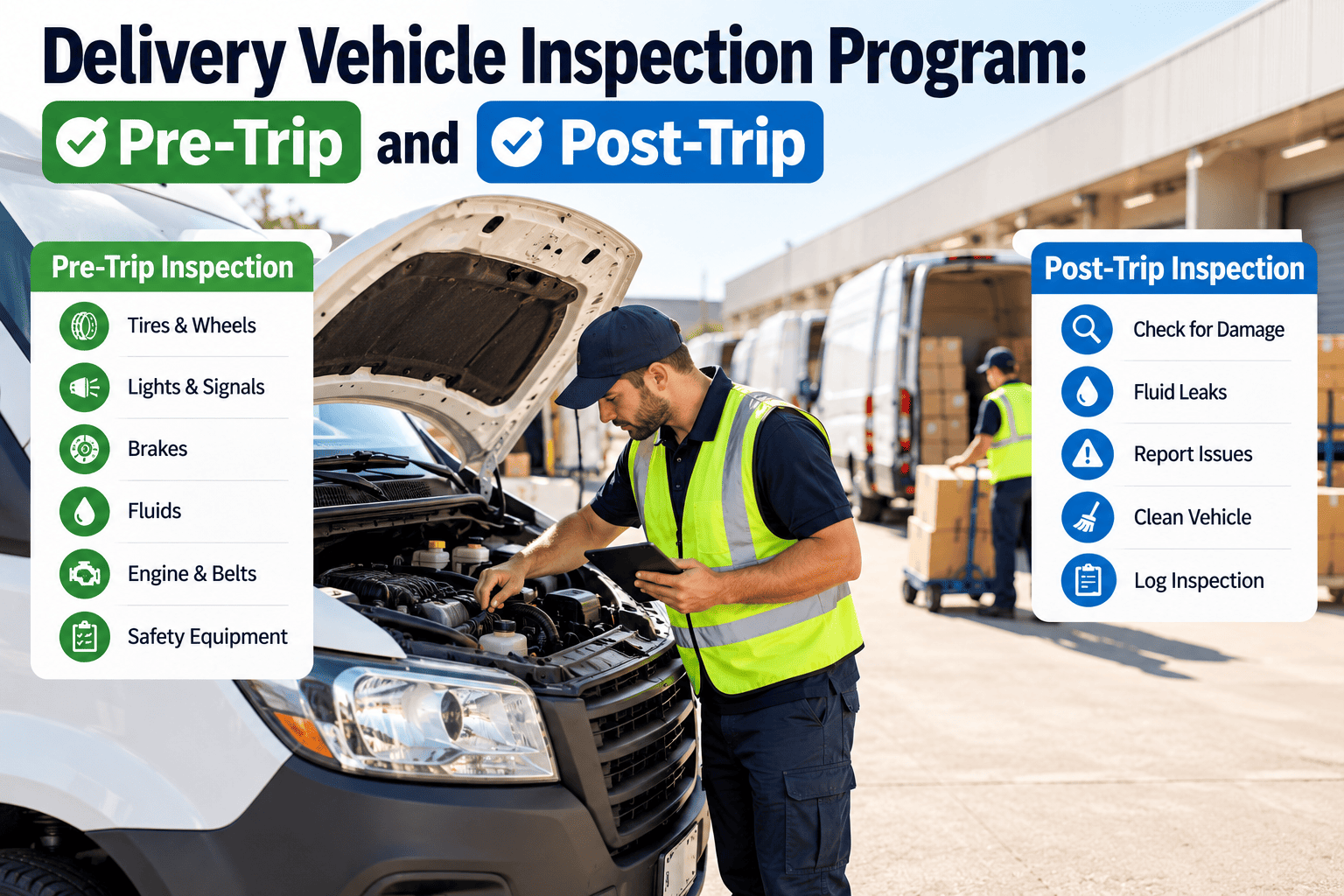
Delivery Vehicle Inspection Program: Pre-Trip and Post-Trip
Build an inspection routine that drivers finish, that maintenance acts on, and that stands up in an audit. Catch problems at the yard gate, not at the roadside.
Why Most Inspection Programs Fail Quietly
An inspection program can look healthy on paper while catching almost nothing. The failure is rarely the driver's attitude. It is usually the design of the process.
- Long checklists drivers learn to skim
- Paper forms collected days later
- Defects described in vague words
- No visible response to what drivers report
- Records hard to find during an audit
- Short checklists focused on real failure points
- Mobile reports submitted at the vehicle
- Photos and notes attached to each defect
- Defects become work orders automatically
- Searchable history by vehicle, driver and date
The cost of a skipped check
A worn tire or a leaking line found at the yard costs minutes. The same issue found on the road costs a tow, a late route and an unhappy customer. Inspections only pay when they run before every shift.
Pre-Trip Walkaround: Inspect by Zone
A zone-based walkaround gives drivers a natural path around the van. It keeps the check fast and makes it harder to skip a side.
| Zone | What the Driver Checks | Typical Defects Found |
|---|---|---|
| Front | Headlights, turn signals, windshield, wipers, grille area, fluid leaks under the engine | Burned-out bulbs, cracked glass, worn wiper blades, drips on the ground |
| Driver side | Tires and wheels, mirror, door operation, steps, visible suspension | Low pressure, sidewall bulges, loose lug nuts, damaged mirror |
| Rear and cargo area | Tail lights, rear doors or lift gate, load restraints, cargo floor, license plate | Broken lights, sticking latches, damaged tie-down points |
| Passenger side | Tires and wheels, sliding door, mirror, body damage | Uneven tread wear, door track binding, new body damage |
| Cab | Brake pedal feel, parking brake, steering play, horn, gauges, warning lights, seat belt, cameras | Soft pedal, active warning lights, inoperative horn, frayed belt |
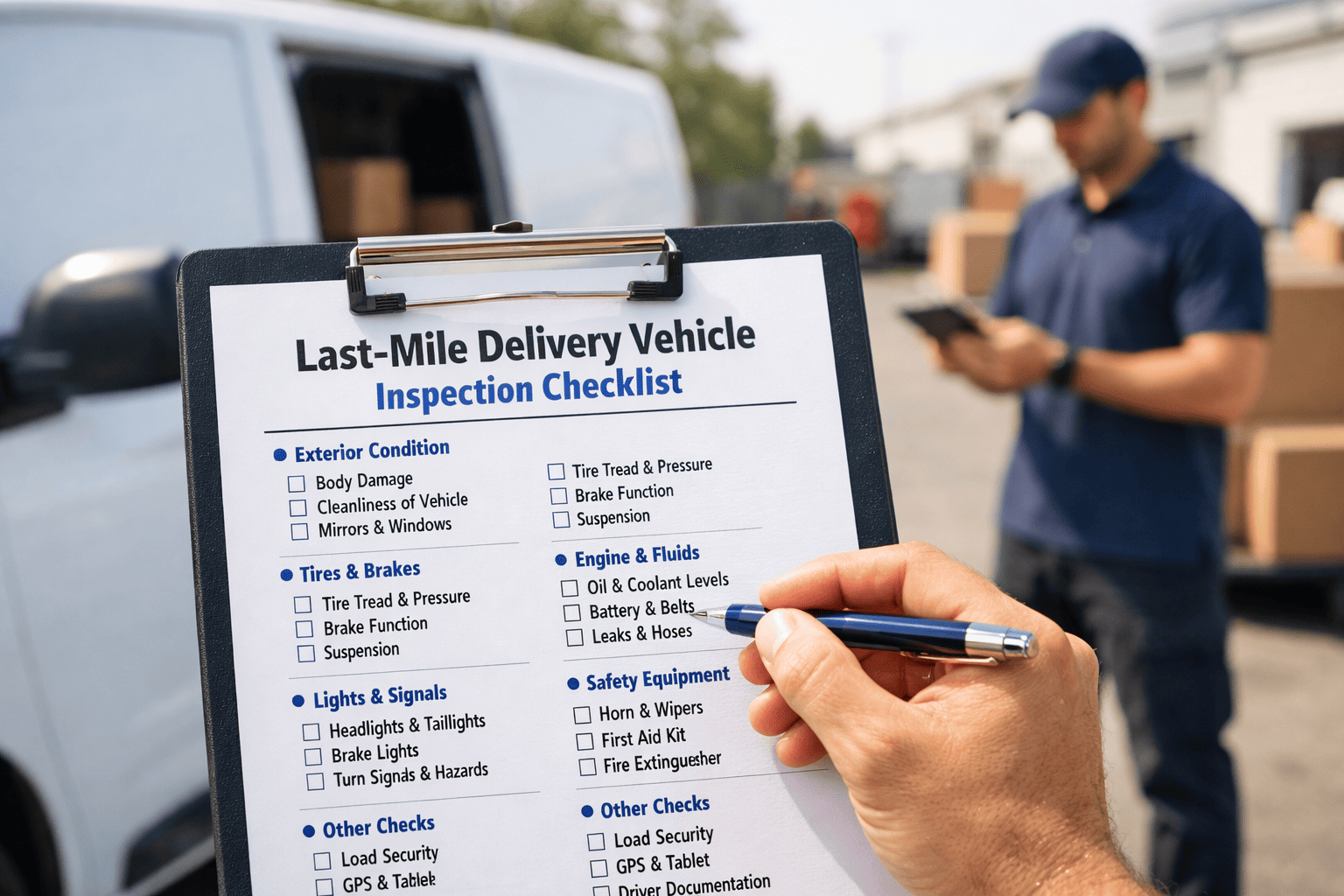
Keep the full list to what a driver can check in a few minutes without tools. Anything deeper belongs in the scheduled PM inspection performed by a technician.
Post-Trip Inspection: Capture What the Route Revealed
The post-trip report records what changed during the shift. It is the best chance to catch damage and developing faults while the driver remembers them.
New damage
Changes in feel
Warning lights and messages
Fluids and leaks
Cargo area and equipment
Mileage and fuel or charge
Triage Every Defect by Severity
Not every defect deserves the same response. A clear severity scale lets dispatch and maintenance act without debate.
Write the severity rules down and train drivers and dispatchers on them. Consistent triage prevents both unsafe dispatching and unnecessary van holds.
Make Every Inspection Count From Driver Report to Repair
Oxmaint turns inspection results into tracked work orders, so no reported defect disappears between the yard and the shop.
Compliance: What DVIR Rules Expect
Where federal driver vehicle inspection report rules apply, the paperwork is as important as the inspection itself. Understand the structure before designing your forms.
Components the regulation names
The federal list covers service brakes, the parking brake, steering mechanism, lighting devices and reflectors, tires, horn, windshield wipers, rear vision mirrors, coupling devices, wheels and rims, and emergency equipment. Many fleets add suspension, exhaust, fuel system and frame.
The electronic DVIR rule
- FMCSA published a final rule on February 19, 2026, effective March 23, 2026, adding explicit electronic-format language to 49 CFR 396.11 and 396.13.
- Electronic records and signatures were already allowed under 49 CFR 390.32, but the older wording led to inconsistent interpretation.
- The agency kept its position that a no-defect report is not required.
- Records must still be retained for the period the regulation specifies, which is three months for the report and related certifications.
DVIR rules apply to commercial motor vehicles as the regulation defines them, and many light delivery vans fall below those thresholds. Confirm which of your vehicles are covered with your compliance advisor, and consider applying the same discipline to all vans.
Paper vs Digital Inspections
The inspection itself is the same. What changes is how reliably the result is captured, routed and retrieved.
| Requirement | Paper Forms | Digital Inspections |
|---|---|---|
| Time to reach maintenance | Hours or days, when forms are collected | Immediate, as soon as the driver submits |
| Defect detail | Short notes, often illegible | Typed notes with photos |
| Signature chain | Depends on form handling | Time-stamped driver, technician and next-driver confirmations |
| Link to repair | Manual re-entry into another system | Defect creates a work order directly |
| Finding records for an audit | Search through folders | Filter by vehicle, driver, date or defect |
| Spotting repeat problems | Rarely visible | Trends appear in reports |
Defect-to-Work-Order Automation
The value of an inspection is realized only when a defect becomes a repair. Automate that handoff so nothing relies on someone remembering to pass a note.
Getting Drivers to Complete Inspections Properly
Adoption decides whether the program works. Drivers comply when the process is quick, respected and clearly useful.
- Keep the mobile checklist short and in the order of the walkaround, so it takes a few minutes.
- Allow time in the shift schedule for the check, so it does not compete with route start times.
- Require a photo for defects, but never for items marked as passing.
- Close the loop by telling drivers what was fixed because of their report.
- Review completion rates privately and coach rather than punish, unless a pattern shows deliberate falsification.
- Rotate a short monthly focus item, such as tire sidewalls, to keep attention fresh.
Speed matters. If the inspection takes ten minutes, drivers will find ways around it. If it takes three and visibly prevents trouble, they will protect it themselves.
An Audit-Ready Inspection Record
Whether the audit comes from a regulator, an insurer or an internal review, the same questions are asked. Be ready to answer them in minutes.
Test your records before someone else does
Once a quarter, pick a vehicle at random and try to produce its full inspection history within a few minutes. Gaps found in a self-check are easy to fix, while gaps found during an audit are findings.
Not Every Inspection Is the Same: Match the Type to the Moment
Daily driver checks are the foundation, but a complete program layers several inspection types. Each has a different owner, depth and trigger.
| Inspection Type | Who Performs It | When It Happens | Depth |
|---|---|---|---|
| Pre-trip walkaround | Driver | Before every shift | Visual and functional, no tools |
| Post-trip report | Driver | End of every shift | Changes and defects during the route |
| Scheduled PM inspection | Technician | On mileage, hour or calendar triggers | Measured wear checks and servicing |
| Incident inspection | Technician | After a collision, curb strike or reported impact | Targeted at the affected systems |
| Return-to-service check | Technician or supervisor | After any repair that held the van | Verification that the repair is complete |
| Seasonal readiness check | Technician | Before cold, hot or peak seasons | Fleet-wide campaign on seasonal risks |
Why layers matter
Drivers see symptoms, while technicians measure causes. When both inspection types feed the same record, a vibration noted by a driver can be matched to a wear reading taken at the next PM.
Training New Drivers to Inspect Well
New hires and seasonal drivers are the group most likely to miss early warning signs. A short, structured introduction pays back quickly.
Inspections After Incidents and Repairs
Two moments deserve special attention because problems hide there: right after an impact and right after a repair.
- Inspect tires, wheels and alignment even if damage is not visible
- Check suspension, steering and underbody components
- Record the incident, photos and driver account
- Hold the van until a technician clears it
- Confirm the original defect no longer appears
- Check that nearby components were reassembled properly
- Test drive when the repair affects brakes, steering or driveline
- Record the certification before returning the van to dispatch
A repair that is never verified is a repair that may return as the next breakdown. Make verification a required step on the work order, not an informal habit.
Measures of Inspection Program Health
Track a handful of indicators to see whether inspections are real or ritual.
Frequently Asked Questions
How long should a delivery van pre-trip inspection take?
Do all delivery vans need a DVIR?
Are electronic inspection reports acceptable?
What should happen after a driver reports a defect?
How can I stop drivers from rushing inspections?
Build an Inspection Program Your Drivers Will Actually Use
Give your fleet quick mobile checklists, automatic work orders and audit-ready records in one maintenance system.