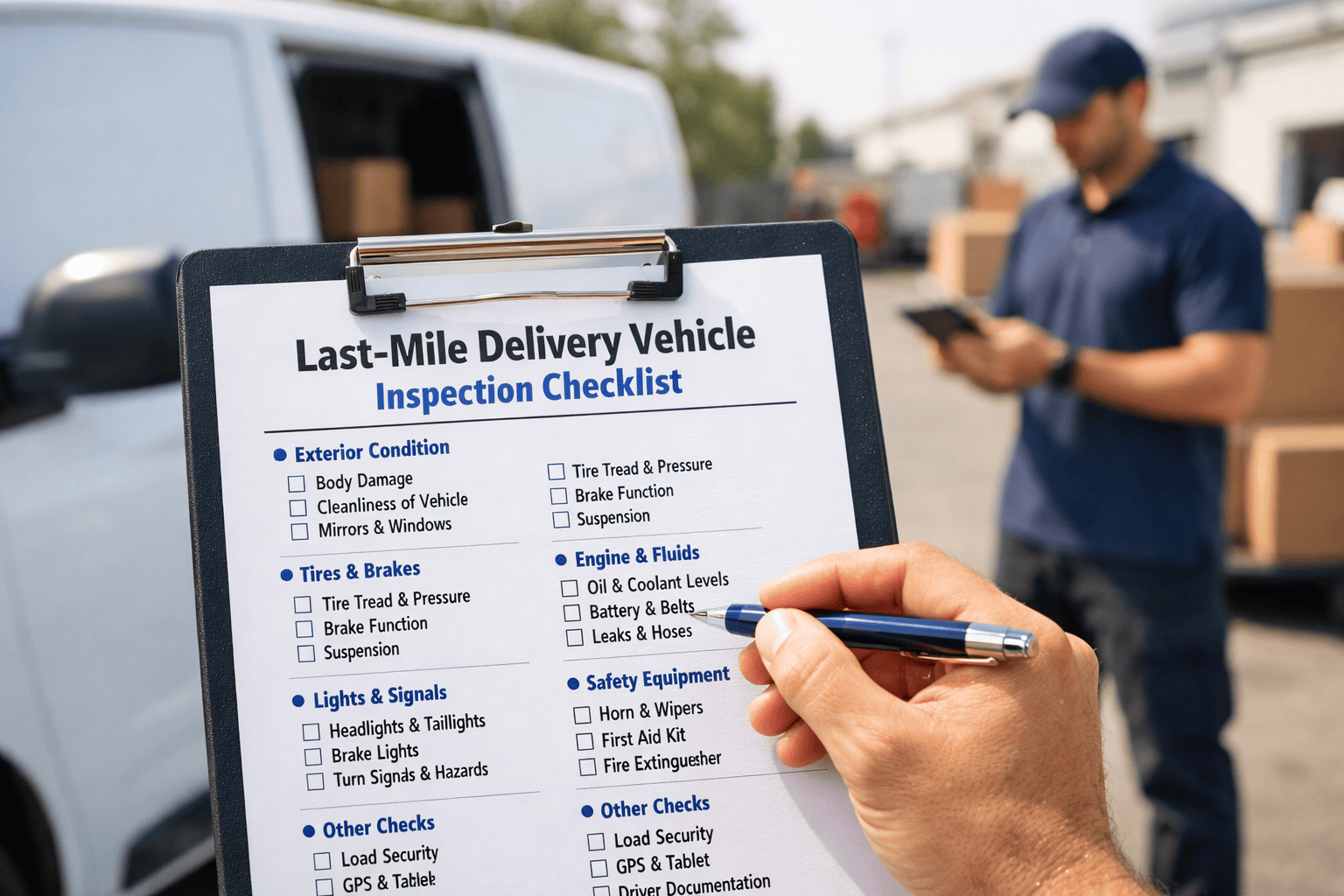
Running a logistics fleet without a structured audit is like navigating without a map. Vehicles degrade silently, compliance gaps widen unnoticed, and one missed inspection can cascade into regulatory fines, breakdowns, and costly downtime. This checklist gives logistics operations teams a clear, actionable framework to audit fleet maintenance — and fix gaps before they become failures. Start managing audits digitally on Oxmaint or book a free demo to see how top logistics teams stay audit-ready year-round.
1 in 4
logistics vehicles fail roadside inspections due to missed maintenance
$9,200
average cost of a compliance violation per commercial vehicle
62%
of fleet managers say audit prep takes more than 2 days manually
3x
fewer violations in digitally tracked fleets vs. paper-based ones
Why Fleet Audits Are Non-Negotiable in Logistics
Regulatory agencies are increasing roadside inspections. Clients are tightening SLA requirements. And insurance carriers are demanding proof of systematic maintenance before renewing commercial policies. A fleet maintenance audit is no longer a periodic formality — it is the backbone of operational continuity.
C
Compliance Risk
Unaudited fleets face fines, vehicle groundings, and liability exposure when inspectors find documentation gaps or deferred maintenance issues.
R
Reliability Loss
Vehicles with missed PM intervals break down mid-route. A single day of downtime in a logistics fleet can delay hundreds of deliveries and damage client relationships.
V
Visibility Gaps
Without structured audits, managers cannot see which vehicles are overdue, which drivers have inspection backlogs, or where maintenance costs are out of control.
Stay audit-ready every single day
Oxmaint automates compliance tracking, PM scheduling, and inspection logging across your entire fleet.
Start Free Trial
Section 1 — Pre-Audit Preparation
Before auditing individual vehicles, establish that your audit infrastructure is in place. These foundational checks determine whether your fleet data is even reliable enough to audit against.
Fleet Asset Register is Current
Every vehicle, trailer, and support unit is listed with correct VIN, registration, and assigned driver.
Maintenance Records Consolidated
All service history, work orders, and repair invoices are in one accessible location — not split across binders and inboxes.
Inspection Templates Defined
Pre-trip, post-trip, and annual inspection checklists are standardized and distributed to all drivers and technicians.
Audit Scope and Period Set
Define the time window being audited, which vehicle classes are in scope, and which regulations apply (DOT, FMCSA, local).
Responsible Owners Assigned
Each audit section has a named person accountable for data collection, review, and sign-off by the audit date.
Digital Audit Tool Ready
Paper-based audit logs are replaced or supplemented by a platform that timestamps entries and flags overdue items automatically.
Section 2 — Vehicle Inspection Audit
This section covers the physical condition and mechanical readiness of every vehicle in the fleet. Each item should be verifiable against a signed inspection record — not just a verbal confirmation.
| Inspection Area |
What to Verify |
Pass Criteria |
Status |
| Brakes |
Pad depth, fluid level, brake line integrity, ABS function |
Within manufacturer spec, no leaks, ABS light off |
Verify |
| Tyres |
Tread depth, inflation pressure, sidewall condition, matching axle types |
Min 4/32" tread, PSI within 10% of spec, no visible damage |
Verify |
| Lights and Signals |
Head, tail, brake, reverse, marker, and hazard lights |
All operational, lenses uncracked, no flickering |
Verify |
| Engine and Fluid Levels |
Oil, coolant, transmission fluid, power steering, DEF (if diesel) |
Within operating range, no visible leaks under vehicle |
Verify |
| Steering and Suspension |
Play in steering wheel, shock condition, ball joint wear |
No excessive play, no unusual noise during inspection drive |
Verify |
| Cab and Driver Area |
Seatbelts, mirrors, wipers, horn, fire extinguisher, first aid kit |
All functional, safety equipment in-date and accessible |
Verify |
| Body and Cargo Area |
Door seals, latches, load securing points, floor integrity |
No structural damage, seals intact, tie-down points rated and present |
Verify |
Section 3 — Maintenance Schedule Compliance
Scheduled maintenance is the core of fleet reliability. This section audits whether your PM program is actually running as designed — not just on paper.
PM Intervals Defined Per Vehicle Class
Each vehicle type has documented service intervals based on mileage, engine hours, and calendar triggers — not a one-size-fits-all schedule.
Zero Overdue Work Orders
No open work orders are past their due date. Overdue PMs are the single leading indicator of upcoming breakdowns in logistics fleets.
Service History Traceable Per Vehicle
Every vehicle can show a complete log of completed maintenance — date, technician, parts used, and mileage at service.
Oil Change Intervals Met
Last oil change date and mileage confirmed. Next due date scheduled and visible to dispatch before next route assignment.
Filter and Fluid Replacements Logged
Air, fuel, and cabin filters replaced on schedule. Transmission and differential fluids changed per OEM specs.
Recall and Technical Service Bulletins Addressed
Open manufacturer recalls checked against VIN for each vehicle. Any outstanding safety recall resolved before vehicle is dispatched.
Never miss a scheduled maintenance window again
Oxmaint auto-generates work orders based on mileage and calendar triggers — no manual tracking required.
Book a Demo
Section 4 — Documentation and Regulatory Compliance
Most compliance failures during external audits are documentation failures — not actual mechanical defects. These items must be current, accessible, and correctly formatted.
01
Vehicle Registration and Licensing
Current registration certificates on board or in fleet records. Commercial vehicle operating licenses valid for all routes operated.
02
Insurance Documentation
Commercial fleet insurance policy current. Each vehicle has valid certificate of insurance accessible to the driver during operations.
03
Annual Safety Inspection Certificates
Statutory annual vehicle inspections completed and certificates not expired. Stickers or digital records reflect current compliance status.
04
Driver Vehicle Inspection Reports (DVIRs)
Pre-trip and post-trip inspection reports filed for every operational day. No unresolved defects carried forward without signed acknowledgement.
05
Emission and Environmental Compliance
Emission test certificates current for applicable jurisdictions. DEF levels maintained, DPF regenerations logged on diesel units.
06
Hazardous Materials Certification (if applicable)
HazMat placarding correct, driver certifications valid, emergency response documentation on board where legally required.
Section 5 — Driver Compliance and Safety Records
Vehicle condition is only half the audit. Driver eligibility, licensing, and hours-of-service compliance are equally scrutinized during regulatory inspections and insurance reviews.
Commercial Driver Licences Valid and Current
All CDL holders have unexpired licences with correct endorsements for the vehicle class and cargo they operate.
Medical Certificates Current
DOT or equivalent medical examiner certificates on file for all drivers requiring them. Expiry dates monitored with advance alerts.
Hours-of-Service Logs Compliant
ELD data or paper logs reviewed for HOS violations. No patterns of falsification, exceeding drive limits, or missing rest periods.
Driver Training Records Documented
Onboarding training, safety refreshers, and hazard-specific certifications on file. Gaps identified and remediation scheduled.
Incident and Accident Reports Filed
All accidents, near-misses, and violations properly documented with root cause analysis and corrective actions recorded.
Pre-Trip Inspection Completion Rate
Verify that 100% of operating days have a completed DVIR on file for each vehicle. Gaps indicate either non-compliance or incomplete record-keeping.
Section 6 — Parts and Inventory Readiness
An audit that reveals maintenance gaps is only useful if your parts inventory can support corrective action. Stock readiness directly affects how quickly your fleet recovers from an audit finding.
Critical — Always In Stock
Engine oil and filters (per vehicle type)
Brake pads and shoes (common axle sizes)
Belts and hoses (priority failure items)
Fuses and bulbs (all variants in use)
Monitor — Reorder Thresholds Set
Tyres (minimum one spare per vehicle class)
Air and fuel filters
Coolant and transmission fluid
Wiper blades (seasonal)
Audit — Confirm Supplier Agreements
Emergency repair parts supplier SLA documented
Preferred vendor list approved and current
Parts delivery lead times known for critical items
Warranty claims process defined for recent replacements
Audit Scoring: How Does Your Fleet Rate?
90 – 100%
Audit Ready
Minimal corrective action needed. Schedule next audit in 6 months. Focus on continuous improvement in cost-per-stop and uptime metrics.
70 – 89%
Needs Attention
Specific gaps identified. Assign owners, set 30-day remediation targets, and re-audit those sections. Do not wait for regulatory inspection to trigger action.
50 – 69%
High Risk
Systemic issues across multiple categories. Escalate to fleet director. Consider grounding vehicles with multiple unresolved items pending corrective maintenance.
Below 50%
Critical
Immediate action required. Pause non-essential dispatching. Conduct emergency maintenance review and consider engaging an external compliance consultant.
Logistics fleets that conduct structured maintenance audits quarterly reduce roadside violations by 58% and cut average maintenance cost per vehicle by over 20% within 12 months.
Commercial Fleet Compliance Report
Logistics Industry Benchmark Study, 2026
From Paper Audit to Digital Audit: What Changes
Paper-Based Audit
Records scattered across binders, emails, and driver logbooks
Audit prep takes 2–5 days of manual data gathering
Overdue PMs discovered only during the audit
No automated alerts for expiring licences or certificates
Compliance gaps found by external inspectors, not internally
Corrective actions tracked by email and verbal follow-up
Digital Fleet Audit
All records in one platform — searchable, timestamped, exportable
Audit report generated in under 30 minutes from live data
Overdue PM alerts trigger 14 days before due date
Automated reminders for licence, medical, and certificate renewals
Internal audits catch gaps before external inspectors do
Work orders assigned, tracked, and closed with digital sign-off
Key Metrics to Track After Every Audit
P
PM Compliance Rate
Percentage of scheduled PMs completed on time. Target: 98% or above for audit-ready fleets.
D
DVIR Completion Rate
Percentage of operating days with a filed driver inspection report. Any gap is a compliance exposure.
V
Violation Rate
Roadside violations per 100 inspections. Industry benchmark for compliant fleets is under 10 per 100.
R
Mean Time to Repair
Average hours from defect reported to vehicle returned to service. Audit trend data reveals where repair bottlenecks sit.
58%
fewer roadside violations in fleets conducting quarterly structured audits
30 min
average time to generate a full audit report with digital fleet management
20%
reduction in annual maintenance cost per vehicle after first year of structured auditing
How Oxmaint Keeps Your Fleet Permanently Audit-Ready
Most fleets audit reactively — scrambling to compile records when a regulatory inspection is scheduled. Oxmaint changes that model by keeping your fleet in a continuous state of compliance, with every maintenance event, inspection, and work order logged automatically. Start for free and have your first audit dashboard live in under a day.
Automated PM Scheduling
Set maintenance intervals by mileage, engine hours, or calendar. Oxmaint generates work orders automatically and alerts technicians before due dates are missed.
Digital Driver Inspection Reports
Drivers complete pre-trip and post-trip inspections from their mobile device. Defects are flagged to dispatch instantly, with a timestamped record on file.
Compliance Document Tracking
Upload registrations, insurance certificates, and inspection documents. Expiry alerts fire 30, 14, and 7 days before any document lapses.
Audit-Ready Reporting
Export full maintenance history, inspection logs, and compliance status per vehicle in minutes. No manual compilation. No missing records.
Parts Inventory Management
Track critical parts stock levels, set reorder thresholds, and ensure the right components are available the moment an audit finding triggers a repair.
Fleet Performance Analytics
Monitor PM compliance rate, DVIR completion, MTTR, and violation trends from a single dashboard — by vehicle, driver, or fleet-wide.
Make Your Next Fleet Audit the Easiest One You Have Ever Done
Oxmaint centralizes maintenance scheduling, driver inspections, compliance documentation, and fleet analytics into one platform built for logistics teams. Stop compiling records manually and start operating with permanent audit confidence.
Frequently Asked Questions
How often should a logistics fleet conduct a maintenance audit?
At minimum, a comprehensive audit should be conducted quarterly. Fleets operating under DOT or FMCSA regulations should review critical compliance documents monthly and maintain continuous inspection logs through digital tools to ensure nothing expires unnoticed between formal audits.
What documents do I need to have ready for a fleet compliance audit?
Core documents include current vehicle registrations, commercial insurance certificates, annual inspection certificates, driver vehicle inspection reports (DVIRs), PM service records, driver licence and medical certificate files, and any applicable HazMat documentation. Digital platforms make these instantly retrievable rather than requiring days of manual assembly.
What is the most common reason logistics fleets fail compliance audits?
The most common failures are documentation gaps rather than actual mechanical defects — missing DVIRs, expired certificates, or incomplete PM records. These are entirely preventable with a structured tracking system that automates reminders and centralizes all records in one auditable location.
Can Oxmaint generate audit reports automatically?
Yes. Oxmaint allows fleet managers to export full maintenance histories, inspection logs, work order completion records, and compliance document status for any vehicle or date range. Reports that previously took days to compile manually are available in under 30 minutes directly from the platform.