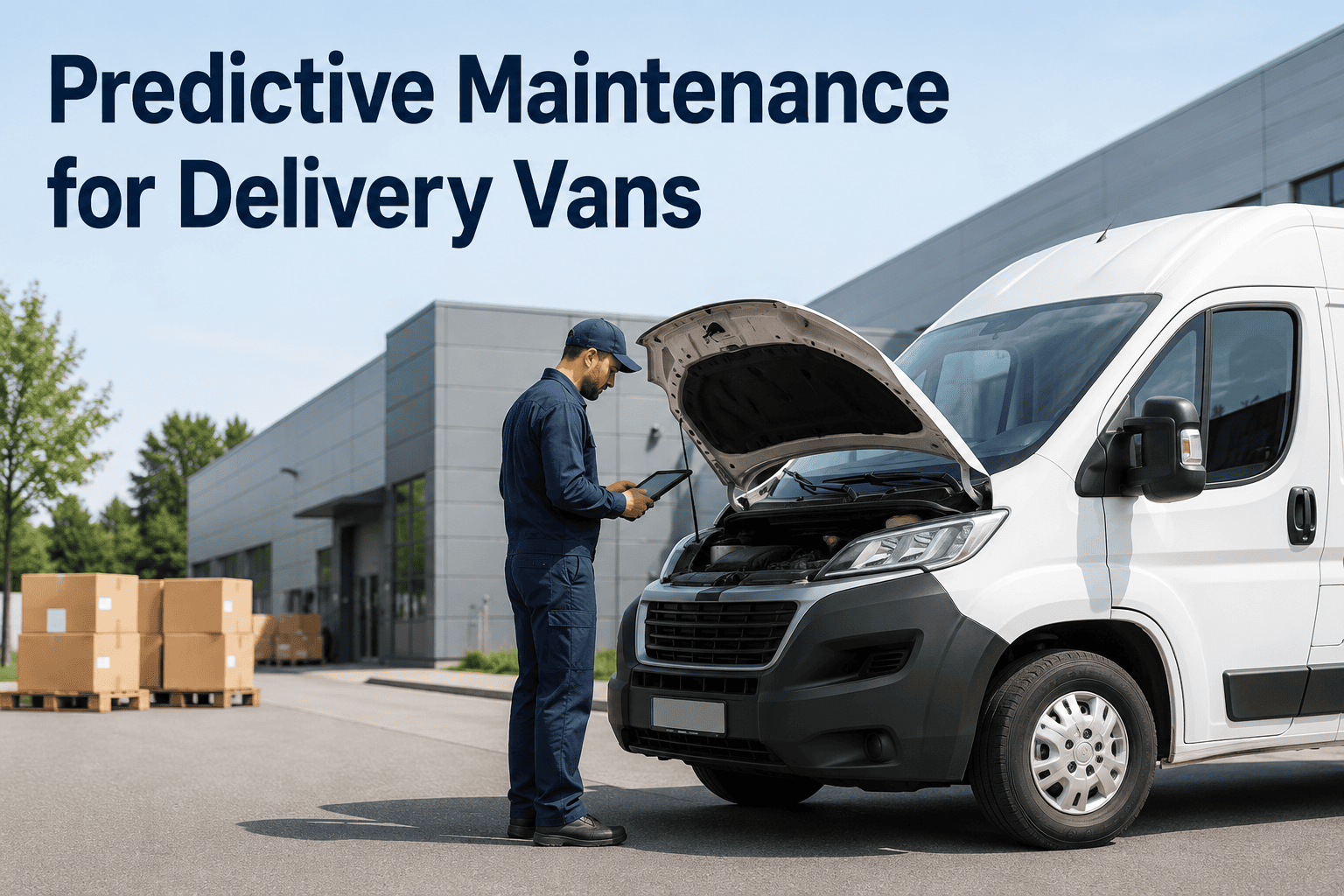
Delivery vans are the backbone of last-mile logistics — and when one breaks down mid-route, you lose more than just the day's revenue. Unplanned breakdowns cost courier fleets 3–5x more than scheduled repairs, and most failures give clear warning signs weeks before they happen. OxMaint.ai turns those warning signs into automated work orders using mileage triggers, inspection data, service history, and AI-powered alerts — so your vans stay on the road and your drivers stay on schedule. To see how predictive maintenance works for delivery fleets, book a free 30-minute walkthrough or start your free trial today.
OxMaint.ai — Delivery Fleet Intelligence
Your Vans Are Telling You They're About to Break. Are You Listening?
Predictive maintenance for delivery vans uses real data — mileage, inspections, defect history, driver reports — to catch failures before they strand your driver 40 miles from the depot.
73%
of van breakdowns are preventable with proactive maintenance
3–5x
higher cost of reactive vs predictive repairs
40%
reduction in fleet downtime with AI-triggered maintenance
22%
lower annual fleet maintenance cost using CMMS
The Problem
Why Delivery Fleets Break Down — Even With a Maintenance Schedule
Traditional time-based maintenance schedules treat every van the same. A van doing 300 km/day in summer heat is not the same as one doing 80 km/day in mild weather. Here is what goes wrong without predictive maintenance.
01
Mileage-Blind Schedules
Service intervals set in calendar weeks ignore actual vehicle stress. A high-utilization van hits critical wear thresholds weeks before its scheduled service — and nobody knows until it fails.
02
Driver Defects Go Untracked
Drivers notice problems first — unusual vibration, warning lights, brake pull. Without a structured defect reporting system, these observations disappear and the problem compounds silently.
03
No Failure Pattern Recognition
Without service history data, a brake calliper that has been replaced three times in eight months on the same van looks like three separate incidents — not a systemic problem that needs investigation.
04
Reactive Parts Ordering
When a van breaks down unexpectedly, parts are ordered at emergency rates and fitted by overtime technicians. Predictive systems order parts in advance at standard rates — typically 30–40% cheaper.
Stop managing breakdowns. Start preventing them.
OxMaint.ai gives every van in your fleet its own maintenance record, mileage tracker, and AI alert engine — so your team acts before the breakdown, not after.
How It Works
Four Data Sources That Predict Van Failures Before They Happen
Mileage-Based Triggers
Set service thresholds by odometer reading — oil changes at 10,000 km, brake inspections at 30,000 km, transmission service at 60,000 km. OxMaint auto-creates work orders when each van crosses its threshold, regardless of what date the calendar says.
Daily Vehicle Inspections (DVIs)
Drivers complete structured pre-trip and post-trip checklists on mobile. Any flagged item — worn tyre, brake warning, fluid level — instantly creates a defect record linked to the van's asset profile. Nothing gets lost in a paper log or a WhatsApp message.
Service History Intelligence
Every repair, part change, and inspection result is stored against the van's asset record. OxMaint AI identifies recurring failure patterns — a component replaced three times in 12 months flags an underlying issue, not just another repair job.
AI-Powered Maintenance Alerts
OxMaint's AI engine analyses combined mileage, inspection scores, and defect frequency to generate predictive alerts — ranking vans by failure risk so your workshop prioritises the most at-risk vehicles first, not the ones that shout loudest.
What Gets Tracked
Critical Van Components — What to Monitor and When
| Component |
Trigger Type |
Interval / Threshold |
Failure Risk Without Monitoring |
OxMaint Action |
| Engine Oil |
Mileage |
Every 10,000–15,000 km |
Engine seizure, scoring, turbo failure |
Auto work order at mileage threshold |
| Brake Pads |
DVI + Mileage |
Inspection flag or 30,000 km |
Brake failure, disc damage, MOT failure |
Defect alert from DVI + mileage trigger |
| Tyres |
DVI + Age |
Pre-trip check + 5-year replacement |
Blowout, aquaplaning, legal non-compliance |
Driver DVI flag creates immediate work order |
| Transmission Fluid |
Mileage |
60,000 km or 2 years |
Gearbox wear, harsh shifts, gear failure |
Scheduled PM with documented fluid check |
| Coolant System |
Inspection + Time |
Annual flush + DVI top-up check |
Overheating, head gasket failure, engine damage |
Annual PM + driver DVI coolant field |
| Battery |
Age + DVI |
3–4 year replacement / no-start report |
No-start, stranded driver, missed deliveries |
Age-based flag + driver defect escalation |
| Suspension Components |
Mileage + DVI |
60,000–80,000 km / driver report |
Handling loss, tyre wear, driver fatigue |
Mileage PM + vibration defect record |
Fleet Outcomes
What Delivery Fleets See After Switching to Predictive Maintenance
67%
Reduction in Roadside Breakdowns
Fleets using mileage-triggered PM and daily DVIs report two-thirds fewer unplanned roadside failures in the first year
2.4 days
Average Downtime Reduction Per Van
Each prevented breakdown saves an average 2.4 days of vehicle downtime — at delivery fleet revenue rates, that is significant per van per year
31%
Lower Parts and Labour Cost
Planned repairs cost 31% less on average than emergency repairs — parts at standard rates, labour in scheduled workshop time, not emergency callouts
98.2%
Fleet Availability Rate
Courier fleets using OxMaint predictive maintenance report fleet availability rates above 98% — versus the industry average of 91–93% on reactive schedules
Frequently Asked Questions
What is predictive maintenance for delivery vans?
Predictive maintenance uses real-time and historical data — mileage, driver inspection reports, service records, and AI pattern analysis — to forecast when a van component is likely to fail, so repairs happen before the breakdown occurs. Unlike time-based schedules, it adjusts to actual vehicle usage and condition.
OxMaint automates this process by combining all data sources into a single fleet maintenance platform.
How does mileage-based maintenance work in OxMaint?
You set service thresholds by odometer reading for each component — oil at 10,000 km, brakes at 30,000 km, and so on. As drivers log mileage or it syncs automatically, OxMaint generates work orders when each van approaches its threshold. Every service record is stored against the vehicle's asset profile for full traceability and warranty compliance.
Can drivers report defects through OxMaint?
Yes. Drivers complete pre-trip and post-trip inspection checklists on a mobile app. Any flagged defect — brake warning, tyre condition, warning light — creates an immediate work order assigned to your workshop team, with photo evidence attached. This closes the gap between what drivers observe and what gets repaired.
Book a demo to see the driver app in action.
How does OxMaint's AI detect failure patterns?
The AI engine analyses each van's complete service history to identify recurring failures — a component replaced multiple times in a short period, or a pattern of defect reports that correlate with imminent failure. It ranks your fleet by risk score so your team focuses attention on the vans most likely to break down next, before they do.
Is OxMaint suitable for small delivery fleets?
OxMaint is built for fleets of all sizes — from 5 vans to 5,000. Smaller fleets benefit because every van gets individual attention through automated triggers, rather than relying on a fleet manager to remember which vehicle is due for what service. The free trial lets you register your full fleet and test the system with no commitment required.
OxMaint.ai — Predictive Fleet Maintenance
Every Kilometre Your Van Drives Is Data. Are You Using It?
OxMaint.ai converts mileage, inspections, defect reports, and service history into automated maintenance alerts — so your vans reach end of life on schedule, not on the hard shoulder.