The superintendent of a 14-school district in central Ohio received three separate phone calls on the same Monday morning. The elementary school principal reported the gym was 58°F — the boiler had failed over the weekend and nobody knew because the building was unoccupied. The middle school custodian called about a roof leak in the library that had been reported three weeks earlier but the work order was sitting in a paper log at the district maintenance office and had never been assigned. The high school athletic director reported that the fire marshal was on-site for a surprise inspection and nobody could locate the sprinkler inspection records because the contractor's certificate was filed at the school, not at the district office, and the school secretary who knew where it was filed was on medical leave. Three buildings. Three failures. One root cause: a multi-campus district managing 1.4 million square feet of facility assets across 14 locations using a patchwork of paper logs, spreadsheets, email chains, phone calls, and individual building-level filing systems with no centralized visibility, no unified work order tracking, and no way for the superintendent or facilities director to know the real-time status of any building, any asset, or any compliance requirement at any school without physically driving there or calling someone who might or might not answer. This is not an Ohio problem. It is the operational reality for 68% of U.S. school districts and a significant percentage of multi-campus university systems that manage facilities across dispersed locations without a centralized digital platform. The cost is not theoretical — it is $47,000 in avoidable emergency repairs per 50 buildings annually, 15–25% of maintenance requests lost between handoffs, and compliance documentation gaps that create institutional liability every day they remain unresolved. Sign up free to centralize facility management across every campus in your district.
Every multi-campus district needs a single platform where every work order, every asset, every compliance record, and every building's real-time status is visible to every authorized person — from the custodian to the superintendent.
The Multi-Campus Facility Management Challenge
Multi-campus education operations — whether K-12 districts with 5–60 schools or university systems with satellite campuses, research facilities, and athletic complexes — face a unique operational problem that single-building facilities do not: the information fragmentation that occurs when maintenance knowledge, work order status, asset records, compliance documentation, and institutional memory are scattered across multiple buildings, multiple staff members, and multiple filing systems with no unified system connecting them.
| Multi-Campus Challenge | Impact on Operations | Financial Consequence |
|---|---|---|
| Information Fragmentation | Work orders, asset records, and compliance docs scattered across buildings in paper logs, email inboxes, and individual spreadsheets | 15–25% work orders lost; duplicated effort; no institutional memory |
| No Cross-Campus Visibility | Facilities director cannot see real-time status of any building without calling or driving there | Problems discovered after they escalate; reactive spending 3–5× higher |
| Inconsistent Maintenance Standards | Each building operates on its own PM schedule (or none); quality varies by custodian | Equipment life varies 30–40% between buildings for identical assets |
| Compliance Documentation Gaps | Inspection records filed at building level; no district-wide compliance dashboard | Fire marshal, OCR, or OSHA findings when records cannot be produced |
| Workforce Inefficiency | Technicians dispatched manually; travel between campuses unoptimized; skill matching absent | 30–40% of technician time spent on non-repair activities (travel, admin, parts runs) |
| Budget Blindness | No per-building maintenance cost data; budget requests based on anecdote, not evidence | Boards defer capital because they cannot evaluate the claim |
Manual vs. Centralized: The 10-Factor Comparison
The difference between manual multi-campus management and centralized digital facility management is not incremental improvement — it is a structural transformation in how districts allocate resources, respond to problems, document compliance, and justify budgets. This comparison covers every operational dimension that matters. Sign up free.
| Operational Factor | Manual / Decentralized | Centralized CMMS |
|---|---|---|
| Work Order Submission | Phone calls, sticky notes, emails, verbal requests — varies by building; 15–25% lost in transit | Mobile app or web portal from any building; every request tracked to resolution; 0% loss rate |
| Work Order Assignment | Verbal handoff or paper note to custodian/technician; no skill matching or priority scoring | Auto-routed to nearest qualified technician with AI priority scoring; skill-matched to task |
| Response Time | 24–72 hours average (if request not lost); no escalation mechanism for overdue items | Under 4 hours average with auto-escalation alerts when deadlines approach |
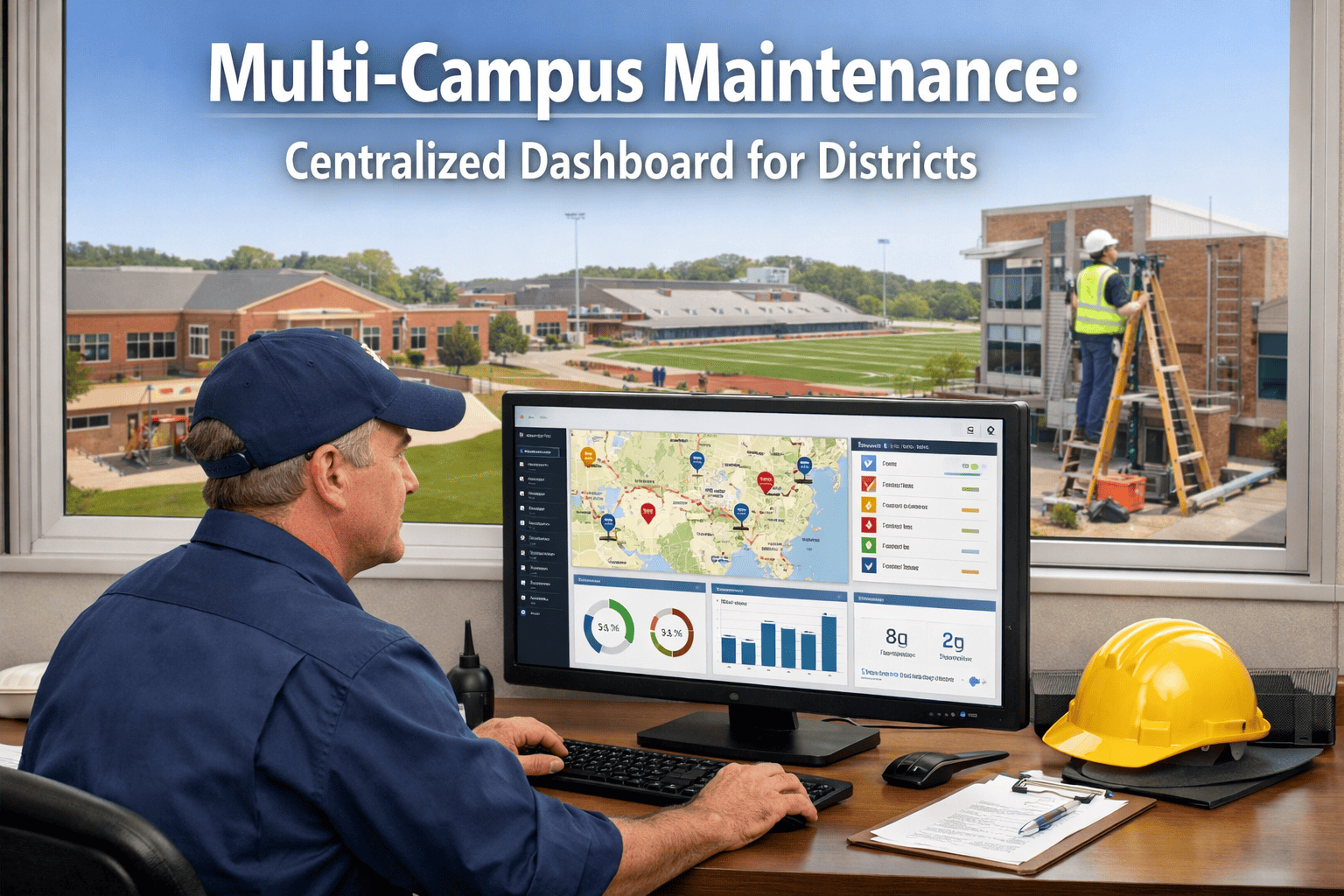
| Cross-Campus Visibility | Facilities director learns about problems when principals call, parents complain, or emergencies occur | Real-time dashboard showing every open work order, overdue item, and compliance status across all buildings |
| PM Scheduling | Calendar-based at best, custodian memory at worst; inconsistent between buildings; seasonal tasks forgotten | Automated recurring PM work orders for every asset at every building; nothing forgotten; nothing skipped |
| Compliance Documentation | Filing cabinets at each school; records scattered; 8–12 hours to compile for auditor | Timestamped, photo-verified digital records; every inspection one search away; 100% audit-ready |
| Asset Tracking | No district-wide inventory; equipment records in retired director's spreadsheet or lead mechanic's memory | Complete asset registry with make, model, age, condition, maintenance history, and replacement cost per building |
| Technician Productivity | 30–40% of time spent on non-repair activities: driving between sites, looking for parts, administrative paperwork | AI-optimized daily schedules; building-grouped work; mobile tools eliminate paperwork; 25–35% more completions |
| Budget Justification | Anecdotal requests: "We need more money because things are breaking." Boards defer routinely. | Data-driven reports: "Building 4 consumed 34% of emergency spend driven by 47 HVAC work orders on 16-year-old units." |
| Institutional Knowledge | Leaves with every retiring technician; 30–40% of campus maintenance professionals retiring within 5–7 years (APPA) | Every work order, inspection note, parts replacement, and technician observation permanently searchable in digital record |
The 7 Core Capabilities of Centralized Multi-Campus Management
A centralized CMMS platform for multi-campus education operations must deliver seven specific capabilities that paper systems, spreadsheets, and building-level tracking cannot provide at scale. Each capability addresses a documented failure mode of decentralized management.
With a centralized CMMS, the answer is yes — every building, every open work order, every overdue compliance item, every equipment alert, visible from a single dashboard accessible from any device.
Diagnostic Workflow: Is Your District Ready for Centralization?
This diagnostic identifies whether your multi-campus operation is experiencing the information fragmentation that centralized CMMS resolves. If three or more of these conditions exist in your district, the operational case for centralization is already documented by your own experience.
Can the facilities director see every open work order across all buildings without calling anyone? If no → centralization needed.
Can you produce every fire, safety, and accessibility inspection record for any building within 5 minutes? If no → centralization needed.
Can you report maintenance cost per building per year with actual data? If no → centralization needed.
If your most experienced technician retired tomorrow, would the service history of your equipment walk out the door? If yes → centralization needed.
Warning Signs: When Decentralized Management Is Failing
These escalating warning signs indicate that your multi-campus operation has outgrown manual management. Each level represents increasing institutional risk that compounds until addressed structurally.
- Fire marshal or OCR findings due to missing compliance records
- Insurance claim denied because maintenance documentation not available
- Board members or parents discovering building problems before facilities team
- Emergency repair costs exceeding 40% of total maintenance budget
- Key retirement causing loss of irreplaceable equipment knowledge
- Facilities director spending 50%+ time on reactive crisis management
- Work orders taking 7+ days to complete on average
- Same equipment failures recurring at same buildings repeatedly
- Budget requests routinely deferred by board due to lack of supporting data
- Technicians driving between buildings multiple times daily for single tasks
- PM schedules exist but vary by building and are not consistently followed
- Compliance records are current but scattered across multiple filing locations
- Maintenance cost data is available but requires hours of manual compilation
- New staff take months to learn building quirks because documentation is informal
- Some buildings well-maintained, others neglected depending on assigned custodian
- Spreadsheet-based tracking becoming difficult to maintain as district grows
- Occasional work orders lost between building and maintenance office
- Board asking for facility condition data that takes days to compile
- Technicians requesting better tools for mobile work order management
- Neighboring districts implementing CMMS and reporting measurable improvements
Essential Monitoring and Inspection Capabilities
A centralized multi-campus CMMS must provide these six operational capabilities across every building simultaneously. Each capability eliminates a specific failure mode of decentralized management. Schedule a consultation to evaluate your district's readiness.
Single prioritized queue showing every open request from every building. Filter by school, trade, priority, age, or assigned technician. Overdue items auto-escalate to facilities director.
Create PM checklists once, deploy to every identical asset at every building simultaneously. Boiler PM at School A is identical to boiler PM at School N — consistent quality district-wide.
Every NFPA, OSHA, ADA, and EPA inspection scheduled across all buildings in one calendar. Status visible by building, by requirement, and by due date. Nothing falls through cracks between schools.
Technicians receive assignments, scan QR-coded assets, view equipment history, document work with photos, log parts used, and close work orders from their phone — at any building in the district.
Compare work order volume, response time, completion rate, emergency vs. planned ratio, and total cost across all buildings. Identify outliers. Justify capital allocation with documented evidence.
Teachers submit requests. Custodians see their building's queue. Technicians see assigned work across all buildings. Principals see their school's status. Facilities director sees everything. Superintendent sees dashboards.
Implementation Roadmap: District-Wide Centralization
The most successful multi-campus CMMS deployments follow a phased approach that delivers visible wins within the first semester, builds staff confidence, and expands based on documented results.
- Configure CMMS with district building hierarchy — every school, wing, room, and critical asset
- Select 3–5 pilot schools representing building variety (one elementary, one middle, one high school, plus highest-maintenance building)
- Register all critical assets at pilot schools — HVAC, boilers, elevators, fire systems, kitchen, playground
- Import any existing work order history and compliance records into digital system
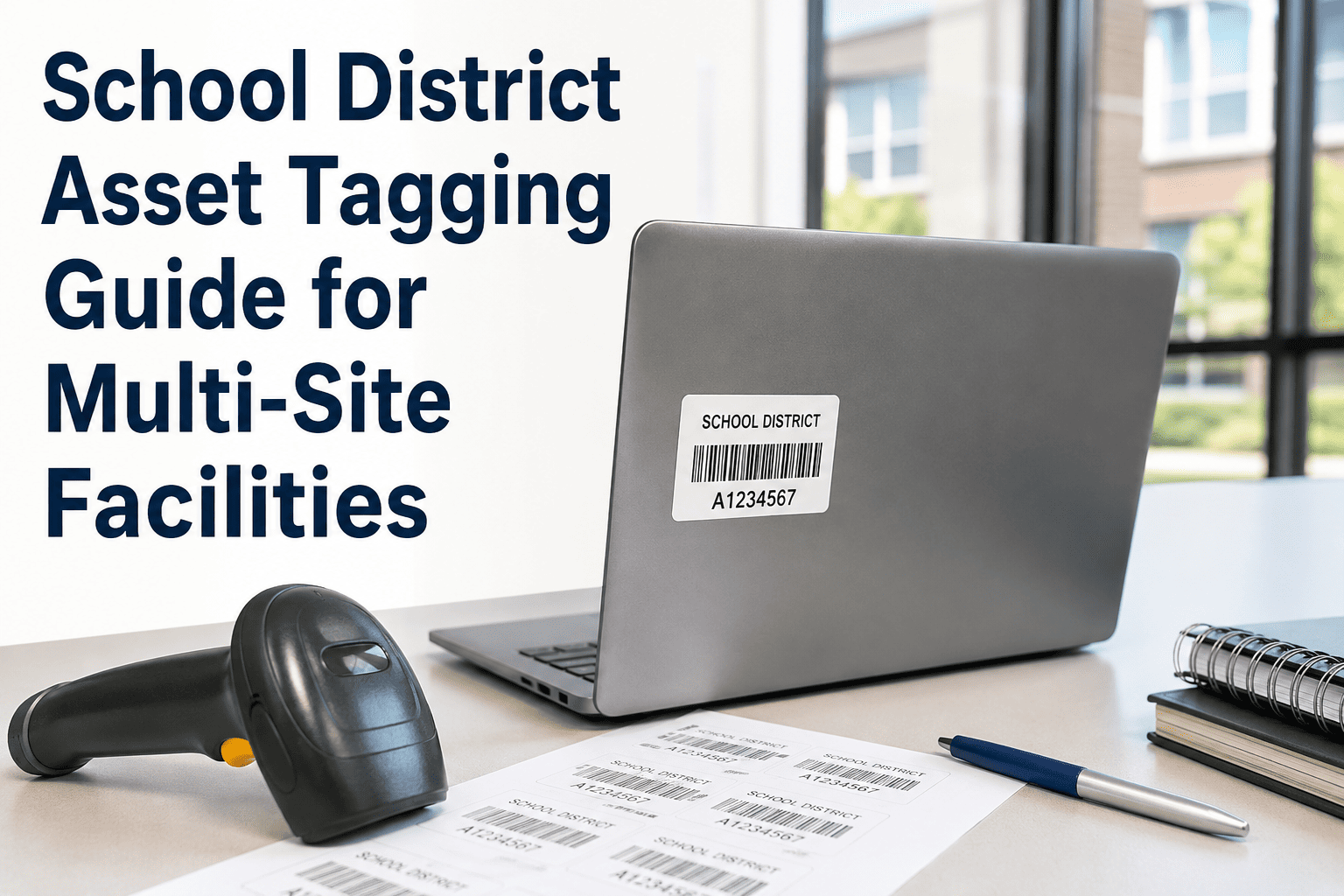
- QR-code tag all critical equipment at pilot schools for mobile scanning
- Train teachers and office staff on mobile/web work order submission — 15-minute session per school
- Train custodians on receiving, updating, and closing work orders from phone
- Train maintenance technicians on mobile tools — asset scanning, photo documentation, parts logging
- Run paper AND digital in parallel for 2 weeks to ease transition
- Assign "digital champion" at each pilot school to assist colleagues
- Expand to all remaining schools using pilot school staff as mentors for new buildings
- Register all critical assets at every building — complete district-wide asset inventory
- Activate standardized PM schedules across all buildings simultaneously
- Configure district-wide compliance calendar — every required inspection at every school
- Set hard cutover date when paper work orders stop being accepted
- Analyze 6 months of per-building data — identify highest-cost buildings, most common failures, resource allocation patterns
- Activate AI scheduling optimization for technicians working across multiple campuses
- Build data-driven 5-year capital replacement plan using documented asset condition data
- Present first annual board report with per-building maintenance analytics, compliance status, and ROI documentation
- Benchmark against APPA peer institutions using standardized operational metrics
Frequently Asked Questions
The districts eliminating emergency repair crises, achieving 100% compliance documentation, and presenting data-driven capital plans to their boards are not spending more money or hiring more people. They deployed a centralized platform that makes every work order visible, every PM schedule automatic, every compliance record accessible, and every maintenance dollar trackable — across every building, every asset, and every technician in the district.