School Kitchen and Cafeteria Equipment Maintenance: Food Safety Compliance
By jamie lanister on March 25, 2026
A school district in Texas failed a surprise health department inspection in November because the grease trap had not been cleaned in 14 months — the required interval was 90 days. The kitchen was closed for two days, lunch service was suspended, and the district paid $4,200 in emergency cleaning fees, a $1,800 health code fine, and arranged three days of alternative food service arrangements that cost more than the entire annual kitchen PM budget. The grease trap cleaning had been on a paper schedule. It was missed twice. Nobody noticed. OxMaint automates every kitchen PM task — grease trap cleaning, hood inspection, refrigeration temperature logs, fire suppression certification, and health department compliance records — on a single platform that generates the documentation your inspector will ask for. Book a demo to see OxMaint's school kitchen compliance module.
OxMaint · School Kitchen Maintenance · Food Safety Compliance
Every PM Task Scheduled. Every Compliance Record Generated. Every Health Inspection Ready.
Grease trap cleaning, hood certification, refrigeration temperature logs, fire suppression testing, and health department compliance documentation — all automated in OxMaint for school kitchens and cafeterias.
Maximum interval for grease trap cleaning in most jurisdictions — the single most missed kitchen PM task
6×/yr
Minimum hood and fire suppression inspection frequency for high-volume school kitchen operations
41°F / 5°C
FDA Food Code maximum temperature for cold food storage — exceedances require immediate disposal of product
2 days
Average kitchen closure from a failed health inspection — disrupting 500–2,000 student meals per day
The Six Kitchen Systems That Drive Health Department Compliance
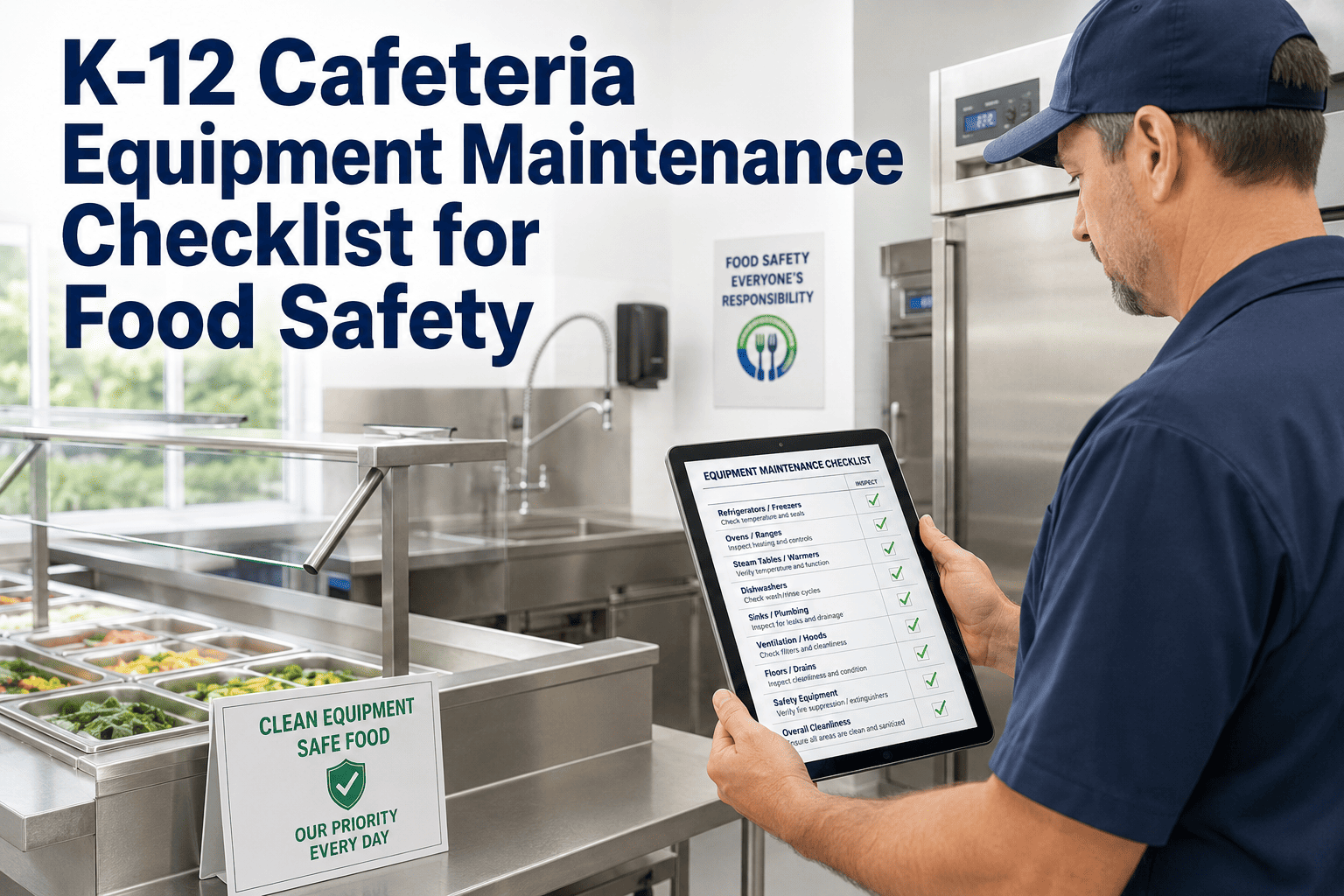
School kitchen health inspections follow a predictable checklist. Inspectors assess the same six systems every visit — and the same four or five failure points within each system. A CMMS-managed kitchen PM programme targets exactly these points on the schedule that satisfies the inspection standard, so no surprise visit catches a missed task. Start free and build your kitchen compliance schedule in OxMaint today.
SIX KITCHEN COMPLIANCE SYSTEMS — WHAT OXMAINT SCHEDULES AUTOMATICALLY
Cooking Equipment
Ovens, combi-steamers, fryers, grills — thermostat calibration, door seal integrity, burner condition, and safety cutout testing per manufacturer schedule
Ventilation Hoods
Grease filter cleaning, baffle inspection, fan belt and motor condition, ductwork grease accumulation — NFPA 96 requires inspection every 3–12 months depending on usage type
Refrigeration
Walk-in coolers, reach-in refrigerators, and freezers — daily temperature logging, door gasket condition, condenser coil clean, refrigerant check, drain clear
Commercial Dishwasher
Rinse temperature verification (180°F for high-temp), sanitiser concentration log for low-temp units, spray arm condition, door gasket, drain basket clean
Fire Suppression
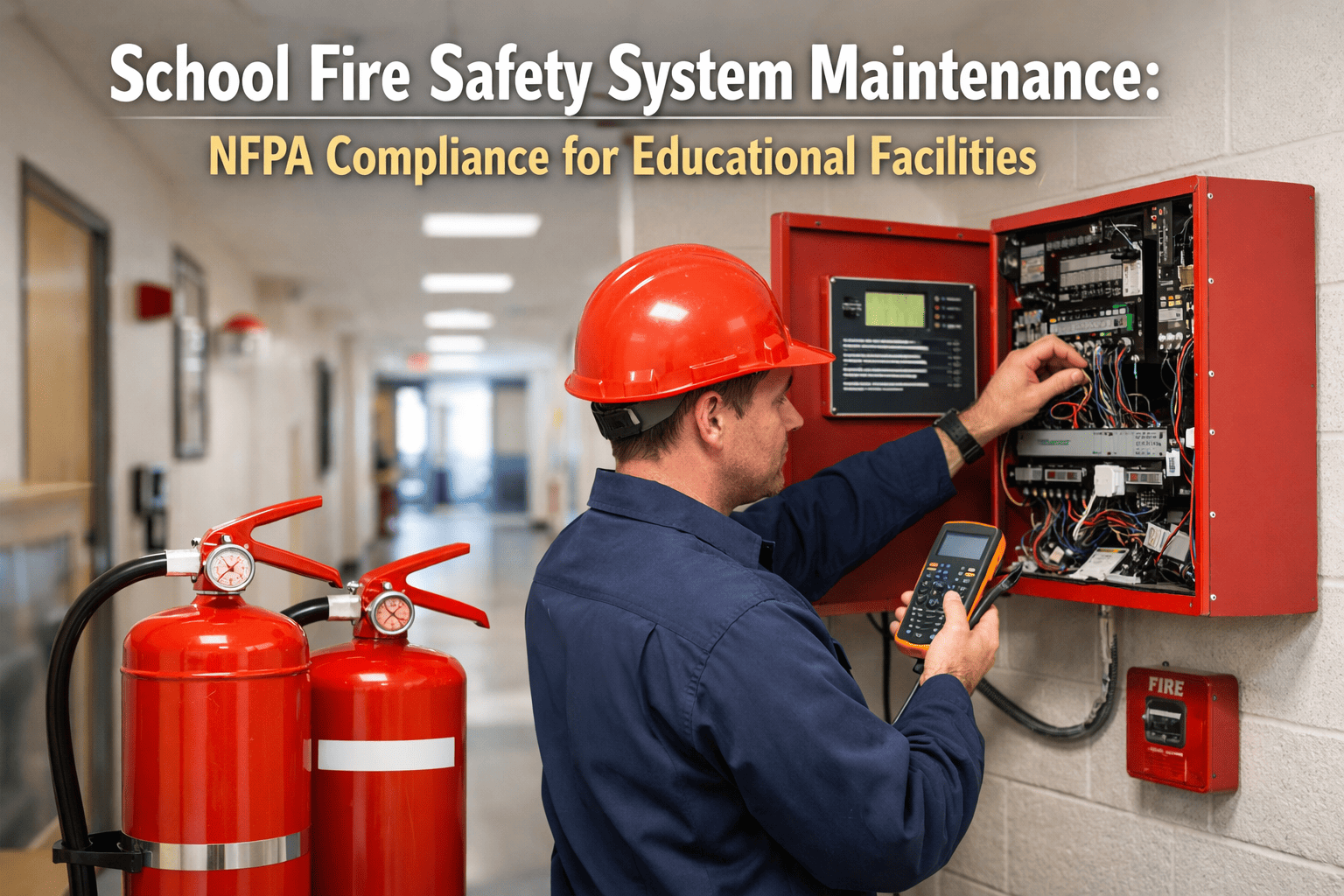
Ansul and wet chemical systems — semi-annual inspection per NFPA 17A, nozzle integrity, fusible link replacement, agent quantity verification, manual pull test
Grease Management
Grease trap cleaning on 90-day maximum interval, grease interceptor service, waste oil collection compliance — most frequently cited health code violation in school kitchens
"Our health inspector showed up in March unannounced. He asked for three years of grease trap service records, hood cleaning certificates, and fire suppression inspection reports. We pulled the complete export from OxMaint in four minutes. He said in 12 years of inspecting school kitchens he had never seen documentation that organised. We passed with zero findings."
Director of Nutrition Services
Texas School District · 9 kitchen sites · OxMaint user since 2021
The Complete Kitchen PM Schedule
School kitchen equipment maintenance follows five frequencies — daily temperature logs, weekly cleaning tasks, monthly equipment checks, quarterly grease management, and semi-annual certification inspections. Missing any frequency creates a compliance gap. OxMaint generates every task automatically from the equipment register — no manual scheduling, no missed intervals.
KITCHEN PM SCHEDULE — FREQUENCY BY TASK CATEGORY
Daily
5–10 min
Temperature & Safety Checks
Log all refrigerator and freezer temperatures before service — minimum 3 readings per day
Confirm all hot-holding equipment holding above 135°F / 57°C
Inspect for pest evidence — droppings, damage, or access points
Confirm hand-wash stations stocked and accessible
Visual check of cooking equipment — no visible damage or malfunction before use
Weekly
30–45 min
Equipment Cleaning Programme
Deep clean all cooking surfaces — oven interior, grill plates, fryer baskets, steamer interior
Clean hood filters — remove, degrease, and replace in sequence
Waste oil collection system check — containment, no overflow
Drain camera survey if any blockage history — before season start
Semi-Annual
Full day
Certification Inspections
Hood and exhaust system inspection — NFPA 96 certified contractor, certificate in OxMaint
Fire suppression system inspection — NFPA 17A, agent check, nozzle and fusible link inspection
Gas system pressure test and valve inspection — all supply lines and shutoffs
Refrigeration full service — refrigerant levels, compressor, condenser clean, temperature verification
Annual calibration — all thermometers and temperature monitoring equipment
Kitchen Compliance Readiness: Without vs With OxMaint
Health inspectors follow a systematic scorecard. Most school kitchen managers score well on food handling practices — the area where OxMaint makes the biggest difference is equipment documentation: the proof that maintenance happened, not just the claim that it did.
KITCHEN COMPLIANCE READINESS — WITHOUT VS WITH OXMAINT
Temperature Logs
Without
40%
OxMaint
99%
Daily temperature logs completed on mobile — auto-flagged if any unit exceeds 41°F
Hood Certificates
Without
45%
OxMaint
98%
Contractor certificates stored against hood asset — with expiry alerts before inspection falls due
Fire Suppression Records
Without
35%
OxMaint
97%
NFPA 17A inspection records per system — 6-month alert, contractor cert, and agent quantity log
Grease Trap Service Log
Without
30%
OxMaint
100%
90-day pump-out auto-scheduled — contractor service record stored, never missed again
Equipment Calibration
Without
48%
OxMaint
96%
Oven, dishwasher, and thermometer calibration tracked per unit — annual alert, result logged
Health Department Inspection: What Inspectors Check and What OxMaint Documents
Health inspectors in most US jurisdictions use the FDA Food Code as their baseline. The most common critical violations in school kitchens are temperature control failures, equipment not maintained in good repair, and inadequate sanitisation. OxMaint provides the evidence that each of these was addressed — before the inspector asks.
HEALTH INSPECTION RISK — COMMON FINDINGS VS OXMAINT DOCUMENTATION
Inspection Finding
Without OxMaint
With OxMaint
No temperature log for refrigeration units
Critical Violation
Daily Log — 3 readings per unit
Hood cleaning not documented or overdue
Critical Violation
NFPA 96 Certificate on File
Fire suppression system inspection overdue
Immediate Closure Risk
NFPA 17A Certificate — 6-month alert
Grease trap last serviced >90 days ago
Health Code Violation
90-Day Auto-Scheduled
Dishwasher sanitise temperature not verified
Major Violation
Monthly Temperature Log per Unit
Equipment maintenance records unavailable
Major Violation
Full History — 2-min Export
Frequently Asked Questions
NFPA 96 requires inspection and cleaning based on usage type: monthly for high-volume operations (solid fuel cooking), quarterly for moderate use (charbroiling, wok cooking), semi-annually for low-to-moderate use (most school kitchens), and annually for low-volume use. Most school kitchens fall into the semi-annual category. OxMaint schedules the correct frequency based on your equipment type and logs contractor certificates against each hood asset.
A maximum of 90 days in most US jurisdictions, though some local health codes require more frequent service. The 90-day interval is the most commonly cited health code violation in school kitchens because it falls off paper schedules. OxMaint auto-schedules the grease trap pump-out 30 days before the deadline, with a contractor work order generated automatically — no manual tracking required.
Inspectors expect documented temperature logs showing that all cold-hold units maintained below 41°F (5°C) consistently. Most jurisdictions require logs from the past 30–90 days. OxMaint generates daily temperature check work orders for kitchen staff — each completed on mobile with temperature readings logged per unit. An exceedance above 41°F auto-generates an alert and an urgent work order for the kitchen manager.
Semi-annually per NFPA 17A for wet chemical systems (the standard for most school kitchen hood fire suppression). Inspection must be conducted by a licensed contractor. The inspection covers nozzle integrity, fusible link replacement, agent quantity, manual pull station function, and tamper indicator condition. OxMaint tracks the 6-month interval per system with 30-day advance notification and stores the contractor certificate against the suppression system asset.
Yes — kitchen equipment registers in OxMaint as assets alongside HVAC, fire systems, and building fabric. The Facilities Director and Head of Nutrition Services see one dashboard. Daily temperature logs, grease trap records, and hood certificates are stored in the same system as fire alarm test records — one export answers any multi-system regulatory request. Start your free trial to set up your kitchen equipment register.
Every Inspection Ready. Every Record Documented. Every Classroom Served.
Temperature logs, hood certificates, grease trap records, and fire suppression documentation — all automated in OxMaint. Free to start today.