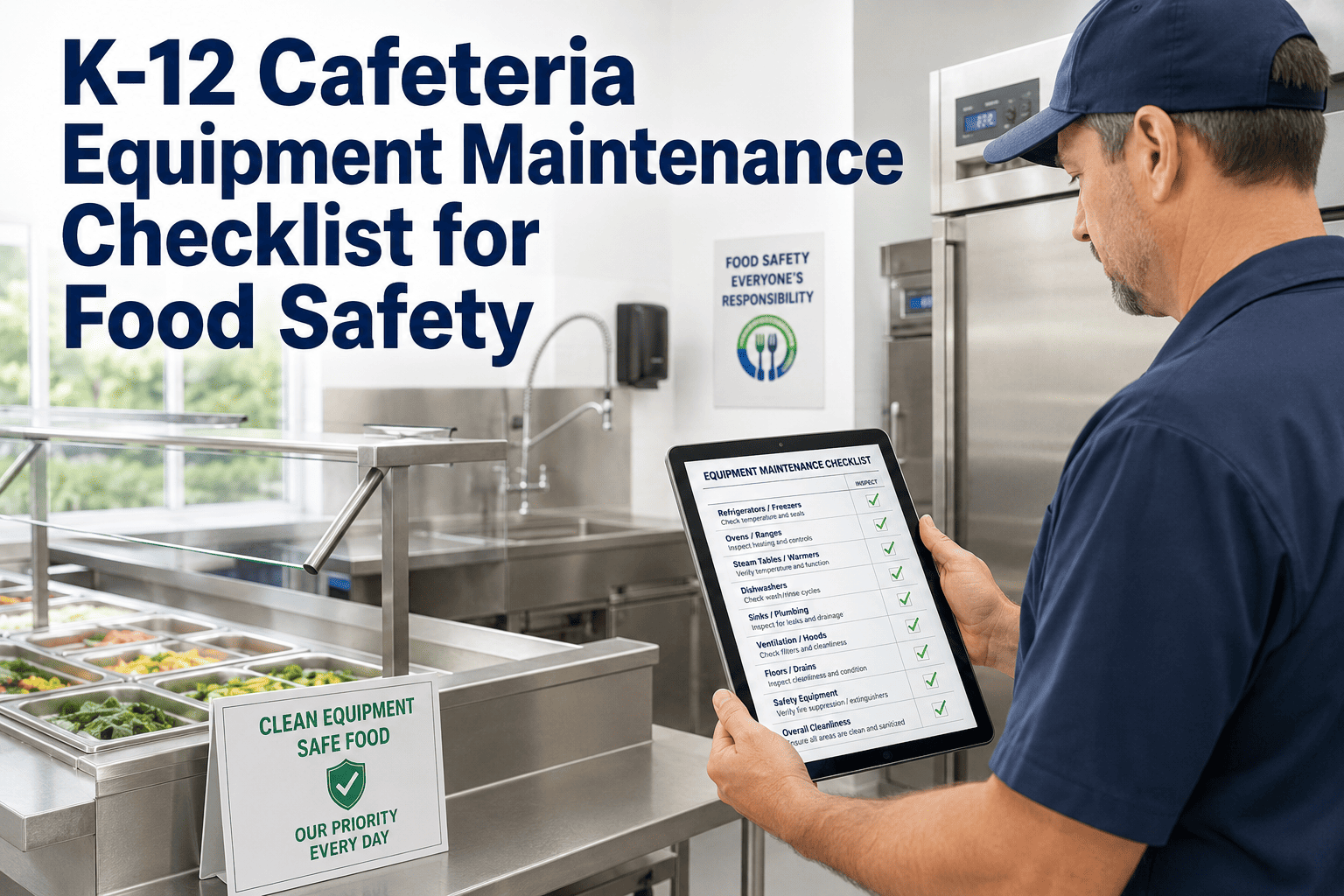
School cafeterias serve hundreds of meals every day, and every piece of equipment — from walk-in coolers to steam tables — is a potential food safety risk when maintenance slips. The FDA Food Code and USDA school nutrition program requirements hold K-12 food service operations to strict hygiene and temperature standards, and equipment failures are the leading cause of temperature abuse violations cited in school health inspections. Most citations do not stem from intentional neglect — they come from missed PM schedules, undocumented cleaning logs, and equipment that was never re-calibrated after a repair. This checklist covers the complete preventive maintenance programme for K-12 cafeteria equipment, from daily cleaning verification to annual deep-service tasks. Deploy it in OxMaint to auto-schedule every task, capture technician sign-offs on mobile, and produce audit-ready documentation for your next health inspection. Book a demo to see it live.
1. Refrigeration Units
Walk-in coolers, reach-in refrigerators, and freezer units are the first line of defence against bacterial growth. Temperature drift of even a few degrees during overnight hours can compromise an entire day's food inventory. Maintenance logs for refrigeration must be retained for a minimum of 90 days for health department review.
2. Cooking Equipment
Ovens, fryers, steamers, and griddles must reach and hold correct cooking temperatures to eliminate pathogens. Equipment that heats unevenly or cycles incorrectly is a food safety risk even when it appears to be operating normally. All cooking equipment should be temperature-verified, not just visually inspected.
3. Serving Lines and Hot/Cold Hold Equipment
The serving line is where food safety is most visible to health inspectors — and most often where temperature violations are cited. Hot and cold hold equipment must be verified at the start of service and monitored throughout. Any serving line equipment that cannot hold correct temperature must not be used until repaired.
4. Warewashing Equipment
High-temperature dish machines must reach and maintain 160°F minimum final rinse temperature to sanitise dishes without chemical sanitiser. Low-temperature machines depend on precise chemical concentration — too low fails to sanitise, too high leaves chemical residue on food contact surfaces.
5. Kitchen Ventilation and Exhaust
6. Small Wares and Utensil Management
7. PM Schedule Summary
| Equipment | Daily | Weekly | Monthly | Annual |
|---|---|---|---|---|
| Walk-in Cooler / Freezer | Temp log | Coil check | Coil clean, drain flush | Refrigerant check |
| Convection Oven | Preheat verify | Interior clean | Door gasket, calibration | Element inspection |
| Fryer | Temp verify | Oil filter/change | Drain valve clean | Full service |
| Dish Machine | Temp / chem log | Wash arm clean | Descale | Full service |
| Exhaust Hood | Visual | Grease filter | Fan, make-up air | Duct cleaning |
| Steam Table | Temp verify | Pan cleaning | Descale, drain clean | Element inspection |