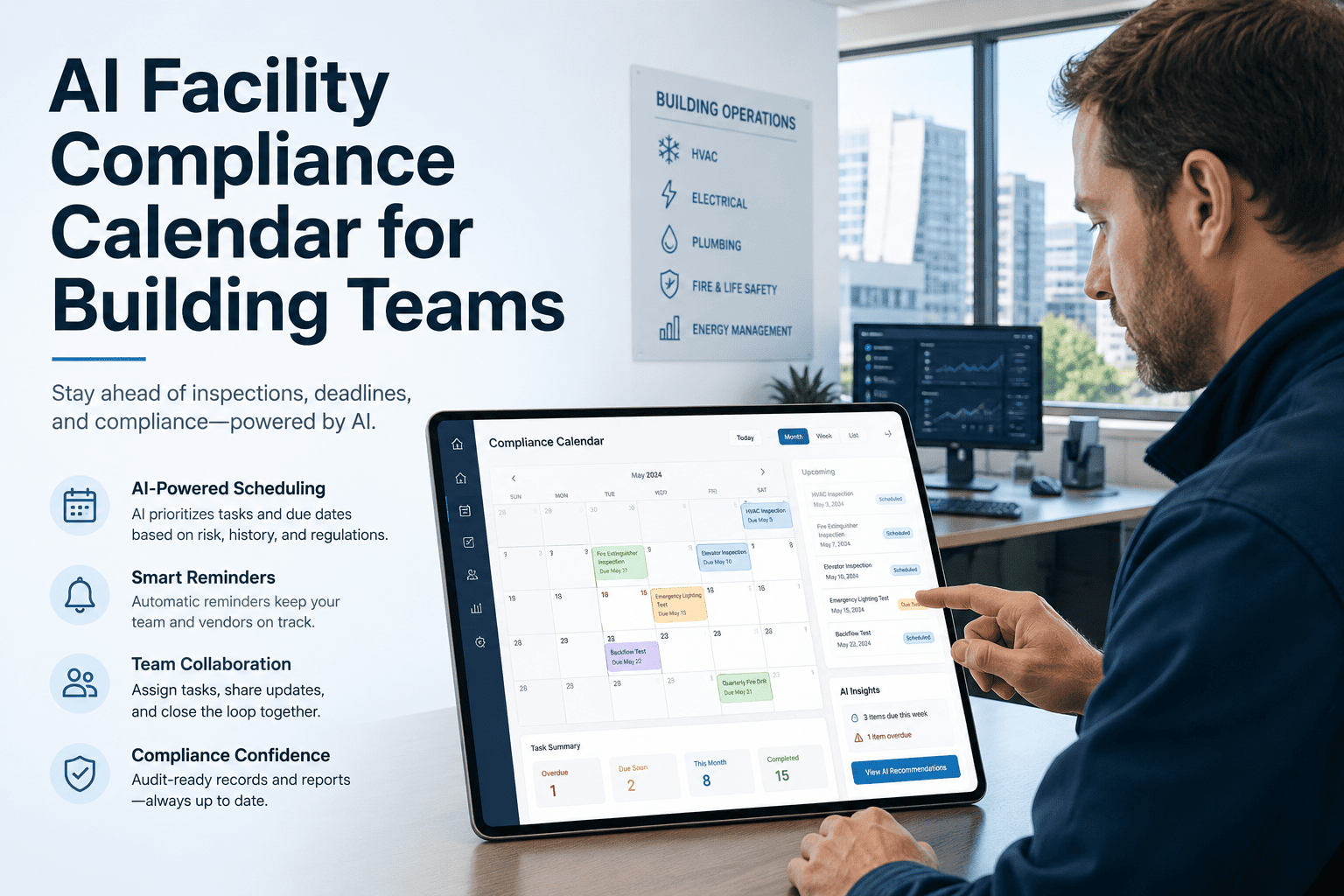
Seasonal transitions are the highest-risk periods for building system failures. HVAC changeovers, freeze-thaw cycles on building envelopes, and the shift from heating to cooling season stress equipment that has been running at steady state and expose deferred maintenance that flat-schedule PM cycles miss entirely. A quarter-by-quarter seasonal maintenance calendar ensures facility teams address the right tasks at the right time each year, catching seasonal vulnerabilities before they become emergency repair events. This calendar covers Q1 through Q4 with system-specific task lists, timing guidance, and the compliance checkpoints that each quarter requires. Sign up free on Oxmaint to convert this seasonal calendar into automated quarterly work order packages for your entire building portfolio, or book a demo to see the seasonal PM scheduling module configured for your buildings.
Checklist
Facility Manager Seasonal Maintenance Calendar: Quarter-by-Quarter Planning Guide
Authority · P1 · Q1 to Q4 · 80+ seasonal tasks
40%
Of HVAC system failures occur during seasonal changeover periods when equipment is transitioning between heating and cooling operating modes
3x
Higher freeze damage insurance claims in buildings without pre-winter heating system validation and pipe lag inspection programmes before first frost
$14K
Average cost of a freeze-burst pipe event in a commercial building, not including business interruption costs for displaced tenants or operations during repair
Q2
Highest-risk quarter for roof membrane failures as winter freeze-thaw cycles complete and summer UV loading begins — the primary window for proactive membrane inspection
Automate Your Seasonal Maintenance Calendar in Oxmaint: Every Quarter Scheduled, Every Task Assigned Before the Season Starts
Quarterly PM work order packages generated automatically at the start of each season. Contractor scheduling triggered 30 days in advance. Seasonal compliance checkpoints tracked with advance alerts. Free to start.
How to Use This Seasonal Calendar
1Review the upcoming quarter's task list 6 to 8 weeks before quarter start. Confirm contractor availability and lead times for specialist services before the seasonal demand peak.
2Identify any tasks from the prior quarter that were deferred and add them to the next quarter work order list before new seasonal tasks are assigned.
3Confirm compliance certificate due dates falling in the quarter and pre-book licensed inspectors at least 4 weeks in advance to avoid regulatory deadline misses.
4At quarter end, review completion rate by system and document any deferred items with the reason and next scheduled date before closing the quarterly record.
Seasonal Priority
Critical Must complete before season change or statutory deadline
Priority Complete within first 4 weeks of the quarter
Ongoing Continues through the quarter at stated frequency
Review Data review and planning task rather than physical inspection
Q1
January to March: Winter Operations and Spring Preparation
Peak Freeze RiskHVAC Winter Load
Winter Operations: HVAC and Heating
Q1 Building Envelope and Site
Q2
April to June: Spring Startup and Summer Cooling Preparation
HVAC Cooling StartupHighest Roof Inspection Priority
Cooling Season Startup and HVAC
Roof and Envelope Spring Inspection
Q3
July to September: Summer Cooling Season and Fall Transition Start
Peak Cooling LoadFall Preparation Start August
Summer Cooling Season Management
Fall Transition Preparation (August to September)
Q4
October to December: Fall Closedown and Winter Readiness
Heating Startup CriticalFreeze Protection Priority
Heating Startup and Frost Protection
Q4 Compliance and Year-End Review
Year
Year-Round Continuous Maintenance Tasks
Every QuarterRegardless of Season
Continuous Life Safety Requirements
Continuous HVAC and Facilities
Certs
Annual Compliance Certificate Calendar
Statutory DeadlinesBook 6 to 8 Weeks in Advance
Certificate Reference by System and Quarter
| System |
Code Reference |
Frequency |
Typical Quarter |
Notes |
| Fire Alarm |
NFPA 72 Ch 14 |
Annual |
Q4 |
Certificate posted at panel. 1 year retention minimum. |
| Sprinkler System |
NFPA 25 |
Annual |
Q4 |
Main drain test included. Filed with water authority where required. |
| Fire Extinguishers |
NFPA 10 S7.3 |
Annual |
Any |
Tag on unit. 6-yr teardown and 12-yr hydrotest on schedule. |
| Backflow Preventer |
Local Code |
Annual |
Q4 |
Filed with local water authority. Device accessible and not bypassed. |
| Elevator / Lift |
ASME A17.1 |
Annual |
Q2 |
Certificate posted in cab. 3 years prior certs in building file. |
| Emergency Lighting |
NFPA 101 S7.9.3 |
Annual |
Q3 |
90-minute battery discharge test. 1 year log retention. |
| Pressure Vessels |
Local Code |
Annual |
Q1 |
Boilers and air receivers. Licensed inspector required. |
| Electrical IR Survey |
NFPA 70B |
Annual |
Q2 |
Thermographic survey all switchgear. Report filed with asset record. |
How Oxmaint Converts This Seasonal Calendar Into an Automated Building Maintenance Programme
A seasonal maintenance calendar in a spreadsheet requires manual reminder management, individual contractor coordination, and retrospective completion tracking. In Oxmaint, the same calendar becomes a live programme: quarterly work order batches generate automatically at season start, contractor scheduling is triggered with 30-day advance notice, and seasonal compliance checkpoint progress is visible in real time across every building in your portfolio.
QWO
Quarterly Work Order Packages
At the start of Q1, Q2, Q3, and Q4, Oxmaint generates all seasonal work orders for that quarter automatically. Every task assigned to the correct technician or contractor with the correct priority and target completion date.
ADV
30-Day Advance Contractor Alerts
Specialist contractor bookings for chiller startup, boiler service, and fire safety inspections are triggered 30 days before the seasonal due date. No last-minute availability issues during peak-demand contractor periods.
CRT
Certificate Expiry Tracking
Every statutory certificate due date tracked with 90, 60, and 30-day alerts. Fire alarm, sprinkler, backflow, elevator, and emergency lighting certificates never missed because no one checked the calendar in time.
KPI
Seasonal Completion Rate Dashboard
PM completion rate by quarter, by system, and by building visible in real time. Any season closing below 85% completion triggers an automatic review flagging all deferred items with their overdue status.
TRD
Year-on-Year Trend Comparison
Energy consumption, emergency repair frequency, and PM compliance rate compared season-over-season. Identifies whether this winter's heating costs are tracking above or below last year before the bill arrives.
CAP
Capital Planning Input From Seasonal Data
Seasonal inspection findings and repeat repair history per system feed the Oxmaint CapEx forecasting model. Equipment approaching end-of-life identified before budget cycle closes rather than as emergency capital requests.
Automate Every Season's Maintenance Tasks Across Your Entire Building Portfolio in Oxmaint
Quarterly work order packages, contractor scheduling, certificate tracking, and seasonal PM compliance rates across every building in your portfolio. Live in days. No IT project required. Book a demo to see seasonal scheduling configured for your buildings.
Frequently Asked Questions: Seasonal Building Maintenance
QWhen should a facility manager start preparation for the cooling season HVAC changeover?
Start contractor booking in February or March for April service, before demand peaks drive 6 to 8 week lead times. Chiller commissioning should be complete before the first week where outdoor temperatures are forecast to exceed 20 degrees C for more than 3 consecutive days.
Sign up free to set 30-day advance contractor alerts, or
book a demo to see seasonal advance scheduling configured.
QWhat are the highest-risk seasonal maintenance failures and how does structured scheduling prevent them?
The three highest-risk failures are: freeze-burst pipes from skipped pre-winter heating system validation, chiller failures in the first week of summer from missed spring commissioning, and certificate lapses from certificates not tracked between renewals. All three are calendar failures, not equipment failures. Oxmaint's advance alerts and quarterly work order packages address all three.
Book a demo to review the advance alert configuration for your highest-risk seasonal items.
QHow should a facility manager document seasonal inspections for insurance and regulatory audit purposes?
Insurance and regulatory auditors look for three things: evidence that a structured inspection programme existed, that specific items were checked on schedule, and that findings generated traceable corrective actions. Oxmaint generates timestamped, GPS-located records for every seasonal inspection item, with photo evidence for any flagged finding. Audit packages generated in under 5 minutes.
Sign up free to start your seasonal compliance record from this quarter.
QHow do seasonal maintenance tasks connect to CapEx planning and budget forecasting?
Repeat seasonal findings on the same equipment item are the earliest leading indicator of approaching end-of-life. Oxmaint logs every seasonal finding against the asset record, building a cumulative condition history that the CapEx forecasting module uses to generate replacement timing recommendations and cost estimates 12 to 18 months before failure risk becomes acute.
Book a demo to see the CapEx forecasting output from seasonal inspection data.
Q1 to Q4. 80+ Seasonal Tasks. Certificate Tracking. CapEx Forecasting. All in Oxmaint.
Move from a static seasonal checklist to a live automated maintenance calendar that generates quarterly work orders, alerts contractors 30 days in advance, and tracks every compliance certificate across your full building portfolio. Free to start.
Quarterly Work Order Automation
30-Day Contractor Alerts
Certificate Tracking
Seasonal PM Dashboard
Continue Reading: FM Checklists and Templates
Building Maintenance Checklist: Daily, Weekly, Monthly and Annual TasksAll-frequency building maintenance across six domains from daily rounds to annual statutory compliance audits.
Click here to read more
Preventive Maintenance Schedule Template for Commercial FacilitiesHVAC, electrical, plumbing, fire safety, and elevator PM frequencies in one structured commercial building template.
Click here to read more
Facility Management SOP Template: Standardize Building OperationsWork order procedures, emergency protocols, vendor onboarding, and inspection routines in one SOP framework.
Click here to read more
Facility Management RFP Template: Select the Right FM Service ProviderScope of work, SLA requirements, evaluation criteria, and vendor scoring for outsourced FM services.
Click here to read more