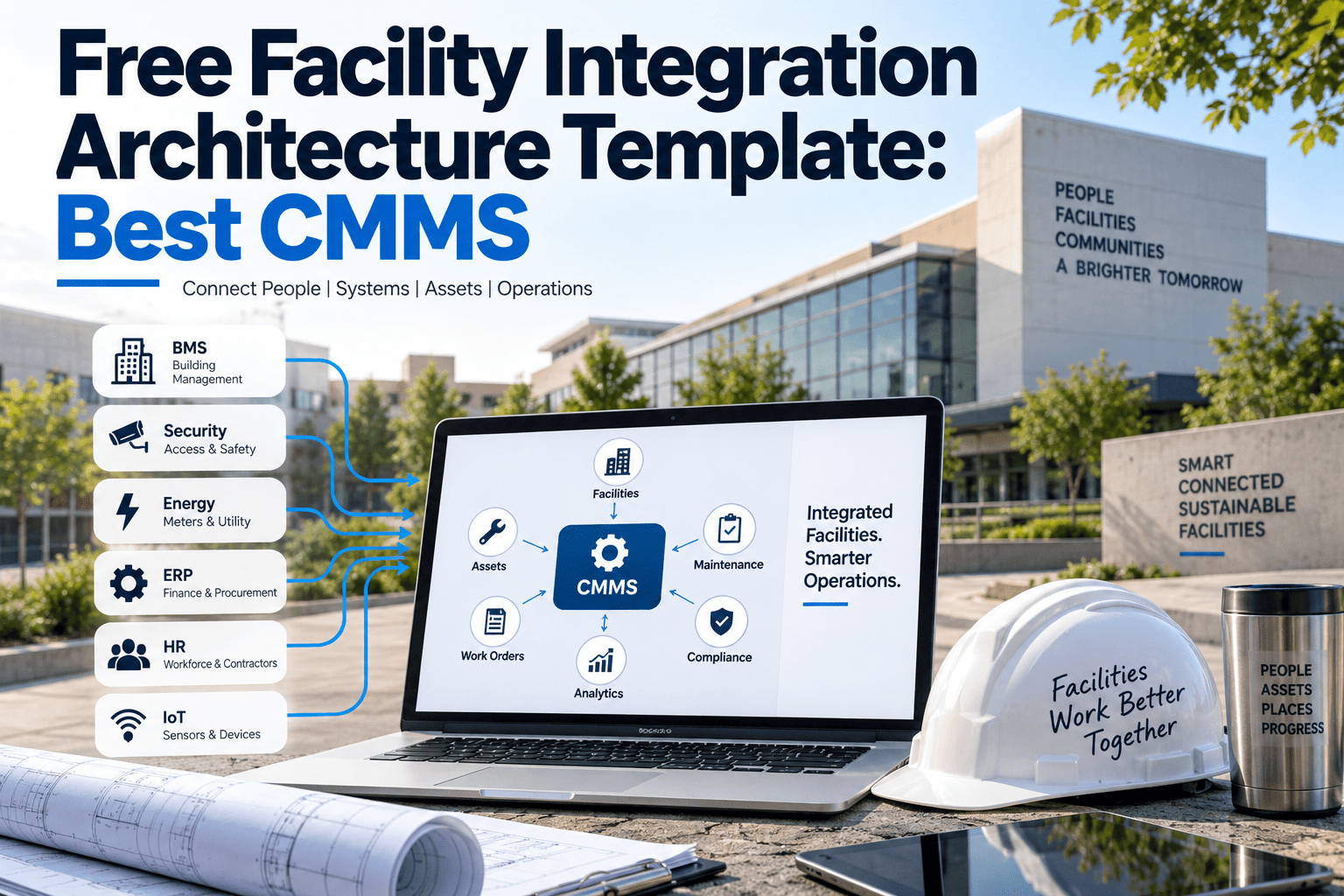
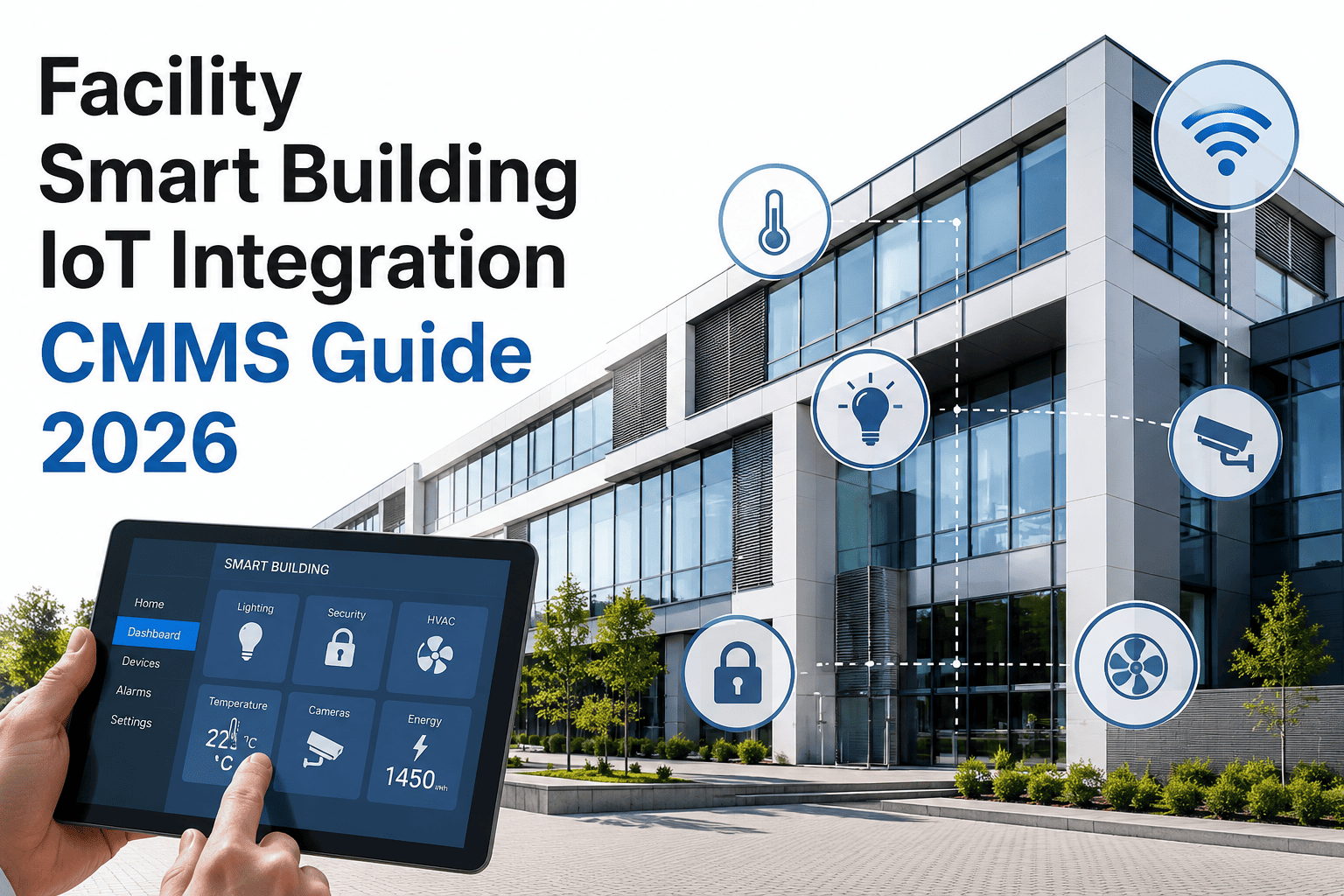
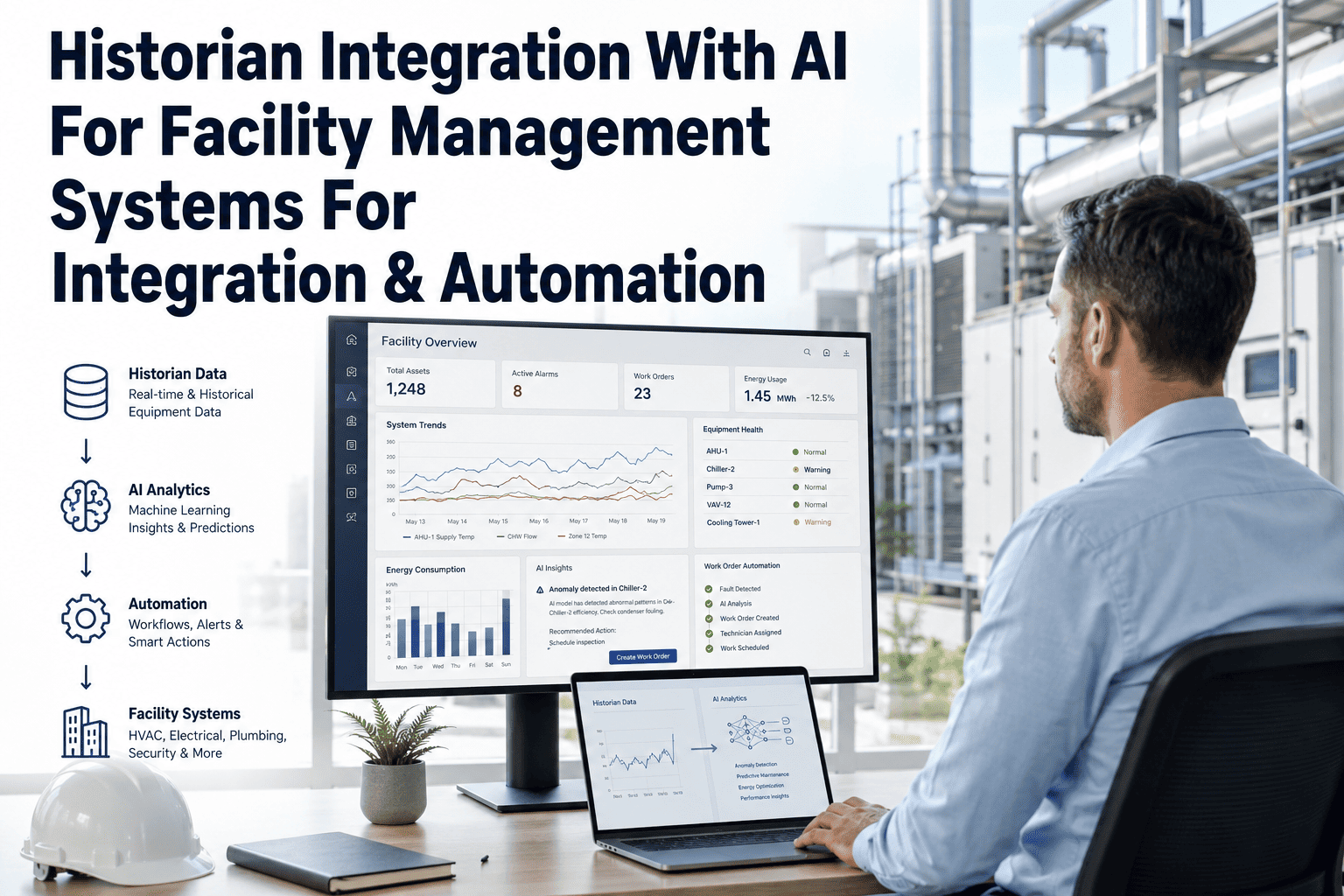
Commercial buildings generate more operational data than any other asset class in facility management, yet 73% of that data is never connected to a maintenance decision. A smart building technology stack changes that equation by integrating IoT sensors, building automation systems, AI analytics, and CMMS platforms into a single operational loop where every sensor reading, fault alert, and maintenance record feeds the next decision automatically. The result is not just better maintenance outcomes; it is the infrastructure for investor-grade reporting, predictive capital planning, and energy cost reduction that reactive facilities cannot produce. Book a demo to see how Oxmaint integrates with your existing building automation infrastructure to complete the smart building stack.
IoT & Smart Buildings
10–12 min read
73%
of commercial building sensor data is never connected to a maintenance or operational decision
30%
average energy cost reduction achieved by buildings with fully integrated IoT-to-CMMS feedback loops
4.2x
ROI on smart building technology investments achieved within 24 months across commercial portfolios
67%
of unplanned equipment failures detectable 2–6 weeks earlier with condition-based sensor monitoring
What Is a Smart Building Technology Stack?
A smart building technology stack is the layered integration of sensors, automation systems, data platforms, and CMMS that transforms a passive building into an active, data-driven operational environment. Unlike isolated "smart devices," a complete technology stack routes operational data across all layers so that a temperature exceedance at a sensor automatically becomes a maintenance work order, an energy report entry, and a capital planning data point simultaneously. The stack has five distinct layers, each with a specific operational role.
Layer 1
IoT Sensors and Edge Devices
The data collection foundation. Temperature, humidity, CO2, vibration, current, pressure, and occupancy sensors capture real-time conditions across every building system. Modern edge devices pre-process data locally, reducing bandwidth requirements and enabling sub-second response to critical thresholds. A well-instrumented commercial building carries 200–800 sensor endpoints across HVAC, electrical, plumbing, and structural systems.
Layer 2
Building Automation System (BAS)
The operational control layer. A BAS manages setpoints, schedules, and automated responses across HVAC, lighting, access control, and fire safety systems. Modern BAS platforms support BACnet, Modbus, and LonWorks protocols and serve as the primary aggregation point for sensor data before it moves to analytics and CMMS layers. Integration here determines how quickly sensor anomalies become actionable maintenance events.
Layer 3
CMMS and Work Order Management
The maintenance execution and documentation layer. A CMMS receives condition alerts from the BAS, generates work orders, assigns technicians, tracks completion, and builds the maintenance history that feeds predictive analytics. Without a CMMS connected to the sensor and automation layers, maintenance teams respond to BAS alarms manually and the operational feedback loop is broken between detection and documented resolution.
Layer 4
AI Analytics and Predictive Intelligence
The pattern recognition and forecasting layer. AI models trained on sensor data, work order history, and asset condition records identify failure signatures before equipment performance degrades to the point of visible fault. At this layer, the system shifts from reactive and preventive maintenance to condition-based and predictive maintenance, extending asset life by 15–25% versus calendar-based PM programs alone.
Layer 5
Portfolio Reporting and CapEx Intelligence
The decision support layer. Aggregated data from all layers below feeds rolling capital replacement forecasts, FCI scoring, energy benchmarking, and investor-grade operational reporting. Portfolio managers see performance across every property without manual report compilation. Capital requests backed by condition data achieve 88% approval rates versus 47% for estimate-based submissions without sensor evidence.
Connect Your Building's Data Layers on One Platform
Oxmaint integrates with BAS platforms, IoT sensors, and building historian data to complete the smart building stack with full CMMS execution and portfolio-level reporting. Start free or book a demo to review integration options for your building infrastructure today.
The Four Gaps Preventing Smart Building ROI
Most commercial buildings have at least two of the five stack layers already deployed. The ROI failure comes from gaps between layers where data stops flowing and decisions return to manual processes. The four gaps below account for 91% of unrealized smart building investment value across commercial portfolios.
01
BAS-to-CMMS Disconnection
A BAS alarm triggers an operator notification. The operator creates a manual work order. The technician completes the repair but the work order is on paper. Three weeks later, the asset fails again and the work history does not exist in the CMMS to diagnose the recurring pattern. This manual handoff between BAS and CMMS is the single largest source of avoidable reactive maintenance in instrumented buildings. Automated work order creation from BAS fault codes eliminates it.
02
Sensor Data Without Maintenance Context
A vibration sensor detects bearing deterioration. The reading goes to a dashboard that maintenance staff monitor when they have time. The bearing fails 4 weeks later. The sensor was working correctly; the process failed. Without automated threshold-to-work-order routing that links sensor data directly to the CMMS asset record, condition monitoring data is observation, not prevention. The average delay between sensor anomaly and work order creation in unintegrated buildings is 23 days.
03
AI Models Without Maintenance History
Predictive AI models require 12–24 months of labeled maintenance data to produce actionable failure forecasts. Buildings that have deployed AI analytics tools without a connected CMMS feed the models unlabeled sensor data that cannot be validated against actual failure events. The model output is interesting but not trusted for maintenance decision-making. Clean CMMS history is the prerequisite for functional predictive maintenance, not the output of it.
04
Multi-Layer Data in Multiple Platforms
BAS data in the automation platform. Work order history in the CMMS. Energy data in the utility dashboard. Capital plans in a spreadsheet. Each system has accurate data but the portfolio manager must manually compile all four for every reporting cycle. Without a unified reporting layer that aggregates across the stack, portfolio-level insight exists only during the week before the board meeting when someone compiles the report manually.
IoT Integration Protocols for Commercial Buildings
| Protocol |
Common Use Case |
Devices Supported |
Oxmaint Integration |
| BACnet IP / MS/TP |
HVAC, AHU, chillers, boilers — dominant BAS protocol in commercial buildings built after 2000 |
Trane, Carrier, Johnson Controls, Siemens BAS platforms |
Native BACnet gateway — fault codes auto-route to CMMS work orders |
| Modbus RTU / TCP |
Electrical panels, generators, UPS systems, energy meters — industrial and utility-grade equipment |
ABB, Schneider Electric, Eaton power monitoring systems |
Modbus TCP polling with configurable threshold-to-work-order mapping |
| MQTT / OPC-UA |
IIoT edge devices, SCADA integration, real-time condition monitoring sensors across assets |
Edge gateways, vibration sensors, temperature transmitters |
MQTT broker support with asset-tagged data mapped to condition records |
| LonWorks |
Lighting control, elevator systems, older commercial BAS in pre-2005 buildings |
Legacy Johnson Controls, Echelon-based control systems |
LonWorks-to-BACnet gateway bridging for unified data collection |
| REST API / Webhooks |
Modern cloud-connected BAS platforms, energy management SaaS, smart meter data |
Siemens Desigo CC, Honeywell Forge, Schneider EcoStruxure |
Full REST API with bidirectional work order sync and asset condition updates |
| Zigbee / Z-Wave / LoRaWAN |
Wireless occupancy sensors, room-level temperature nodes, remote asset monitoring |
Wireless sensor networks, Monnit, Multitech, Dragino gateways |
Gateway-to-API integration with configurable alert routing per sensor type |
How Oxmaint Completes the Smart Building Stack
Feature 01
BAS Fault-to-Work-Order Automation
BAS fault codes and threshold breaches automatically generate Oxmaint work orders with asset ID, fault description, priority level, and recommended technician pre-populated. The average time from BAS alarm to documented work order drops from 23 days to under 4 hours. Every fault event has a permanent, searchable record linked to the asset and the repair outcome.
Feature 02
Sensor Condition Scoring Per Asset
IoT sensor readings feed a continuous condition score for each asset in the registry. Condition thresholds are configurable per asset type — vibration for rotating equipment, temperature for electrical, differential pressure for HVAC. When the condition score crosses a configured threshold, a predictive maintenance work order is created automatically, 2–6 weeks before the equipment reaches failure state.
Feature 03
AI Work Order Prioritization
AI classifies incoming work requests and sensor-triggered work orders by asset criticality, failure mode severity, occupant impact, and technician availability — assigning and dispatching in under 2 seconds without supervisor intervention in 73% of routine cases. Escalation chains fire automatically at SLA thresholds. The priority queue rebalances in real time as new work orders arrive and technician availability changes during the shift.
Feature 04
Energy Data Integration and PM Linkage
Energy consumption data from smart meters and BAS is linked to specific asset PM records in Oxmaint. When HVAC energy consumption trends 15% above baseline for an asset, a filter inspection or coil cleaning work order is triggered automatically — connecting energy waste directly to maintenance action. Facilities using energy-linked PM programs report 22–30% HVAC energy reductions within the first year of integration.
Feature 05
Multi-Site Portfolio Intelligence Dashboard
Portfolio managers see PM compliance rate, open work order backlog, condition alert counts, energy benchmarking, and FCI scores across every property in real time on one dashboard. Drill down from portfolio overview to individual building to specific asset and sensor reading. No monthly status call, no spreadsheet consolidation. Capital requests backed by condition data from this dashboard achieve an 88% council approval rate.
Feature 06
CapEx Forecasting from Condition Data
Asset condition scores from IoT readings and work order findings feed rolling 5–10 year capital replacement forecasts automatically. Remaining useful life estimates update as condition data accumulates. The CapEx forecast identifies which assets are approaching replacement threshold 18–36 months in advance, enabling phased budget planning rather than emergency capital requests after unexpected failures damage building operations.
Feature 07
Mobile-First Field Operations with Offline Mode
Technicians access work orders, asset history, sensor readings, and PM checklists from mobile devices at the equipment location. QR asset tags link the technician to the complete asset record in under 3 seconds. Offline mode ensures connectivity gaps in mechanical rooms, basements, and remote locations do not interrupt the maintenance workflow. 74% of work orders are completed via mobile in Oxmaint-deployed buildings.
Feature 08
Compliance Documentation Auto-Generation
Every maintenance task on a compliance-relevant asset generates a timestamped, technician-attributed digital record linked to the applicable standard — NFPA, OSHA, ASHRAE, or building code. Audit documentation packages for any regulatory framework export in under 4 hours from the compliance dashboard with zero manual record compilation. Insurance renewal packages generate from the same system with no additional input required.
Smart Building Stack: Disconnected vs Integrated
Disconnected Stack
XBAS alarms reach an operator dashboard but generate no automatic work order — average 23-day delay from fault detection to documented maintenance action
XSensor data feeds monitoring dashboards but PM schedules run on calendar intervals, not actual condition readings from installed sensors
XWork order history is in the CMMS, energy data is in the utility platform, and capital plans are in a spreadsheet — no unified view exists without manual compilation
XPortfolio reporting requires 3–5 days of manual compilation per reporting cycle and is always retrospective by 30–45 days by the time it reaches leadership
Oxmaint Integrated Stack
VBAS fault codes auto-generate Oxmaint work orders in under 4 hours — every fault event has a permanent digital record linked to the asset and repair outcome
VSensor condition scores trigger predictive work orders 2–6 weeks before failure, extending asset life 15–25% versus calendar-only PM programs
VOne portfolio dashboard shows PM compliance, condition alerts, energy benchmarks, and FCI scores across every property in real time without manual assembly
VCapital forecasts update automatically from condition data — 88% CapEx request approval rate versus 47% for estimate-based submissions without sensor evidence
Frequently Asked Questions
QDoes Oxmaint work with existing BAS and BMS platforms or does it require new hardware?
Oxmaint integrates with existing BAS platforms via BACnet, Modbus, MQTT, OPC-UA, and REST API — no hardware replacement required. Most integrations are live within 3–5 days of configuration.
Start free or
book a demo to confirm compatibility with your specific BAS vendor and version.
QWhat IoT sensors deliver the fastest ROI for commercial buildings?
HVAC vibration and temperature sensors, electrical current monitoring on critical panels, and occupancy sensors for energy management deliver the fastest payback — typically 8–14 months. Chiller and air handler monitoring alone reduces emergency repair spend by 40–60% in the first year.
Book a demo to review sensor ROI data for your building type.
QHow long does it take to deploy the full smart building technology stack with Oxmaint?
CMMS deployment is live in 14 days. BAS integration adds 3–7 days per protocol. IoT sensor configuration adds 5–10 days depending on sensor count. Full stack deployment including AI features is typically complete within 30–45 days.
Start free to begin the CMMS layer immediately.
QCan Oxmaint manage smart building data across a multi-property portfolio from one account?
Yes. Oxmaint supports unlimited sites under one account with property-level configuration and portfolio-level reporting. Each building maintains its own BAS integration and sensor configuration while the portfolio dashboard aggregates all data automatically.
Book a demo to see the multi-site portfolio dashboard configured for your property count.
Complete Your Smart Building Stack with Oxmaint
Oxmaint connects IoT sensors, BAS platforms, and AI analytics to your maintenance execution layer — closing the gap between building data and operational decisions across every property in your portfolio. Start your free trial or book a 30-minute demo to review your integration options today.
Continue Reading
73% of Your Building Data Is Untapped. Oxmaint Changes That.
Connect IoT sensors, BAS platforms, and AI analytics to a unified CMMS layer that turns every sensor reading into a maintenance decision, a compliance record, and a capital planning data point. Live in 14 days. Book a 30-minute demo to see the smart building stack configured for your portfolio today.