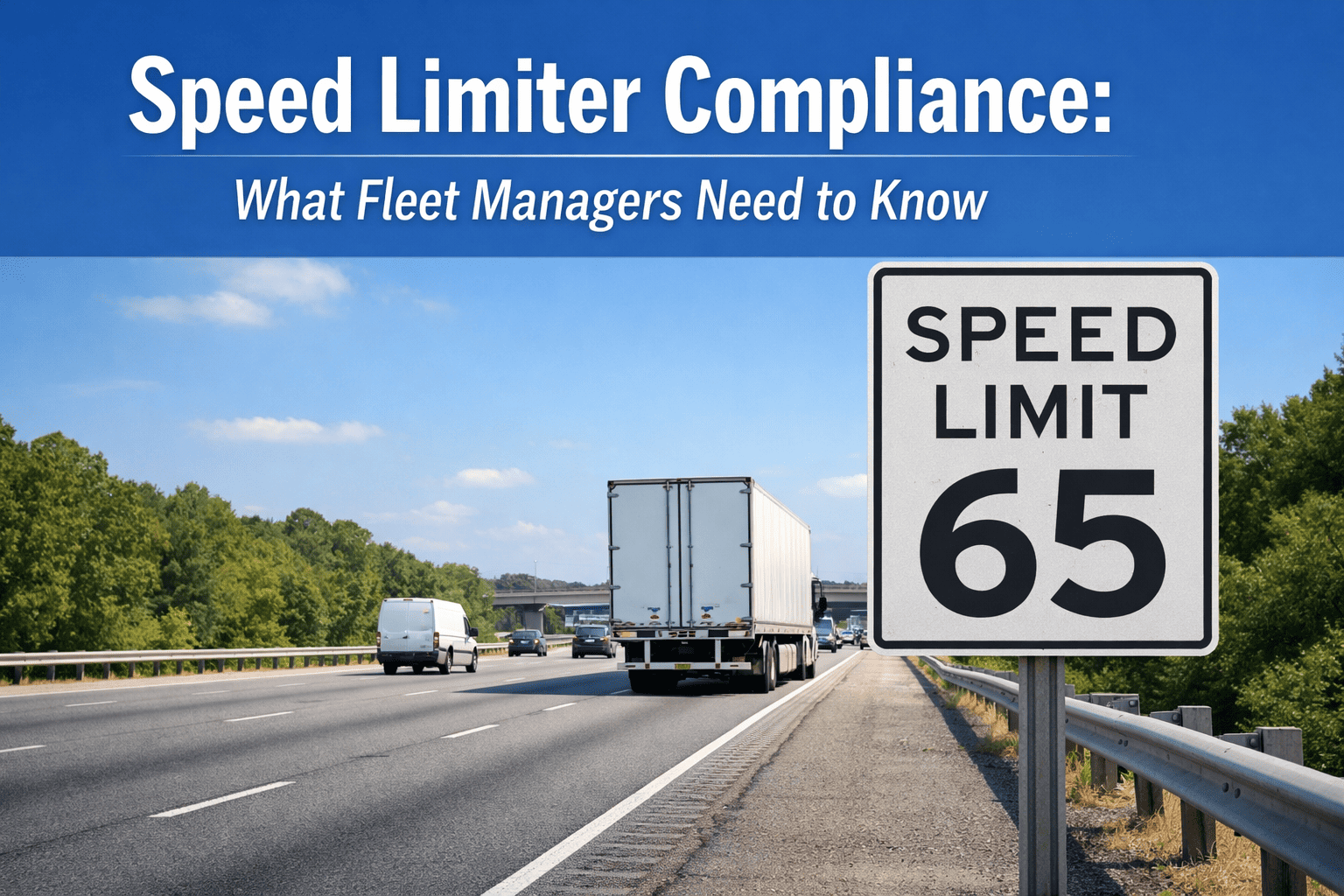
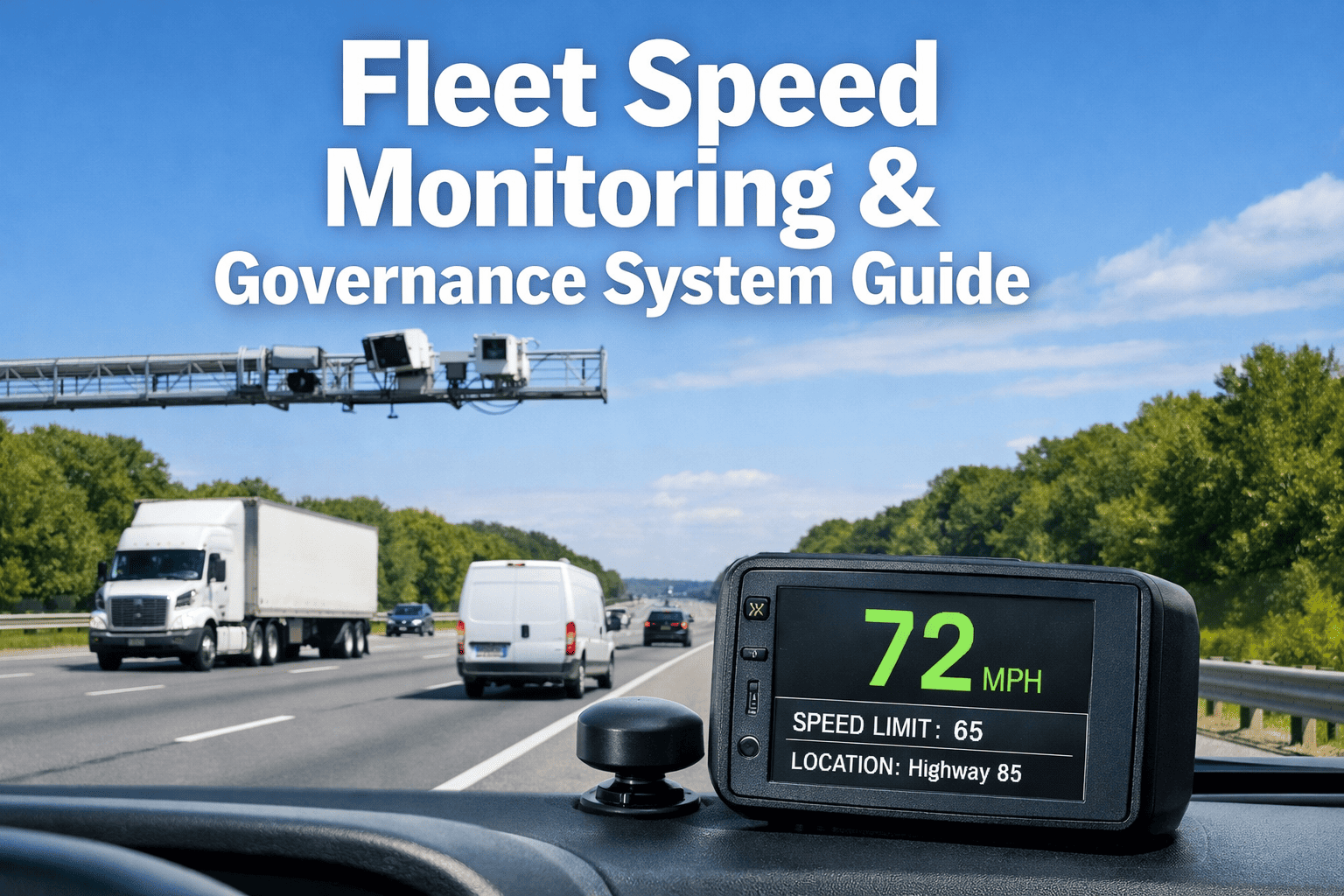
Speed limiter regulations for commercial motor vehicles have been one of the most debated and long-delayed federal rulemaking proceedings in trucking history — proposed by FMCSA and NHTSA in 2016, reactivated in 2022, and advancing toward final rulemaking in 2025 and 2026 with significant bipartisan support in Congress and backing from major carrier associations who recognise that speed governance is already best practice at the fleets with the strongest safety records. Whether or not a federal mandate reaches final rule status in 2026, the commercial reality is that major shippers, insurance underwriters, and corporate safety programmes have been pushing speed limiter requirements onto fleets through contractual requirements and premium structures for years — and the fleets that cannot demonstrate systematic speed governance policy and compliance documentation are increasingly finding themselves excluded from preferred carrier programmes, facing insurance surcharges, and carrying safety scores that disadvantage them in carrier selections. Speed limiter compliance in 2026 is not just a regulatory question — it is a business survival question for carriers whose customers and insurers are asking for documented evidence of a speed governance programme. Sign in to OxMaint to configure speed governance monitoring and compliance documentation for your fleet, or book a demo to see how OxMaint tracks vehicle speed settings, monitors compliance, and generates the documentation that shippers and insurers are increasingly requiring from preferred carriers.
Speed Limiter Compliance · Fleet Speed Governance · FMCSA Speed Management · OxMaint 2026
Federal Rulemaking or Shipper Requirement — Speed Governance Is Now a Business Survival Issue for Fleets That Can't Document It. OxMaint Makes Documentation Automatic.
OxMaint fleet speed governance monitoring tracks speed limiter settings per vehicle, measures real-world compliance against configured limits, identifies persistent over-speed events, and generates the compliance documentation that shippers, insurers, and regulators increasingly require from carriers operating in competitive freight markets.
65 mph
proposed federal speed limiter cap for CMVs over 26,000 lbs — the FMCSA/NHTSA proposed rulemaking speed limit under active consideration for final rule in 2026
8,500
large-truck fatalities involving speed as a contributing factor annually in the US — the safety data underlying the federal speed limiter rulemaking initiative
40%
insurance premium reduction available to fleets demonstrating documented speed governance programmes to commercial vehicle insurers — the financial incentive that predates federal regulation
2026
anticipated federal speed limiter final rule timeline — fleets without established speed governance programmes will face rushed compliance with inadequate documentation history
The fleets most at risk from speed limiter regulation in 2026 are not the ones whose vehicles run at 80 mph — they are the ones that have no documentation of what their vehicles run at. A fleet with a configured 65 mph speed limiter and a year of GPS-based compliance documentation is in a defensible position with regulators, shippers, and insurers regardless of where the final rule lands. A fleet with no governance documentation faces the same questions from all three audiences without any evidence basis to answer them. OxMaint speed governance monitoring produces the compliance record that turns "we have a speed policy" from an assertion into a documented fact — with vehicle-level speed configuration records, real-world compliance data, and driver event histories that satisfy the documentation requirements of every audience asking the question.
Why Fleets Are Getting Speed Governance Wrong in 2026 — Six Failure Patterns
Speed Policy Without Speed Documentation
Most fleets have a speed policy in their driver handbook. Few can produce GPS-based evidence that the policy is being followed across the fleet. A written policy with no compliance documentation is not a speed governance programme — it is a policy that will be used as evidence of knowledge in a post-accident negligence claim.
Engine Limiter Setting vs. Real-World Speed
A vehicle with a 68 mph engine limiter can still frequently operate at 67 mph for extended periods on Interstate corridors — technically below the limiter but well above the proposed federal cap in states with 70+ mph posted limits. GPS speed monitoring reveals the actual distribution of operating speeds, not just whether the limiter fires.
No Persistent Offender Identification
Fleet-level average speeds look acceptable even when 15% of drivers routinely exceed company limits — because averages mask outlier behavior. Without driver-level speed event tracking, the persistent over-speed offenders who represent the highest liability exposure are invisible in fleet-level reports.
Limiter Setting Tampering Undetected
ECM speed limiter settings can be modified by unauthorized personnel at third-party shops — and without a system that records configured limiter settings and compares them to real-world speed data, limiter tampering can go undetected for months before a compliance audit or accident investigation reveals it.
Shipper Documentation Request Cannot Be Met
Major shippers including Amazon, Walmart, and large food and beverage companies now require preferred carrier speed governance documentation as part of carrier qualification. Fleets that cannot produce speed compliance reports are losing freight contracts to carriers that can — regardless of federal rule status.
Insurance Documentation Gap
Commercial trucking insurers are increasingly requiring pre-renewal speed governance documentation — and fleets that cannot provide GPS-based speed compliance reports are facing surcharges, coverage limitations, or outright non-renewal. The 40% premium reduction available for documented speed governance is real money for fleets paying $15,000+ per truck annually.
How OxMaint Speed Governance Monitoring Works — Three Operational Layers
01
ECM Speed Limiter Setting Verification
OxMaint captures each vehicle's configured ECM speed limiter setting from ELD integration — recording the programmed limit per vehicle and alerting the fleet manager when any vehicle's recorded limiter setting deviates from the fleet-standard configuration. Limiter tampering — a vehicle whose ECM-reported setting changes between maintenance intervals — triggers an immediate compliance alert and creates a maintenance work order for ECM configuration verification at an authorized shop.
02
GPS-Based Real-World Speed Monitoring
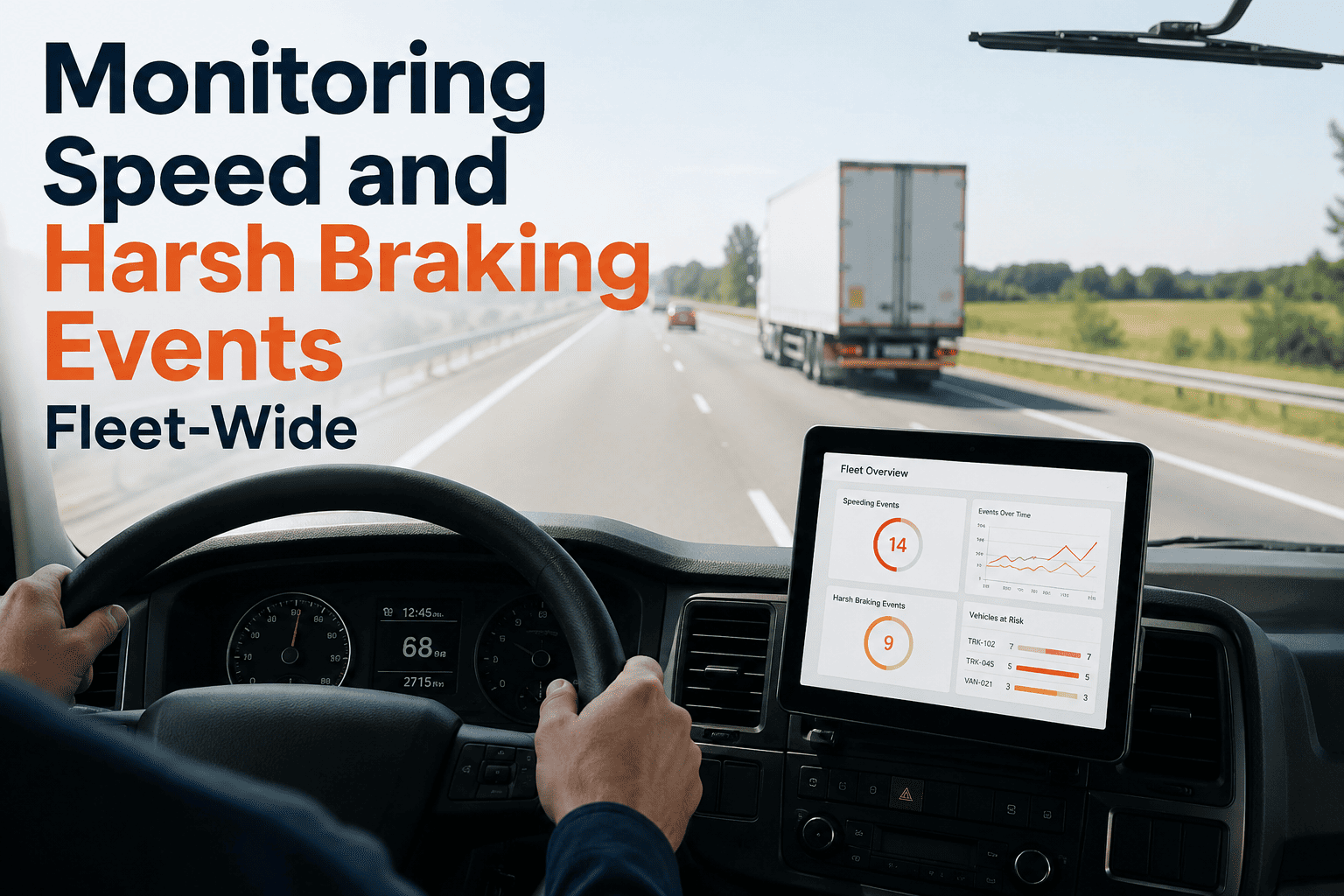
OxMaint GPS monitoring records actual vehicle speed continuously — providing the real-world operating speed distribution that reveals how vehicles actually operate, not just what their limiter theoretically allows. Speed events above configurable thresholds are logged with GPS location, duration, speed peak, and driver attribution — building the driver-level speed event record that identifies persistent over-speed patterns and supports targeted coaching before a serious incident occurs.
03
Compliance Report Generation for All Audiences
OxMaint generates speed governance compliance reports formatted for every audience that asks for them — regulatory format for FMCSA compliance reviews, fleet scorecard format for internal safety programme management, shipper qualification format for preferred carrier applications, and insurance documentation format for pre-renewal submissions. One monitoring programme produces all the reports, for all the audiences, without any additional data collection.
OxMaint AI · Fleet Speed Governance & Compliance
ECM Setting Verification. GPS Speed Monitoring. Driver Event Tracking. Compliance Reports for Every Audience. Speed Governance That Produces the Documentation Shippers and Insurers Require.
OxMaint turns a speed policy in a driver handbook into a documented speed governance programme with vehicle-level compliance evidence — the standard that freight contracts and insurance renewals increasingly require.
OxMaint Speed Governance Features — What Fleet Managers Get
Vehicle Speed Limiter Configuration Tracking
OxMaint records the configured ECM speed limiter setting for every vehicle in the fleet — generating alerts when any vehicle's setting deviates from the fleet-standard configuration and creating a documented history of limiter settings that supports both regulatory compliance and negligence defence.
Real-Time GPS Speed Monitoring with Event Logging
GPS-based speed monitoring records actual operating speeds for every vehicle continuously — logging speed events above configurable thresholds with GPS location, duration, peak speed, and driver attribution. Speed event logs are retained for the full DOT safety data lookback period.
Driver-Level Speed Scorecard and Coaching Workflow
OxMaint generates individual driver speed scorecards ranking each driver's speed event frequency, severity, and trend — identifying persistent over-speed offenders for targeted coaching before they become post-accident discovery exhibits. Coaching workflow tracks the coaching conversation, the corrective action commitment, and the post-coaching speed event trend.
Shipper Qualification Documentation Package
OxMaint generates speed governance documentation in the format required by major shipper carrier qualification programmes — including fleet-level compliance percentages, configured limiter settings, speed event summaries, and driver coaching records that satisfy the documentation requirements of Amazon, Walmart, and other major shippers' preferred carrier standards.
Insurance Pre-Renewal Speed Governance Report
OxMaint generates the speed governance report format that commercial trucking insurers use in pre-renewal assessments — showing fleet-level speed compliance rates, trend over 12 months, persistent offender identification and coaching actions, and limiter configuration verification. Documented speed governance is worth 20–40% in premium reduction at most commercial CMV insurers.
FMCSA Regulatory Compliance Documentation
When federal speed limiter rulemaking reaches final rule status, OxMaint fleets will have the complete compliance documentation history already in place — vehicle limiter configurations, real-world compliance data, and driver coaching records that satisfy regulatory record-keeping requirements from the first day the rule is enforceable.
Speed Governance Requirements by Audience — What Each Stakeholder Needs to See
Federal Regulatory Compliance
FMCSA final rule documentation will require vehicle-level speed limiter configuration records and compliance monitoring data. OxMaint fleets have both from the day of deployment — with historical records that demonstrate pre-rule compliance commitment rather than reactive rule implementation.
Shipper Carrier Qualification
Major shipper carrier programmes require documented speed governance including fleet compliance rates, limiter configuration verification, and driver coaching records. OxMaint generates all required documentation in the format preferred carrier applications require — turning speed governance into a competitive advantage rather than a qualification barrier.
Insurance Underwriting
Commercial trucking insurers use speed governance documentation as a primary underwriting factor — rewarding fleets with documented compliance programmes and penalizing fleets without them. OxMaint speed reports give insurers the evidence they need to apply maximum discounts, potentially saving $3,000–6,000 per truck annually in premium costs.
Speed Governance Comparison — Fleets With and Without OxMaint Documentation
Without Speed Governance Documentation
Speed policy exists in driver handbook only
No vehicle-level limiter setting records
No GPS speed event data by driver
Persistent over-speed drivers invisible
Limiter tampering undetected
Cannot satisfy shipper documentation requirement
Insurance premium at full rate — no discount
Federal compliance reactive — day-of-rule scramble
VS
With OxMaint Speed Governance
Policy + GPS-verified compliance evidence
Vehicle limiter settings recorded and verified
Driver speed event log — every event attributed
Persistent offenders identified — coached proactively
Limiter deviation alert — tampering detected immediately
Shipper documentation generated on demand
20–40% insurance premium reduction available
Federal rule-ready — documentation history in place
Speed Governance Outcomes — Fleets Using OxMaint Monitoring
40%
average insurance premium reduction at fleets presenting OxMaint speed governance documentation to underwriters — $3,000–6,000 per truck annually in premium savings
31%
reduction in speed-related safety events at fleets using OxMaint driver-level speed scorecard and coaching workflow — within 12 months of programme deployment
Zero carrier qualification rejections for speed governance documentation at fleets using OxMaint — every shipper documentation request satisfied on first submission
Shippers are already requiring it. Insurers are already rewarding it. Federal regulation is advancing. Speed governance documentation is not a future problem — it is the freight contract and insurance premium you are losing this quarter because you cannot produce the evidence.
ECM setting verification. GPS speed monitoring. Driver scorecards. Shipper and insurer reports. OxMaint makes speed governance a documented programme — not a policy in a binder that nobody can prove is being followed.
We lost two freight contracts in 2022 to carriers who could produce speed governance documentation and we couldn't. That was the wake-up call. We deployed OxMaint speed monitoring in January 2023, built 12 months of documented compliance data, and went back to both shippers in early 2024. We got both contracts back. We also submitted our OxMaint speed report to our insurer at renewal and got a 38% reduction on our premium — $420,000 in annual savings on a 90-truck fleet. Speed governance paid for itself before we'd had it 90 days.
— VP of Operations, Regional Carrier · 90 Trucks · OxMaint speed governance user since 2023
Frequently Asked Questions — Fleet Speed Limiter Compliance and Governance in 2026
What is the current status of the federal speed limiter rule for commercial vehicles in 2026?
The FMCSA and NHTSA joint speed limiter rulemaking — proposing a 65 mph cap for CMVs over 26,000 lbs — remains under active rulemaking consideration as of early 2026, with Congressional support and major carrier association backing. The timeline for final rule publication is 2026, though final rulemaking timelines are subject to change. OxMaint users are advised to monitor FMCSA regulatory activity for updates.
Sign in to OxMaint to configure your fleet's speed governance settings in advance of any final rule.
How does OxMaint detect if a vehicle's speed limiter setting has been tampered with?
OxMaint records each vehicle's ECM-reported speed limiter setting through ELD integration — comparing the current setting against the fleet-standard configuration and the vehicle's previous recorded setting. Any deviation from the fleet standard or any change from the previously recorded setting generates an automatic alert to the fleet manager and creates a maintenance work order for ECM configuration verification. Tampering is detected within one data sync cycle of occurrence.
What format does OxMaint use for shipper carrier qualification speed documentation?
OxMaint generates speed governance documentation covering fleet-level compliance rates against configured limits, vehicle-level limiter configuration records, driver speed event summaries, and coaching action records — in PDF and CSV formats. For shippers with specific documentation formats, OxMaint's custom report builder can produce output matched to the shipper's preferred carrier application template.
Book a demo to review documentation format options.
How does OxMaint identify persistent speed offenders for coaching?
OxMaint generates individual driver speed scorecards ranking each driver's speed event frequency, duration, and peak speed against the configured fleet threshold — sorting drivers from highest to lowest event rate to identify persistent offenders. Drivers who appear in the top tier of the scorecard for two or more consecutive months generate automatic coaching flags with the event history attached for the coaching conversation.
Can OxMaint help fleets that already have speed limiters configured but need documentation?
Yes — and this is the most common use case. Most fleets already have speed limiters configured in their vehicles. What they lack is the documentation of those configurations, the real-world compliance data showing actual operating speeds, and the driver event history that demonstrates active programme management. OxMaint builds this documentation record from the day of deployment, producing a defensible compliance history within 90 days of activation.
Speed Governance Isn't Just About Federal Regulation in 2026. It's About the Freight Contracts and Insurance Premiums You're Losing This Quarter Because You Can't Prove Your Fleet Follows Its Own Speed Policy.
ECM setting verification. GPS speed monitoring. Driver-level scorecards. Shipper qualification documentation. Insurance pre-renewal reports. OxMaint turns your speed policy into a documented speed governance programme that every audience — regulators, shippers, and insurers — can see and verify.