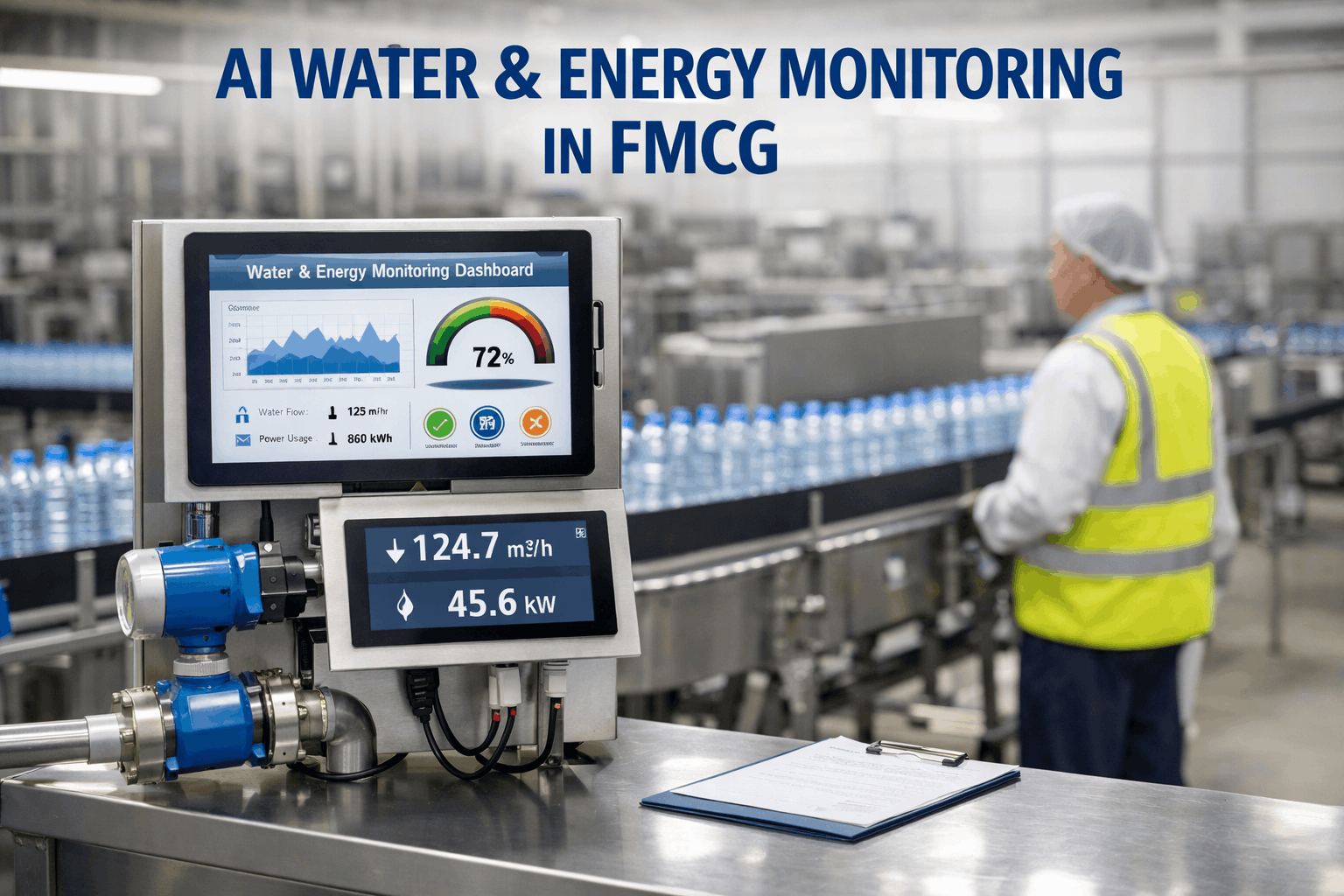
The sustainability director stared at three different spreadsheets, each maintained by a different department, each telling a different story about the plant's water consumption. Manufacturing reported 4.2 liters per unit produced. Utilities reported 5.8 liters per unit. The figure submitted to the corporate ESG report last quarter was 3.9 liters—a number nobody could trace to a source. When the third-party auditor asked for documentation supporting the reported 12% year-over-year water reduction, the team spent eleven days assembling data from utility bills, production logs, and maintenance records—only to discover the actual reduction was 3.4%. The corporate report had already been published. The restatement cost the company its position on a major ESG index and triggered due diligence reviews from two institutional investors representing $340 million in holdings. The problem was never intent. The plant was genuinely improving. The problem was that nobody could prove it because the data lived in fifteen different systems and none of them agreed. Book a Demo to see how AI-powered ESG tracking eliminates the gap between actual sustainability performance and reported performance.
This guide examines how AI-driven sustainability monitoring systems give FMCG plants a single source of truth for energy, water, waste, and carbon data—with automated calculations, real-time dashboards, and audit-ready reporting that transforms ESG compliance from a quarterly scramble into a continuous, verifiable process. Sign Up to start tracking sustainability KPIs alongside your maintenance operations.
Why FMCG Plants Cannot Afford Manual ESG Tracking
Without automated sustainability monitoring, FMCG manufacturers rely on monthly utility bills, manual meter reads, and spreadsheet calculations to assemble ESG metrics. This approach introduces errors at every stage—and the consequences are escalating as investors, regulators, and retailers demand verifiable data.
30–40%
Of global industrial energy is consumed by FMCG manufacturing
15–25%
Typical energy waste recoverable through AI optimization in FMCG plants
78%
Of FMCG companies still report ESG data manually using spreadsheets
Critical Gap
ESG data restatements destroy credibility faster than good performance builds it
A single data restatement can cost an FMCG company its position on ESG indices, trigger investor due diligence reviews, and undermine years of genuine sustainability progress. AI-driven tracking creates an unbroken chain from sensor reading to published metric—with every calculation documented and every source traceable.
The Four Pillars of FMCG Sustainability Tracking
AI-driven ESG monitoring for FMCG plants organizes around four environmental pillars—each requiring its own data sources, calculation methodologies, and optimization strategies. Together they provide the complete sustainability picture that stakeholders demand. Sign Up to track sustainability KPIs alongside your maintenance operations automatically.
kWh per unit produced · CO2e per MWh = Carbon intensity
Real-time monitoring of electricity, natural gas, steam, and compressed air consumption by production line and process area. AI converts consumption to CO2e using region-specific grid emission factors and tracks Scope 1 (direct combustion), Scope 2 (purchased electricity), and Scope 3 upstream estimates.
Peak Demand Optimization
Scope 1/2/3 Tracking
Liters per unit produced · Effluent quality vs. permit limits
Tracks water intake, process water, CIP (clean-in-place) cycles, cooling water, and wastewater discharge. AI identifies abnormal consumption patterns—a CIP cycle using 40% more water than baseline triggers investigation. Monitors effluent quality parameters against discharge permit limits in real time.
CIP Cycle Optimization
Effluent Compliance
Waste per unit · Diversion rate = Landfill intensity
Monitors production waste by category: packaging scrap, product waste, process sludge, and facility waste. Tracks diversion rates (recycled, composted, energy recovery) versus landfill. AI correlates waste spikes with production events—changeovers, startups, and quality rejects—to identify reduction opportunities.
Changeover Waste Reduction
Diversion Rate Tracking
Why FMCG Sustainability Reporting Fails: Manual vs. AI
The accuracy of your ESG metrics depends entirely on data quality. Manual tracking introduces errors and blind spots at every stage. Book a Demo to see how Oxmaint automates data collection and eliminates the guesswork entirely.
Manual / Spreadsheet ESG
Data from utility bills, manual meter reads, and waste manifests
Monthly or quarterly collection with temporal misalignment
Emission factors and conversion constants vary between teams
4–8 weeks to compile each ESG report
No audit trail—auditors cannot trace figures to source data
±25–40%
typical GHG calculation variance
VS
AI-Driven ESG Platform
Real-time automated data from meters, BMS, SCADA, and MES
Continuous collection with sensor-to-metric calculation
Locked emission factors and conversion constants—no drift
Reports generated on-demand or auto-scheduled
Complete audit trail from sensor reading to published metric
Sustainability KPI Benchmarks by FMCG Plant Type
Different FMCG manufacturing processes generate distinct sustainability profiles. AI monitoring systems must be configured for the specific resource consumption patterns and waste streams of each plant type.
FMCG Sustainability Benchmarks
The Six Hidden Sustainability Losses in FMCG Plants
Just as OEE identifies the Six Big Losses destroying production capacity, AI sustainability tracking exposes six categories of resource waste that manual monitoring misses entirely.
01
Equipment Degradation Waste
Fouled heat exchangers, worn compressor seals, and poorly tuned burners waste 8–15% more energy than properly maintained equipment.
Sign Up to link PM completion directly to energy efficiency KPIs.
02
Non-Production Runtime
Equipment running during breaks, changeovers, and weekends without producing output. AI scheduling analysis shows that 15–25% of energy consumption occurs outside productive operation.
03
CIP Over-Washing
Clean-in-place cycles running longer than necessary, using higher temperatures, or more chemical than required. CIP accounts for 20–40% of total water use—AI optimization reduces this by 15–30%.
04
Leak and Overflow Waste
Undetected leaks in distribution, cooling towers, and steam traps. A single leaking steam trap wastes $3,000–$8,000 per year. AI detects anomalous flow patterns within minutes, not billing cycles.
05
Changeover and Startup Waste
Product transitions generate off-spec material, packaging scrap, and purge waste. AI correlates waste volumes with specific SKU transitions to identify which changeovers produce the most waste and why.
06
Untracked Waste Streams
Waste sent to landfill that could be diverted to recycling, composting, or energy recovery. Many plants achieve only 60–70% diversion because waste characterization is incomplete—AI categorization reaches 90%+.
Equipment degradation is the largest hidden sustainability cost. A fouled heat exchanger wastes 8–15% more energy. A leaking steam trap wastes thousands annually. Oxmaint links preventive maintenance completion to sustainability KPIs—proving that maintenance investment delivers measurable environmental returns.
AI Sustainability Tracking Maturity: Where Does Your Plant Stand?
Use this framework to assess your current ESG data capability and set improvement targets. Most FMCG plants operate at Level 1 or 2—AI-driven platforms move you to Level 4 within 6–12 months.
Level 1: No TrackingPlant-level utility bills only · Annual estimates · No per-unit metrics
Level 2: Manual TrackingSpreadsheet consolidation · Monthly reporting · ±25–40% variance
Level 3: Basic MonitoringBuilding-level sub-meters · Weekly dashboards · ±10–20% variance
Level 4: AI-Driven PlatformEquipment-level data · Real-time KPIs · ±3–5% verified · Auto-reporting
Phase 1 — Data Foundation (Weeks 1–4)
Audit existing metering infrastructure: identify which streams are metered vs. estimated
Map all data sources: BMS, SCADA, MES, ERP, utility accounts, waste hauler manifests
Define baseline year methodology and lock emission factors, conversion constants, boundaries
Phase 2 — Infrastructure & Integration (Weeks 5–10)
Install sub-metering on highest-impact systems: boilers, chillers, compressed air, CIP, major lines
Connect all data sources to centralized AI platform via API, IoT gateway, or manual upload
Configure automated KPI calculations: energy/unit, water/unit, waste diversion rate, CO2e/ton
Phase 3 — Intelligence & Optimization (Weeks 11–16)
Enable AI anomaly detection: flag consumption spikes, efficiency degradation, meter discrepancies
Build role-based dashboards: plant manager (daily), sustainability director (monthly), executive (quarterly)
Link sustainability KPIs to
Sign Up for maintenance data correlation: correlate PM completion with efficiency trends
Phase 4 — Verified Reporting & Continuous Improvement
Configure automated report generation for GRI, CDP, CSRD, TCFD, and retailer scorecards
Submit first AI-verified ESG report with full data provenance from sensor to published metric
Plants reaching Phase 4 achieve 15–25% energy reduction, 10–20% water reduction, and 60–80% reduction in reporting preparation time—freeing sustainability staff for improvement projects instead of data collection.
Proven Strategies to Improve FMCG Sustainability Metrics
Improving ESG performance is not about chasing a number—it's about systematically attacking your biggest resource losses. Start with Pareto analysis of consumption data, then apply targeted strategies by pillar.
FMCG Sustainability Improvement Playbook
How Oxmaint CMMS Drives Sustainability Performance
A CMMS directly impacts sustainability by ensuring the equipment that consumes energy, water, and produces waste operates at peak efficiency. Deferred maintenance is deferred sustainability.
PM-to-Efficiency Correlation
Oxmaint links preventive maintenance completion directly to energy and water consumption trends. When PM compliance drops, the platform predicts the corresponding increase in resource consumption and alerts both maintenance and sustainability teams—creating cross-departmental accountability.
Equipment Degradation Tracking
Monitor asset condition scores alongside sustainability KPIs. A fouled heat exchanger scores lower on condition assessment and simultaneously shows increased energy consumption. Oxmaint makes this correlation visible and actionable—prioritizing maintenance work by environmental impact.
Steam Trap and Leak Management
Automated PM schedules for steam trap surveys, compressed air leak detection, and refrigerant system integrity checks. Every failed trap or detected leak generates a work order with estimated resource waste—quantifying the sustainability cost of deferred repairs.
Audit-Ready Maintenance Records
Complete digital records of every maintenance activity that affects sustainability: calibration of meters, cleaning of heat exchange surfaces, replacement of seals and gaskets, and equipment efficiency testing. ESG auditors can trace every data point to its source.
Sustainability and maintenance are not separate disciplines—they are the same discipline measured differently. Every piece of poorly maintained equipment is simultaneously a production risk and an environmental liability. The moment you connect your CMMS to your ESG platform, both teams start solving the same problems.
— Plant Sustainability Manager, Global FMCG Manufacturer
Turn Sustainability Data into Verifiable, Actionable Intelligence
Spreadsheets cannot detect a steam leak wasting $40,000 per year, identify that Line 3's CIP cycles use 35% more water than Line 1, or auto-generate a CDP-compliant carbon disclosure. AI-driven ESG tracking does all of this—continuously, accurately, and with the audit trail that investors, regulators, and retailers demand.
Frequently Asked Questions
How does AI improve ESG data accuracy compared to manual tracking?
AI eliminates three primary sources of manual error: transcription mistakes during data entry (typically 2–5% error rate), calculation inconsistencies from spreadsheet formula drift, and temporal misalignment between different data sources. Automated sensor-to-metric calculation uses locked emission factors and conversion constants that cannot be accidentally modified. The system also detects anomalies—a meter reading that deviates 15% from the statistical norm is flagged for investigation rather than silently incorporated into reports. Plants typically improve from ±25–40% variance to ±3–5% verified accuracy within the first reporting cycle.
Sign Up to start tracking sustainability alongside maintenance.
What reporting frameworks does AI sustainability tracking support?
Modern AI ESG platforms generate reports aligned to GRI (Global Reporting Initiative), CDP (Carbon Disclosure Project), CSRD (EU Corporate Sustainability Reporting Directive), TCFD (Task Force on Climate-Related Financial Disclosures), and SBTi (Science Based Targets initiative). The system maps your raw data to each framework's specific metrics, scopes, and disclosure requirements automatically—so the same underlying energy data produces a GRI energy intensity disclosure, a CDP Scope 1/2 emissions report, and a CSRD-compliant ESRS E1 climate disclosure without manual reformatting.
How does maintenance data connect to sustainability performance?
Equipment degradation is one of the largest hidden drivers of excess energy and water consumption. A fouled heat exchanger operates 8–15% less efficiently. A leaking steam trap wastes $3,000–$8,000 per year. An improperly tuned boiler burns 5–10% more fuel than specification.
Book a Demo to see how Oxmaint links preventive maintenance completion directly to sustainability KPIs—when PM compliance drops, the platform predicts the corresponding increase in energy consumption and alerts both maintenance and sustainability teams.
What sub-metering is required before deploying AI ESG tracking?
You do not need perfect metering to start. Phase 1 works with existing plant-level utility meters and production data—this alone provides plant-level intensity metrics and GHG calculations. As you install sub-meters on high-impact systems (boilers, chillers, compressed air, CIP, major production lines), the AI progressively disaggregates plant-level consumption into equipment-level attribution. Most plants achieve 80% of the analytics value with sub-metering on just 6–10 key systems.
What ROI does AI ESG tracking deliver beyond compliance?
Beyond compliance, AI sustainability tracking delivers direct operational savings: 15–25% energy reduction through anomaly detection and optimization, 10–20% water reduction through CIP optimization and leak detection, 5–15% waste reduction through changeover analysis, and 60–80% reduction in reporting preparation time. A mid-size FMCG plant typically saves $200K–$800K annually in direct resource costs while simultaneously meeting ESG disclosure requirements.
Sign Up to calculate your plant's specific savings potential.