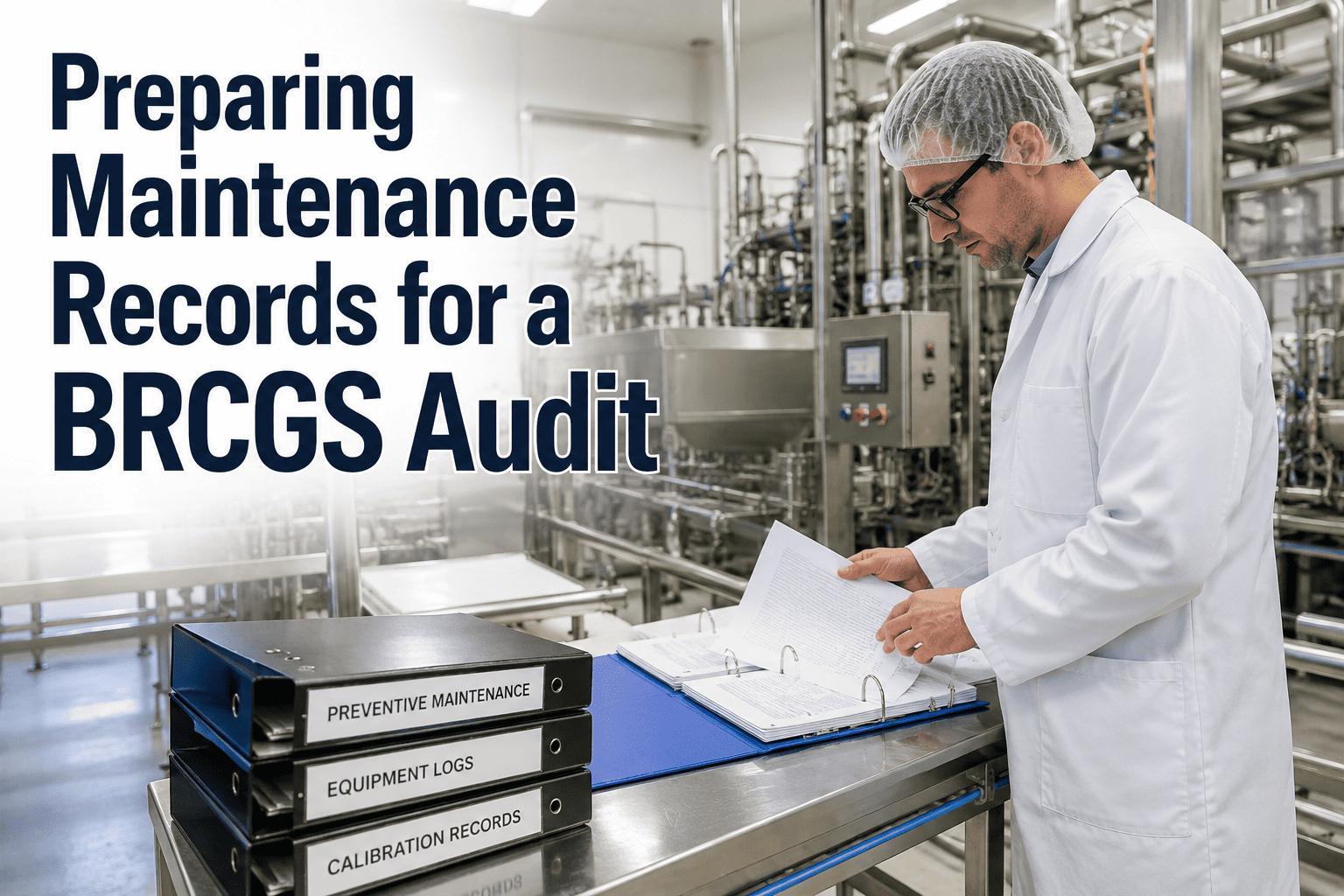
BRC Issue 9 maintenance requirements changed what auditors expect from food plants — calibration records, lubricant control, post-repair hygiene verification, and traceable work order history are no longer "nice to have," they're clause-level requirements with direct line-item scoring. Most plants still track this in spreadsheets and paper logs, which is exactly where audits fall apart. AI-driven compliance tracking platforms like OxMaint close that gap by turning every maintenance action into a timestamped, audit-ready record automatically.
See how much audit-prep time you can cut by automating BRC Issue 9 maintenance documentation — in a 30-minute walkthrough.
Trusted by teams managing 10,000+ assets · Live in days, not months.
What Are BRC Issue 9 Maintenance Requirements?
BRC Issue 9 maintenance requirements are the clauses within the BRCGS Global Standard for Food Safety (effective February 2023) that govern how food manufacturers plan, document, and verify equipment maintenance to prevent contamination risk. They require documented PM schedules, calibrated instrument records, lubricant approval logs, and hygiene clearance after every repair.
Unlike earlier issues, Issue 9 tightened expectations around traceability — auditors now expect to see which technician performed a repair, what parts were used, whether food-grade lubricants were applied, and confirmation the equipment was cleaned and cleared before restart. A maintenance log on paper, filled in after the fact, rarely survives that scrutiny.
For plants running food manufacturing operations across multiple lines or sites, this documentation burden multiplies fast — which is why a growing share of BRCGS-certified facilities are shifting maintenance records into a digital work order management system rather than fighting it manually.
Most food plants lose 20–30% of audit prep time chasing down maintenance paperwork that should already exist in a single system.
Key BRC Issue 9 Maintenance Clauses You Need to Track
Clause 4.7 requires a planned maintenance program covering all food-contact and hygiene-critical equipment, reviewed and updated on a defined cycle.
Thermometers, metal detectors, and check-weighers need calibration certificates with traceable dates, tolerances, and corrective actions on failure.
Lubricants used near food-contact surfaces must be NSF H1-rated and logged per application — auditors check usage records against approved lists.
Equipment must be inspected and cleared for foreign-body risk and cleaned before restart after any repair — with a signed clearance record.
Temporary fixes (tape, wire, non-food-grade materials) must be logged, risk-assessed, and tracked to permanent resolution within a set timeframe.
Tools and small parts used during repairs near open product must be counted out and back in, reducing foreign-body contamination risk.
Where Plants Struggle Under Issue 9
Calibration certs in one binder, PM logs in another, repair notes on whiteboards — auditors find gaps fast, and gaps become non-conformances.
Manual tracking means overdue calibrations slip past unnoticed until an auditor — or a customer complaint — catches it first.
Without a signed clearance record tied to each repair, auditors cannot verify equipment was safe to restart — an automatic finding.
A "quick fix" logged nowhere often becomes a permanent fixture — and a contamination liability waiting to be discovered.
Spreadsheet-based compliance tracking is the single biggest driver of repeat BRC non-conformances — start a free trial to see what automated tracking looks like on your lines.
How OxMaint Supports BRC Issue 9 Compliance
Digitized checklists and audit trails for OSHA, ISO, and BRC-aligned inspection management, generated automatically at every PM cycle.
Preventive maintenance scheduling auto-flags overdue calibrations and instrument checks before they become audit findings.
Technicians scan a QR code to log repairs, parts used, and lubricant type in seconds — building the traceable record auditors require.
Parts and inventory management logs which food-grade lubricants and components were used on each work order, tied to approved-supplier lists.
Paper Logs vs OxMaint: Audit Readiness Compared
| Compliance Task | Paper / Spreadsheet Tracking | OxMaint Digital Tracking |
|---|---|---|
| Calibration due-date tracking | Manual review, easily missed | Automated alerts before due date |
| Post-repair hygiene clearance | Verbal or unsigned confirmation | Signed digital clearance per work order |
| Lubricant usage records | Inconsistent or untracked | Logged automatically per repair |
| Audit report preparation | Days of manual compilation | One-click exportable report |
| Temporary repair follow-up | Often forgotten | Tracked to closure with due dates |
Plants that digitize maintenance documentation report up to 70% fewer audit findings tied to maintenance and calibration records.
Results Plants See After Digitizing BRC Maintenance Records
Want to see your own audit-readiness score? Book a demo and we'll map it to your current BRC checklist.
Frequently Asked Questions
What does BRC Issue 9 require for equipment maintenance records?
It requires documented PM schedules, calibration certificates with traceable dates, food-grade lubricant logs, and signed hygiene clearance after every repair. Records must be available for auditor review on request.
How long should BRC maintenance and calibration records be kept?
Most certification bodies expect records retained for at least the certification cycle, typically 12 months minimum, though many plants keep 2–3 years for trend analysis and repeat-audit comparison.
Does a CMMS satisfy BRC Issue 9 documentation requirements?
Yes, when configured correctly. A CMMS that logs calibration dates, lubricant usage, hygiene clearance sign-offs, and repair history per asset directly supports clause 4.7 evidence requirements during audits.
What happens if a food plant fails maintenance documentation during a BRC audit?
It typically results in a non-conformance, which can range from minor (corrective action plan required) to major, potentially affecting certification grade or timeline depending on severity and recurrence.
Stop Losing Audit Points to Missing Maintenance Records
Every untracked calibration, unsigned clearance, or forgotten temporary fix is a finding waiting to happen. OxMaint turns BRC Issue 9 maintenance compliance into an automatic byproduct of daily work, not a scramble before audit week.
Trusted by teams managing 10,000+ assets · Live in days, not months.