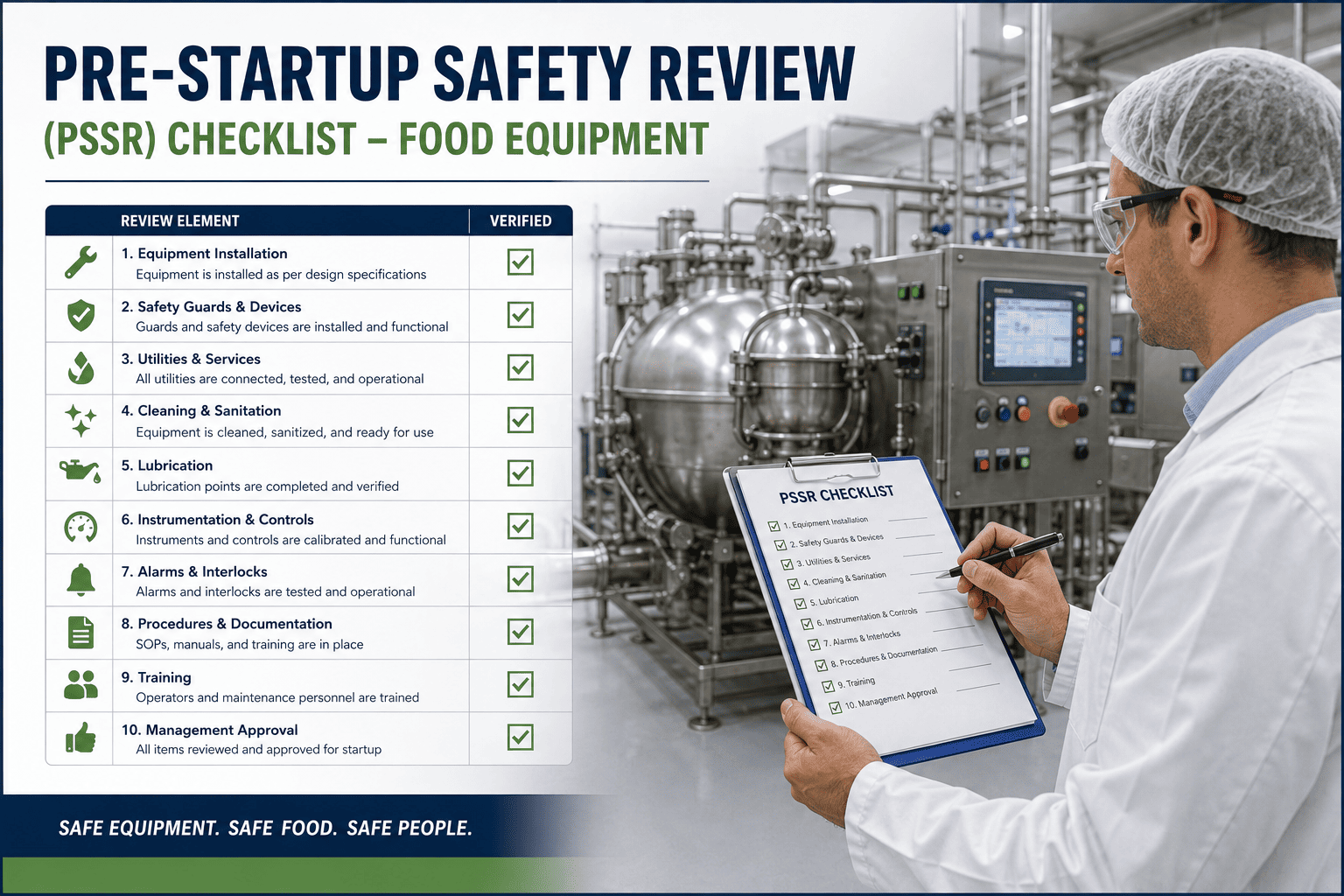
Food manufacturing facilities pursuing SQF (Safe Quality Food) certification face rigorous audits that evaluate every layer of their food safety management system — from documented programs and equipment calibration to management commitment and infrastructure integrity. A structured SQF audit preparation checklist enables quality assurance teams to identify gaps proactively, close non-conformances before the auditor arrives, and demonstrate the systematic control required for certification and re-certification success.
Automate your SQF audit preparation program
Schedule inspections, manage compliance tasks, and generate audit-ready records across every food safety system and facility zone.
1. Food Safety Fundamentals & Program Documentation
Verify all prerequisite programs and food safety fundamentals meet SQF Code requirements before audit day.
2. Management Responsibility & SQF Practitioner Readiness
SQF auditors assess leadership commitment and practitioner competency as core elements of certification readiness.
3. Site & Infrastructure Requirements
Physical facility conditions are directly evaluated during SQF audits — infrastructure deficiencies are among the most common sources of major non-conformances.
4. Equipment, Maintenance & Calibration Checklist
SQF auditors scrutinize equipment condition and calibration programs closely — gaps here can result in major non-conformances affecting your certification grade.
5. Personnel Training & Hygiene Compliance
Auditors conduct staff interviews and observe practices firsthand — training records alone are not enough if personnel cannot demonstrate competency.
6. Supplier Management & Incoming Material Controls
SQF requires demonstrable control over your supply chain — approved supplier programs and incoming inspection records are audited in detail.
7. Product Control, Traceability & Recall Readiness
Traceability and recall systems are tested during SQF audits — verify your system can perform a full mock trace within the required timeframe.
8. Compliance Documentation & Audit Record Management
Complete, organized, and accessible documentation is the foundation of a successful SQF audit — records must demonstrate your system is implemented, not just written.
Ready to pass your SQF audit with confidence?
OxMaint auto-generates maintenance and inspection work orders at the correct SQF-required frequency and tracks every completion in a timestamped, audit-ready log — accessible anywhere, anytime.
Frequently Asked Questions About SQF Audit Preparation
1. What are the most common causes of SQF audit non-conformances in food manufacturing?
The most frequent non-conformances fall into four categories: incomplete or out-of-date documentation, gaps in CCP monitoring records, expired calibrations on critical measurement devices, and failure of personnel to demonstrate food safety knowledge during staff interviews. Proactively addressing these areas during internal audits significantly reduces audit risk.
2. How far in advance should a facility begin SQF audit preparation?
Best practice for SQF-certified facilities is continuous readiness — maintaining records, completing internal audits, and closing non-conformances on an ongoing basis. However, a structured pre-audit review using a comprehensive checklist should begin at least 60–90 days before the scheduled audit to allow adequate time to address any gaps identified.
3. Does a CMMS help with SQF audit preparation?
Yes — a CMMS significantly strengthens SQF compliance by automating preventive maintenance scheduling, tracking calibration due dates, generating timestamped completion records, and providing auditors with a clear, searchable history of equipment maintenance activity. Facilities using a CMMS typically demonstrate stronger equipment and calibration program evidence during SQF audits.
4. What SQF Code elements are most important for QA teams to focus on?
Quality assurance teams should prioritize the food safety fundamentals (HACCP and PRPs), management responsibility elements, document and record control, product identification and traceability, and the corrective and preventive action system. These elements form the core of the SQF Code and receive the most scrutiny from certification body auditors.
5. How should facilities handle open corrective actions before an SQF audit?
All corrective actions from the previous audit cycle, internal audits, and customer complaints should ideally be closed with documented evidence before the audit date. For actions that cannot be fully completed, facilities should have a documented timeline with clearly assigned responsibility and evidence of progress — auditors evaluate the quality and timeliness of the corrective action system, not just closure counts.