-procedure-checklist.png)
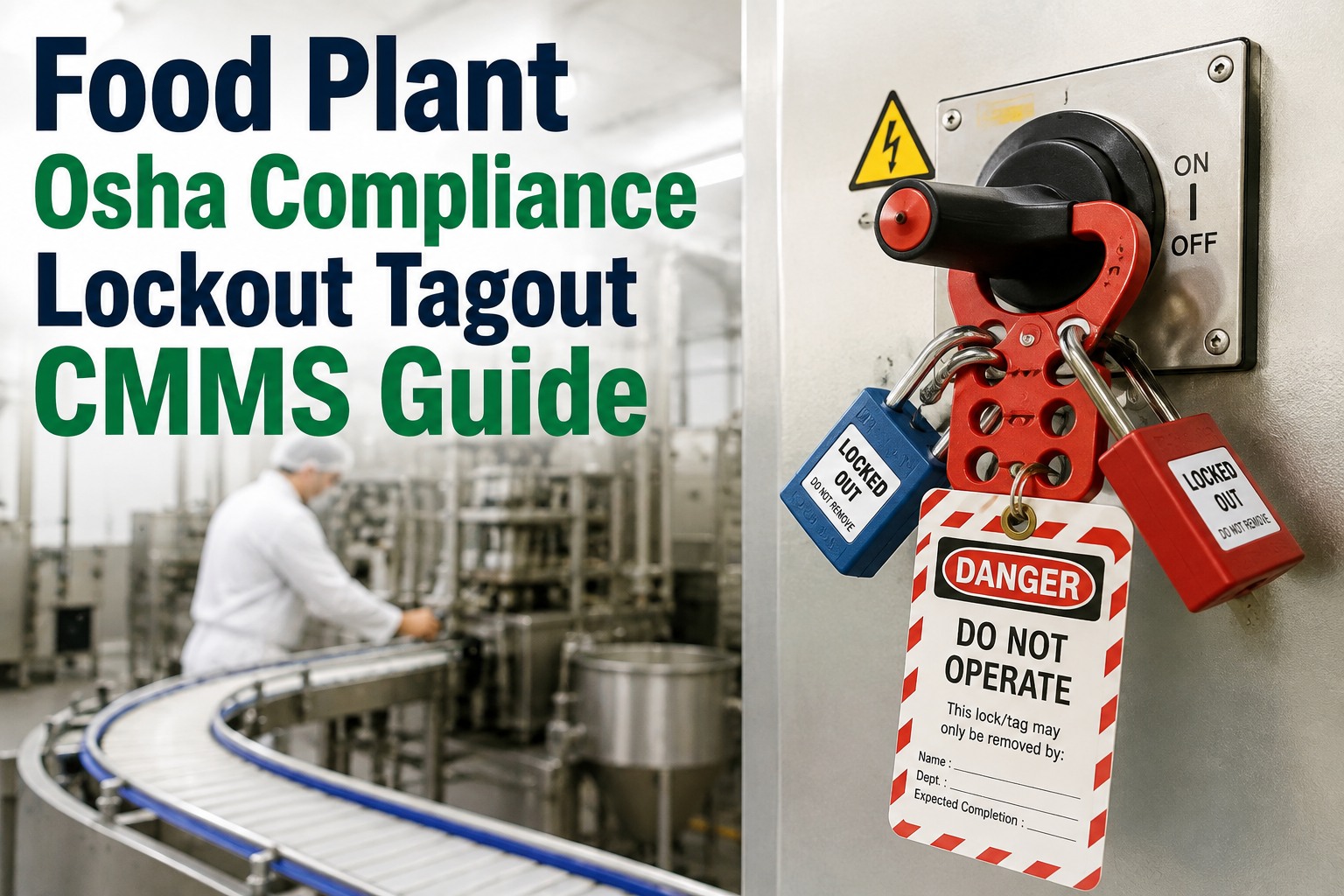
Lockout/tagout failures are among the most cited OSHA violations in food manufacturing — and the consequences extend far beyond citations. A single inadequately isolated energy source during sanitation or maintenance puts workers at direct risk of amputation, electrocution, or crush injuries. This lockout/tagout procedure checklist gives EHS managers, maintenance supervisors, and authorized employees a structured, step-by-step LOTO framework covering energy source identification, isolation point verification, lock and tag application, stored energy release, work authorization, and return-to-service procedures — every critical control from OSHA 29 CFR 1910.147 compliance to equipment-specific machine-level documentation, built for the real operational demands of food processing and packaging environments. Manage LOTO procedures and compliance records with OxMaint.
1. Energy Source Identification Checklist
Before any maintenance, cleaning, or repair task begins on food processing equipment, every authorized employee must identify and document all hazardous energy sources associated with the machine. In food plant environments, equipment commonly involves multiple simultaneous energy types — electrical, pneumatic, hydraulic, mechanical, thermal, and chemical — and each must be accounted for in the machine-specific LOTO procedure before any isolation begins.
Obtain and Review the Machine-Specific LOTO Procedure
Retrieve the authorized LOTO procedure for the specific equipment from the facility's procedure library. Verify the procedure is current, has been reviewed within the past 12 months, and reflects the machine's current configuration. Do not proceed with any energy isolation using a generic or outdated procedure.
Identify All Electrical Energy Sources and Disconnect Locations
Locate every electrical disconnect, circuit breaker, or motor control center (MCC) bucket that supplies power to the equipment. Confirm voltage ratings for each source. Multi-voltage equipment common in food packaging lines — 480V three-phase, 120V control circuits, 24VDC instrumentation — must each be individually identified and listed in the procedure.
Identify All Pneumatic Supply Lines and Isolation Valves
Map all compressed air supply lines feeding actuators, conveyors, filling heads, and pneumatic clamps. Confirm the location of all ball valves, lockable shut-off valves, and pneumatic dump valves designed to exhaust system pressure. Note line pressures and confirm lockable valve handles are available at each isolation point.
Identify Hydraulic, Thermal, and Chemical Energy Sources
Locate hydraulic power unit isolation valves and pressure accumulator locations on equipment with hydraulic clamping or motion systems. Identify steam, hot water, or CIP chemical supply isolation points on processing equipment with thermal or cleaning-in-place circuits. Document each source type, isolation valve location, and residual energy hazard in the procedure.
Identify All Stored Energy Sources and Release Points
Identify capacitors in control panels, pneumatic accumulators, hydraulic pressure reservoirs, gravity-loaded parts, and spring-loaded mechanisms that retain hazardous energy after isolation. Each stored energy source must have a documented release or restraint method listed in the procedure before work begins.
2. Equipment Shutdown and Notification Checklist
Proper equipment shutdown and affected employee notification are mandatory LOTO steps that are frequently rushed in high-production food manufacturing environments. OSHA 29 CFR 1910.147 requires that all affected employees — operators, sanitors, QA personnel, and others in the area — be notified before lockout begins and must not attempt to restart or re-energize equipment under lock. Building a structured digital LOTO workflow ensures these steps are never skipped — sign up free on OxMaint to create equipment-specific shutdown checklists your team can follow on any device.
Notify All Affected Employees Before Initiating Shutdown
Inform all operators, line leads, sanitation crew, and any other personnel working in or adjacent to the equipment area that a LOTO procedure is being initiated and the equipment will be de-energized. Notification must be verbal and documented. Do not initiate shutdown without confirming all affected employees are aware.
Shut Down Equipment Using Normal Stopping Procedure
Use the machine's normal stop controls — operator panel stop buttons, HMI shutdown sequence, or conveyor line stop — to bring all moving parts to a complete rest before de-energizing. Avoid emergency stopping as the primary shutdown method, as it can leave hydraulic or pneumatic circuits in pressurized states that complicate isolation.
Clear All Personnel from the Hazard Zone Before Isolation
Physically confirm that no personnel remain inside guards, within reach of moving parts, or in areas accessible by the equipment before proceeding to energy isolation. On large conveyor systems, tunnel ovens, or spiral freezers, a physical walk-through of the entire equipment footprint is required before the first lock is applied.
Document Equipment State and Active Process Conditions at Shutdown
Record the operational state of the equipment at the time of shutdown — product in process, CIP cycle status, temperature setpoints, pressure readings — in the LOTO work order or permit. This documentation supports safe return-to-service by establishing the pre-LOTO baseline for accurate product integrity decisions after maintenance is complete.
3. Energy Isolation and Lock Application Checklist
Energy isolation is the physical act of separating equipment from every identified hazardous energy source. In food manufacturing, correct isolation sequence and individual lock application by each authorized employee is the core mechanical barrier that prevents accidental re-energization during maintenance or sanitation tasks.
Open and Lock All Electrical Disconnects in the Off Position
Move each identified electrical disconnect to the open (off) position in the sequence specified by the LOTO procedure. Apply a lockout hasp to the disconnect handle and attach the authorized employee's personal padlock. If multiple employees are working on the same equipment, each individual must apply their own padlock to the hasp — group lockout using a single lock is not OSHA-compliant.
Close and Lock All Pneumatic Isolation Valves
Shut all identified pneumatic supply valves and apply lockout devices to prevent re-opening. Confirm each valve is fully closed before applying the lock. On multi-branch pneumatic systems, lock every supply branch independently rather than relying solely on a single upstream header valve.
Isolate and Lock All Hydraulic, Steam, and Chemical Supply Valves
Apply lockout devices to all hydraulic system isolation valves, steam supply block valves, and CIP chemical injection points identified in the procedure. On ball valves, confirm the handle is perpendicular to the pipe (closed position) before locking. Tag each locked valve with a completed danger tag showing the authorized employee's name and date.
Apply Danger Tags to Every Lockout Device and Isolation Point
Attach a completed OSHA-compliant danger tag to every lock, hasp, and lockout device applied during the procedure. Each tag must include the authorized employee's full name, department, date and time of application, and reason for the LOTO. Tags must be durable enough for wet food plant environments and must never be removed by anyone other than the employee who applied them.
4. Stored Energy Verification and Release Checklist
Stored energy release is the most frequently skipped step in food plant LOTO procedures — and the most dangerous omission. Pneumatic cylinders can fire, hydraulic presses can descend, and capacitors can discharge seconds after electrical disconnects are opened if residual energy is not positively released or restrained before any contact with the equipment. Teams that manage stored energy verification digitally catch these gaps before they become incidents — book a demo with OxMaint to see how digital LOTO permits enforce every release step before work begins.
Exhaust All Pneumatic System Pressure After Valve Isolation
After closing pneumatic supply valves, actuate or manually exhaust downstream pneumatic circuits to confirm all residual pressure has been released to zero. Verify exhaust completion with a calibrated pressure gauge at the cylinder or actuator — do not assume pressure has released based on valve closure alone.
Bleed or Block Hydraulic System Pressure at the Actuator
After isolating the hydraulic power unit, use the system's bleed valve or pressure relief circuit to release residual pressure in hydraulic cylinders and accumulator circuits. Verify zero pressure using an installed gauge. Where gravity-loaded hydraulic components cannot be fully de-pressurized, use mechanical blocks or safety pins to physically restrain the load before work begins.
Block or Restrain Gravity-Loaded and Spring-Loaded Components
Physically support or restrain any component that can move under gravity or spring force after energy isolation — raised platens, suspended conveyor sections, counterbalanced guards, spring-loaded clamps. Use OEM-approved safety blocks, prop rods, or mechanical restraints rated for the load. Document the blocking method used in the LOTO permit.
Verify Capacitor and Control Panel Electrical Discharge
Wait the minimum discharge time specified by the equipment OEM after opening electrical disconnects before opening control panels or contacting internal components. Test for residual voltage using a calibrated non-contact voltage tester or multimeter at each potential capacitor discharge point before touching any conductors.
Release or Neutralize Thermal Energy Before Contact with Hot Surfaces
Confirm that heat exchangers, pasteurizers, cooking tunnels, and steam-jacketed vessels have cooled to a safe contact temperature before allowing work near thermal surfaces. Allow adequate cool-down time or apply positive steam isolation with a bleed vent confirmed open. Measure surface temperature with an infrared thermometer before contact is made.
5. Isolation Verification and Zero-Energy State Confirmation Checklist
Verification of the zero-energy state is the critical proof step that confirms every isolation action was effective before the authorized employee contacts the equipment. OSHA 1910.147 explicitly requires that the authorized employee verify isolation is complete before beginning work, regardless of how familiar the individual is with the equipment.
Verify Zero Voltage at All Electrical Isolation Points
Use a properly rated and calibrated non-contact voltage tester or multimeter to test for voltage at the load side of every electrical disconnect that was locked out. Test all phases, including control circuits and instrumentation circuits. Document the test tool used, test readings, and the name of the authorized employee who performed the verification.
Attempt Equipment Start Using Normal Controls to Confirm De-energization
With all locks applied and stored energy released, attempt to start the equipment using normal operator controls. The equipment must not respond. After attempting the start, return all controls to the off or neutral position before beginning work. This test confirms that the electrical isolation has removed all control circuit power.
Confirm Zero Pneumatic Pressure at All Downstream Actuators
Verify that pneumatic pressure has been fully exhausted by reading gauges at cylinder ports or downstream of isolation valves. Physically stroke accessible actuators by hand to confirm they are unpressurized. On double-acting cylinders, check both ports. Record gauge readings at each verified actuator in the LOTO permit documentation.
Visually Confirm All Mechanical Blocks and Restraints Are in Place
Before authorizing any personnel to enter the equipment work zone, physically verify that all safety blocks, prop rods, pins, and mechanical restraints are correctly installed and rated for the loads they are restraining. This visual check must be performed by the authorized employee responsible for the LOTO, not delegated to a helper.
6. Return-to-Service and LOTO Release Checklist
Return-to-service is the final and equally critical phase of the LOTO process. Improper LOTO release — tools left in equipment, locks removed by someone other than the employee who applied them, or personnel still inside a machine when energy is restored — causes the majority of LOTO-related fatalities in industrial environments. Facilities that track LOTO release steps digitally close these gaps consistently across every shift and every machine — sign up free on OxMaint and build your return-to-service workflow in minutes.
Confirm All Work Is Completed and No Personnel Remain in the Equipment
Before initiating LOTO release, verify all repair, maintenance, or sanitation work has been completed and signed off. Physically account for all personnel who were working on the equipment and confirm no one remains inside guards, tunnels, hoppers, or any other area accessible through the machine's footprint. Collect all tools and maintenance materials from the work zone.
Remove All Mechanical Blocks, Props, and Restraints
Remove all blocking devices, prop rods, safety pins, and mechanical restraints installed during the LOTO procedure. Confirm that all components are free to return to their normal operating positions once energy is restored. Remove blocks before removing locks to reduce residual risk during this transition step.
Each Authorized Employee Removes Only Their Own Personal Padlock
Every authorized employee who applied a personal padlock must remove only their own lock when work is complete. Under no circumstances may one employee remove another's lock — this is a fundamental OSHA requirement. If an employee is unavailable, a documented emergency lock removal procedure involving supervisor authorization must be followed.
Reinstall Guards, Panels, and Safety Devices Before Restoring Energy
Replace all machine guards, access panels, electrical enclosure covers, and safety interlocks removed during the work task before restoring any energy source. Confirm all safety interlock switches are correctly seated and functional. Restore guarding first, then restore energy in the correct sequence specified by the LOTO procedure.
Notify All Affected Employees Before Restoring Energy
Communicate to all affected employees in the area that the LOTO is being released and the equipment is being returned to an energized state. Confirm understanding before closing disconnects or opening supply valves. Restore energy sources in the reverse sequence of isolation as specified in the machine-specific procedure.
Complete and File the LOTO Work Permit and Completion Record
Close out the LOTO work permit with the completion time, authorized employee signatures, description of work performed, and any findings or deficiencies noted. File the completed permit in the equipment's maintenance history record and in the LOTO compliance log. Records must be retained per the facility's document control policy and are required for OSHA PSM mechanical integrity programs.
Looking for a smarter way to manage machine-specific LOTO procedures, track lock assignments, and maintain audit-ready compliance records? Book a free OxMaint demo and see how food manufacturing EHS teams digitize their entire LOTO program in one connected platform.
Frequently Asked Questions
Common questions from EHS managers, maintenance supervisors, and authorized employees about food manufacturing LOTO compliance, procedure requirements, and OSHA enforcement expectations.
Lockout involves physically applying a locking device to an energy isolation point to prevent re-energization. Tagout involves applying a danger tag to indicate a control or isolation point must not be operated, but without a locking device. OSHA requires lockout as the primary method whenever equipment has isolation points capable of accepting a lock. Tagout-only is permitted only when the equipment's design does not physically allow a lockout device — and even then, additional protective measures must compensate for the reduced protection that tagging alone provides.
OSHA 29 CFR 1910.147 requires that energy control procedures be reviewed at least annually, or whenever there is reason to believe the procedure may be inadequate or not being followed. In food manufacturing, procedures must also be updated whenever equipment is modified, relocated, or replaced. The review must be documented with the reviewer's name and date, and any identified deficiencies must be corrected before the procedure is returned to active use.
Yes — OSHA's LOTO standard applies to any task that requires an employee to remove or bypass machine guards or place any part of their body into a point of operation where unexpected energization could cause injury. Sanitation employees cleaning inside mixing bowls, hoppers, conveyors, or slicers are among the highest-risk LOTO tasks in food manufacturing and are covered by the full LOTO requirements, including machine-specific procedures and individual padlock application.
Authorized employees must be trained to recognize hazardous energy sources, understand the type and magnitude of energy present in their equipment, and know the methods necessary to isolate and control that energy. Training must be equipment-specific, not generic, and must be documented with the employee name, date, trainer, and content covered. Retraining is required whenever the authorized employee's job changes, equipment changes, or a LOTO deficiency is identified through observation or incident investigation.
A CMMS like OxMaint centralizes machine-specific LOTO procedures as digital work instructions attached to each equipment record, issues LOTO permits as part of maintenance work orders, tracks authorized employee certifications and retraining due dates, and stores completed permit records in a retrievable audit log. This eliminates the paper-based gaps — missing signatures, outdated printed procedures, lost permit copies — that create OSHA citation exposure during inspections of food manufacturing facilities.


-checklist.png)