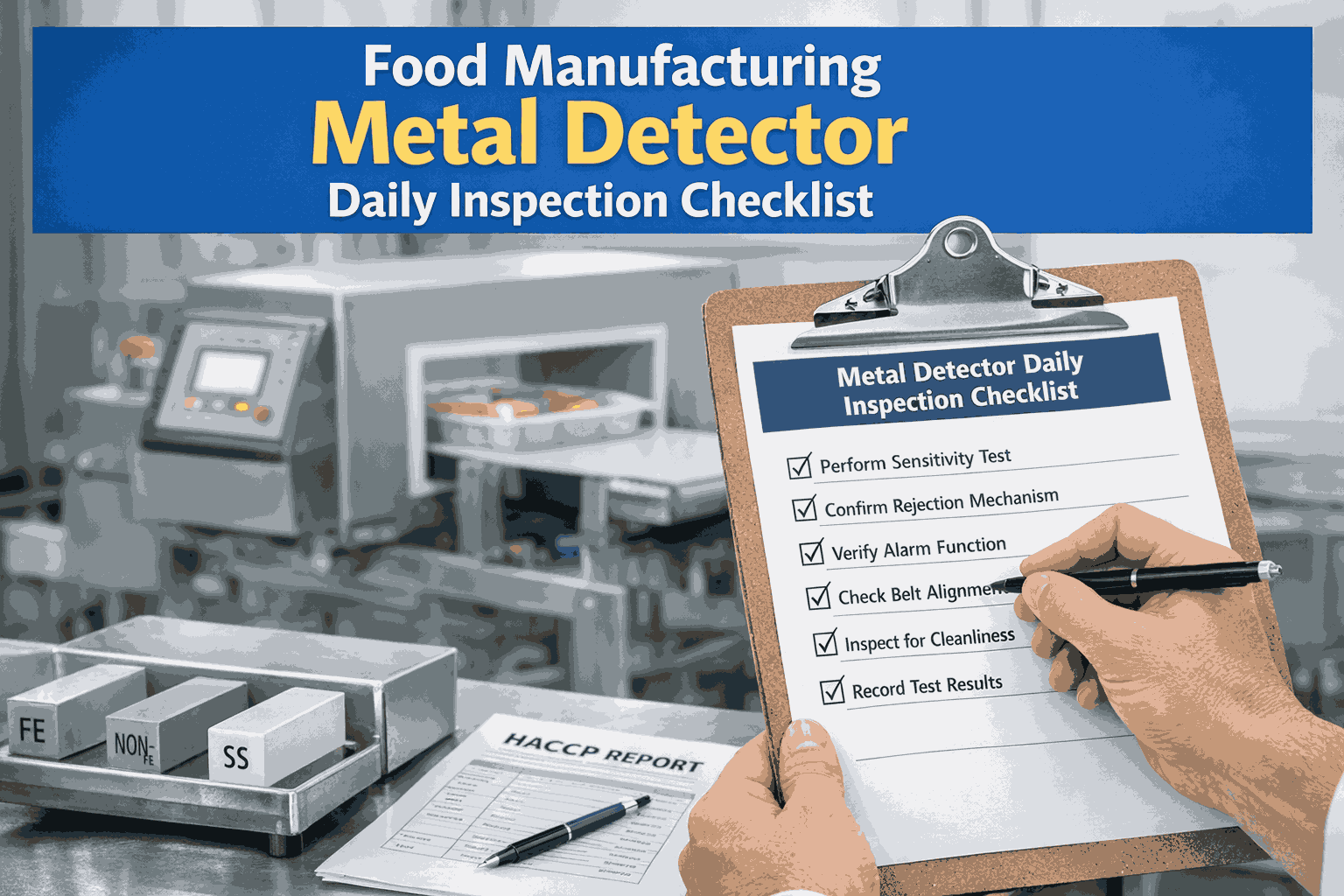
Food Manufacturing Sanitation Standard Operating Procedure (SSOP) Checklist
By Josh Turley on March 24, 2026
A documented Sanitation Standard Operating Procedure (SSOP) is not optional in food manufacturing — it is the foundational requirement that separates compliant facilities from those at risk of FDA action, product recalls, and customer loss. Under 21 CFR Part 117 and the FSMA Preventive Controls rule, facilities must establish, implement, and monitor procedures that address all eight sanitation conditions defined by regulation. Sanitation supervisors who rely on inconsistent manual checks and paper-based logs expose their facilities to audit failures and pathogen events. Facilities that implement a structured automated SSOP management program maintain full documentation traceability, reduce sanitation non-conformances, and pass third-party audits with measurable consistency across every shift and production line. Sign Up Free and start building a compliant SSOP documentation system today.
Automate Your SSOP Compliance and Sanitation DocumentationSchedule sanitation tasks, track corrective actions, and generate audit-ready records across every production zone in your facility.
FDA-defined sanitation conditions required in every food facility SSOP
FDA
21 CFR Part 117 FSMA compliance requires written, monitored SSOP records
72%
Of food safety audit failures trace to incomplete or inconsistent SSOP documentation
SQF
BRC and SQF require verified SSOP execution records as primary audit evidence
CriticalRegulatory requirement — no deviation permittedHighComplete within shift interval — no deferralOngoingMonitor continuously throughout the production shift
Checklist 1 — Safety of Water That Contacts Food or Food-Contact Surfaces
Verify municipal water supply certification or private well test results before production
Confirm that water used in food processing, equipment cleaning, and hand-washing meets potable water standards under the Safe Drinking Water Act; facilities using private wells must conduct microbial and chemical testing on a documented schedule and retain test results as regulatory evidence.
CriticalDaily (Pre-op)Sanitation Supervisor
Inspect backflow prevention devices on all water lines connected to food processing equipment
Check that backflow preventers are installed and intact on hose bibs, equipment water inlets, and chemical injection points; a missing or failed backflow preventer allows non-potable water to enter the potable water supply line, creating a direct route for chemical or microbial contamination of product.
CriticalWeeklyMaintenance Tech
Confirm water temperature at food-contact rinse points meets validated sanitizer efficacy requirements
Measure rinse water temperature at point-of-use for all equipment rinse stations and confirm temperature meets the validated minimum for the sanitizer type in use; water temperature below the validated threshold reduces sanitizer efficacy and may fail to achieve the required log reduction on food-contact surfaces.
HighDaily (Pre-op)Sanitation Tech
Document water safety test results and backflow inspection outcomes in the shift sanitation log
Record all water test data, inspection findings, and corrective actions with time-stamp and technician ID; water safety documentation is a primary SSOP record required during FDA inspections and GFSI scheme audits as evidence that Condition 1 of the SSOP is actively monitored. Sign Up Free to automate your shift sanitation logs.
OngoingEach test eventSanitation Supervisor
Checklist 2 — Condition and Cleanliness of Food-Contact Surfaces
Perform pre-operational inspection of all food-contact surfaces before production startup
Visually inspect all conveyors, slicers, fillers, mixers, and other food-contact equipment surfaces for visible soil, residue, and sanitizer application; pre-op inspection is the control step that validates sanitation was effective and must be completed and documented before any product touches the line.
CriticalDaily (Pre-op)Sanitation Supervisor
Verify sanitizer concentration on food-contact surfaces meets validated ppm range before product contact
Test sanitizer concentration on all food-contact surfaces using calibrated test strips or titration and confirm readings fall within the validated effective range; sanitizer applied below the minimum effective concentration fails to achieve pathogen reduction, while concentrations above the food-safe limit create a chemical hazard in the product.
CriticalDaily (Pre-op)Sanitation Tech
Inspect food-contact surfaces for pitting, cracks, corrosion, and worn coatings requiring repair or replacement
Check all equipment surfaces for physical defects that create harborage sites for pathogens; pitted metal, chipped coatings, and cracked gaskets cannot be effectively sanitized regardless of sanitizer concentration and must be flagged for maintenance correction before returning to food-contact use.
HighWeeklySanitation Supervisor
Conduct ATP swab verification on high-risk food-contact surfaces and record luminometer readings
Perform ATP bioluminescence testing on selected food-contact surfaces at a defined frequency and compare results to the facility pass/fail threshold; ATP results above the threshold indicate organic residue that was not removed during cleaning and signals an immediate re-clean requirement before production resumes.
HighPer scheduleQA Technician
Checklist 3 — Prevention of Cross-Contamination
Verify physical separation between raw and ready-to-eat processing zones is maintained and intact
Confirm that barriers, doors, and workflow controls separating raw material handling from ready-to-eat production zones are in place and functioning; a breach in physical separation between raw and RTE zones creates a direct allergen and pathogen cross-contamination pathway that cannot be controlled by sanitation alone.
CriticalDaily (Pre-op)Sanitation Supervisor
Confirm color-coded utensil and equipment segregation protocols are followed across all production zones
Verify that color-coded cutting boards, scoops, brushes, and tools are used exclusively within their designated zones and are not transferred between raw and finished product areas; unauthorized movement of tools between zones is one of the most common cross-contamination events documented in FDA 483 observations.
CriticalOngoingLine Supervisor
Inspect condensation control on overhead structures, refrigeration coils, and process lines above food exposure points
Check overhead pipe insulation, refrigeration coils, and HVAC drip pans for condensation accumulation that could drip onto open food or food-contact surfaces; uncontrolled condensation is a recognized environmental contamination source for Listeria monocytogenes in ready-to-eat production environments.
HighDaily (Pre-op)Sanitation Supervisor
Verify employee traffic flow and footwear hygiene protocols at zone transition points
Confirm that footwear sanitation stations and directional traffic flow controls are functioning at all zone transition entries; employees moving between raw and RTE zones without footwear sanitation are a documented Listeria and Salmonella cross-contamination vector in ready-to-eat and low-moisture food facilities.
HighOngoingLine Supervisor
Checklist 4 — Hand Washing, Hand Sanitizing, and Toilet Facilities
Verify hand-washing stations are stocked, operational, and accessible at all required entry points
Confirm that all hand-washing sinks have soap, single-use towels or functional air dryers, running water at the correct temperature, and posted hand-washing instructions; a non-functional or inaccessible hand-washing station at a food processing entry point is a direct SSOP non-conformance under 21 CFR 117.135.
CriticalDaily (Pre-op)Sanitation Tech
Confirm hand sanitizer concentration at point-of-use dispensers meets required alcohol or quat percentage
Test sanitizer concentration at entry-point and line-side dispensers and confirm readings are within the validated effective range; diluted hand sanitizer from a clogged or improperly refilled dispenser provides inadequate antimicrobial protection and creates a false sense of hygiene compliance on the line.
HighDaily (Pre-op)Sanitation Tech
Inspect toilet facilities for cleanliness, supply adequacy, and proper ventilation preventing air flow toward production areas
Verify that toilet rooms are clean, supplied with soap and paper products, and that ventilation exhausts away from food production areas; toilet facility airflow that moves toward processing zones is a documented fecal contamination risk and a recurring finding in FDA inspections of food manufacturing facilities.
CriticalDaily (Pre-op)Sanitation Supervisor
Conduct unannounced hand-washing compliance observations and document non-conformances
Perform periodic unannounced observations of employee hand-washing practices at production entry points and after restroom use; documented compliance observations are required evidence in a GFSI audit to demonstrate that employee hygiene controls in the SSOP are actively monitored and enforced. Book a Demo to see how compliance observations are tracked automatically.
HighPer scheduleQA Technician
Checklist 5 — Protection of Food from Adulterants and Contamination
Inspect all open food and ingredient storage containers for proper coverage and seal integrity
Verify that all open bags, bins, and totes holding food ingredients and in-process product are covered with food-grade lids or wraps when not in active use; uncovered food containers are directly vulnerable to dust, pest activity, condensation drip, and employee-introduced contamination during production operations.
CriticalDaily (Pre-op)Line Supervisor
Verify lubricants, maintenance chemicals, and non-food compounds are food-grade approved and properly labeled
Confirm that all lubricants used on food-zone equipment components are NSF H1 approved and that containers are clearly labeled; an unlabeled non-food-grade lubricant stored near food-contact equipment is a direct adulteration risk and an automatic SSOP critical finding during regulatory and customer audits.
CriticalWeeklyMaintenance / QA
Check glass and brittle plastic register for completeness and inspect all registered items for integrity
Review the glass and hard brittle plastic register and physically inspect all registered items including light fixtures, gauges, and equipment guards for cracks, chips, or missing sections; any unaccounted breakage event during production requires immediate product quarantine and investigation before affected product can be released.
CriticalDaily (Pre-op)QA Technician
Inspect floor drains, floor surface integrity, and standing water pooling near food processing zones
Check that all floor drains are flowing freely with intact drain covers and that no standing water accumulates near food processing equipment; standing water on production floors is a primary environmental harborage site for Listeria and other pathogens and creates a pathway for splash contamination of food-contact surfaces.
HighDaily (Pre-op)Sanitation Supervisor
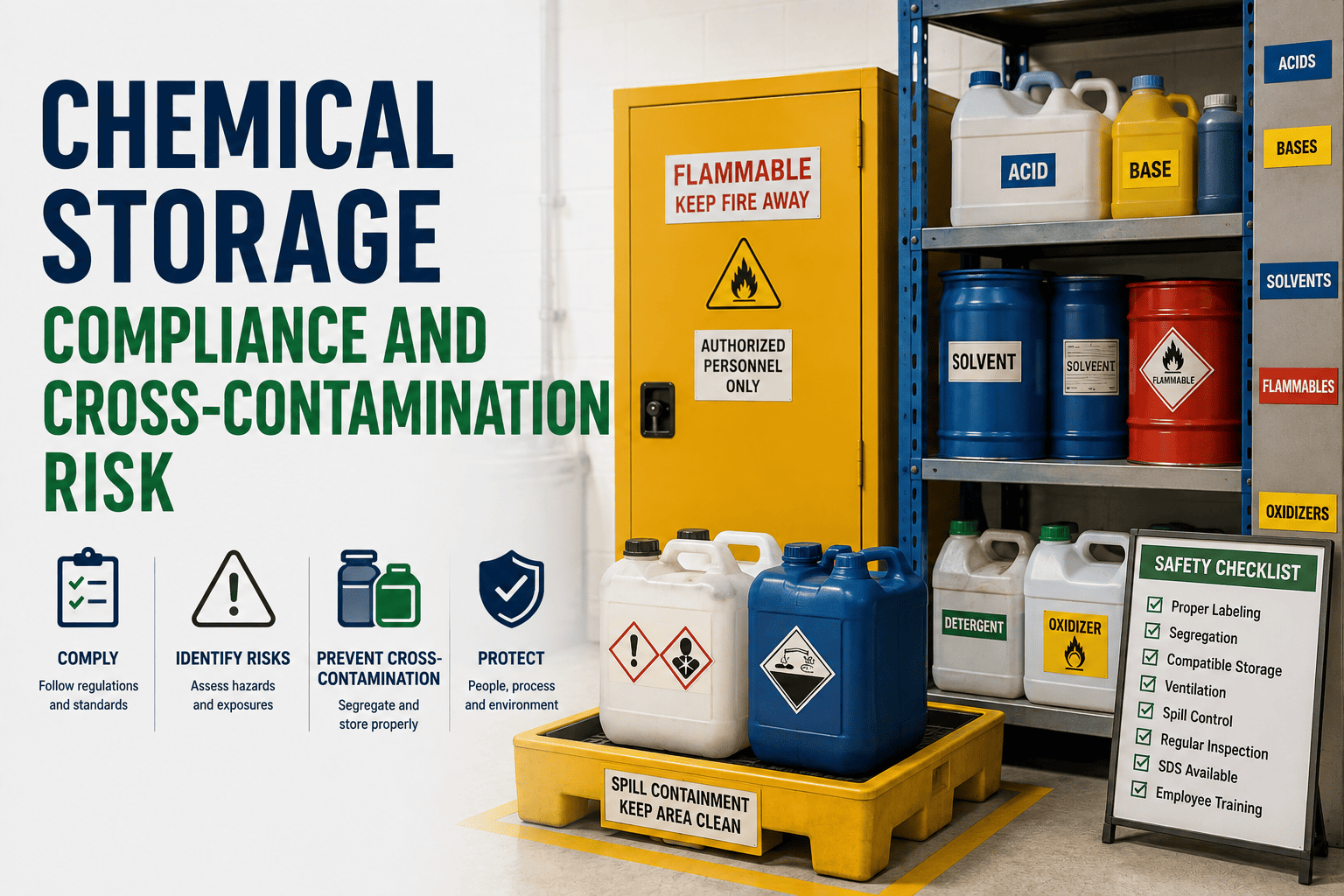
Checklist 6 — Proper Labeling, Storage, and Use of Toxic Compounds
Audit chemical storage room for proper segregation, secondary containment, and SDS posting compliance
Confirm that cleaning chemicals, sanitizers, and pest control compounds are stored in the designated chemical room with secondary containment, original or approved labels, and a current Safety Data Sheet posted; co-storage of incompatible chemicals such as chlorine-based cleaners and acid descalers creates a hazardous gas risk that endangers personnel and production areas.
CriticalWeeklySanitation Supervisor
Verify sanitizer and cleaning solution dilution concentrations at point-of-use mixing stations
Test diluted sanitizer and cleaning solution concentrations at each mixing station before use and compare to the validated effective range on the approved chemical use sheet; an over-concentrated sanitizer applied to food-contact surfaces without an adequate rinse step leaves a chemical residue that constitutes a direct adulteration hazard.
CriticalDaily (Pre-op)Sanitation Tech
Confirm chemical inventory log reflects current stock levels and usage records match chemical consumption patterns
Reconcile chemical inventory usage against sanitation task records; an unexplained discrepancy between chemical inventory consumption and documented sanitation activities indicates either unauthorized chemical use or incomplete sanitation record documentation, both of which are SSOP compliance failures.
HighWeeklySanitation Supervisor
Verify that only approved chemicals on the facility master chemical list are present in the production and sanitation areas
Inspect all sanitation carts, cleaning supply stations, and chemical cabinets to confirm that no unapproved chemicals are present; an unapproved chemical in the production environment that is applied to food-contact surfaces is an immediate adulteration non-conformance and a regulatory violation under 21 CFR Part 117.
CriticalWeeklyQA Technician
Checklist 7 — Employee Health and Hygiene Controls
Conduct pre-shift employee health screening for illness symptoms before allowing production floor access
Screen all production personnel for illness symptoms including vomiting, diarrhea, jaundice, and open wounds before shift start; an employee with an active reportable illness who enters the production floor without restriction is a direct source of pathogen contamination and a violation of the SSOP employee health condition under 21 CFR 117.10.
CriticalDaily (Pre-op)Line Supervisor
Verify glove, hair net, beard cover, and jewelry restriction compliance for all personnel entering food zones
Inspect all personnel entering food production zones for correct PPE including hair restraints, gloves where required, and absence of jewelry including rings, watches, and loose earrings; jewelry and unsecured personal items entering the production environment are a documented source of both physical contamination and microbial transfer.
CriticalOngoingLine Supervisor
Inspect bandage and cut glove policy compliance and confirm colored detectability standards are enforced
Verify that all cuts and wounds on personnel handling food are covered with brightly colored, metal-detectable bandages and that blue glove over-protection is applied; a standard skin-colored bandage that falls into product cannot be detected by metal detectors or X-ray systems and creates an uncontrolled physical contamination event. Sign Up Free to manage employee hygiene compliance records in one place.
HighOngoingLine Supervisor
Checklist 8 — Pest Exclusion and Pest Control Program Verification
Inspect exterior building perimeter for pest entry points including gaps, cracks, and door seal integrity
Walk the exterior perimeter of the facility and identify any gaps, cracks, or compromised door sweeps that could allow pest entry; a gap larger than 6mm in any exterior wall, door frame, or utility penetration is sufficient for rodent entry and requires immediate repair to maintain pest exclusion as an effective SSOP control measure.
CriticalWeeklySanitation Supervisor
Inspect all interior and exterior pest monitoring stations and document findings on station inspection maps
Check all rodent bait stations, insect light traps, and glue boards for activity and record findings on the pest activity map; increased catch rates at specific trap locations indicate a new pest pressure point or harborage site that must be investigated and corrected before the population expands into the food production zones.
CriticalPer PCO scheduleQA Technician
Verify that interior pest control chemical applications are performed only by licensed applicators using approved food-safe products
Confirm that all interior pesticide applications are conducted by a licensed pest control operator using EPA-registered products approved for use in food handling areas and that all applications are documented with product name, application area, rate, and applicator license number; unauthorized interior pesticide applications by facility staff are a regulatory violation and a direct food adulteration risk.
CriticalEach applicationQA Manager
Inspect dock doors, receiving areas, and ingredient storage zones for evidence of pest activity or harboring conditions
Check receiving docks, pallet storage areas, and ingredient warehouses for pest droppings, gnaw marks, nesting material, and conditions that attract pests such as spillage, exposed food, and clutter; receiving areas are the primary pest entry point in food manufacturing facilities and require heightened SSOP monitoring frequency.
HighDaily (Pre-op)Sanitation Supervisor
SSOP Program Investment vs. Compliance Risk Cost Analysis
A fully documented and monitored SSOP program is the lowest-cost food safety investment relative to the regulatory, financial, and reputational exposure of an SSOP failure during an FDA inspection or GFSI scheme audit. Book a Demo to see the full compliance workflow in action.
SSOP Condition
Annual Program Cost
Risk / Savings Avoided
Payback
Water Safety Monitoring Program
$350 per facility
$90,000+ avoided recall from contaminated water supply event
Under 2 days
Food-Contact Surface Sanitation Verification
$800 per line
$140,000 avoided Listeria or Salmonella product recall
Under 3 days
Cross-Contamination Control Program
$600 per facility
$75,000 avoided allergen cross-contact recall
Under 1 week
Chemical Storage and Use Compliance
$400 per facility
$55,000 avoided chemical adulteration regulatory action
Under 1 week
Pest Exclusion and Monitoring Program
$1,800 per facility
$180,000+ avoided facility closure from pest infestation finding
Under 1 week
CMMS-Automated SSOP Documentation
$1,200 per facility
$65,000 reduction in audit remediation and regulatory response costs
Under 3 weeks
A complete SSOP monitoring and documentation program delivers 10–20× ROI within the first compliance event it prevents. Sign Up Free and automate your SSOP documentation program today.
Stop Managing Sanitation Records on SpreadsheetsAutomate every SSOP task, pre-op inspection record, corrective action log, and audit trail — across every shift and every line.
What are the 8 sanitation conditions required in a food manufacturing SSOP?
Under 21 CFR Part 117 and FDA guidance, a compliant SSOP must address: (1) safety of water that contacts food or food-contact surfaces, (2) condition and cleanliness of food-contact surfaces, (3) prevention of cross-contamination from unsanitary objects, (4) maintenance of hand-washing and toilet facilities, (5) protection of food from adulterants, (6) proper labeling, storage, and use of toxic compounds, (7) control of employee health conditions, and (8) exclusion of pests from the food plant. Each condition must have documented monitoring procedures and corrective action protocols. Book a Demo to see how all 8 conditions are managed in one platform.
How often must SSOP monitoring be performed in a food manufacturing facility?
SSOP monitoring frequency depends on the specific sanitation condition and the risk level assigned in the facility's HACCP or FSMA Preventive Controls plan. Pre-operational inspections of food-contact surfaces and hand-washing station readiness must occur before every production shift. Water safety verification frequency depends on the source type — municipal supply certificates are reviewed periodically, while private well testing requires a defined schedule. Pest monitoring station inspections follow the PCO service schedule, typically weekly for interior stations. All monitoring activities must be documented with dates, findings, and corrective actions. Sign Up Free to automate your SSOP monitoring schedule.
What SSOP records are required for an FDA inspection or GFSI audit?
Required SSOP records include: written SSOP procedures addressing all 8 sanitation conditions, pre-operational and operational monitoring records with date, time, and employee ID, corrective action logs for all SSOP deviations, sanitizer concentration test records, ATP swab results where applicable, pest activity monitoring maps and PCO service reports, employee health screening records, chemical inventory and dilution records, and equipment sanitation verification logs. Records must be retained for a minimum of 2 years under FSMA Preventive Controls and longer under some GFSI schemes.
What is the difference between an SSOP and a master sanitation schedule in food manufacturing?
An SSOP is a written procedure that describes how each of the 8 regulatory sanitation conditions will be maintained, monitored, and corrected in the facility. A master sanitation schedule (MSS) is an operational planning document that lists all cleaning and sanitation tasks in the facility, the frequency of each task, and the responsible party. The SSOP is the regulatory compliance framework; the MSS is the operational execution tool. Both are required in a compliant food safety management system, and the MSS tasks must fully address all conditions defined in the SSOP.
What corrective actions are required when an SSOP monitoring check fails?
When an SSOP monitoring check identifies a failure, the facility must immediately implement the corrective action defined in the SSOP for that condition, which typically includes stopping production or restricting the affected area, identifying and segregating any product potentially affected by the sanitation failure, correcting the condition that caused the failure, increasing monitoring frequency until the condition is stabilized, and documenting all corrective action steps with responsible party and completion time. All corrective actions must be recorded and reviewed by the QA manager. Recurring corrective actions for the same condition require a root cause investigation and preventive measure update to the SSOP.
-checklist.png)
.png)

-procedure-checklist.png)