Every conveyor belt in a food plant carries two jobs at once, moving product and staying clean enough to touch it safely. When a belt frays, mistracks, or loosens at the splice, it stops doing the second job long before anyone notices the first. Foreign material from worn belts was the single biggest driver of USDA food recalls in 2025, tied to 13 of 42 total recalls and more than 71 million pounds of affected product. Most plants track uptime closely but leave belt condition to memory and a walk-by glance, which is exactly where hygiene failures start. See what a tracked belt record looks like with a free trial.
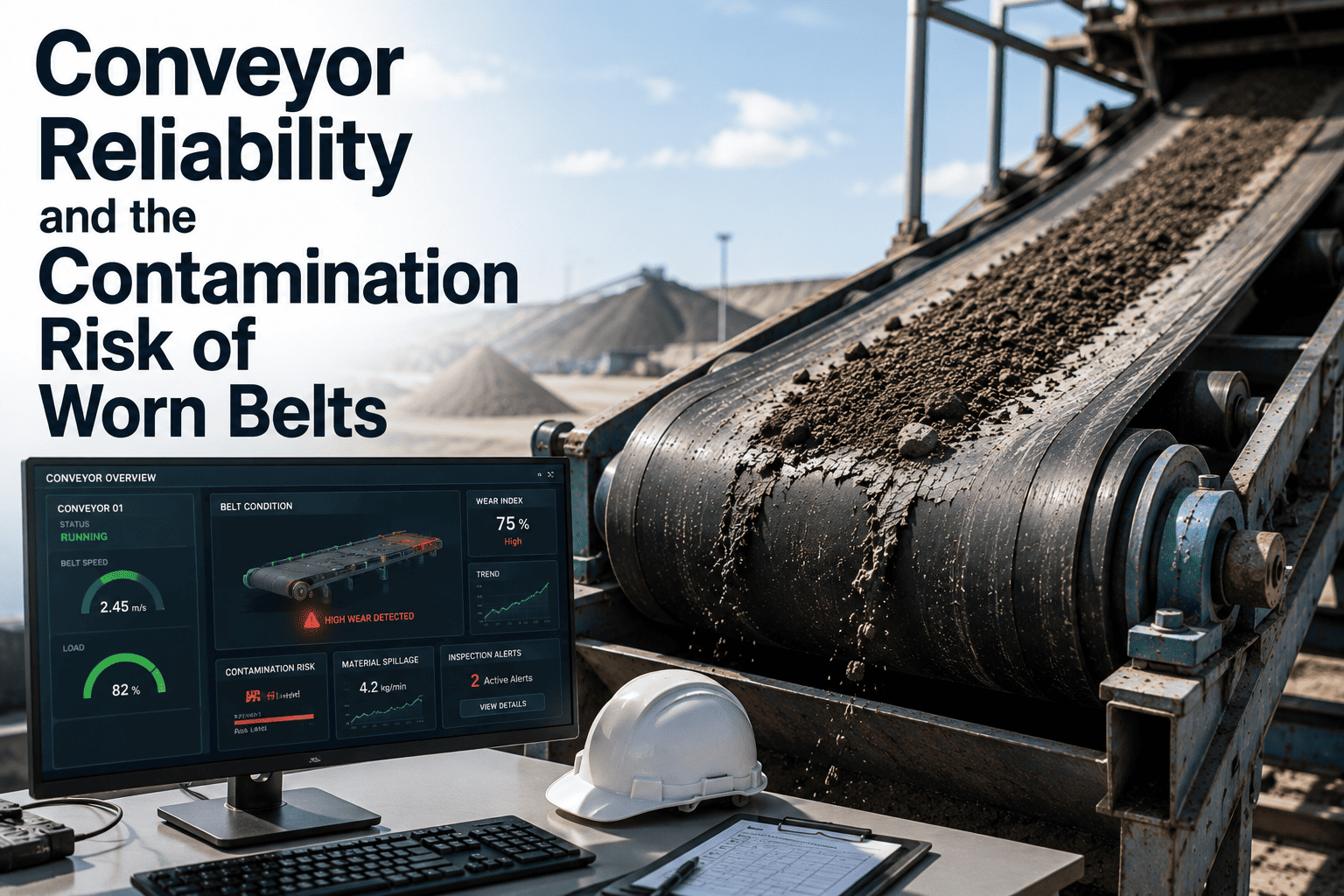
Conveyor Reliability and the Contamination Risk of Worn Belts
A worn belt is not a maintenance line item, it is an open door for foreign material. Here is how tracking and splice condition connect directly to recall risk, and what a reliability program needs to close the gap.
Mechanical Reliability And Hygiene Are Not The Same Record
Food conveyors carry a responsibility industrial conveyors do not share equally. A bearing failure stops the line. A cracked belt module or a loose hinge rod contaminates the product while the line keeps running. Both need their own trail of evidence, for two different audiences.
Bearing wear, chain stretch, motor load, and drive-side tension readings, the failure modes that halt production and drive unplanned repair cost.
Belt surface condition, frame hollow sections, transfer point buildup, and post-clean verification, the evidence that closes an FSMA or BRCGS finding.
Split The Record Before The Auditor Splits It For You
Oxmaint logs mechanical and hygiene findings against the same conveyor asset, so a splice inspection and a bearing reading never live in two different spreadsheets again.
Six Failure Modes That Turn Into Contamination Events
Belt mistracking is the single biggest driver of premature wear and conveyor stoppages in food plants, and it rarely travels alone. These are the patterns worth watching before they show up as a foreign-material finding.
Material buildup on return-side rollers is the leading trigger for mistracking in food plants, pulling the belt off center and accelerating edge wear.
Loose tension causes slippage and product damage, while over-tight tension accelerates wear on drive components and the belt structure itself.
One failed roller cascades stress across the whole system, raising motor load and accelerating wear on every belt section that passes over it.
Early gearbox noise typically gives three to six weeks of lead time before failure, but only if it is logged and trended, not just heard in passing.
In food environments, excess food-grade grease is as damaging as too little, since it can migrate onto product zones and create its own contamination risk.
A cracked module, a frayed fabric edge, or a loose hinge rod forms a microbial harbor that survives sanitation cycles and contaminates product for days.
One Frayed Edge, One Missed Shift Report
A poultry plant lost an entire third-shift run when a worn belt shed a strip of material into the packaging line overnight. The edge fraying had been visible for weeks, but with no structured checklist in place, three shifts walked past it undocumented.
Reactive Conveyor Care vs A CMMS-Tracked Program
The physics of belt wear, bearing fatigue, and motor degradation repeat across plants of every size. A program that schedules interventions before those curves peak removes most unplanned events before they start.
| Area | Reactive Approach | CMMS-Tracked Program |
|---|---|---|
| Belt tracking | Checked when a stoppage occurs | Logged on a fixed interval, trended over time |
| Splice condition | Assessed by memory during walkthroughs | Recorded per inspection with photo evidence |
| Hygiene evidence | Reconstructed manually before an audit | Exported in one click, tied to the asset |
| Gearbox anomalies | Noted verbally, rarely trended | Logged and trended for early warning |
| Unplanned downtime | Absorbed as a routine cost | Reduced through scheduled PM checklists |
Move From Verbal Notes To A Trended Record
Oxmaint schedules conveyor PMs against production hours and belt cycles, and keeps every mechanical and hygiene finding attached to the same asset history.
What To Check, And How Often
Aggressive washdowns and temperature swings between cold rooms and ambient areas loosen tracking faster than a standard duty cycle, so cadence matters as much as the checklist itself.
Spin rollers by hand for resistance or roughness, listen for gearbox noise, and check for visible edge fraying at the start of each shift.
Measure tension against belt-type specification and verify food-grade grease levels on a cycle-count trigger, not a calendar guess.
Inspect frame hollow sections and inaccessible zones for harborage risk, and confirm post-clean verification results meet program standards.
Frequently Asked Questions
Why is a worn belt treated as a food safety issue, not just wear and tear?+
What usually causes belt mistracking in a food plant?+
How often should splice and belt condition actually be inspected?+
Can a CMMS really reduce conveyor-related downtime?+
What records do auditors expect to see for conveyor hygiene?+
Give Every Conveyor A Record That Holds Up
From daily roller checks to the quarterly hidden-zone review, Oxmaint keeps mechanical and hygiene evidence on one timeline, per belt, ready before the auditor asks.