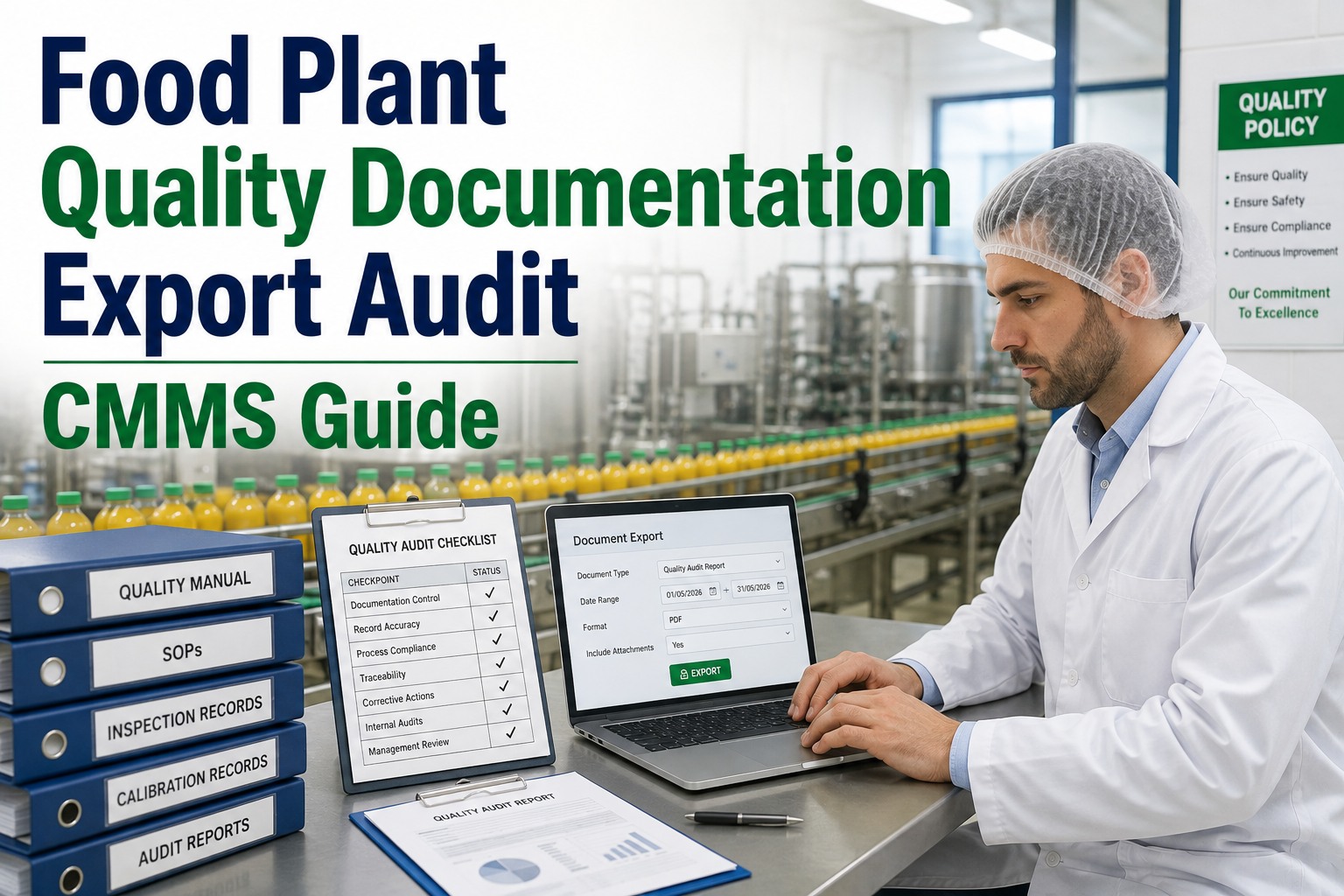
A quality manager at a ready-to-eat salad facility spent 23 hours reconstructing monitoring records after an FDA inspector requested documentation for the previous quarter's sanitation controls. The paper logs existed — scattered across three binders, two clipboards, and a filing cabinet in the maintenance office. Seven entries were illegible. Four were missing entirely. Two showed temperatures recorded at impossible times — 3:47 AM on a Sunday when the facility was closed. The inspector issued a Form 483 observation citing failure to maintain adequate records of monitoring activities. The facility's corrective action cost $47,000 in consultant fees, staff overtime, and system overhaul — not including the reputational damage of an OAI classification on public record. The preventive controls existed. The monitoring happened. The documentation failed. FSMA compliance is not about having a food safety plan. It is about proving — at any moment, to any inspector — that your controls are monitored, verified, and documented with timestamps, signatures, and corrective action records that tell a complete story. Ready to automate your FSMA documentation? Start a free trial or book a demo to see how OxMaint transforms compliance tracking.
Stop Chasing Paper. Start Proving Compliance.
OxMaint digitizes every preventive control, monitoring record, and corrective action — creating audit-ready documentation that FDA inspectors can verify in minutes, not hours.
What Are FSMA Preventive Controls?
The FDA's Preventive Controls for Human Food rule (21 CFR Part 117) requires food facilities to implement a systematic approach to food safety — identifying hazards before they cause illness, implementing controls to prevent those hazards, and maintaining documentation that proves the system works. Unlike traditional HACCP focused primarily on processing hazards, FSMA expands requirements to include supply chain controls, sanitation controls, allergen management, and comprehensive verification activities. Every FDA-registered food facility must have a written Food Safety Plan developed by a Preventive Controls Qualified Individual (PCQI), reanalyzed at minimum every three years, and documented with monitoring records that demonstrate ongoing compliance. The difference between facilities that pass inspections and those that receive 483 observations often comes down to one factor: the ability to produce documented evidence instantly. Discover how to digitize your compliance documentation — start a free trial or book a demo to see the OxMaint compliance module in action.
Process Controls
Parameters for controlling hazards during processing — cooking temperatures, cooling times, pH levels, water activity. Every critical limit requires documented monitoring at specified frequencies.
Sanitation Controls
Procedures maintaining sanitary conditions to prevent contamination — environmental monitoring, equipment cleaning, personnel hygiene. Required for all facilities handling ready-to-eat foods.
Allergen Controls
Procedures preventing allergen cross-contact and ensuring accurate labeling for the Big 9 allergens. Undeclared allergens caused 34% of all food recalls in 2024.
Supply Chain Controls
Risk-based verification of supplier compliance when hazard analysis identifies supply chain risks. Manufacturers retain responsibility for verifying supplier controls — even when using third-party audits.
Why Documentation Failures Drive FDA Enforcement
FDA inspectors do not verify that your controls exist. They verify that your controls are documented. The distinction matters: a facility with excellent food safety practices but incomplete records receives the same 483 observation as a facility with genuine compliance gaps. In 2024, documentation failures — inadequate records, incomplete monitoring logs, missing corrective action documentation — appeared consistently among the most common Form 483 observations. The FDA's new AI system "Elsa," launched in June 2025, now analyzes historical inspection outcomes and compliance data to prioritize high-risk facilities, making documentation gaps even more consequential.
Paper Records Scattered Across Facilities
Monitoring logs in maintenance offices, corrective actions in supervisor binders, verification records in QA filing cabinets. When an inspector asks for documentation, the reconstruction effort itself becomes evidence of inadequate record-keeping systems.
Timestamps That Cannot Be Verified
Paper logs allow backdating. Inspectors know this. Records showing monitoring at 3:47 AM on facility holidays, or 47 consecutive days of identical readings, trigger immediate skepticism about data integrity.
Missing Corrective Action Documentation
The monitoring record shows a deviation. Where is the corrective action? Who was notified? What product was affected? Without documented responses, deviations become evidence of systemic control failures.
No Linkage Between Records
Hazard analysis in one document. Preventive controls in another. Monitoring records in a third. Verification activities somewhere else. FDA expects a connected system — not a collection of independent documents.
How CMMS Transforms FSMA Compliance
A Computerized Maintenance Management System (CMMS) designed for food manufacturing does not merely digitize paper forms. It creates an integrated compliance ecosystem where preventive controls, monitoring activities, corrective actions, and verification records connect automatically — generating the audit-ready documentation that FDA inspectors require. The difference between scattered paper records and a unified digital system becomes most apparent during inspections: facilities using digital compliance tracking retrieve complete documentation in minutes, while paper-based facilities spend hours reconstructing records that may still be incomplete. Transform your compliance approach today — start a free trial or book a demo to see how OxMaint automates FSMA documentation.
Preventive Controls Linked to Assets
Each piece of equipment in your facility connects to its relevant preventive controls — process parameters, sanitation procedures, allergen protocols. When a work order generates, the required monitoring activities and documentation requirements attach automatically.
Automated Monitoring Schedules
Temperature checks, sanitation verifications, and equipment inspections trigger at specified frequencies. The system alerts technicians when monitoring is due — and escalates when monitoring is overdue, creating accountability before gaps occur.
Digital Timestamps and Signatures
Every monitoring entry captures verified timestamps from device GPS and authenticated digital signatures. No backdating possible. No ambiguous handwriting. No missing entries that require explanation during inspections.
Corrective Action Workflows
When monitoring identifies a deviation, the system triggers corrective action protocols automatically — notifying supervisors, documenting affected product, tracking resolution, and linking the complete sequence to the original monitoring record.
Verification Records Generated Automatically
PCQI verification activities — record reviews, environmental monitoring results, supplier documentation — integrate with preventive control records. The system generates verification reports showing that controls are consistently applied and effective.
Instant Audit Retrieval
When an FDA inspector arrives, retrieve complete documentation for any preventive control, any time period, any equipment — in minutes. Filter by date range, control type, deviation status, or corrective action category.
Before vs. After: Paper Records vs. CMMS Documentation
| Compliance Element | Paper-Based Approach | CMMS-Automated Approach |
|---|---|---|
| Monitoring Records | Handwritten logs, scattered locations, illegible entries, unverifiable timestamps | Digital entries with GPS timestamps, authenticated signatures, centralized storage |
| Corrective Actions | Documented inconsistently, often missing linkage to original deviation | Auto-triggered workflows linking deviation, response, resolution, and verification |
| Verification Activities | Separate documents, manual scheduling, easy to overlook | Integrated with preventive controls, automated reminders, completion tracking |
| Audit Retrieval | Hours of reconstruction, incomplete records, missing documentation | Instant retrieval by date, asset, control type, or deviation status |
| Reanalysis Documentation | Stored separately, manual tracking of 3-year cycles | Automated reanalysis scheduling with linked historical records |
| Supplier Verification | Paper certificates in filing cabinets, manual expiration tracking | Digital document storage with automated expiration alerts |
Measurable Compliance Impact
FSMA Compliance Roadmap: 30-Day Implementation
Transitioning from paper-based compliance to digital documentation does not require months of implementation. The critical path focuses on high-impact preventive controls first, building the documentation foundation that FDA inspectors evaluate most closely. Facilities begin generating audit-ready records within the first week. Ready to begin your implementation? Start a free trial or book a demo to see the implementation pathway for your facility.
Critical Control Digitization
Identify your highest-priority preventive controls — typically process controls for biological hazards and sanitation controls for environmental pathogens. Configure digital monitoring forms. Train PCQI and lead technicians on mobile data entry. Execute first digital monitoring cycle alongside existing paper process.
Corrective Action Integration
Configure corrective action workflows triggered by monitoring deviations. Establish notification protocols — who receives alerts, escalation timelines, resolution documentation requirements. Link corrective actions to affected product identification and disposition tracking.
Verification and Supplier Documentation
Configure PCQI verification schedules — record reviews, environmental monitoring analysis, reanalysis triggers. Import supplier documentation with expiration tracking. Generate first compliance dashboard showing preventive control status across all facility assets.
Frequently Asked Questions
Does FDA accept digital records for FSMA compliance?
Yes. FDA explicitly accepts electronic records for preventive controls documentation under 21 CFR Part 11. Digital records with verified timestamps, authenticated signatures, and audit trails often provide stronger compliance evidence than paper records — particularly because they eliminate concerns about backdating and illegibility that frequently appear in 483 observations. The key requirement is that electronic records must be readily retrievable and must demonstrate who performed monitoring, when it occurred, and what was observed.
How does CMMS handle corrective action documentation?
When monitoring identifies a deviation from critical limits, OxMaint automatically triggers corrective action workflows. The system notifies designated personnel, captures affected product identification, tracks corrective steps taken, documents product disposition decisions, and links the complete sequence to the original monitoring record. This creates the continuous documentation chain that FDA expects — from deviation detection through resolution verification — without manual reconstruction. Book a demo to see corrective action workflows in action.
Can CMMS integrate with existing food safety plans?
OxMaint integrates with your existing Food Safety Plan structure — your hazard analysis, preventive controls, and monitoring procedures remain unchanged. The system digitizes the monitoring and documentation components while preserving your PCQI-developed control framework. Most facilities import their existing preventive controls during Week 1 implementation and begin generating digital records without modifying their established food safety procedures.
What documentation does CMMS provide during FDA inspections?
During inspections, OxMaint generates comprehensive documentation packages including: monitoring records with verified timestamps and digital signatures; corrective action documentation linked to specific deviations; verification activity records; supplier documentation with approval status; environmental monitoring results and trending; and reanalysis documentation. Reports can be filtered by date range, preventive control type, asset, or deviation status — providing inspectors exactly what they request within minutes. Start a free trial to explore audit documentation capabilities.
FDA Inspectors Do Not Verify Controls. They Verify Documentation.
OxMaint transforms FSMA compliance from a documentation burden into an automated system — where every preventive control links to monitoring records, every deviation triggers documented corrective actions, and every verification activity generates audit-ready evidence. The next FDA inspection becomes a demonstration of systematic compliance, not a reconstruction exercise.