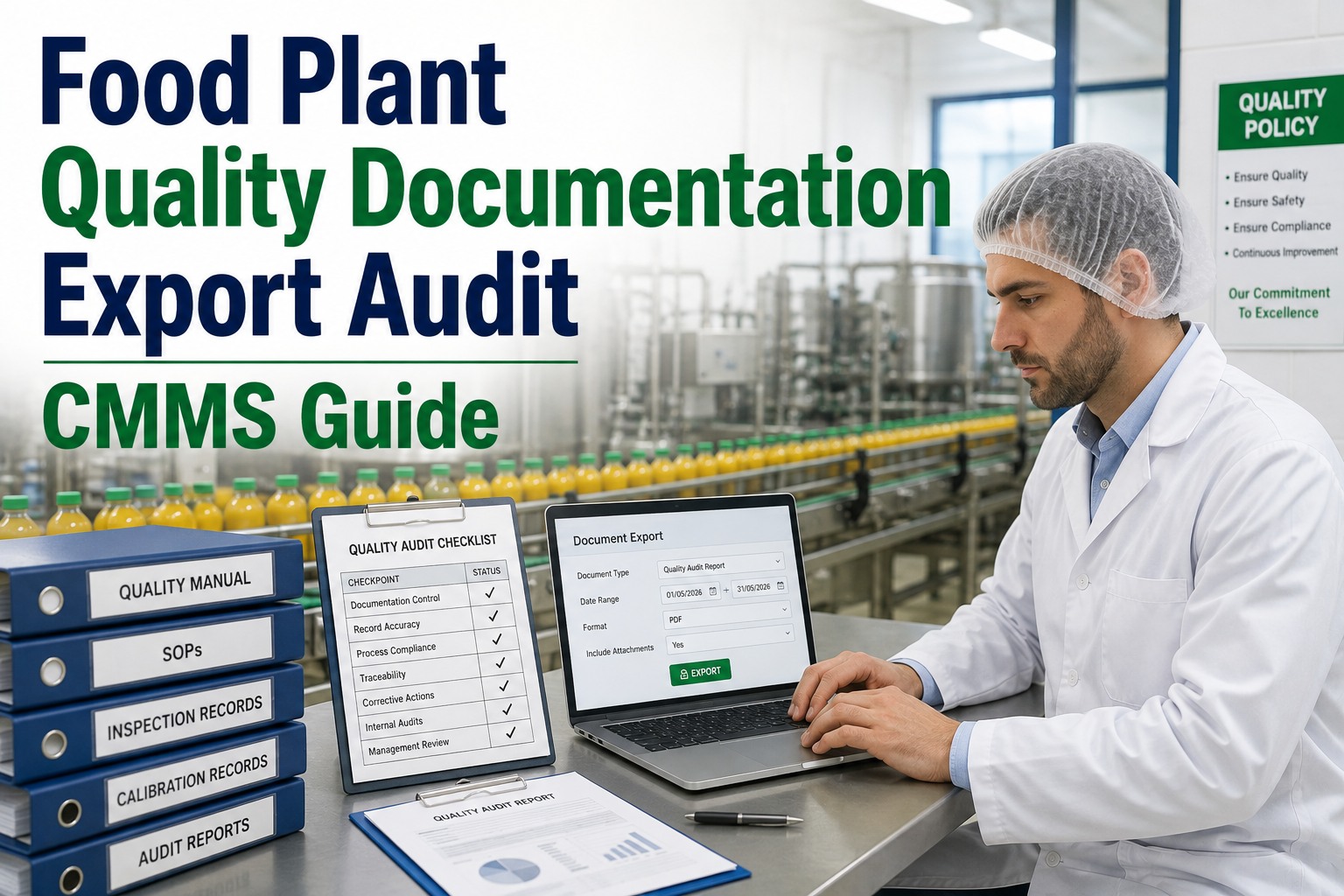
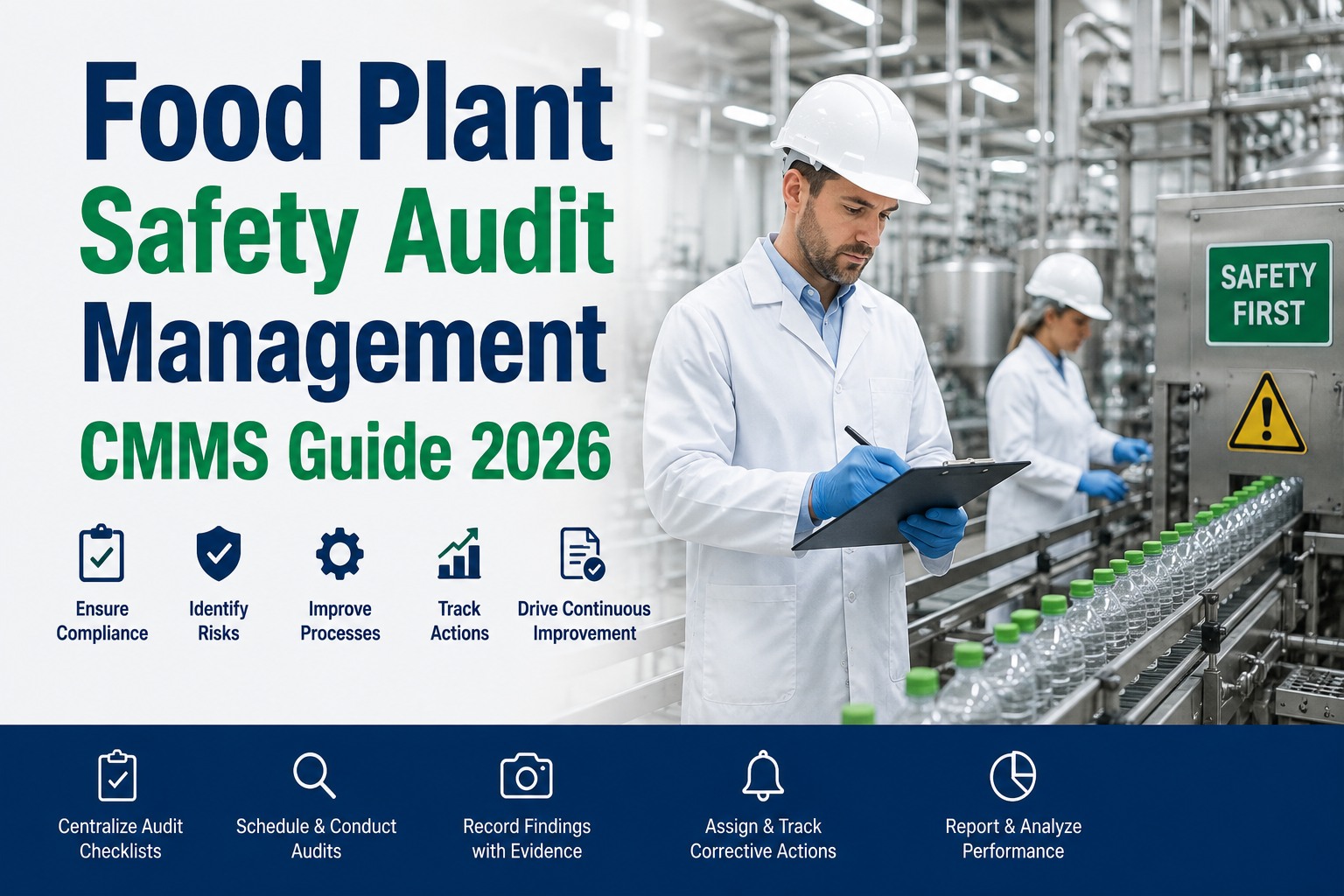
The FDA Food Safety Modernization Act (FSMA) Preventive Controls for Human Food rule requires food manufacturers to maintain a documented Food Safety Plan — and the record-keeping burden is substantial. During an FDA inspection, investigators will request hazard analysis documentation, monitoring records, corrective action logs, verification activity evidence, and supplier controls — often going back two years. Facilities that lack organized, current documentation face Warning Letters, consent decrees, and production shutdowns. Those that treat FSMA documentation as a continuous process rather than an annual scramble report 60% faster FDA inspection response times and significantly reduced regulatory risk. Start a free trial on Oxmaint to centralize your FSMA documentation and verification records, or book a demo to see how the platform manages food safety compliance across multi-site operations.
FSMA Compliance Management
Replace Scattered FSMA Records with a Single Audit-Ready Platform
See how much regulatory risk you can eliminate from your food safety documentation in 30 days.
Centralized FSMA documentation and verification records
Automated monitoring record collection and corrective action tracking
Multi-site food safety compliance visibility in one dashboard
Used by operations teams managing 10,000+ assets — live in days, not months.
FSMA Compliance — The Stakes for Food Manufacturers
$10M+
Average cost of a food recall including direct costs, lost sales, and brand damage (ERS/USDA)
60%
Faster FDA inspection response for facilities with organized, digital documentation systems
85%
Of FSMA Warning Letters cite inadequate monitoring records or verification documentation
2 yrs
Minimum record retention period required under FSMA Preventive Controls rule (21 CFR 117)
Section 2 — What Is This Checklist?
FSMA Preventive Controls Documentation — Defined
The FSMA Preventive Controls for Human Food rule (21 CFR Part 117) requires covered food manufacturers to develop, implement, and maintain a written Food Safety Plan that includes a hazard analysis, preventive controls, monitoring procedures, corrective action procedures, verification activities, recall plans, and supply chain controls. This checklist is a practical audit of whether all required documentation elements are in place, current, and retrievable — which is exactly what FDA investigators evaluate during an inspection.
Beyond FDA compliance, this checklist supports SQF, BRC, FSSC 22000, and customer audit preparation by ensuring that the documentary evidence of a functioning food safety system is organized and accessible. Facilities that treat this checklist as a living monthly review — rather than an annual pre-audit panic — consistently outperform their peers on regulatory and third-party audit scores — start a free trial to see how Oxmaint centralizes food safety documentation, or book a demo to walk through your current documentation gaps.
85% of FSMA Warning Letters cite inadequate documentation — not inadequate food safety practices. The risk is in the records, not the plant.
Section 3 — Key Documentation Areas
8 Core FSMA Documentation Categories
01
Food Safety Plan
The master document covering all required elements — must be signed by the Preventive Controls Qualified Individual (PCQI) and reviewed at least annually.
02
Hazard Analysis
Written evaluation of known and reasonably foreseeable biological, chemical, and physical hazards — including hazards introduced by economically motivated adulteration.
03
Preventive Controls
Documented process, allergen, sanitation, and supply chain controls with defined parameters, monitoring methods, and frequencies for each hazard requiring a control.
04
Monitoring Records
Completed records showing that preventive controls are being monitored at the required frequency — the most commonly cited gap during FDA inspections.
05
Corrective Actions
Documented response to deviations from preventive controls — including the action taken, product disposition decision, root cause analysis, and preventive measures.
06
Verification Activities
Evidence that preventive controls are effective — including calibration records, environmental monitoring results, process validation studies, and records reviews.
07
Recall Plan
Written procedures for identifying, retrieving, and correcting products that may contain a food safety hazard — must include lot traceability methodology.
08
Supply Chain Controls
Documentation of approved supplier programs, supplier verification activities, and certificates of analysis or audit results for raw materials with significant hazards.
Section 4 — Pain Points
6 Critical FSMA Documentation Failures
These are the documentation gaps most frequently cited in FDA Warning Letters and 483 observations — and all of them are preventable with organized systems — start a free trial to close these gaps before your next inspection.
!
Incomplete Monitoring Records
CCP and preventive control monitoring records with gaps, missing signatures, or entries made retroactively are the single most common FSMA violation cited by FDA.
!
No Corrective Action Documentation
Deviations that were addressed operationally but never documented create a compliance gap — FDA investigators treat undocumented corrective actions as if they never happened.
!
Outdated Food Safety Plan
Food Safety Plans not reviewed after process changes, new product introductions, or ingredient changes are considered non-compliant under the annual review requirement.
!
Missing Supplier Verification Records
Approved supplier programs without current audit results, COAs, or third-party certification records fail FSMA supply chain control requirements.
!
Inadequate Recall Plan Traceability
Recall plans that cannot demonstrate lot-level traceability from raw material to finished product distribution fail the FSMA traceability and recall plan requirements.
!
PCQI Training Not Current
Facilities where the designated PCQI has not completed FDA-recognized training or where training records are not current face direct citation in FDA inspection reports.
Section 5 — How Oxmaint Solves It
How Oxmaint Supports FSMA Documentation Management
Digital Monitoring Record Collection
Replace paper monitoring logs with mobile digital forms that capture time-stamped, operator-signed monitoring data at the point of control — eliminating retroactive entries.
Corrective Action Workflow
When a deviation is logged, Oxmaint triggers a corrective action workflow capturing the action taken, product disposition, root cause, and preventive measure — all linked to the originating monitoring record.
Calibration Record Management
Track calibration schedules, store certificates, and set expiry alerts for all monitoring equipment — metal detectors, checkweighers, thermometers, and pH meters.
Supplier Document Tracking
Store and track expiry dates for supplier COAs, third-party audit certificates, and FSMA supplier verification records with automated renewal alerts.
Audit-Ready Record Export
Export complete documentation packages for FDA inspections, customer audits, or internal reviews in seconds — organized by date range, equipment, or control type.
Multi-Site Compliance Dashboard
Monitor FSMA documentation compliance across all facilities from a single dashboard — showing overdue monitoring records, expiring certificates, and open corrective actions.
During FDA inspections, investigators request up to 2 years of monitoring records — facilities with paper systems spend 40+ hours preparing what digital platforms produce in minutes.
Section 6 — Paper vs. Digital Documentation
Paper-Based FSMA Records vs. Digital Documentation System
Documentation Element
Paper-Based System
Digital System (Oxmaint)
Monitoring record completeness
Gaps common — no automatic prompts for missing entries
System alerts when monitoring records are not completed on schedule
Record retrieval during FDA inspection
Hours to days of manual search
Filtered export in minutes by date, control type, or equipment
Corrective action linkage
Separate paper forms, often not linked to originating deviation
Corrective action automatically linked to monitoring deviation record
Calibration certificate tracking
Paper binders, expiry dates checked manually
Automated expiry alerts — no expired certificates missed
Supplier verification records
Emails and spreadsheets, difficult to retrieve by supplier
Supplier record database with expiry tracking and audit trail
Multi-site visibility
No consolidated view — each site manages independently
Portfolio dashboard showing compliance status across all facilities
Annual Food Safety Plan review
Manual reminder, often deferred
Scheduled review task triggered automatically with version control
Section 7 — ROI and Results
What Organized FSMA Documentation Delivers
60%
Faster FDA inspection documentation response with digital vs. paper-based record systems
Oxmaint platform benchmark
$10M+
Average cost of a food product recall — prevented by effective preventive control documentation
USDA Economic Research Service
40hrs
Average time food safety teams spend preparing records for a routine FDA inspection using paper systems
Food Safety Magazine benchmark
85%
Of FSMA Warning Letters are preventable with organized, current documentation systems
FDA enforcement data analysis
The ROI on organized FSMA documentation is not measured in efficiency savings alone — it is measured in regulatory risk avoided, recalls prevented, and audit outcomes that protect your business relationships — start a free trial to build your FSMA documentation system in Oxmaint, or book a demo to review your current documentation gaps.
Section 8 — The Checklist
FSMA Preventive Controls Documentation and Verification Checklist
Use this checklist monthly for ongoing compliance management and as a pre-inspection readiness review. Check each item and note any gaps requiring corrective action.
Food Safety Plan — Foundation Documents
Hazard Analysis Documentation
Preventive Controls Documentation
Monitoring Records — Ongoing Verification
Corrective Action Records
Verification Activities
Supply Chain Controls
Recall Plan
Record Retention and Organization
Section 9 — FAQ
FSMA Documentation — Common Questions
Who qualifies as a Preventive Controls Qualified Individual (PCQI) under FSMA?
A PCQI is an individual who has successfully completed training in the development and application of risk-based preventive controls, as recognized by FDA. The standard pathway is completing the FSPCA (Food Safety Preventive Controls Alliance) Preventive Controls for Human Food course, which is recognized by FDA as meeting the PCQI training requirement. The PCQI must prepare or oversee the preparation of the Food Safety Plan and reanalyze it as required. Your facility must have a designated PCQI — this person does not need to be on-site at all times but must be available and responsible for the Food Safety Plan. Book a demo to see how Oxmaint tracks PCQI responsibilities and training records.
How long must FSMA records be retained?
Under 21 CFR Part 117, monitoring records and corrective action records must be retained for at least 2 years from the date they were created. The Food Safety Plan itself, along with validation and verification records supporting the plan, must be retained for at least 2 years after they are no longer the current version. Records must be stored in a manner that is retrievable and protected from damage. During an FDA inspection, investigators may request records going back the full two-year retention period, so organized retrieval systems are critical. Start a free trial to manage FSMA record retention in Oxmaint.
How often must the Food Safety Plan be reviewed?
FSMA requires the Food Safety Plan to be reanalyzed at least every 3 years and whenever there is a significant change that could affect food safety, including new or changed processes, new or changed ingredients, new or changed equipment, or new hazard information. In practice, most food safety professionals recommend an annual review as best practice. The reanalysis must be performed or overseen by the PCQI, and the review itself must be documented with a signature and date showing when the review was completed.
Can Oxmaint store and manage FSMA records across multiple food manufacturing sites?
Yes. Oxmaint's multi-site architecture allows food manufacturers to manage FSMA documentation, monitoring records, corrective actions, and supplier verification records across all facilities from a single platform. Each site maintains its own Food Safety Plan records and compliance documentation while corporate food safety teams get consolidated visibility into documentation completeness, overdue verification activities, and expiring certificates across the entire portfolio. Book a demo to see the multi-site compliance dashboard.
Stop Scrambling Before Every FDA Inspection
Turn FSMA Documentation Into a Continuous, Auditable System
Oxmaint centralizes your FSMA monitoring records, corrective actions, verification activities, and supplier documentation — so you are always inspection-ready, not just pre-audit ready.
Centralized FSMA documentation and verification records
Automated monitoring record collection and corrective action tracking
Multi-site food safety compliance visibility in one dashboard
Used by operations teams managing 10,000+ assets. Live in days, not months. No heavy implementation required.